
 Texas Native
Texas Red Oak
Quercus buckleyiLocal DFW Delivery Only
Product Details
Texas Red Oak
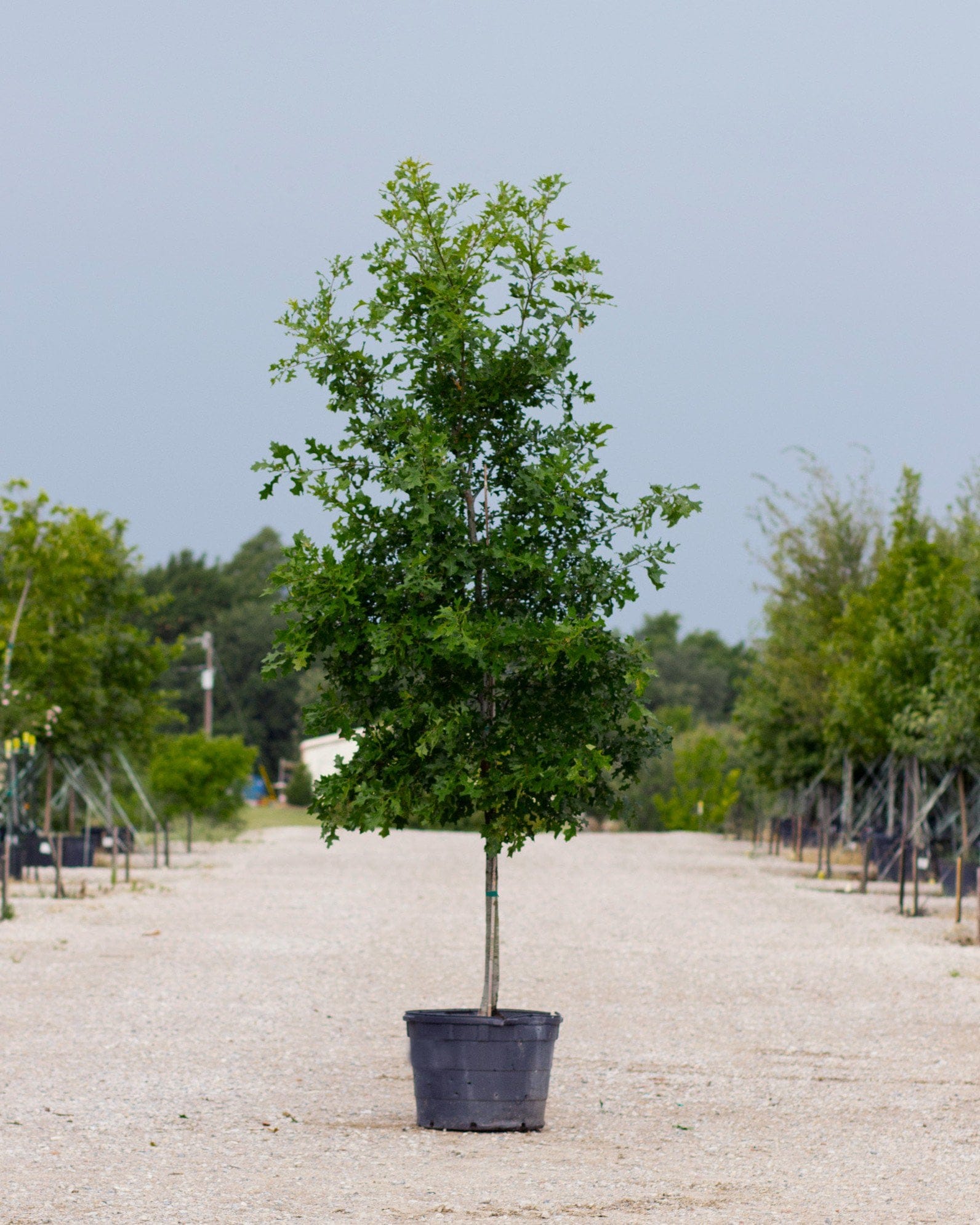
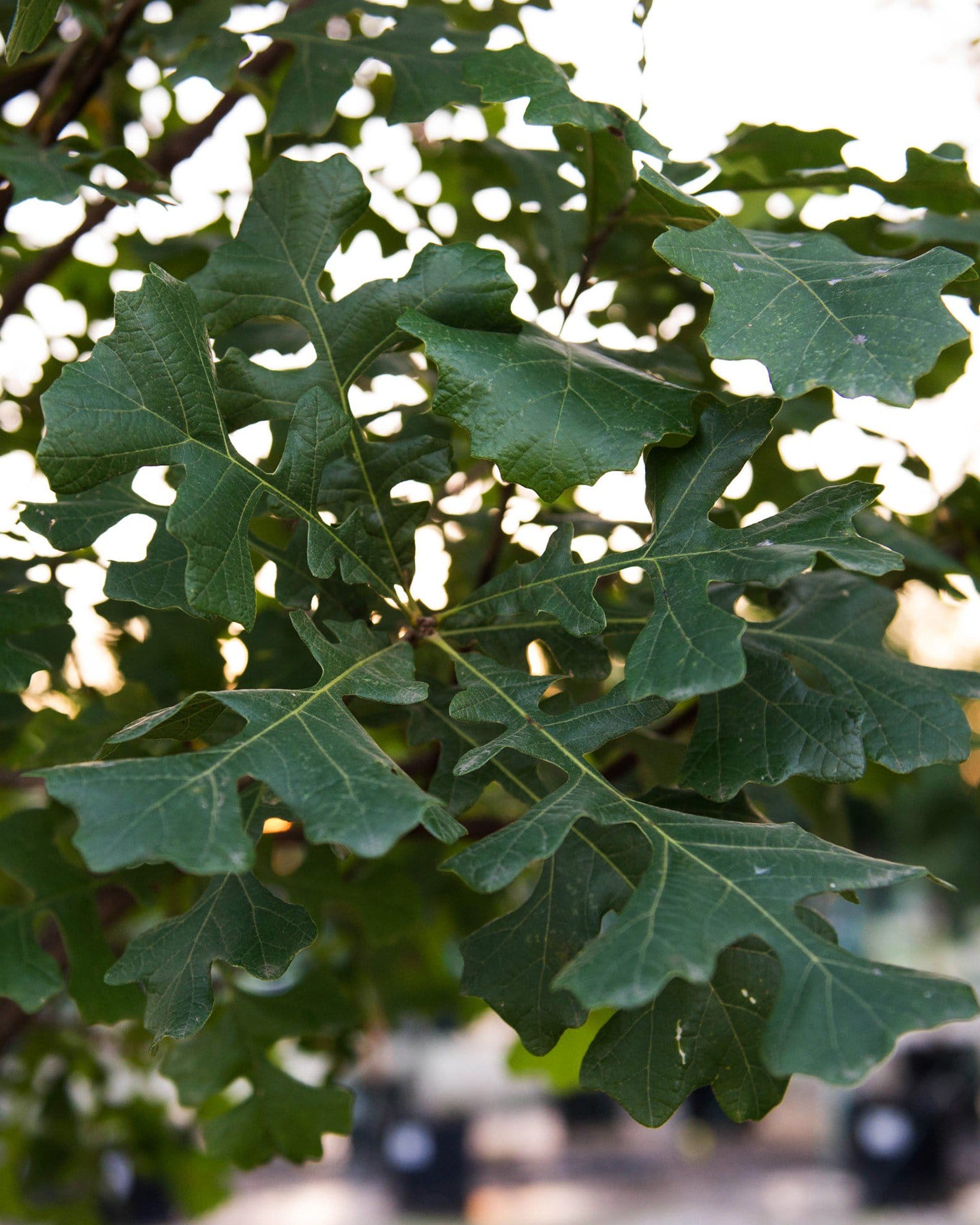
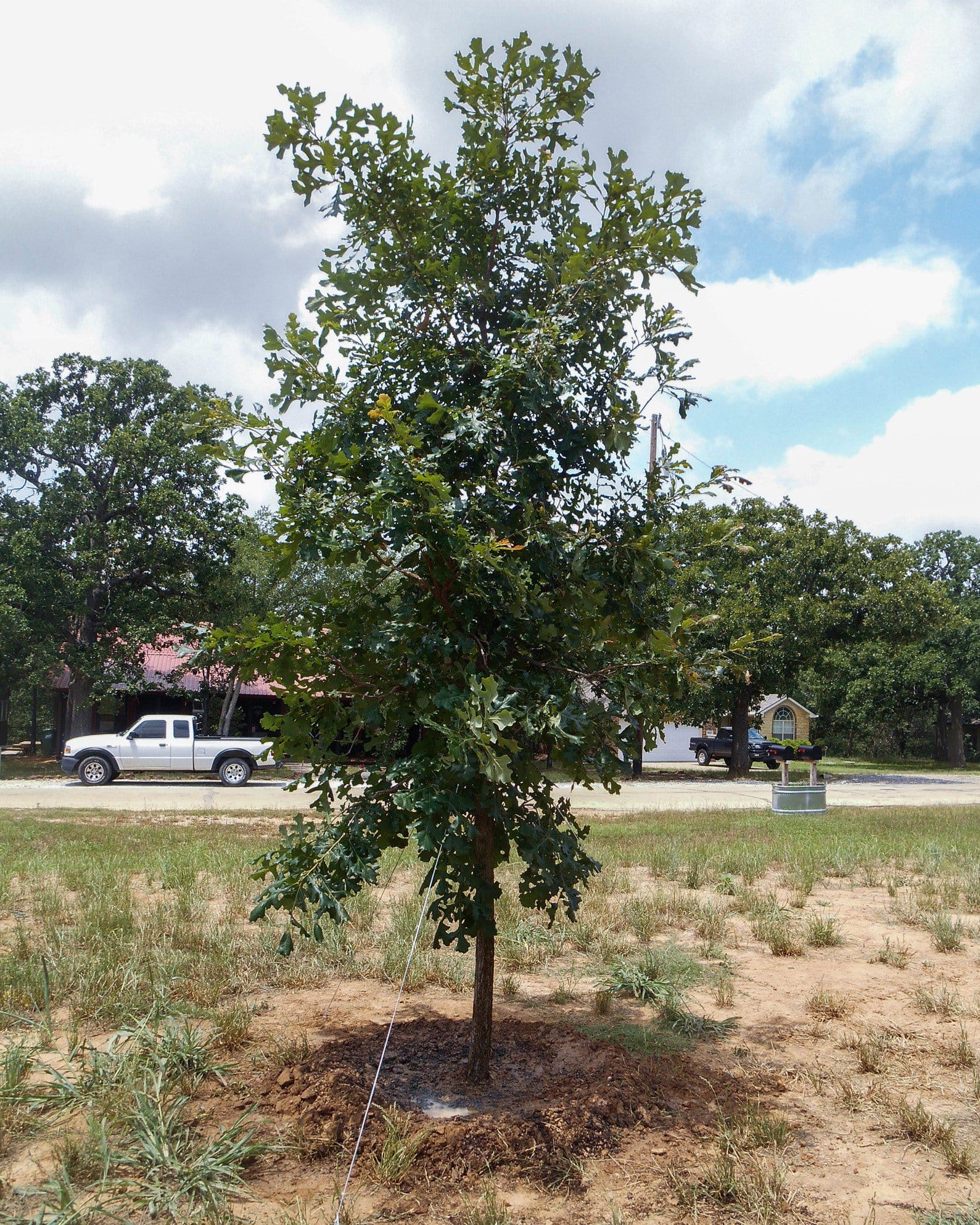
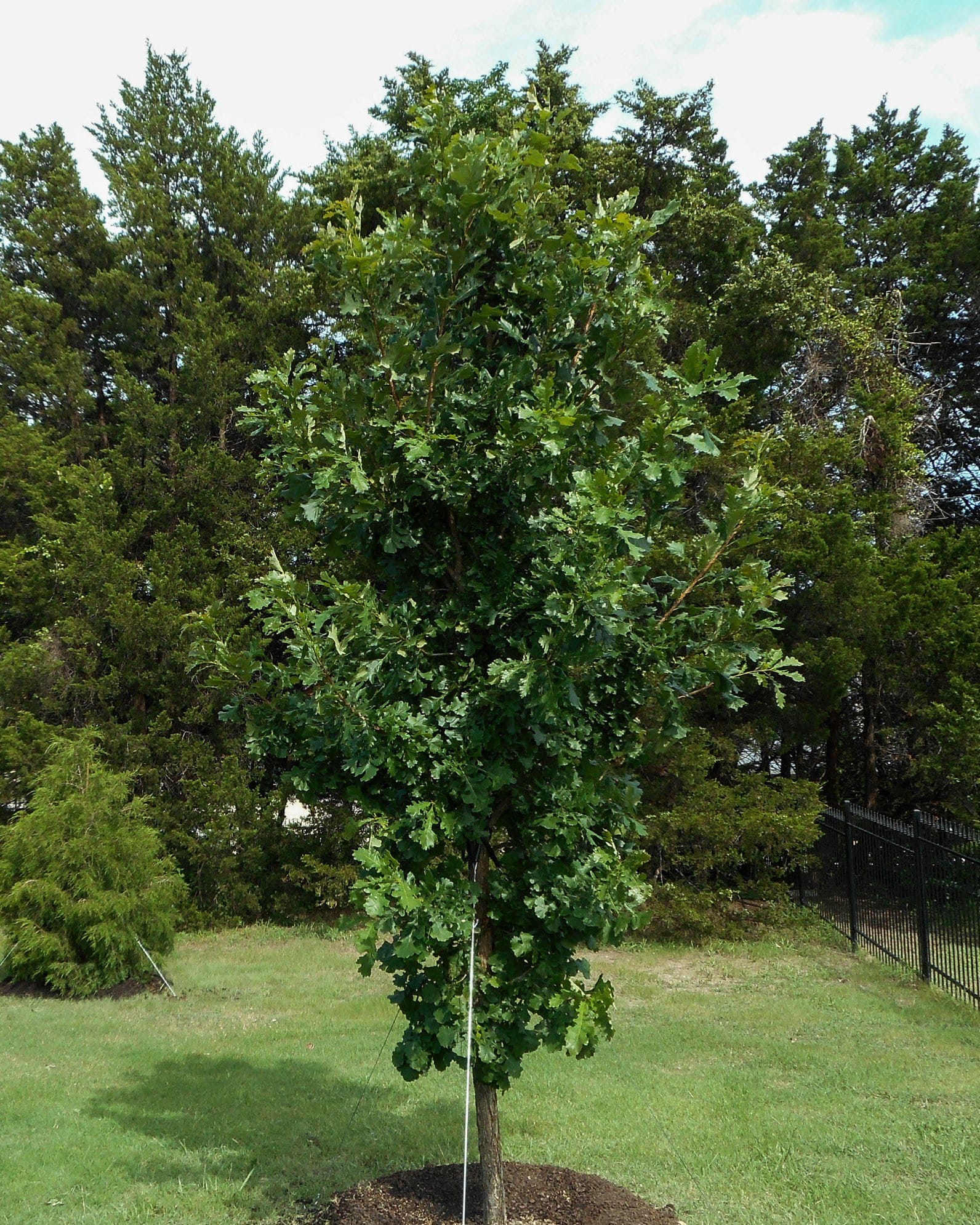
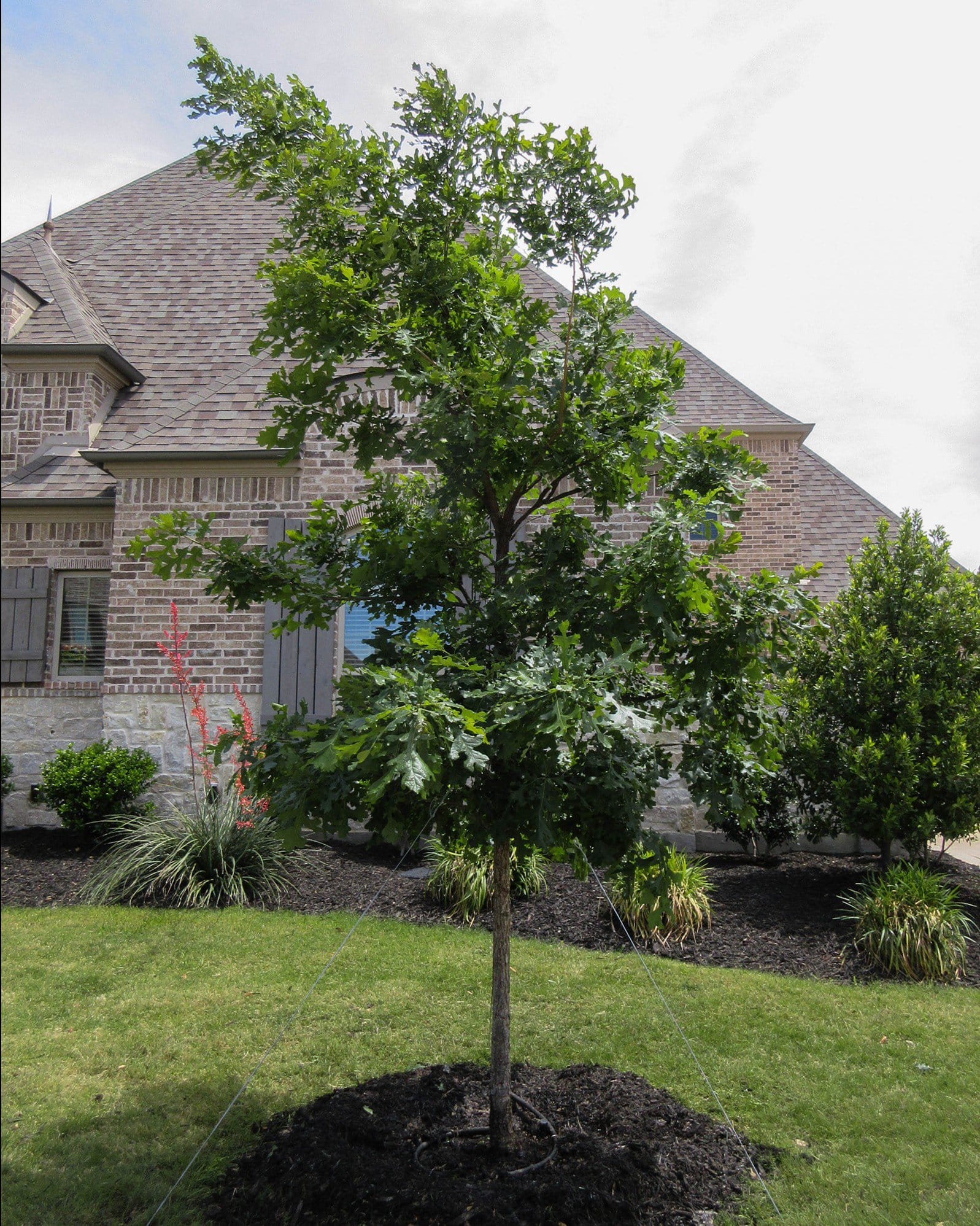
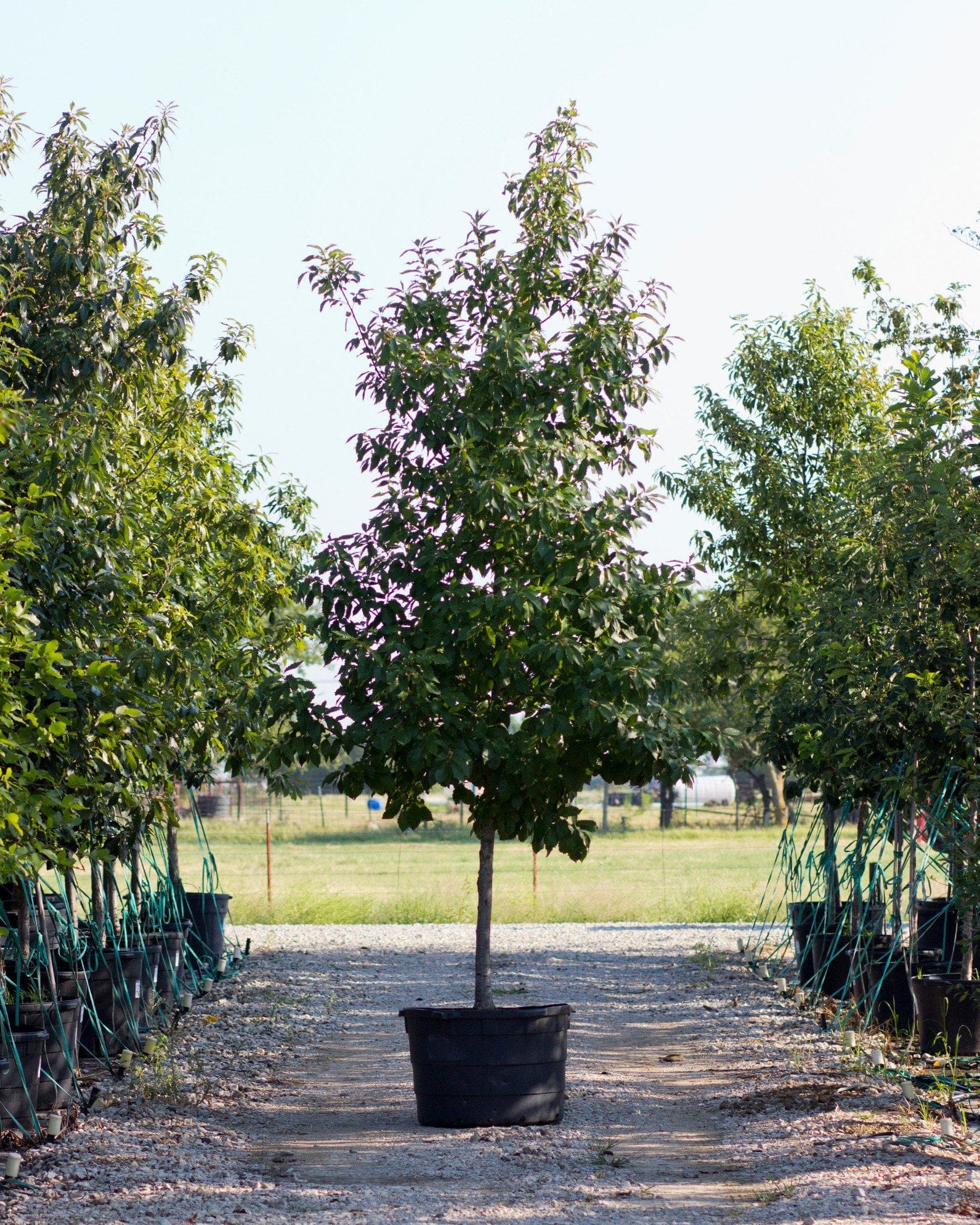
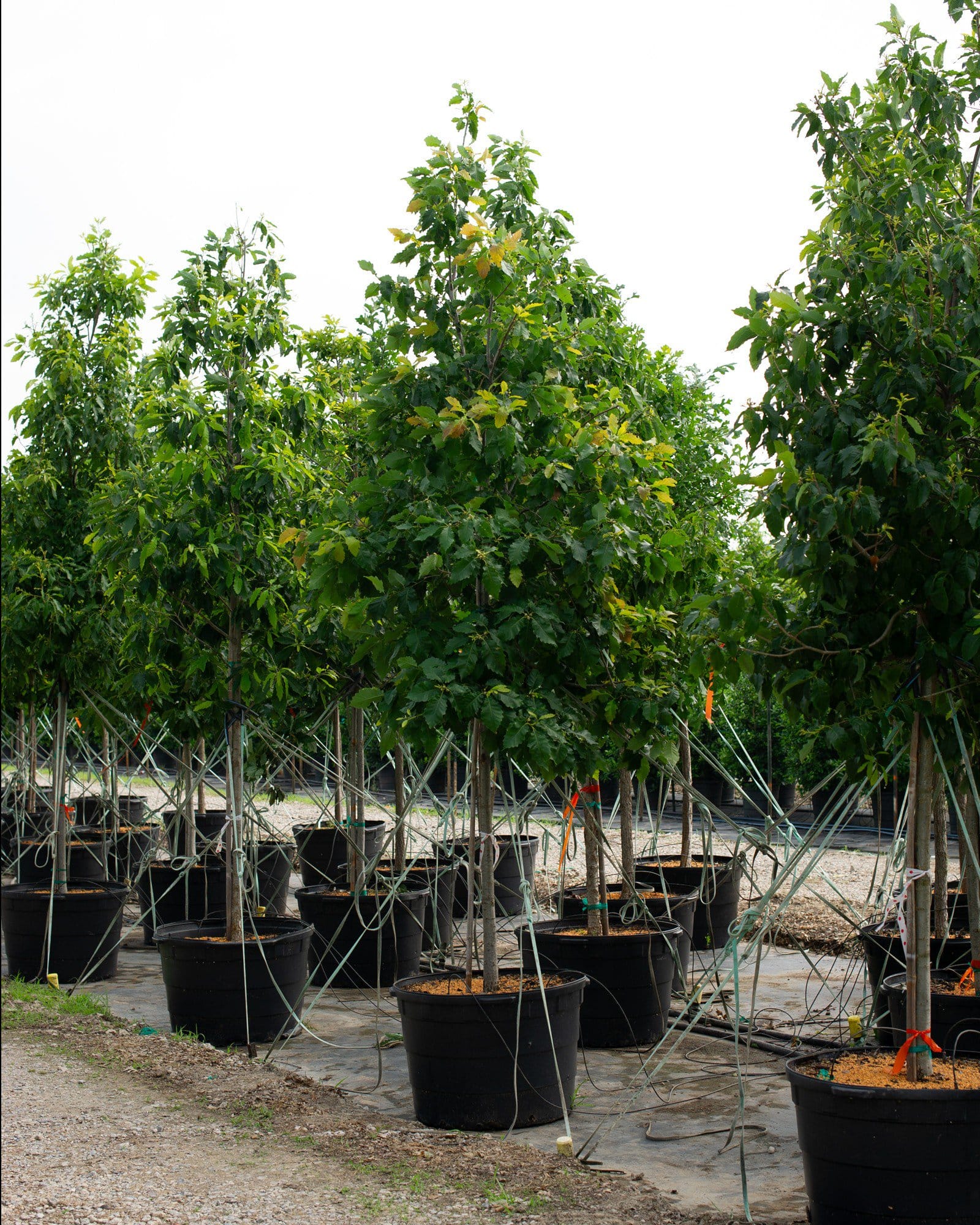
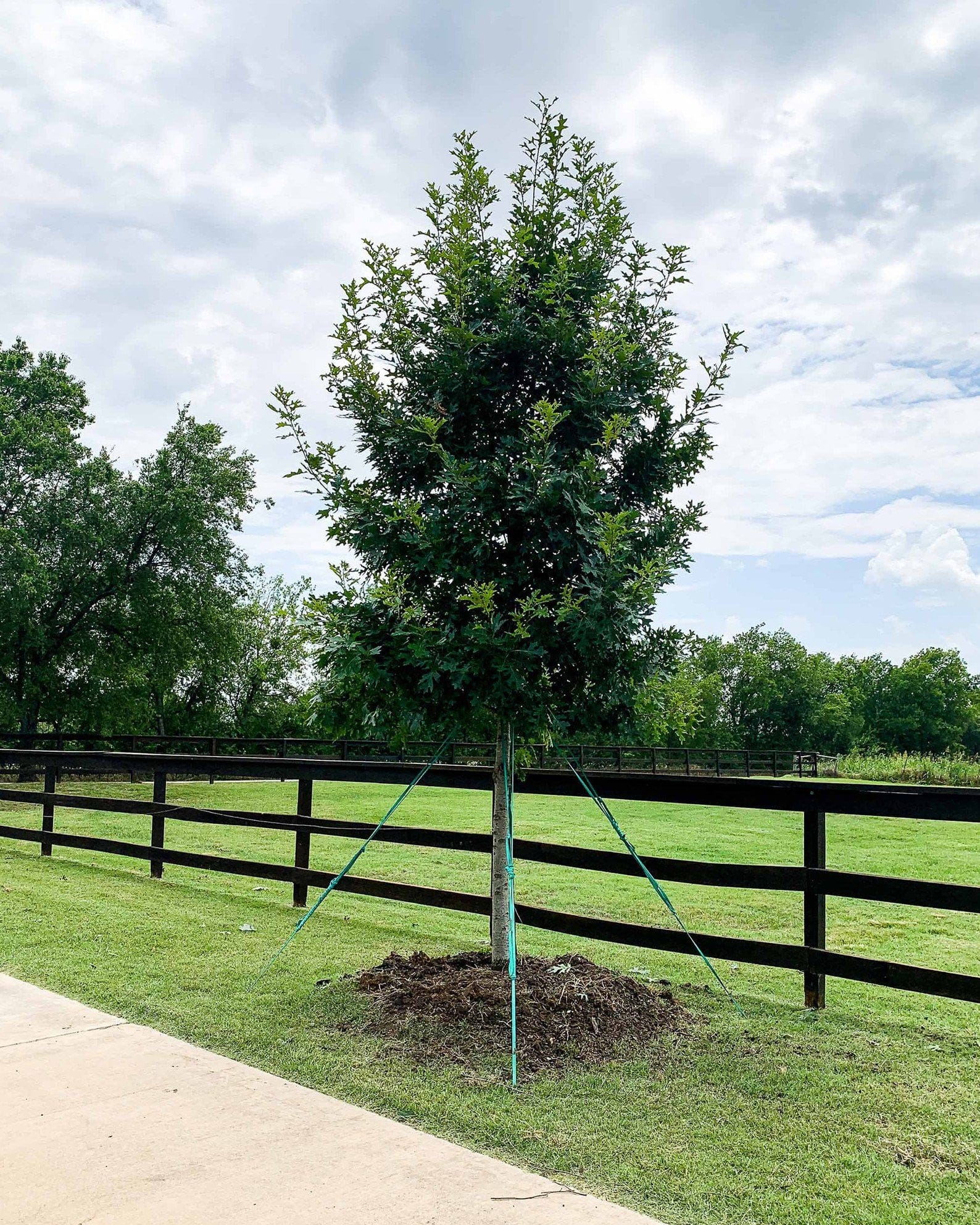
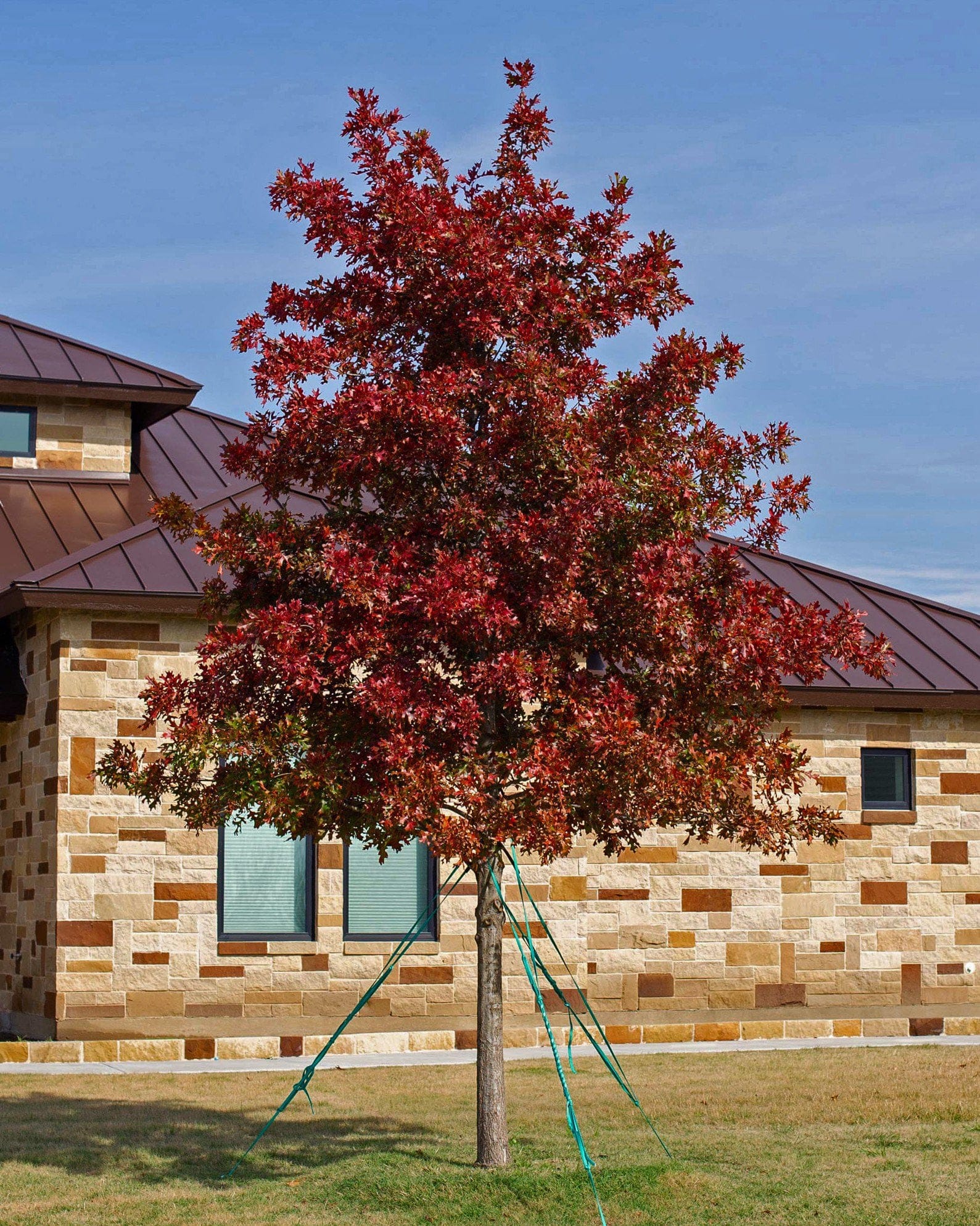
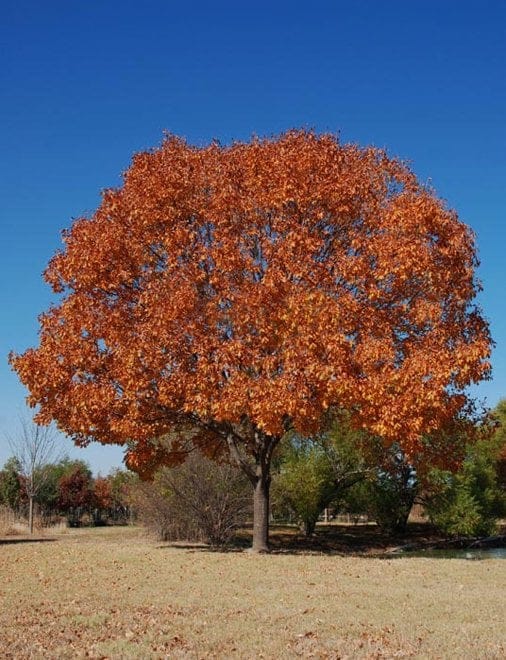
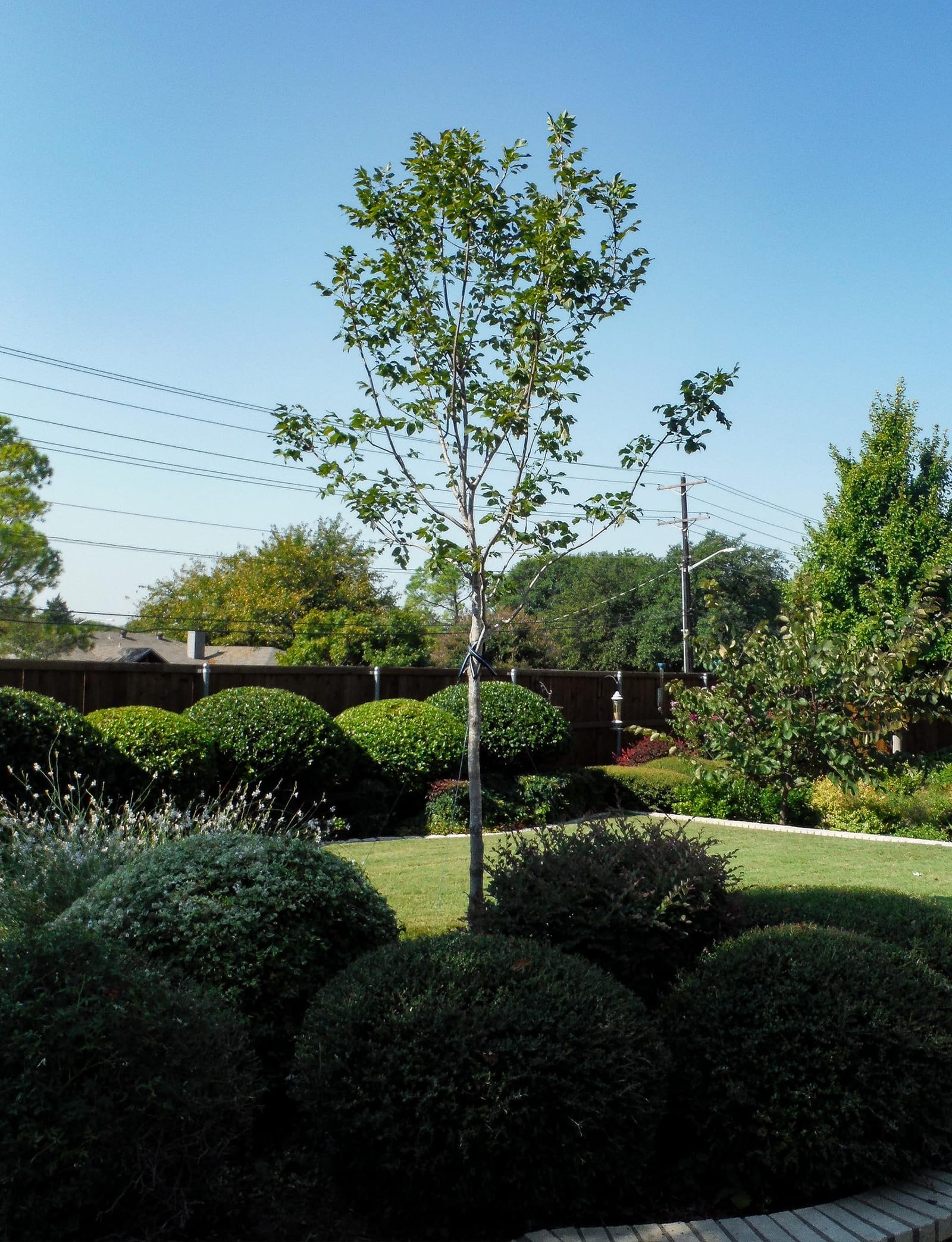
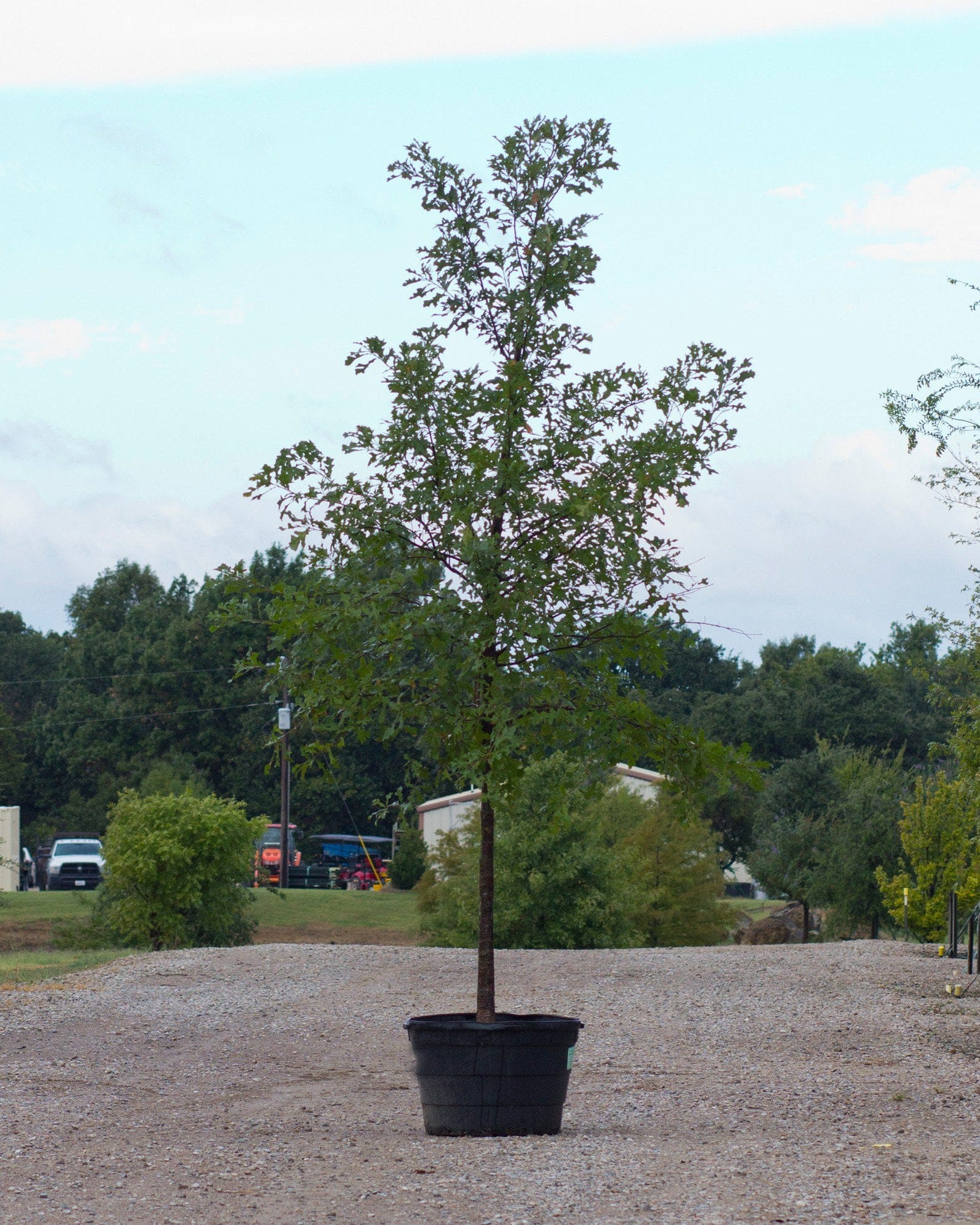
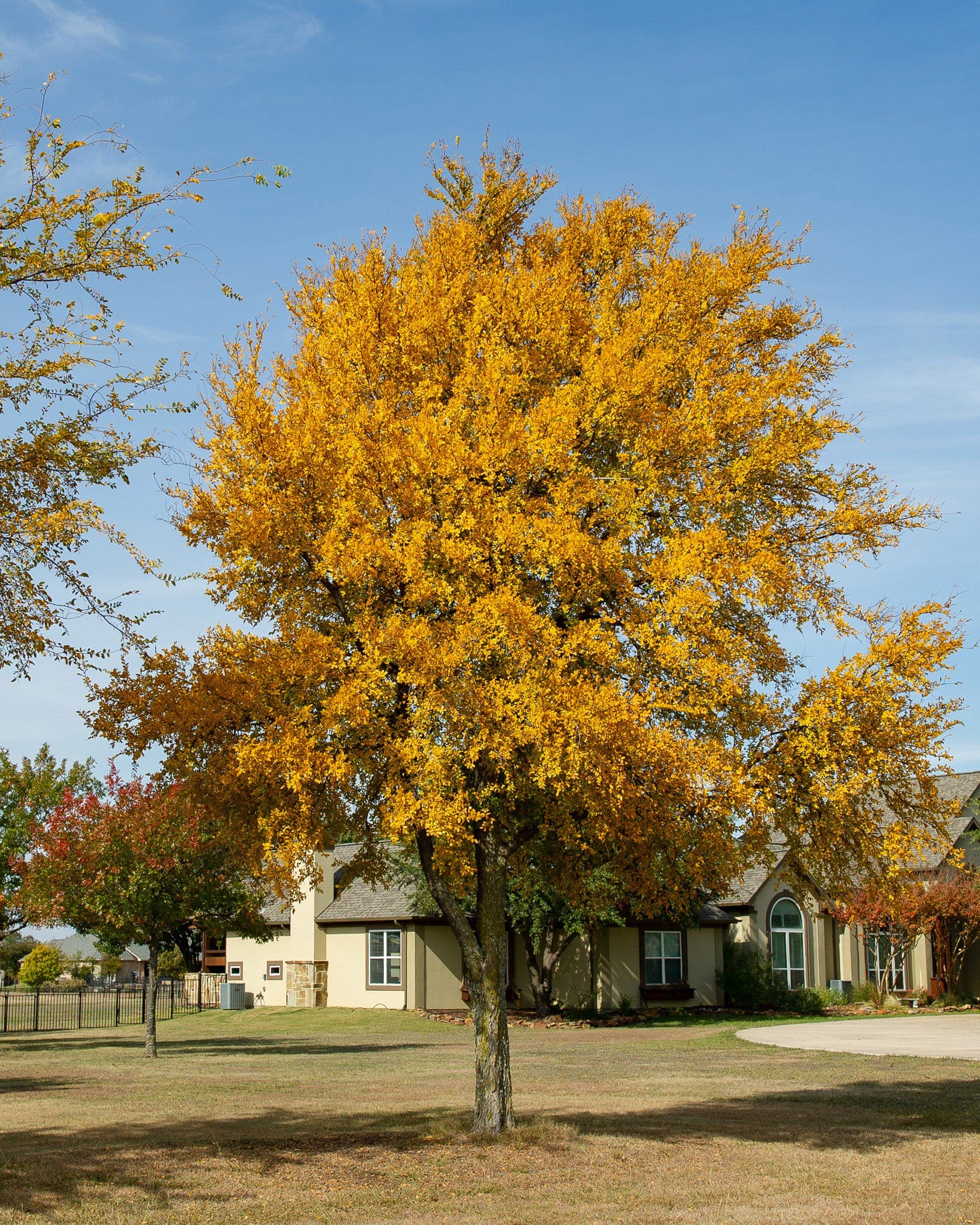
Quercus buckleyiTexas Red Oak is a striking deciduous tree prized for its brilliant red foliage that lights up landscapes each fall. It matures around 45 feet tall and spreads about 35 feet wide at maturity, making it a great medium-sized shade tree for yards and parks. This oak features a rounded canopy and a fast growth rate, quickly providing impressive structure and color. It is well-suited for residential and commercial settings where seasonal interest is desired.
- Deciduous tree
- Fast growth rate with a rounded habit
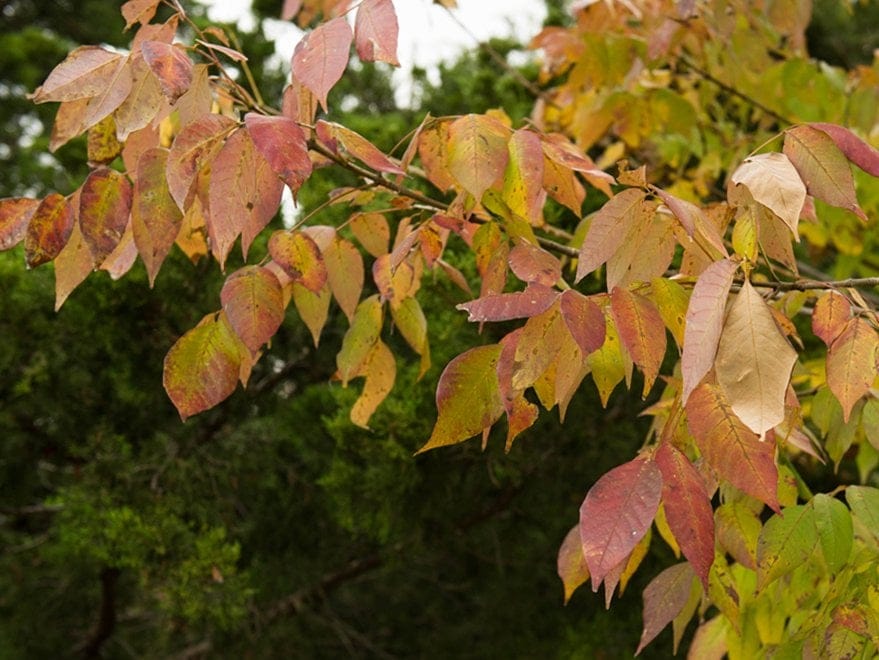
- Vibrant red fall foliage
- Provides excellent shade and ornamental value
- Excellent shade and ornamental tree
Hardy in USDA zones 7–9, Texas Red Oak thrives in full sun and prefers well-drained soils. It adapts well to North Texas conditions, making it a reliable and colorful choice for local landscapes.
Maintenance
Texas Red Oak is exceptionally low-maintenance once established, needing only the basic care to grow beautifully:
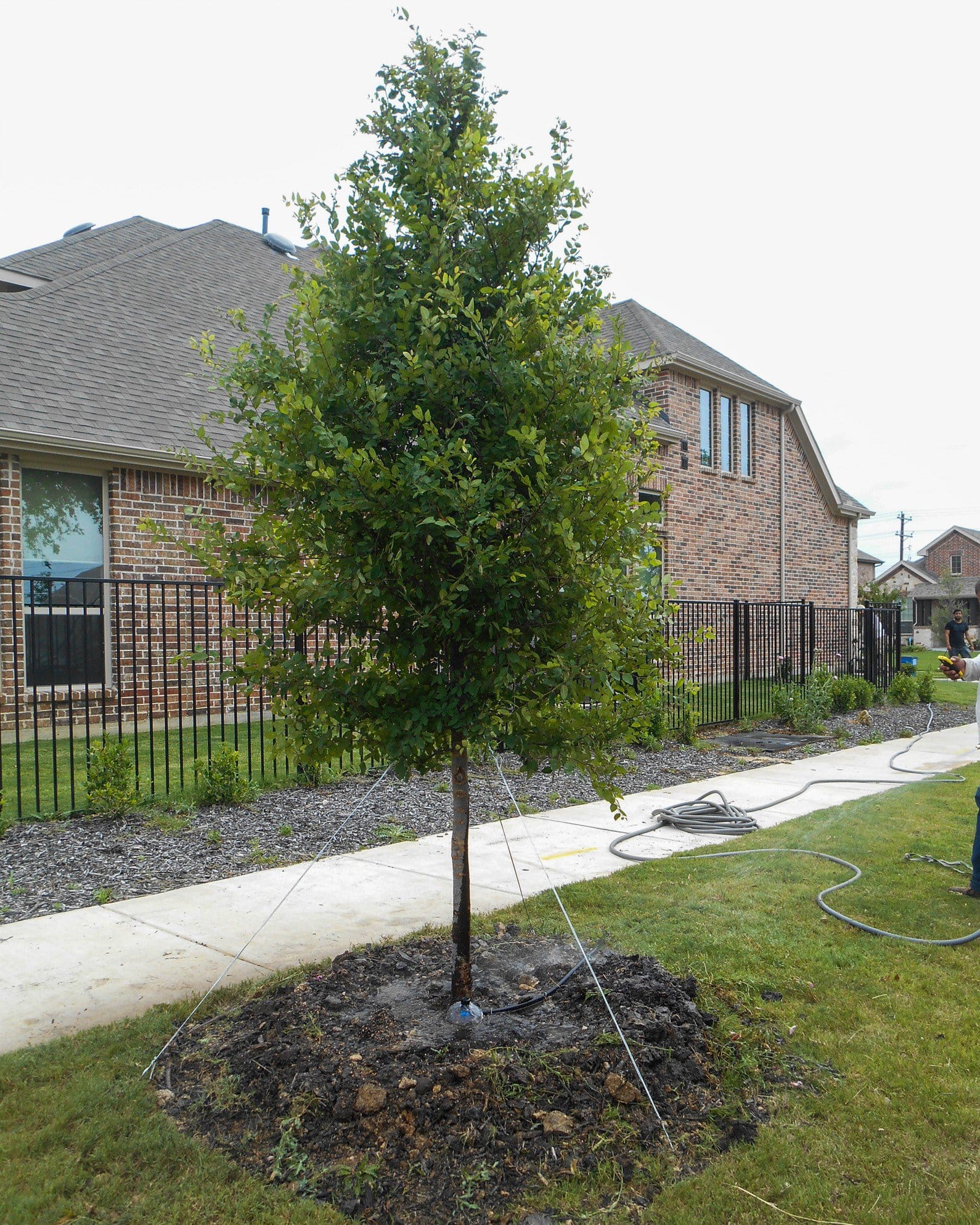
- Watering: Water young Texas Red Oaks deeply and consistently during the first 2-3 years to establish a strong, drought-hardy root system. Once mature, the tree thrives with little supplemental watering and usually needs it only during extended droughts.
- Pruning: Prune in late winter to remove crossing, damaged, or poorly angled branches. Early structural pruning helps guide a sturdy scaffold of limbs, especially important for achieving a clean, upright canopy; mature trees typically need minimal pruning.
- Fertilizing: Texas Red Oak performs well in a wide range of soils and often requires no fertilizer once established. If growth slows or foliage appears pale, a light spring application of slow-release, balanced fertilizer can enhance vigor - but avoid heavy nitrogen.
- Mulching: Apply a 2-3 inch mulch layer around the base to conserve moisture, stabilize soil temperatures, and reduce weed competition. Extend the mulch ring outward as the tree grows to protect feeder roots, keeping mulch several inches away from the trunk.
- Winter Care: This tree is reliably cold-hardy throughout its range and typically needs no special winter protection once mature. Young trees may show mild leaf discoloration after severe freezes, but they recover quickly with the return of spring growth.
Common Issues and How to Take Care of Them
Texas Red Oak is durable and adaptable, though a few manageable issues may arise in stressful or highly humid seasons:
- Powdery Mildew: A white, powdery coating appears on leaves in shaded, humid areas. Improve air circulation and avoid wetting leaves to keep foliage healthy.
- Borers: Insects that tunnel throughout the wood, weakening it and disturbing the flow of nutrients.
- Leaf Scorch: During extremely hot or dry periods, leaves may brown along the edges. Deep watering and mulching will usually prevent this and promote recovery.
- Aphids: Small insects that feed on plant sap and produce honeydew that attracts sooty mold (black and grimy mold that weakens the tree).
- Scale: Bumpy, waxy insects attach to stems and feed on sap, causing yellowing leaves. Apply horticultural oil or insecticidal soap to control populations.
- Spider Mites: Tiny pests that can cause foliage discoloration during hot, dry weather. Rinse foliage with water or use insecticidal soap if infestations persist. Encouraging beneficial insects, like ladybugs, can also help keep mite populations under control.
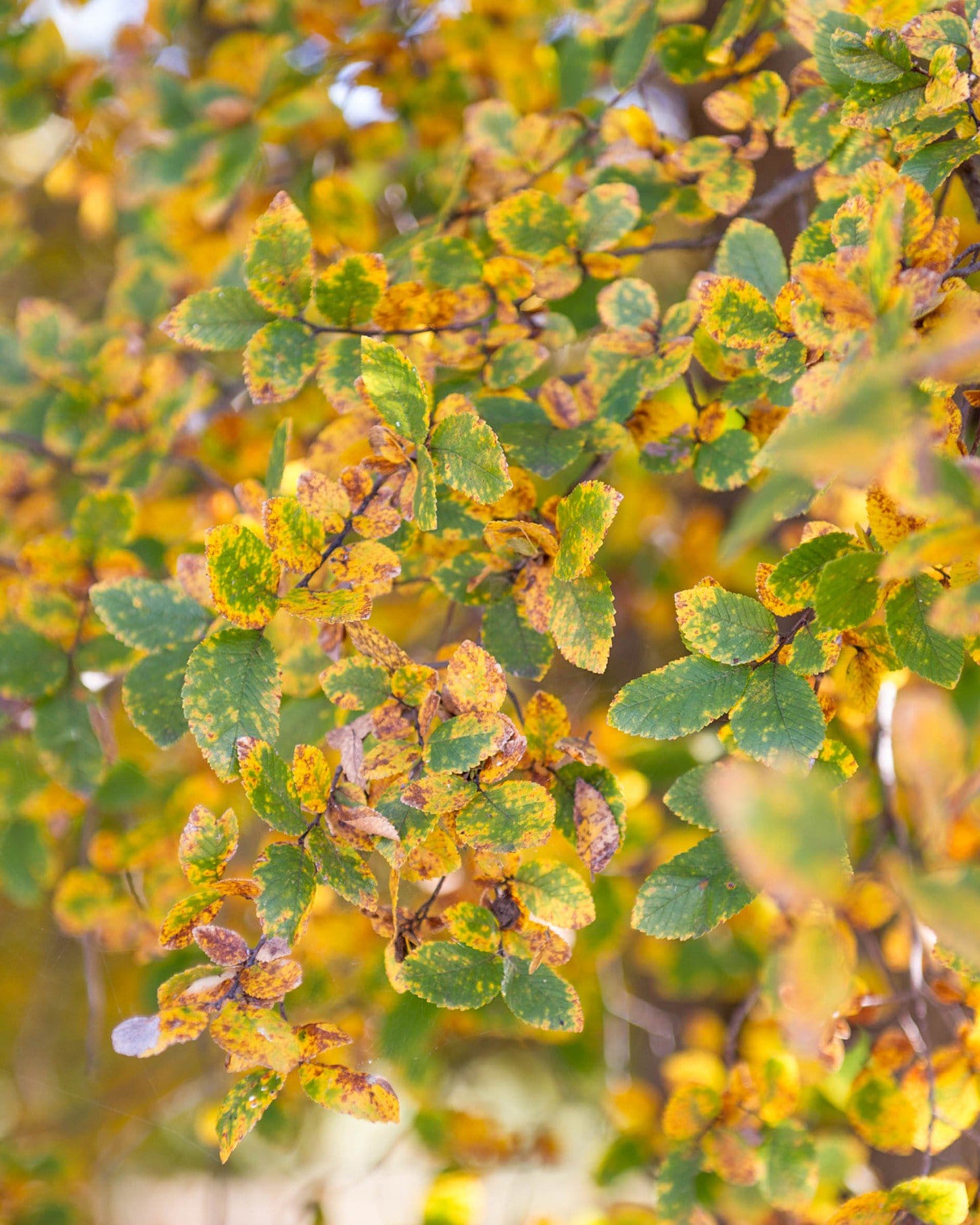
- Tubakia (Fungal Leaf Spot): Brown spots may appear in late spring or summer, which occurs during really rainy periods. This is nothing to be concerned about. All Oaks, Maples and Elms will get Tubakia to varying degrees and it will not hurt your tree in any way. If you were to spray for Tubakia then it wouldn’t cause the spots to go away. They will remain on the leaf until the leaves fall off and once the new set of leaves are produced they will look normal again.
- Oak Galls: Oak galls are abnormal growths of plant tissue, similar to tumors, that develop when the plant is exposed to minute amounts of hormone-like chemicals released by the organisms that create them. While fungi, bacteria, nematodes, and mites can all be gall makers, insects are the primary culprits. Galls can form on roots, flowers, bark, or buds, but the ones appearing on leaves and twigs are the most easily noticed. Two galls frequently appear on Texas and Shumard red oaks: the Oak Apple Gall and the Oak Plum Gall. The Oak Apple Gall is a lime-sized structure that has a thin, translucent cover, appearing spring-green before fading to light brown in summer. If its outer skin is removed, you will find a distinct interior of cotton-candy-like fibers. In contrast, the Oak Plum Gall is a grape-sized growth, easily identified by its maroon and cream coloring. While difficult to spot in the canopy among the acorns, they are often noticed when they drop to the lawn below. If an Oak Plum Gall is cut open, it reveals a single larva nestled within a dark red center.
Texas Red Oaks typically live 70-120 years when grown in healthy soil and given proper care. Their strong structure and seasonal beauty make them long-lasting assets to both private and public landscapes.
They grow at a moderate to fast rate, often 12-24 inches per year, and generally reach a mature canopy structure in 20-30 years.
Young leaves may be nibbled occasionally, but mature foliage becomes far less appealing to deer. Early protection ensures healthy establishment and long-term vigor.
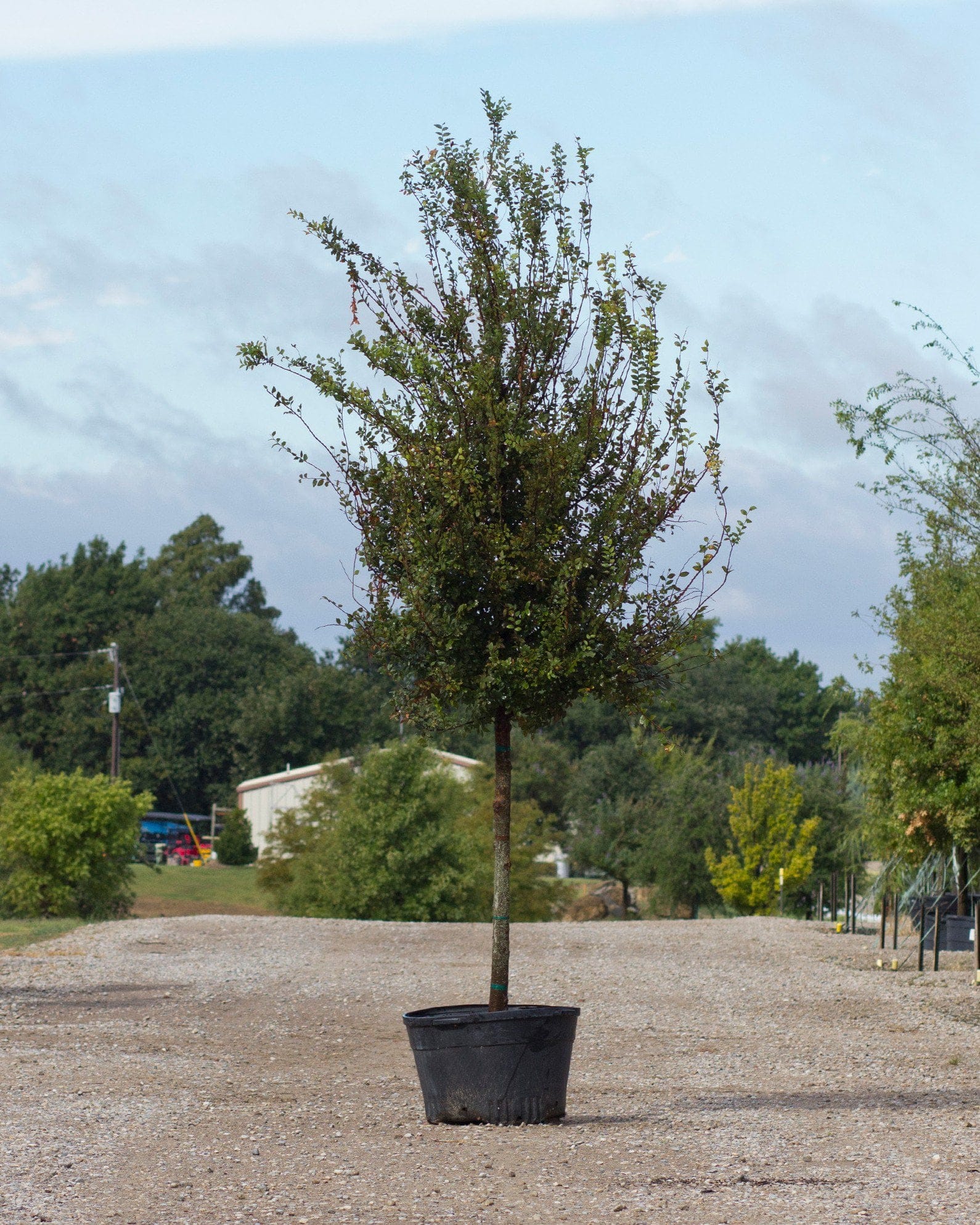
It is not suitable for container growing due to its size and robust root development. Planting it in the ground allows the tree to reach its full canopy and thrive naturally.
It handles heat extremely well, maintaining healthy foliage throughout intense summers. Deep watering during severe droughts helps keep the canopy lush and vibrant.
It performs beautifully in alleys, ranch rows, and grouped plantings thanks to its clean structure and brilliant fall color. Repeated plantings create striking seasonal displays and strong directional shade.
Companions like Cedar Elm, Texas Mountain Laurel, Big Muhly, and native grasses blend seamlessly with its upright form and fall tones. These combinations create layered, drought-tolerant landscapes that thrive in similar conditions.
It adapts well to city conditions, tolerating heat, compacted soils, and mild pollution. Its strong canopy and reliable growth make it an excellent option for parks, large yards, and commercial sites.
Young Texas Red Oaks transplant well, especially when moved during dormancy. Older trees can be transplanted with proper professional assistance, though planting early yields the best long-term results.
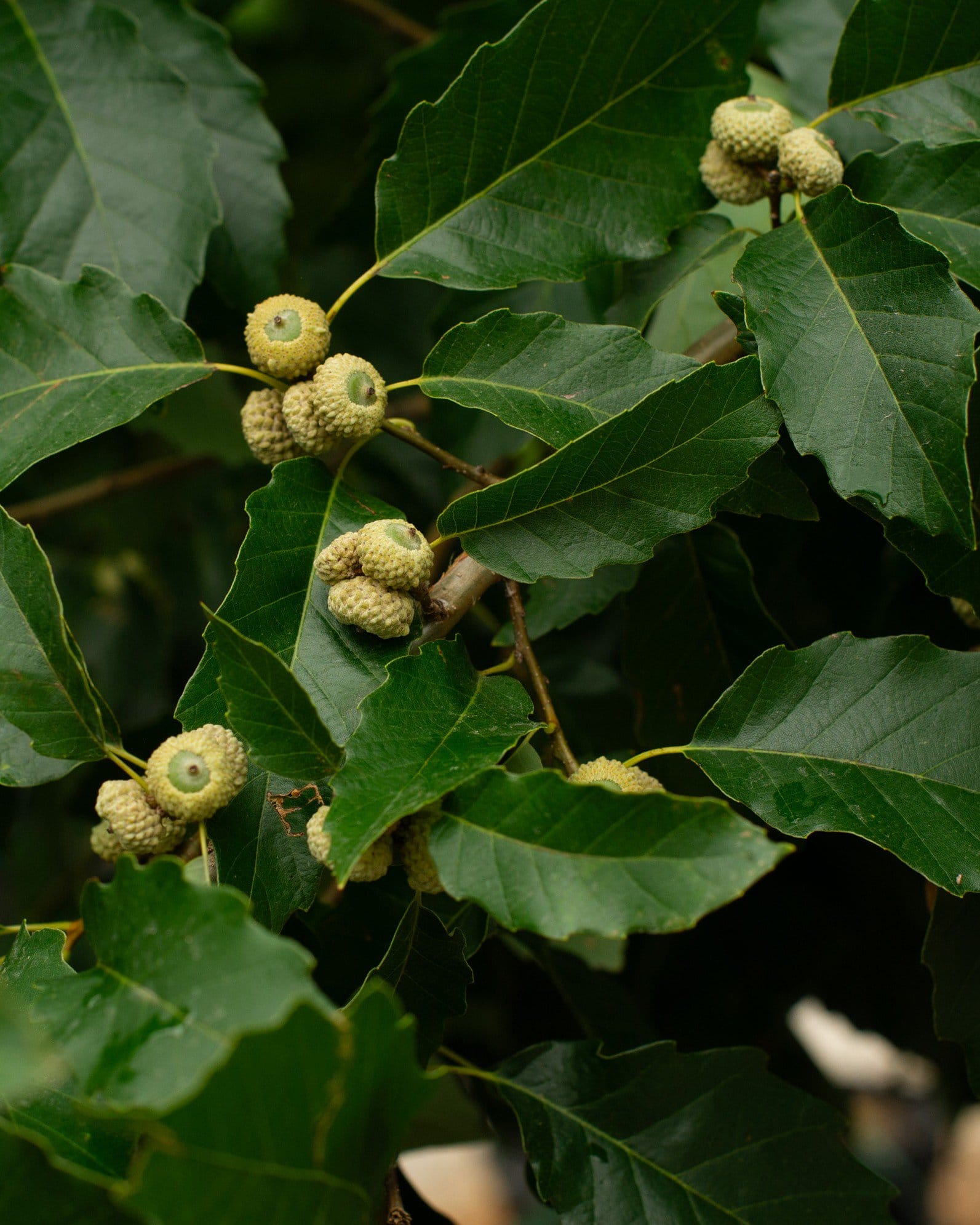
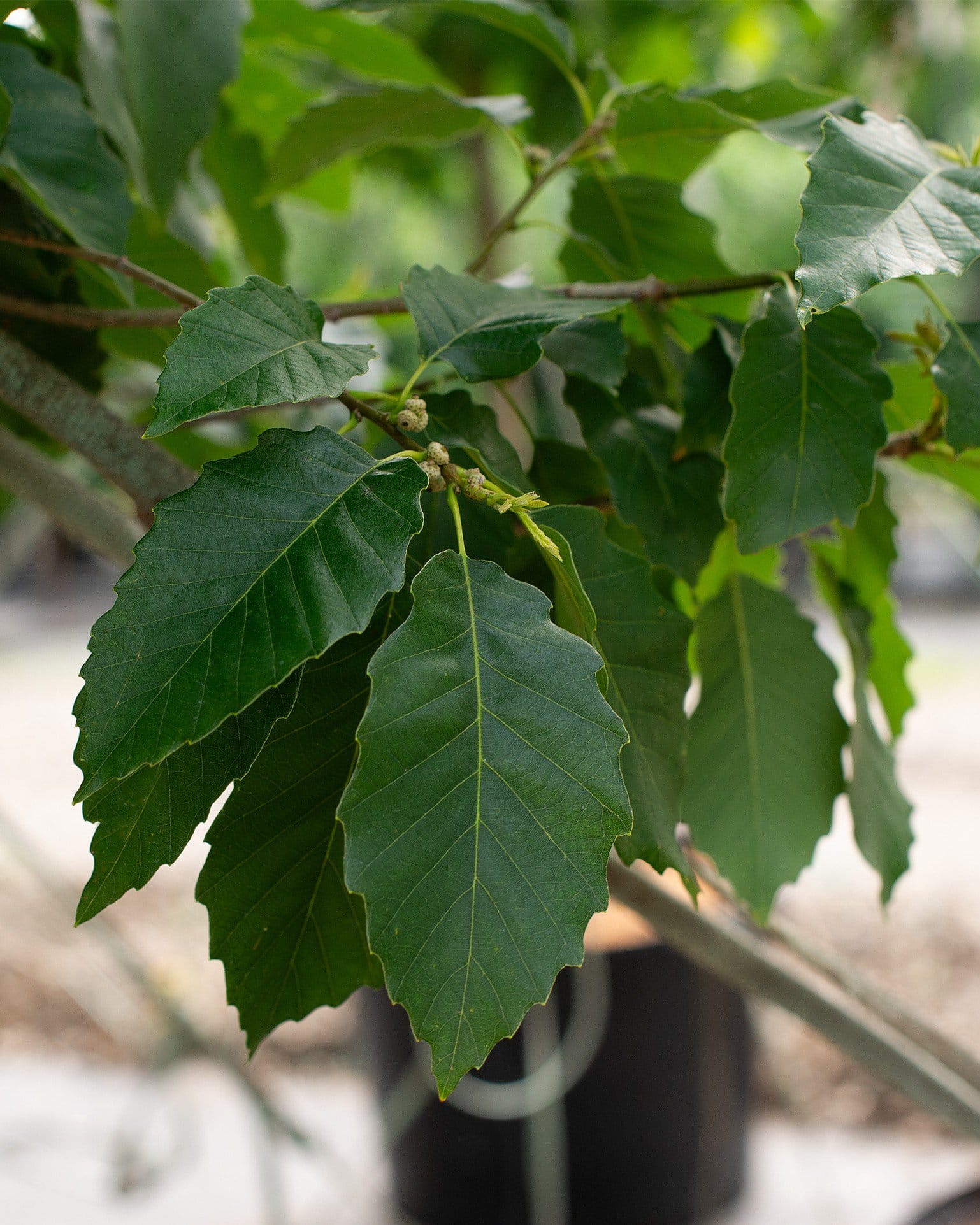
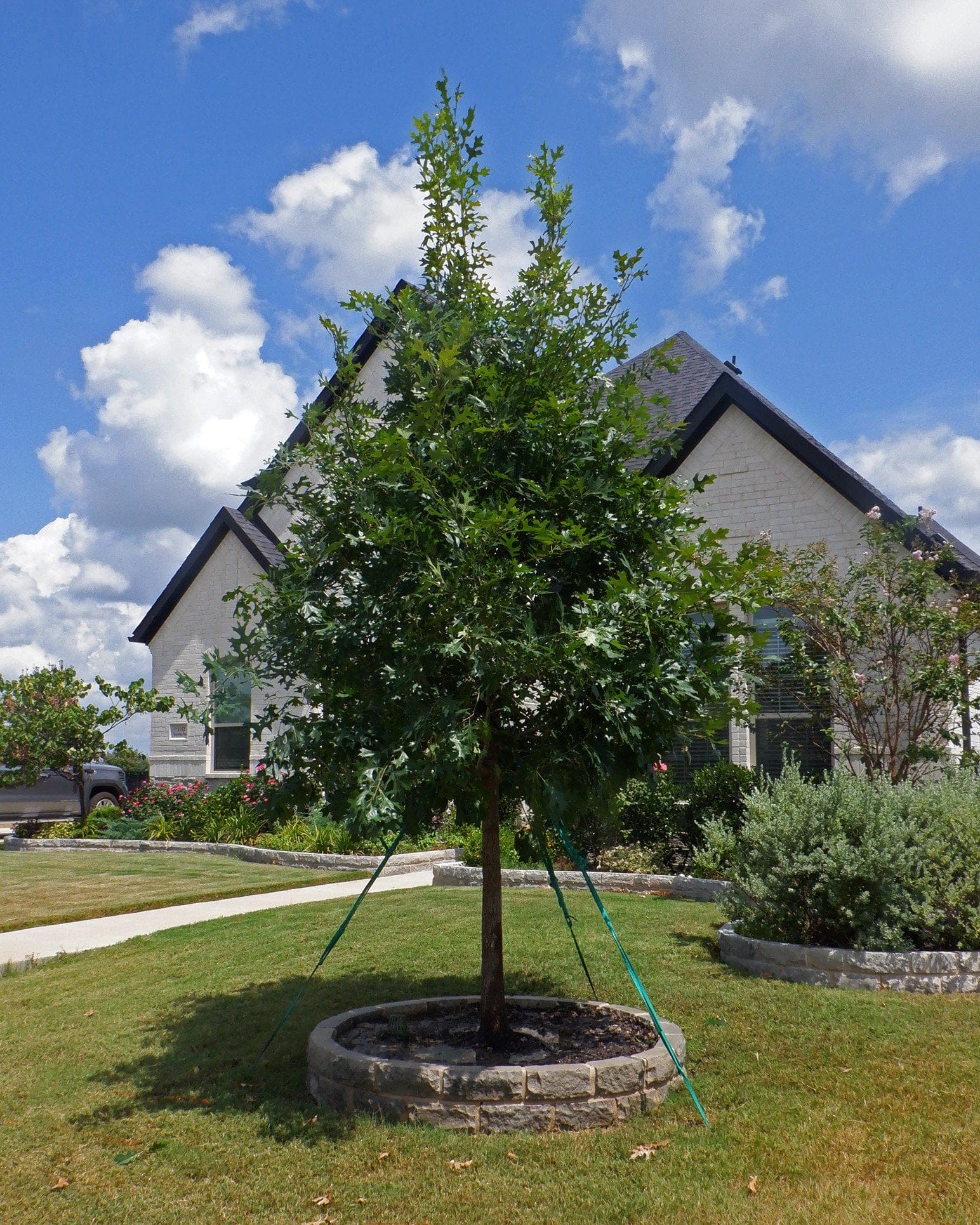
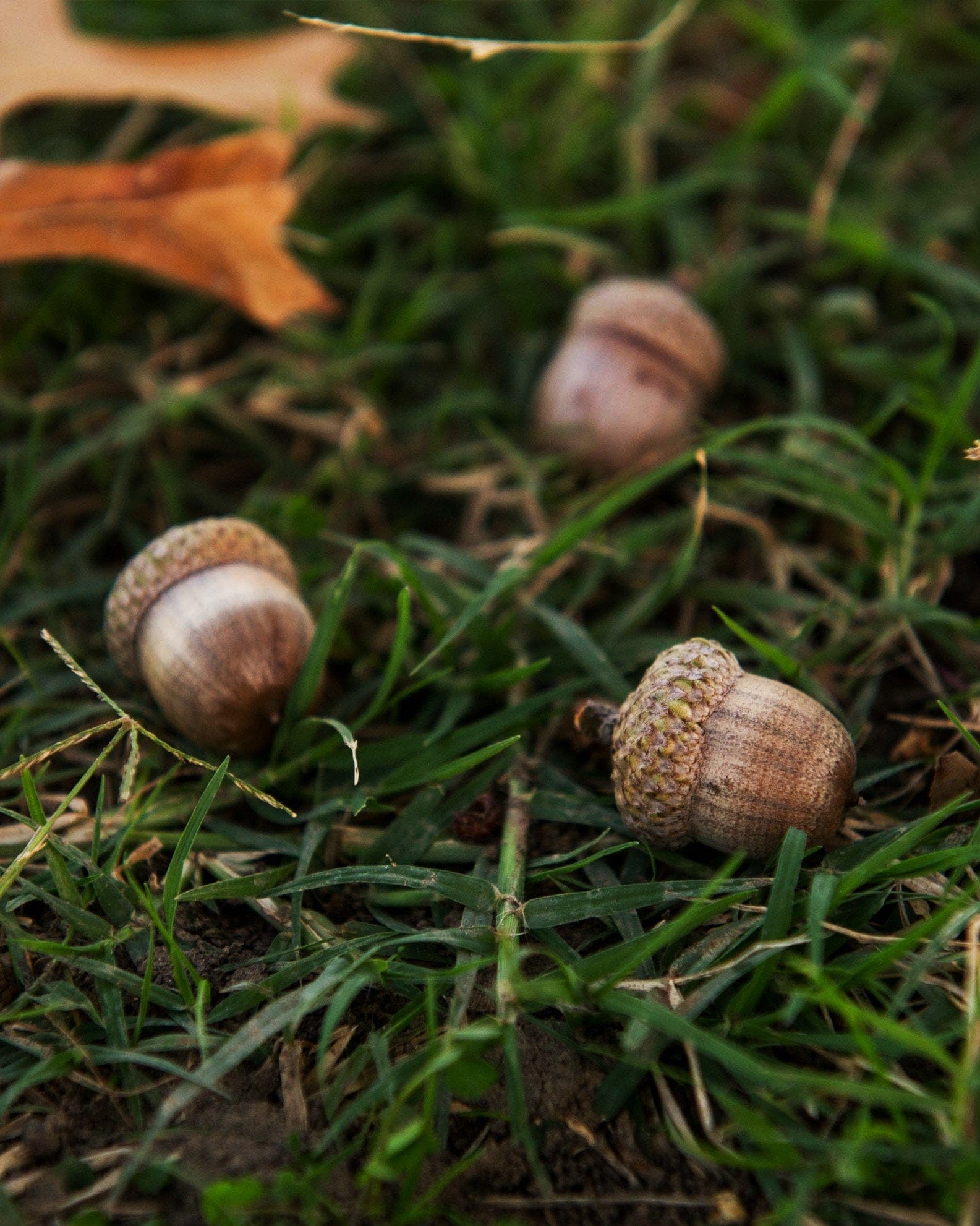
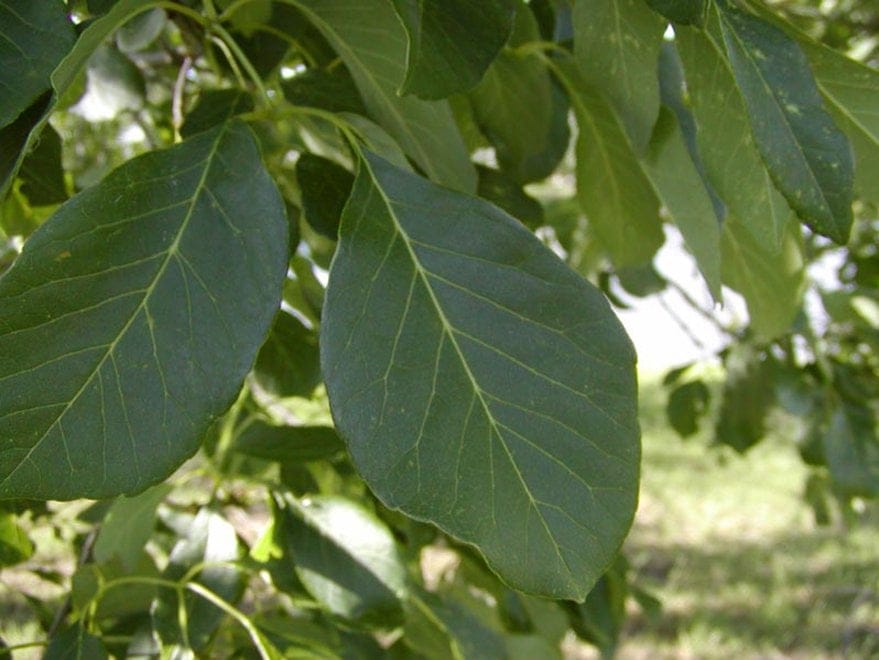
The Shumard Red Oak (Quercus shumardii) and the Texas Red Oak (Quercus buckleyi) are two distinct species of the red oak group, though they are often confused and can even hybridize in areas where their ranges overlap, particularly in Central Texas. The Shumard Red Oak is generally the larger and taller of the two, routinely reaching heights of 80 to 100 feet at maturity with a broad, columnar trunk, and it prefers deeper, moister, well-drained soils and is native to the eastern third of Texas. In contrast, the Texas Red Oak is a smaller tree, typically growing 30 to 50 feet tall, and is better adapted to the rockier, well-drained limestone soils of Central and North Texas. Differentiation can also be seen in their features: Shumard Red Oak leaves are typically larger with deeper sinuses (indentations between the lobes), and its acorns are usually larger with a shallow, saucer-shaped cup covering about a quarter of the nut. The Texas Red Oak leaves are generally smaller, often with five to seven lobes and sometimes a slightly smaller acorn with a more goblet- or cup-shaped cup covering about a third to half of the nut. Both species are prized for their brilliant red-to-orange fall foliage.
Special Features
You might also like
Shumard Red Oak Multi-Trunk
Maturity: 60' H x 50' W
Bur Oak
Maturity: 60' H x 50' W
Chinquapin Oak
Maturity: 50' H x 40' W
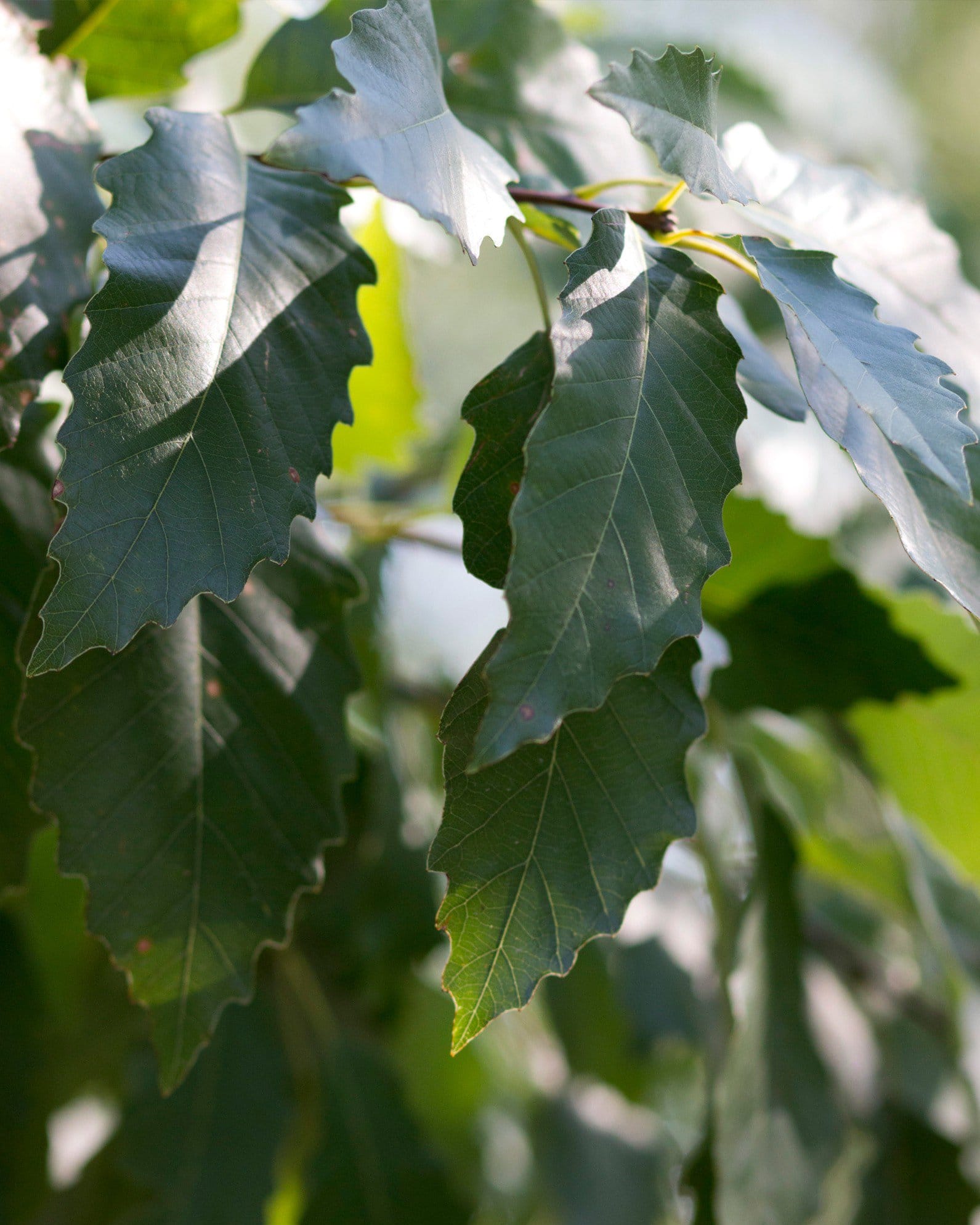
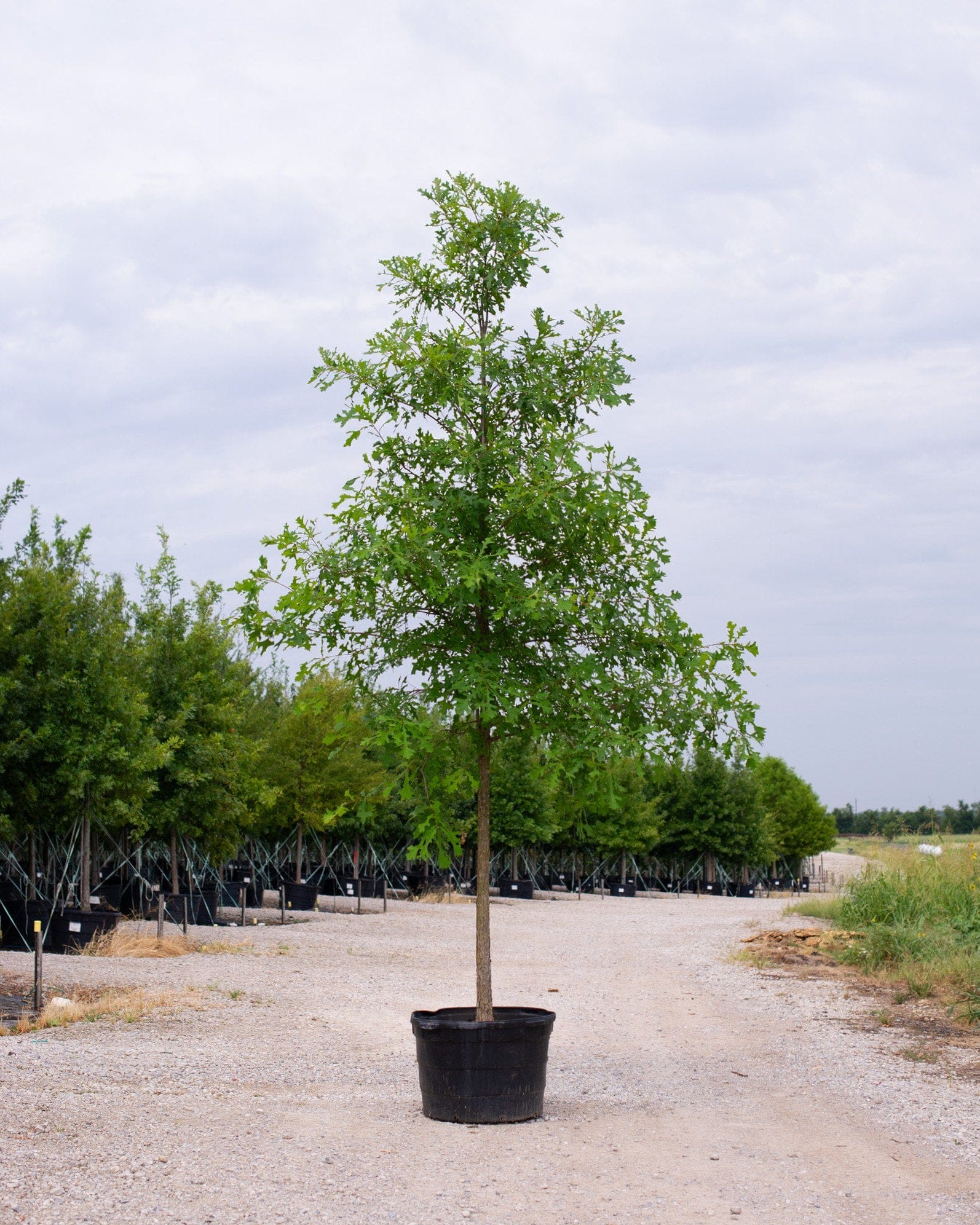
Overcup Oak
Maturity: 45' H x 35' W
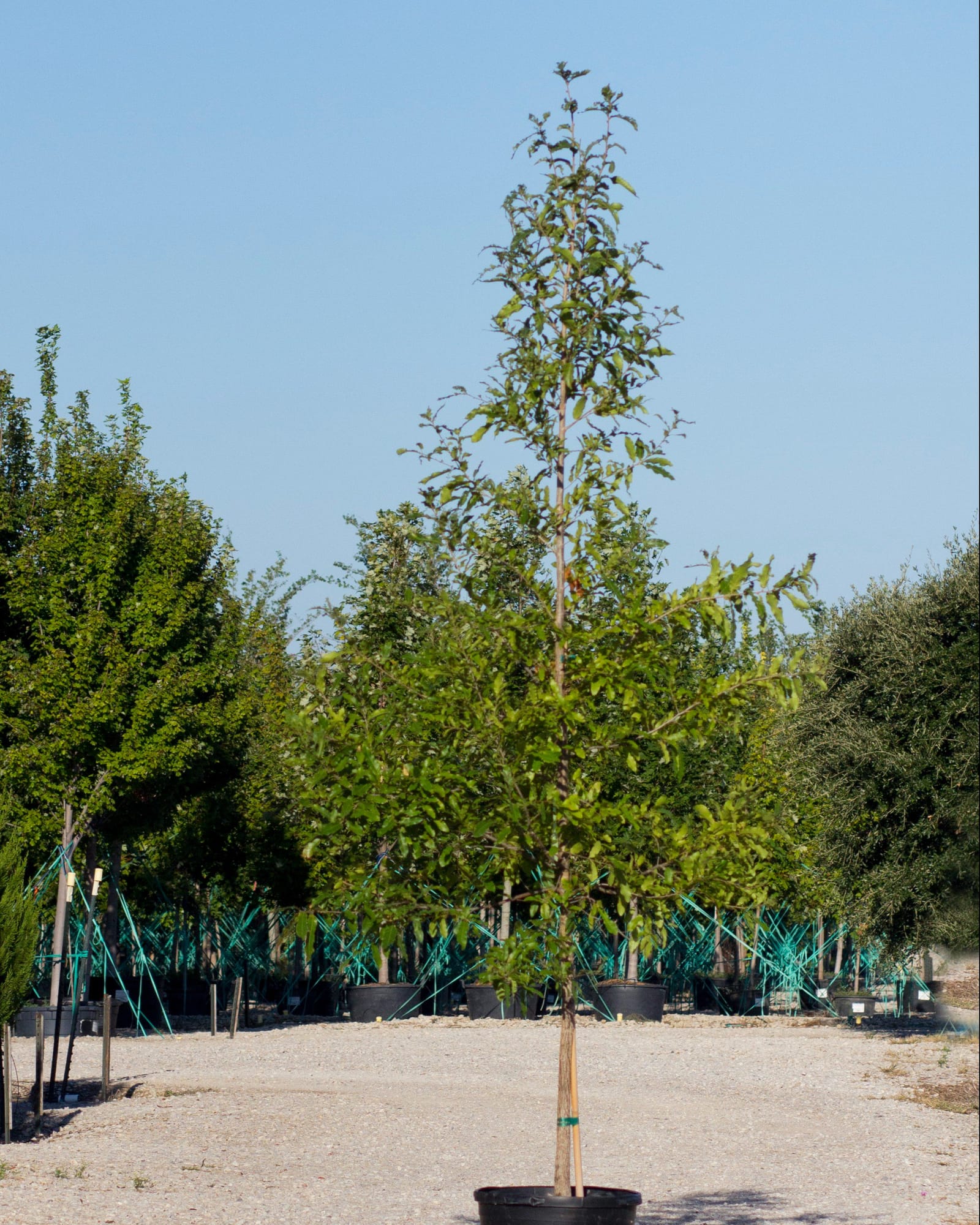
Sawtooth Oak
Maturity: 45' H x 35' W
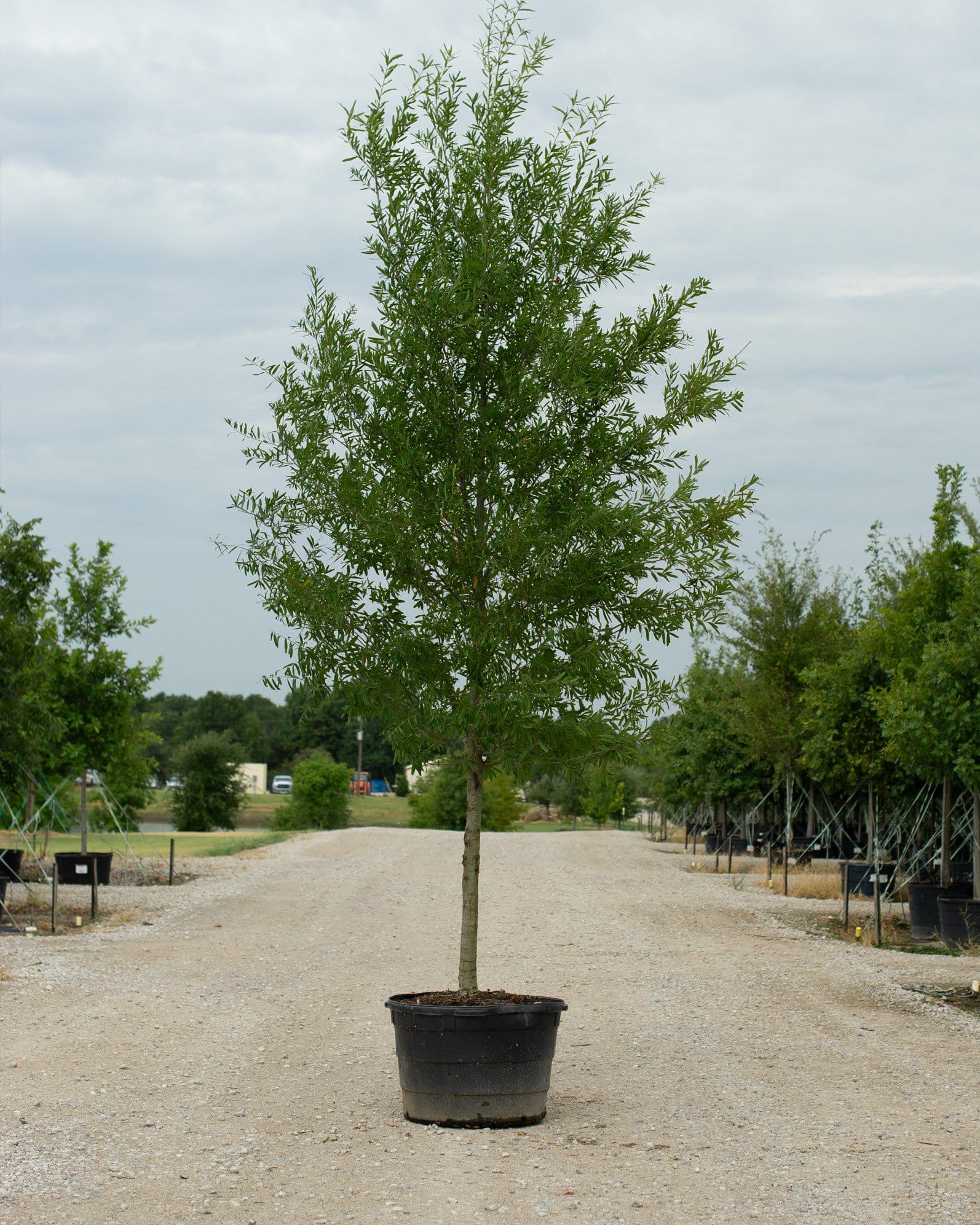
Willow Oak
Maturity: 60' H x 50' W
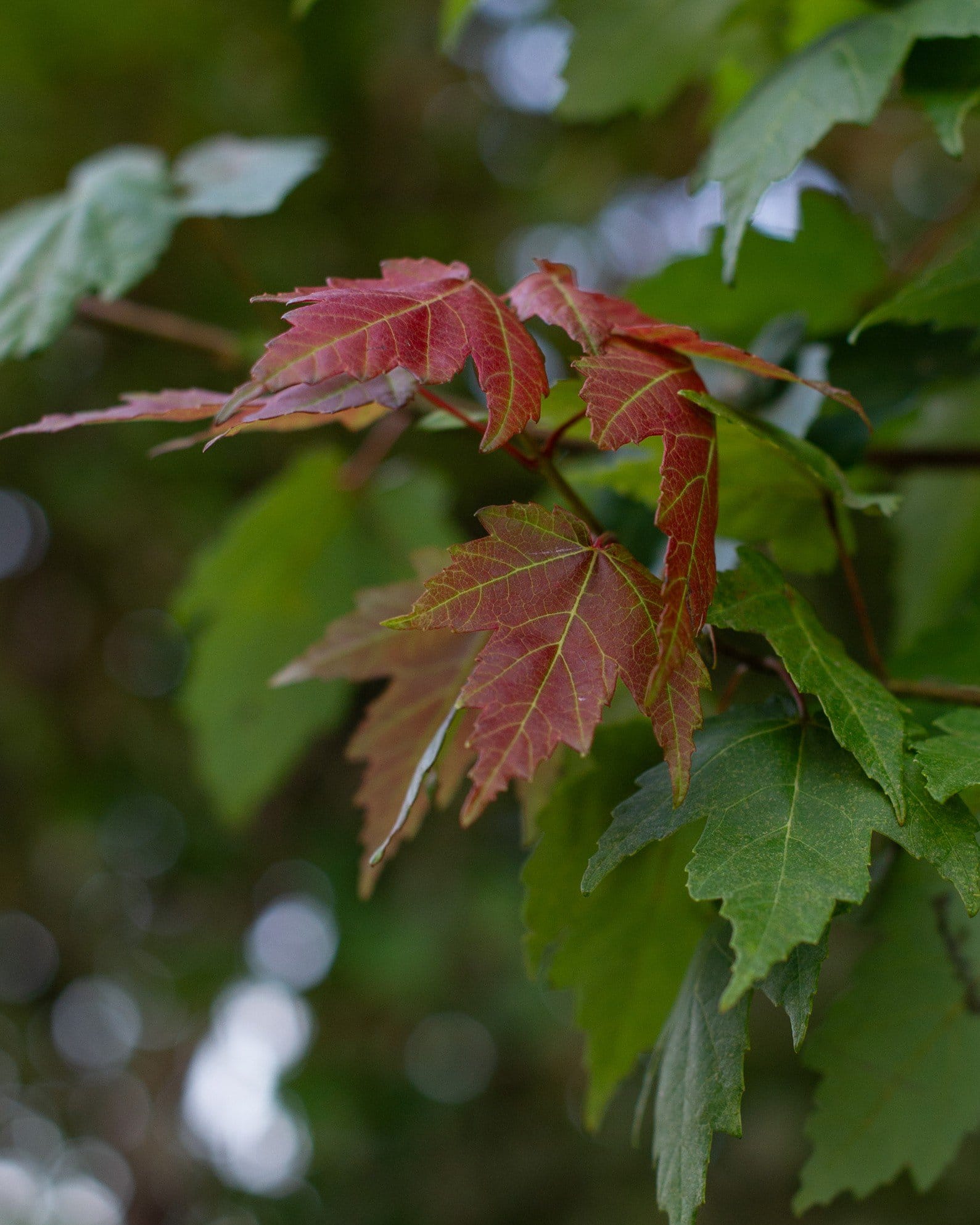
Autumn Flame Maple
Maturity: 45' H x 35' W
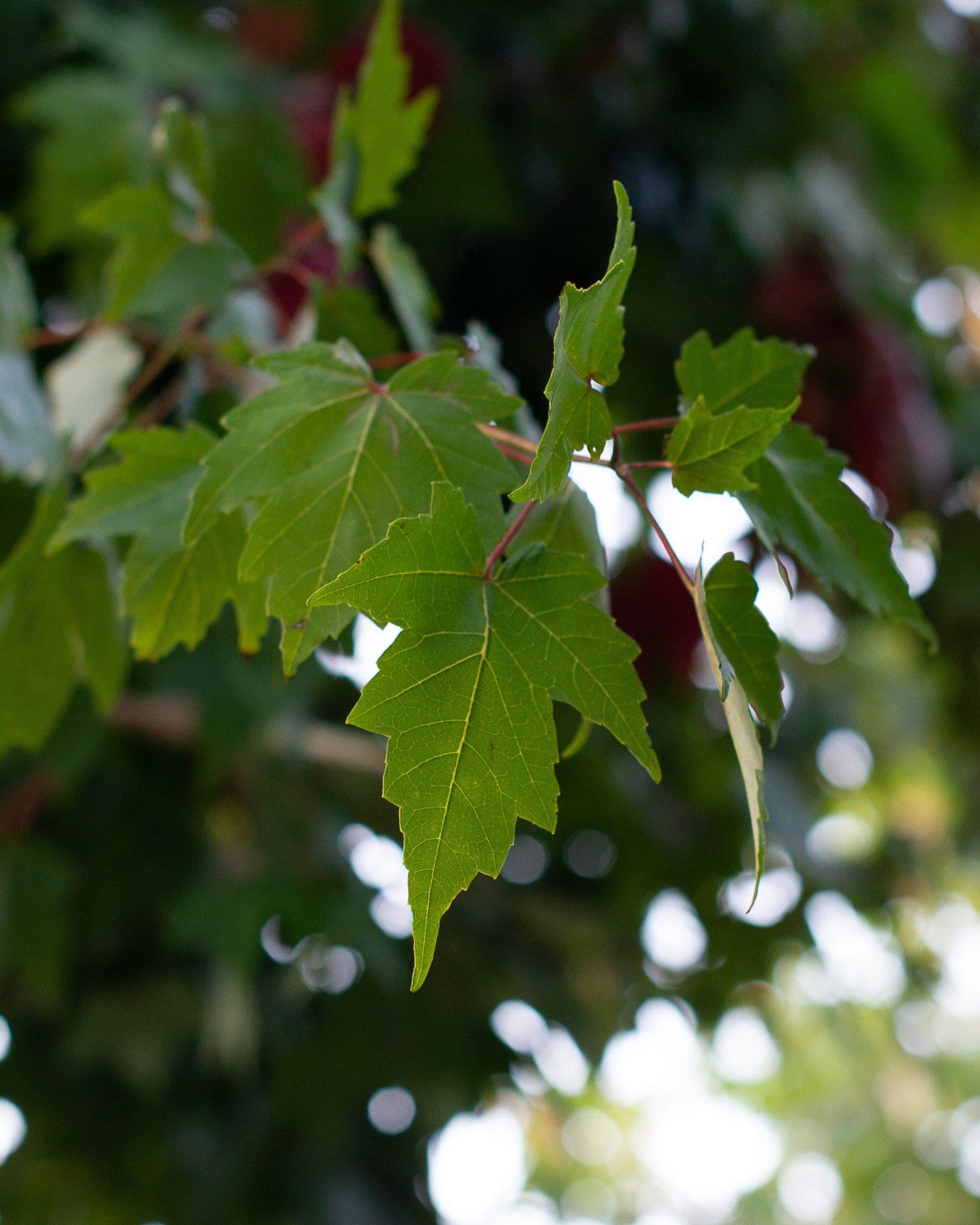
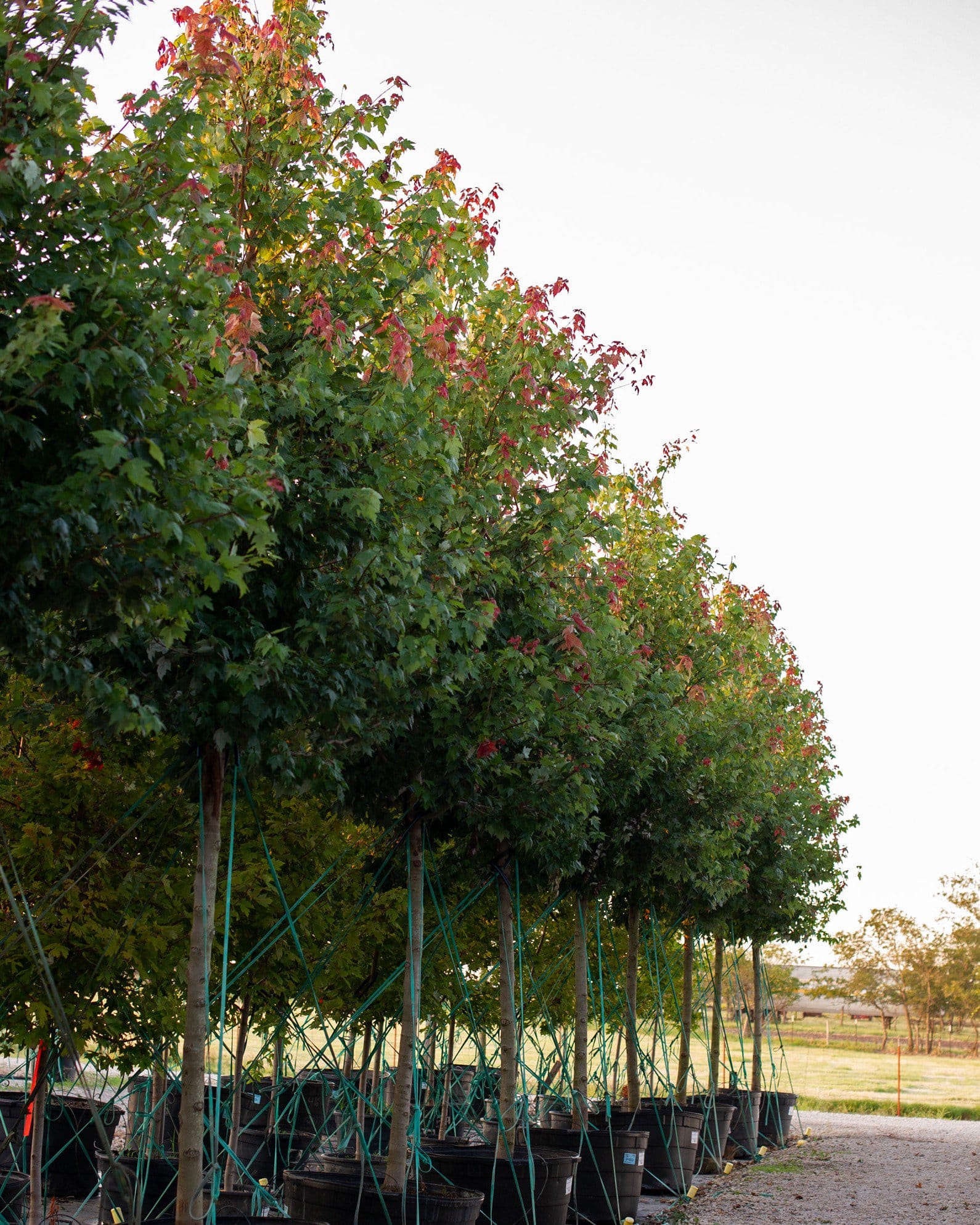
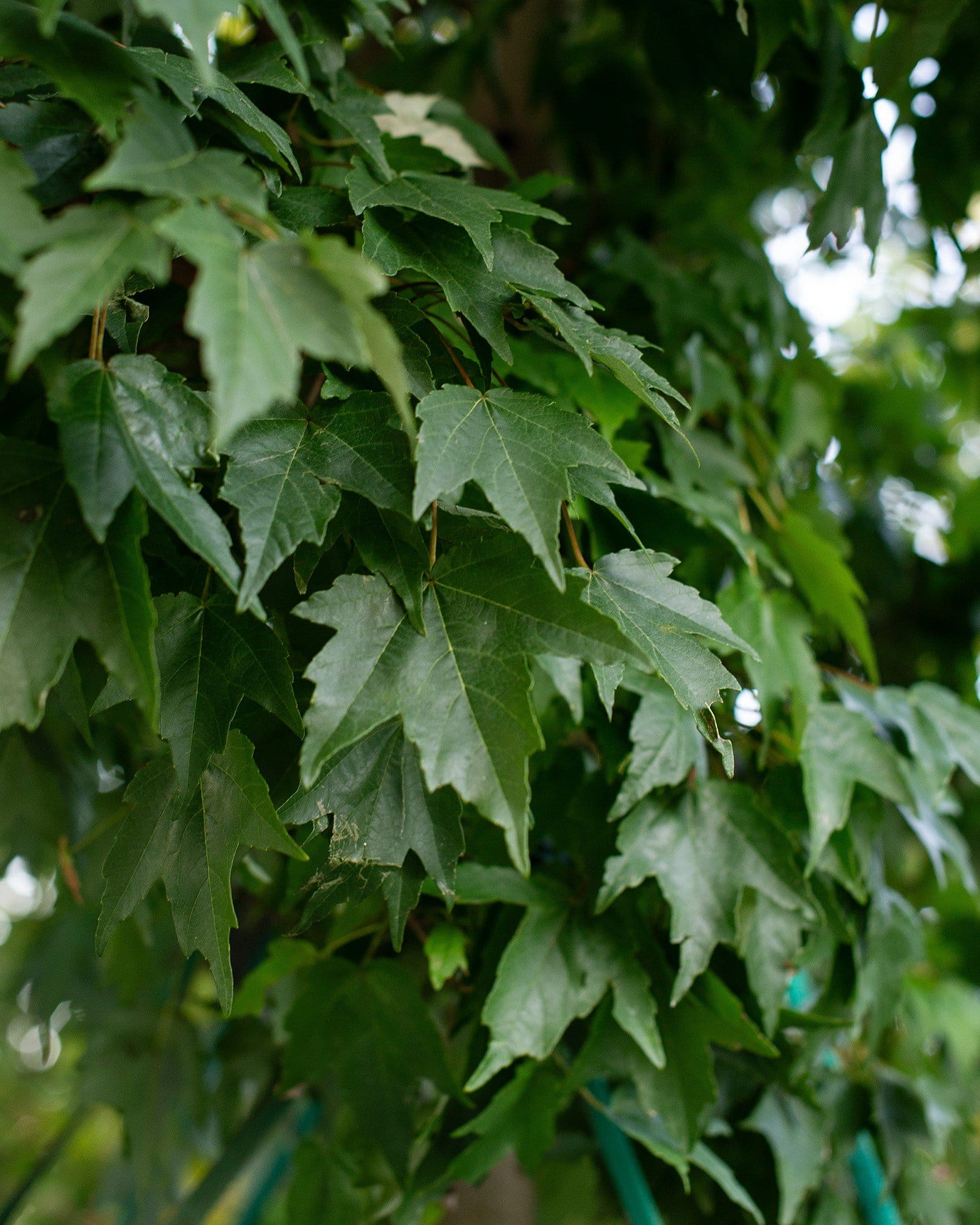
Cherokee Sweet Gum
Maturity: 45' H x 30' W
Shumard Red Oak
Maturity: 60' H x 50' W
Texas Ash
Maturity: 45' H x 35' W
Bald Cypress
Maturity: 60' H x 40' W
Caddo Pecan
Maturity: 60' H x 40' W
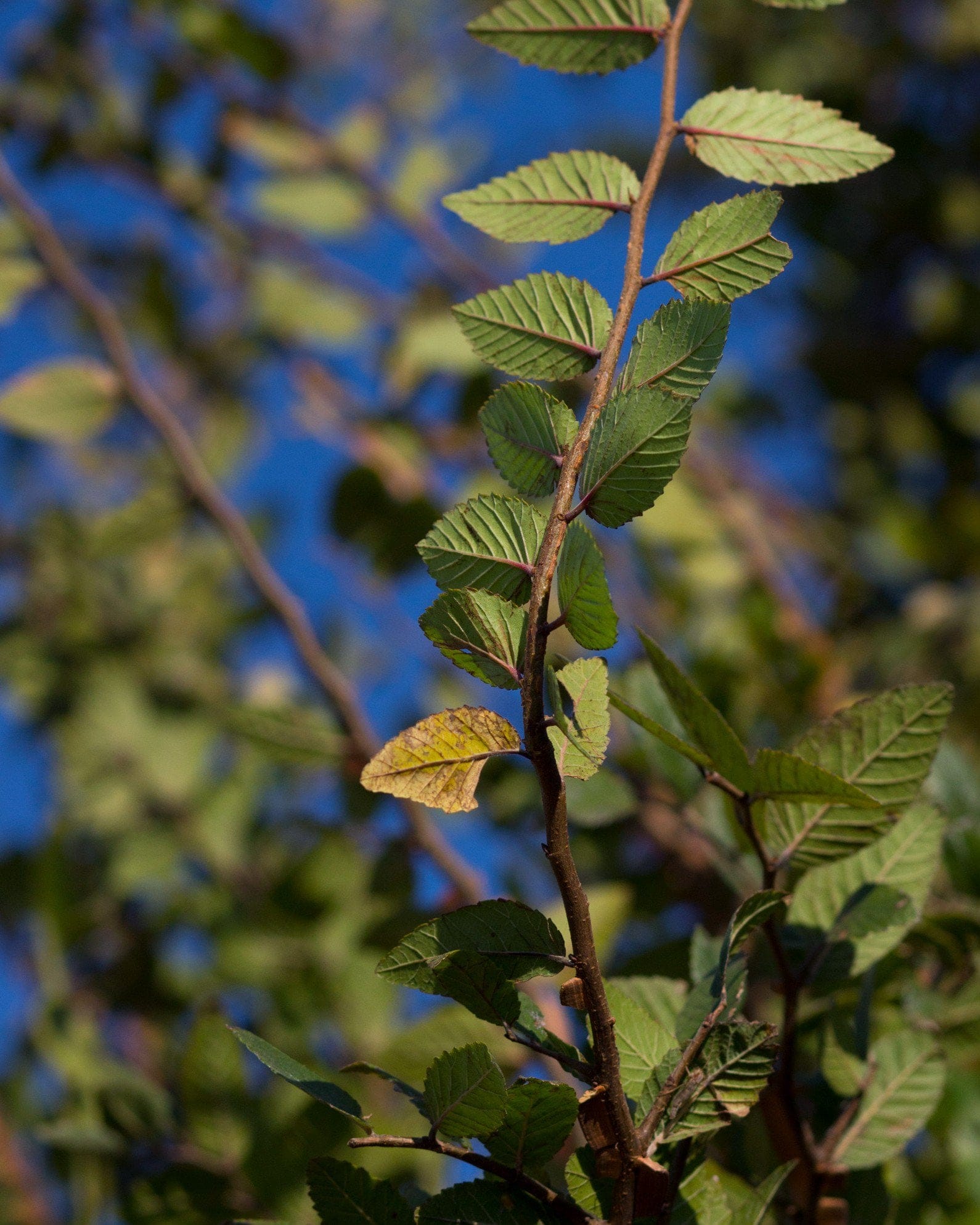
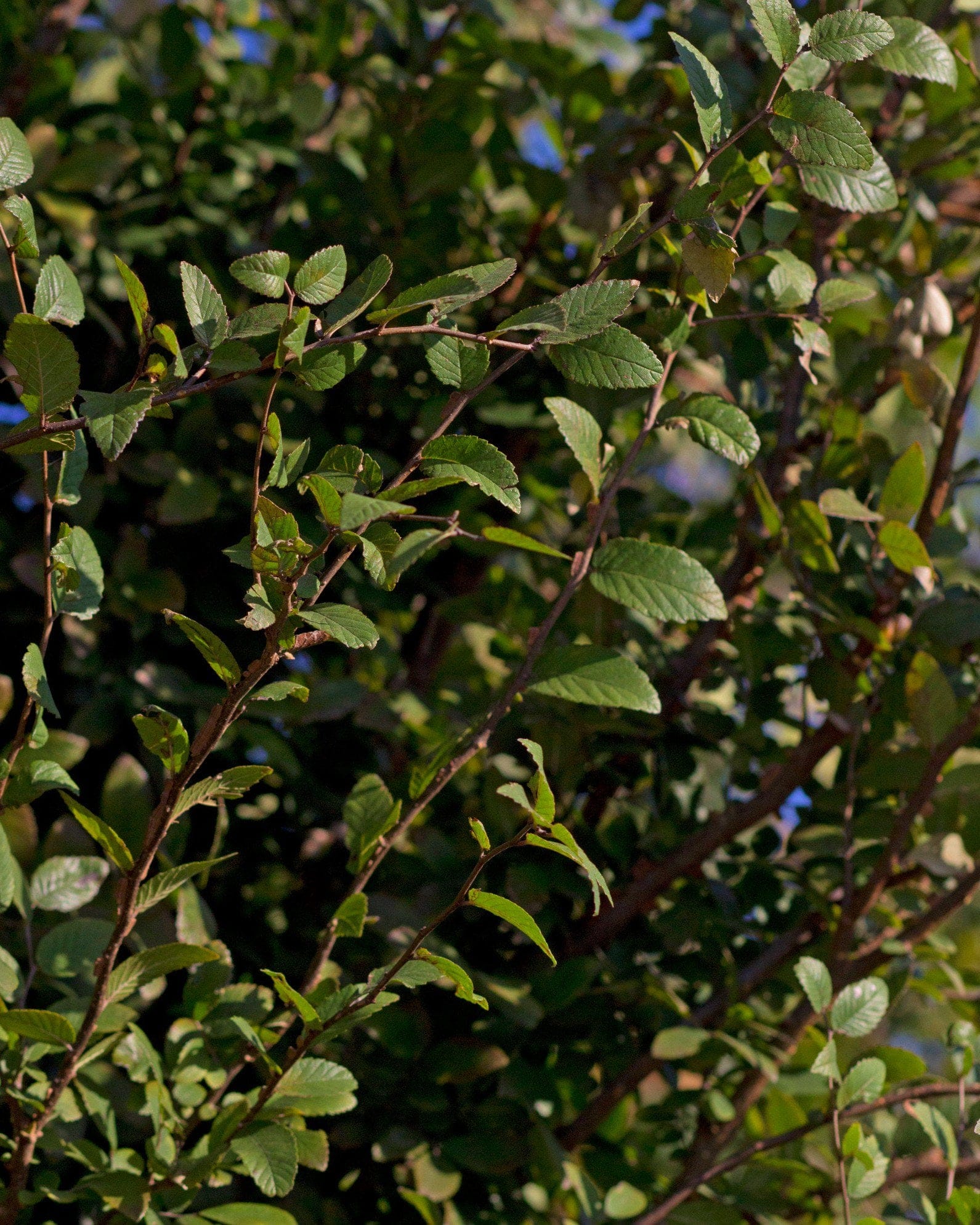
Cedar Elm
Maturity: 50' H x 35' W
Cedar Elm Pioneer
Maturity: 50' H x 30' W
Desirable Pecan
Maturity: 60' H x 40' W
Compare Similar Plants
Texas Red Oak This plant | ||
|---|---|---|
| Scientific Name | Quercus buckleyi | Quercus shumardii |
| Size at Maturity | 45' H x 35' W | 60' H x 50' W |
| Leaf Retention | Deciduous | Deciduous |
| Fall Color | Red | Red |
| Sizes Available | 10, 30, 65 gal | 15 gal |

Our 1-Year Planting Guarantee
We take pride in our plants and installation services. If any plants or trees installed by Treeland fail to thrive within the first year, we'll provide a replacement credit in accordance with our guarantee program.
Learn More About Our Guarantee