
Bellini Raspberry Crape Myrtle
Lagerstroemia indica 'Conlagras'Local DFW Delivery Only
Product Details
Bellini Raspberry Crape Myrtle
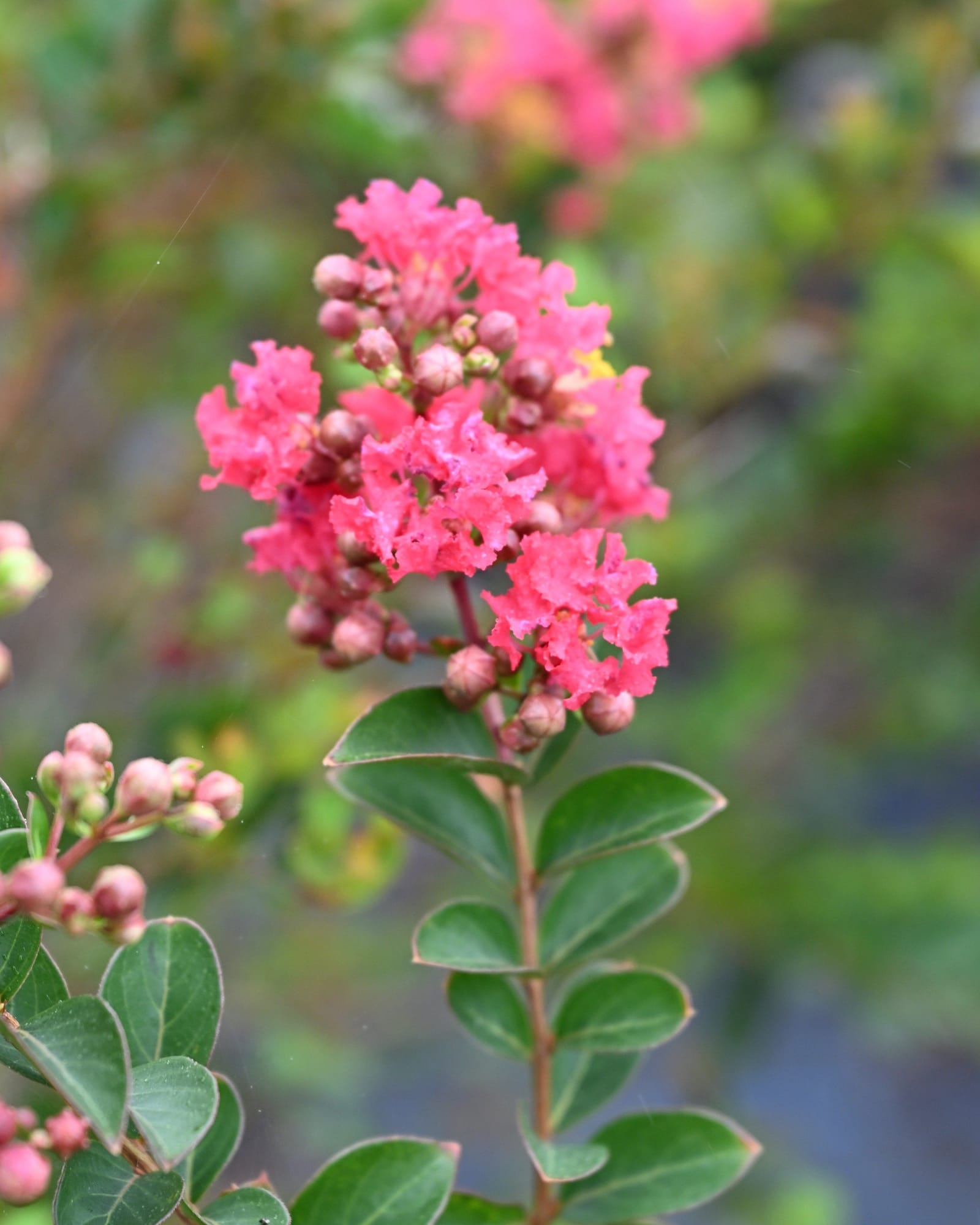
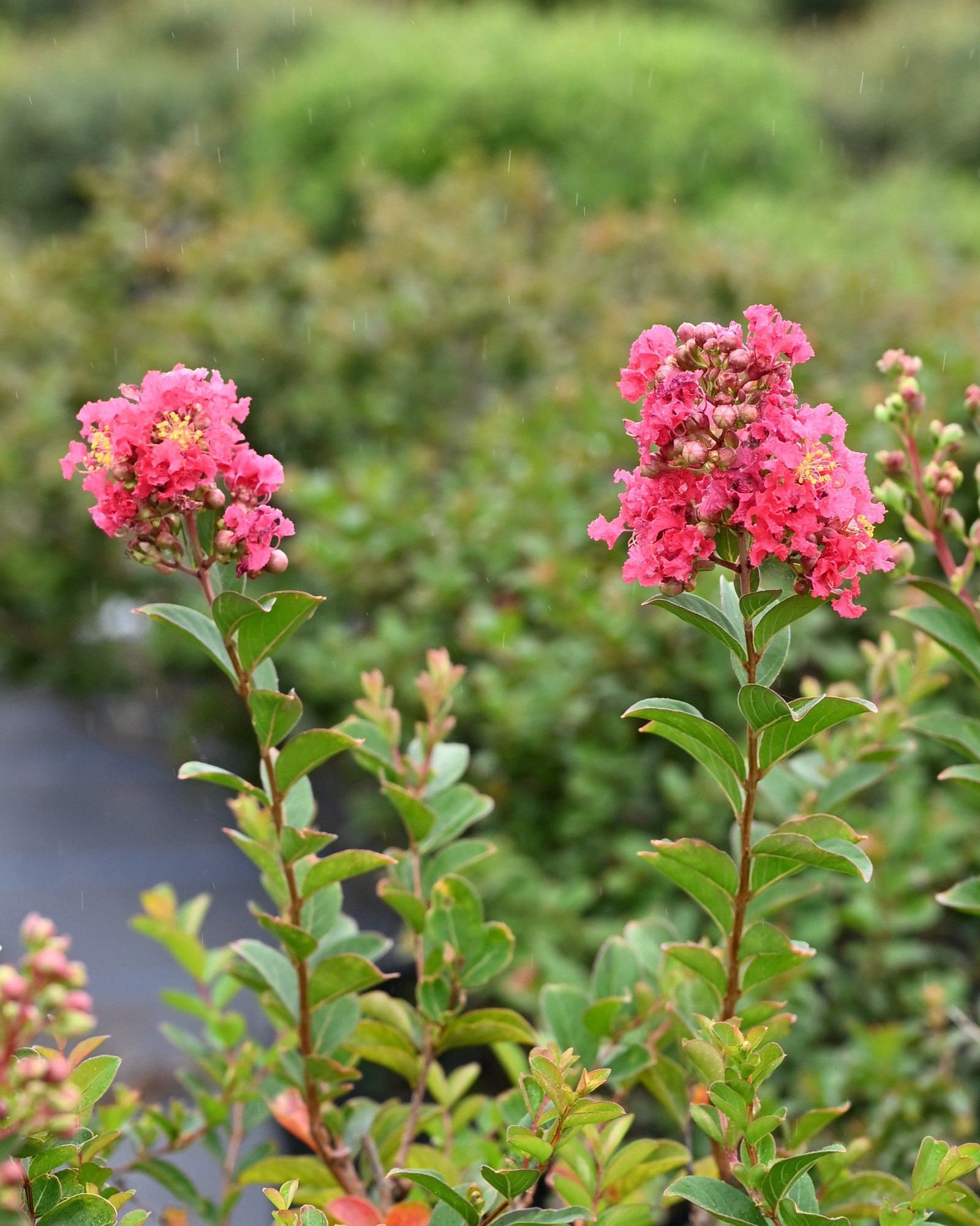
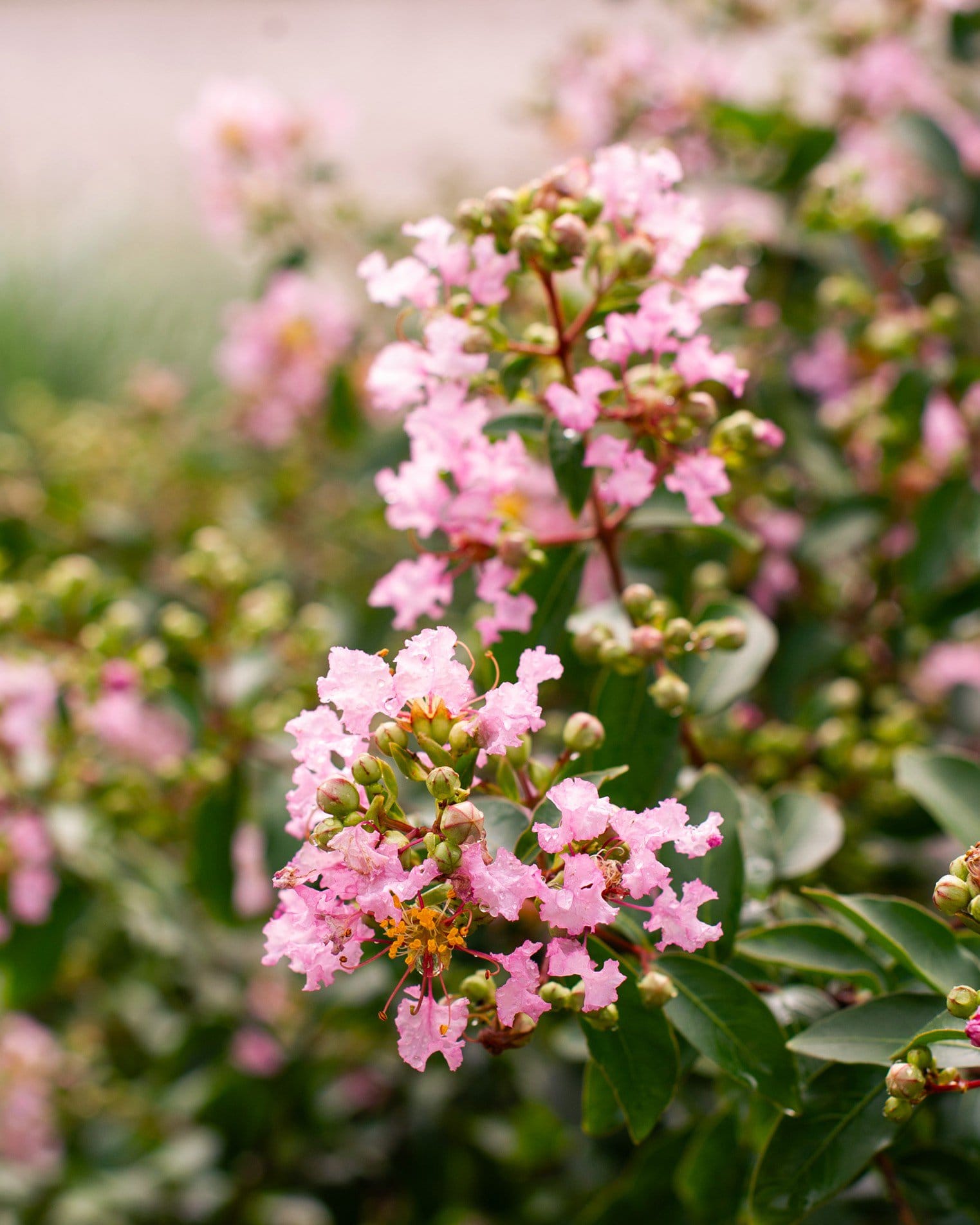
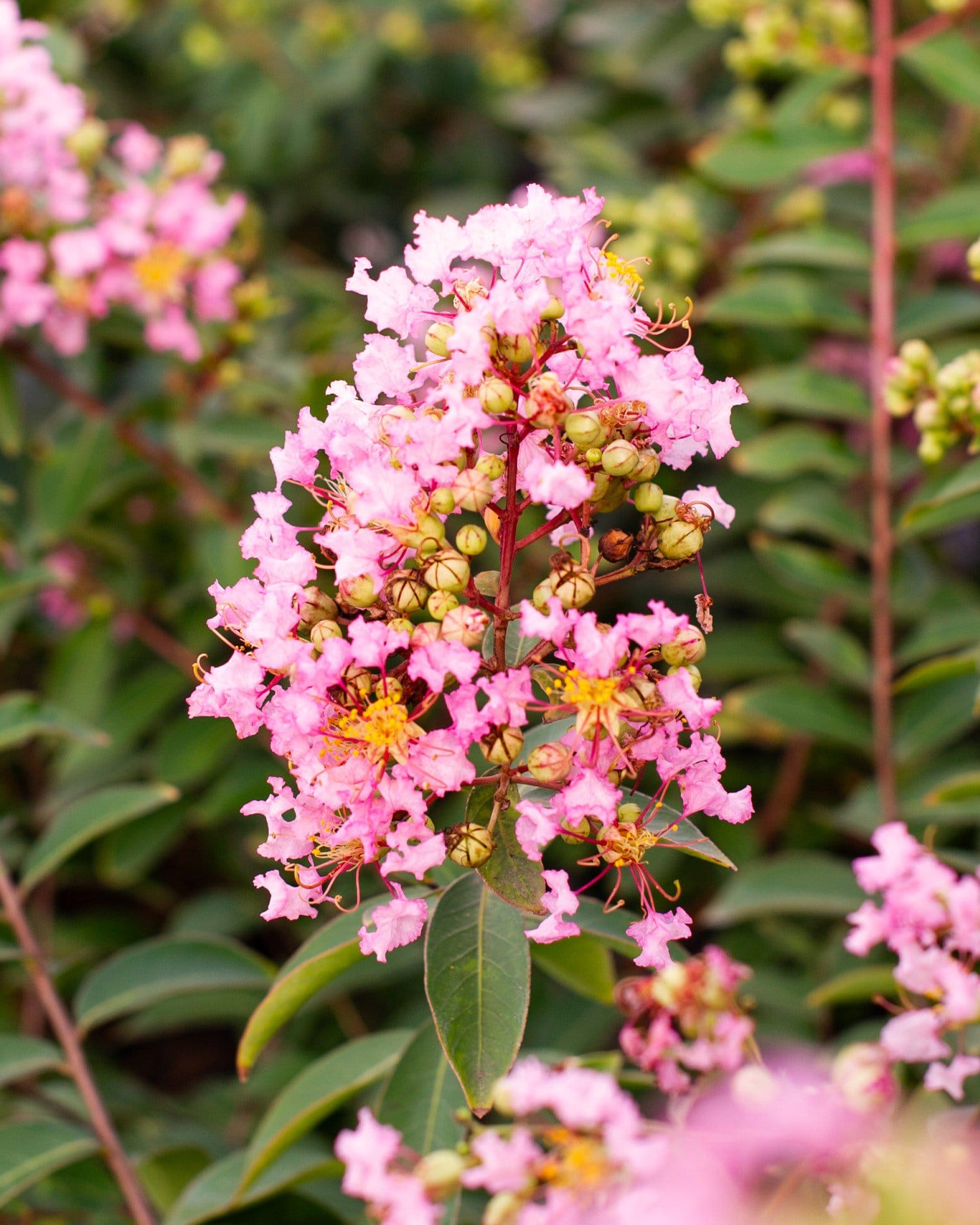
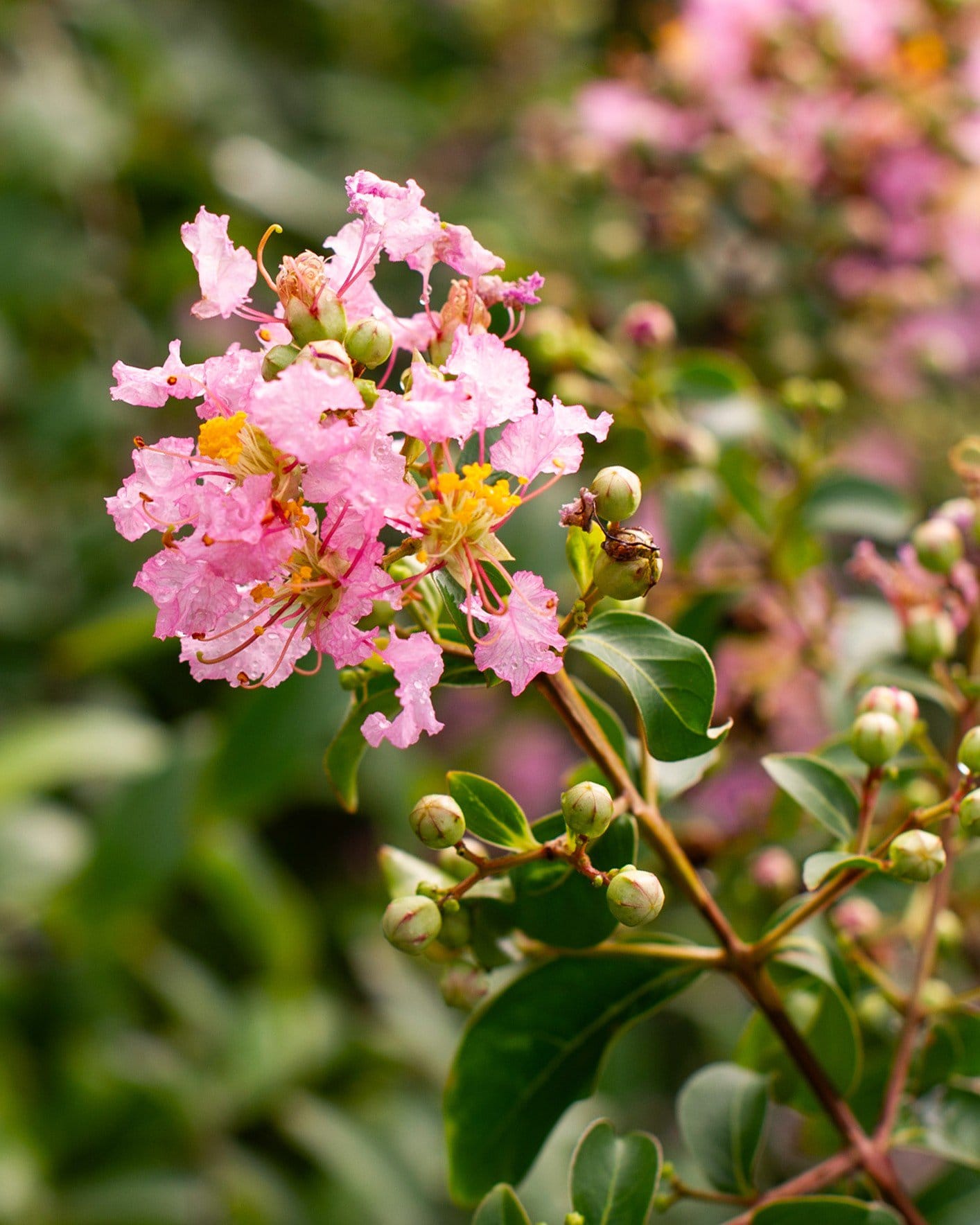
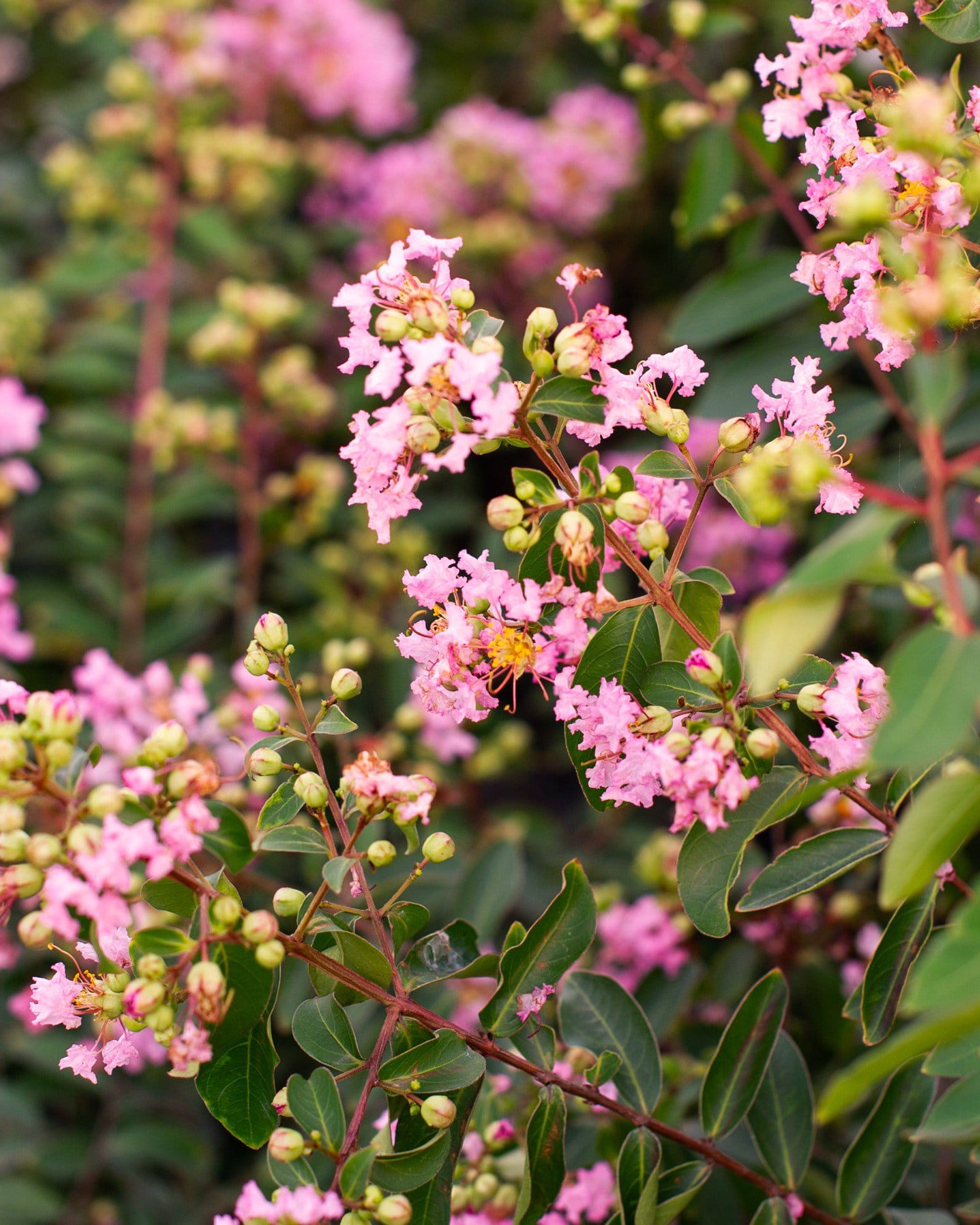
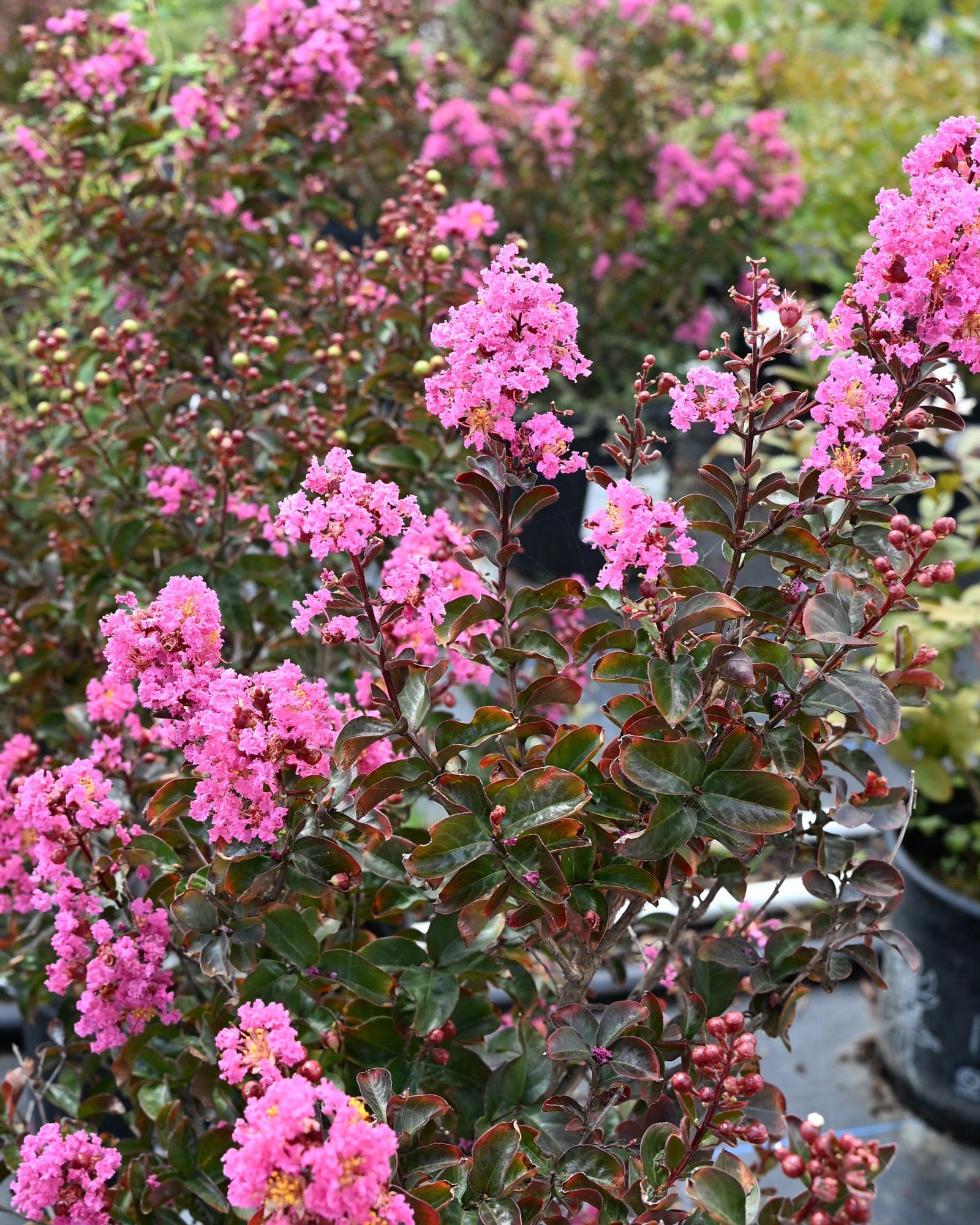
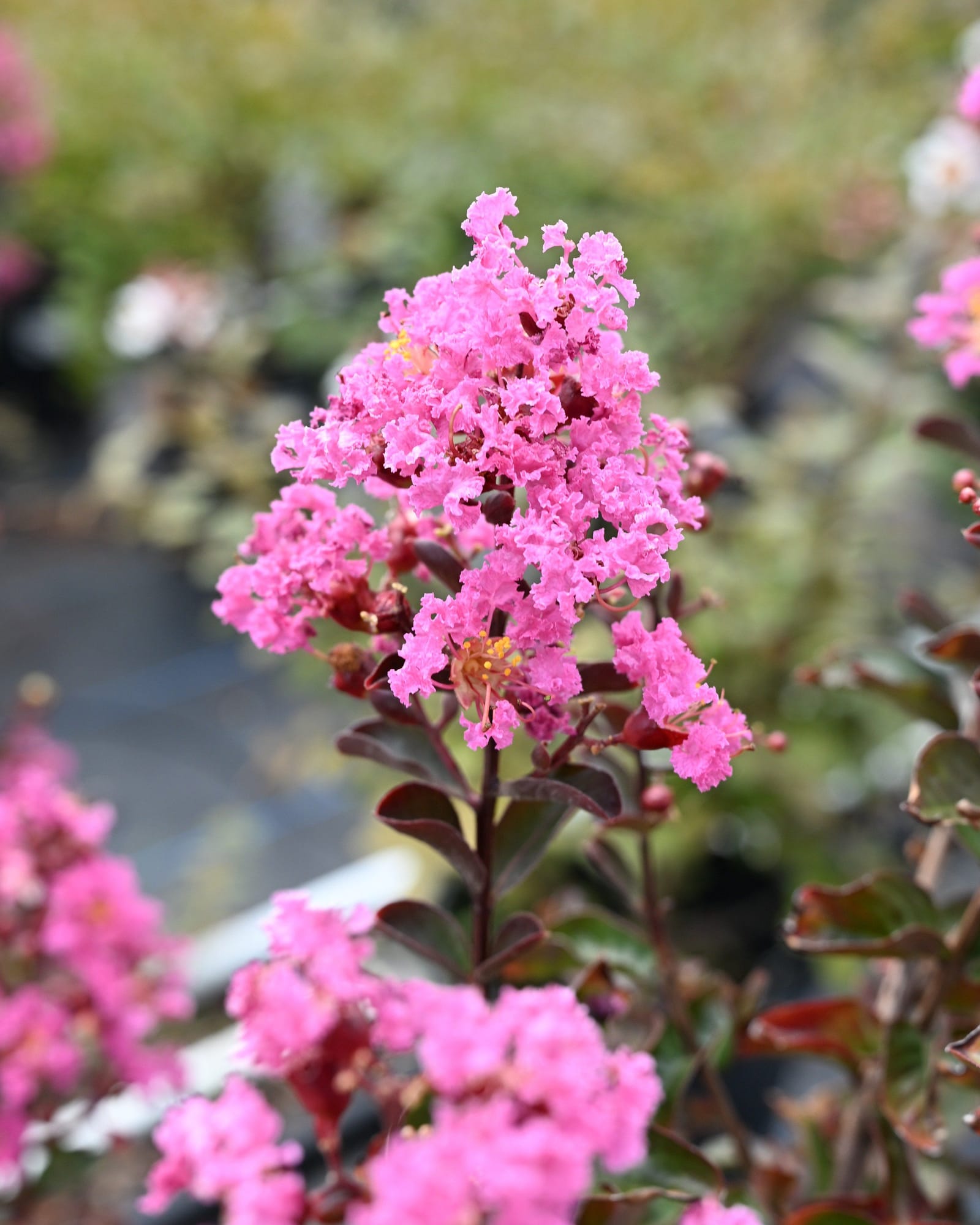
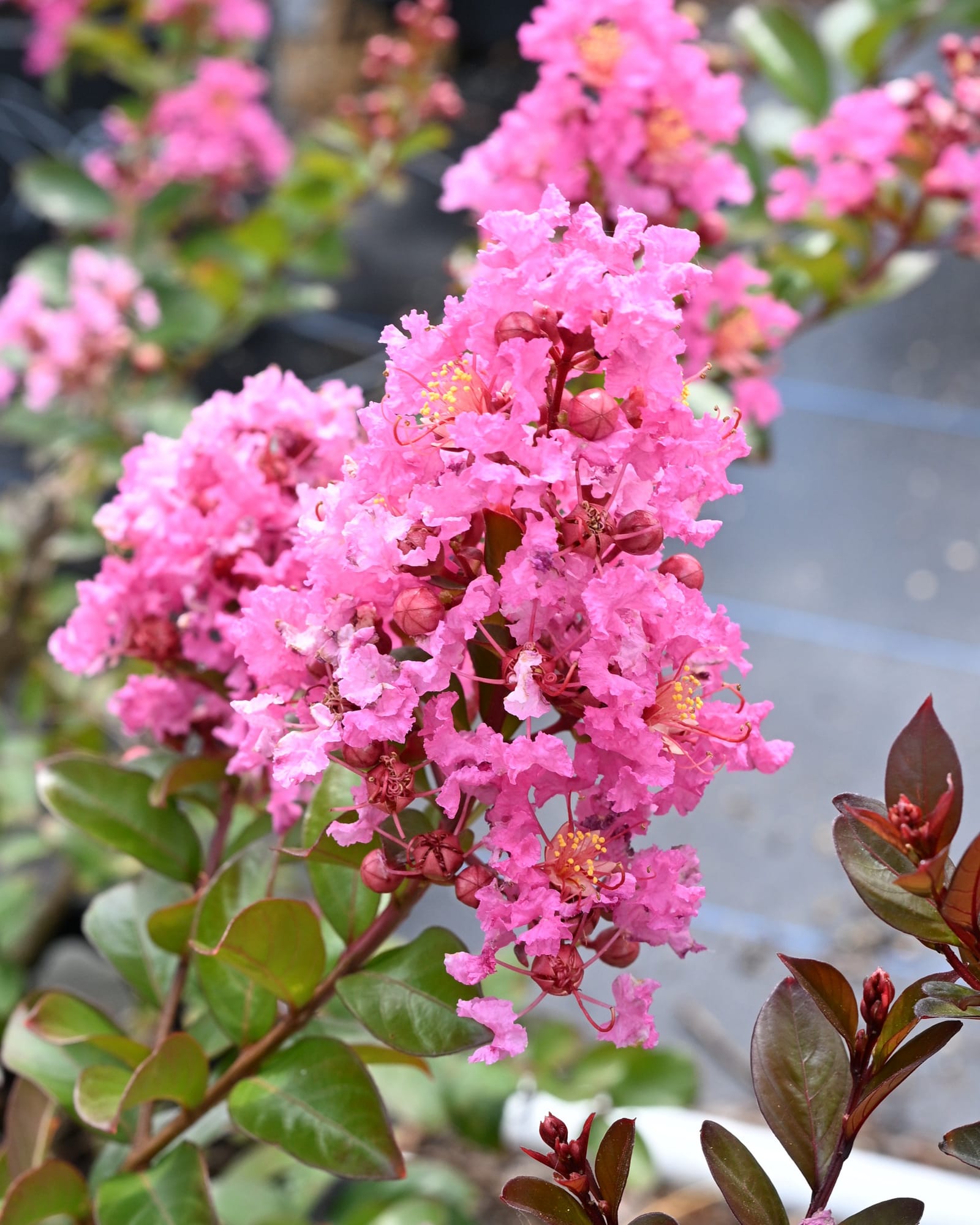
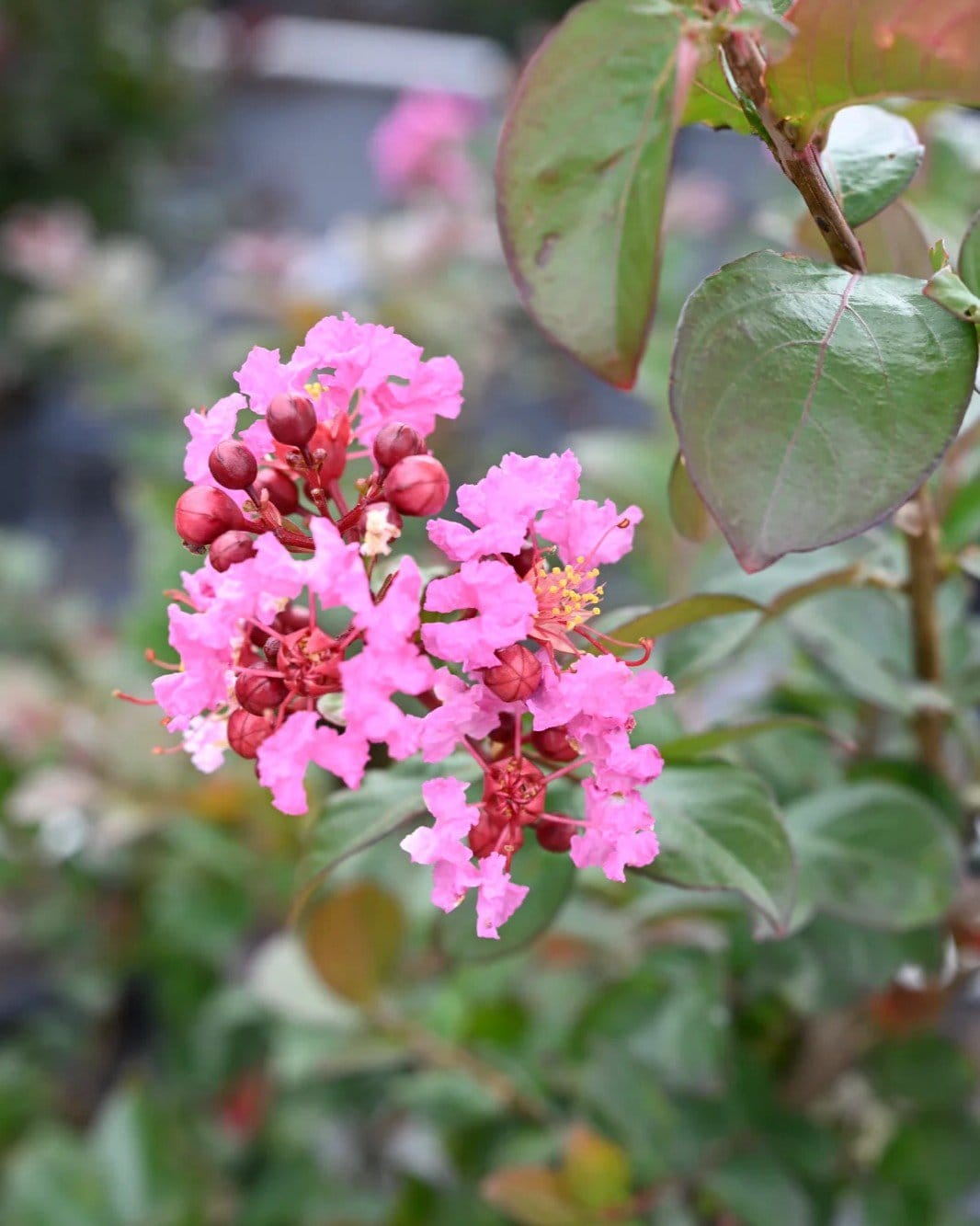
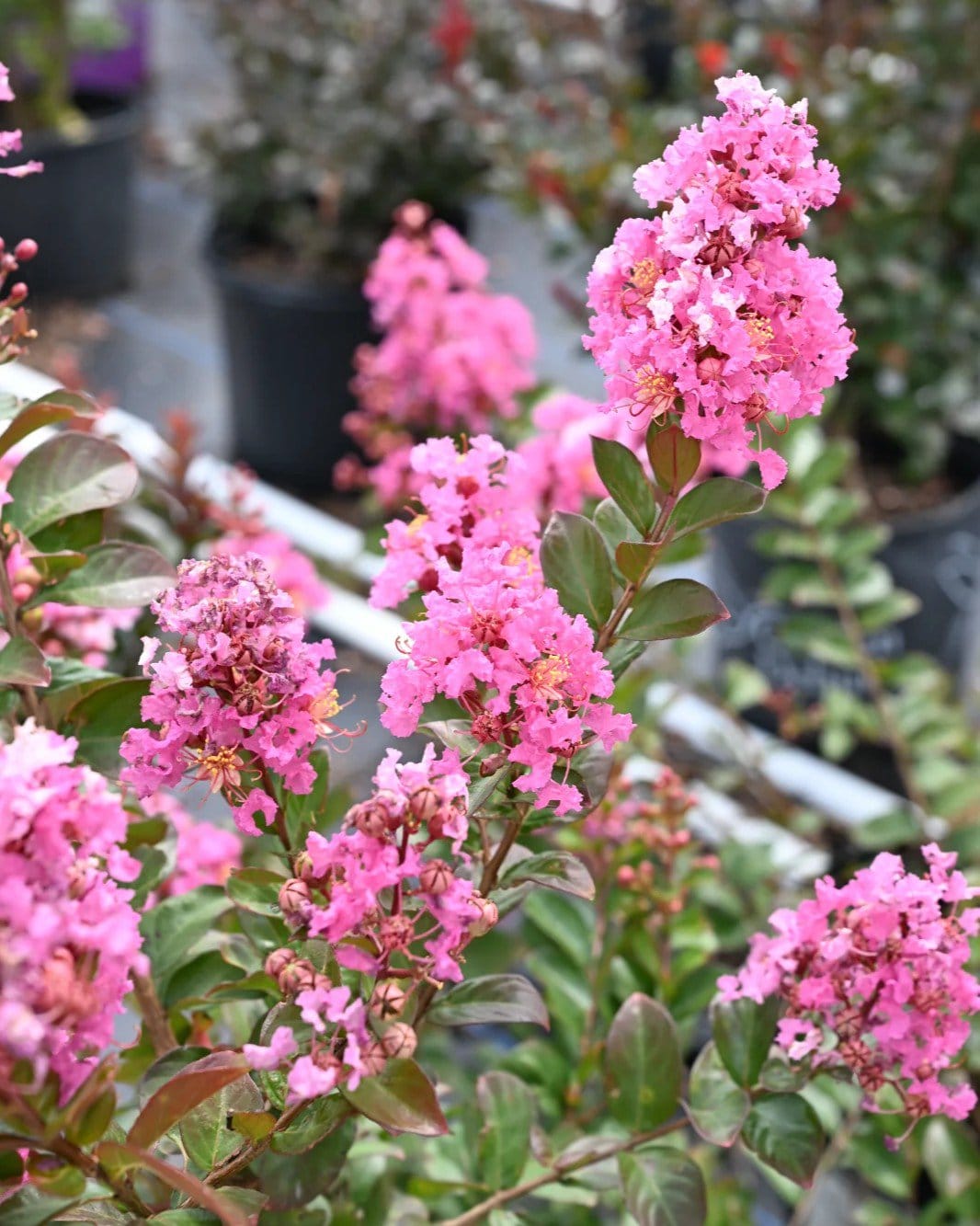
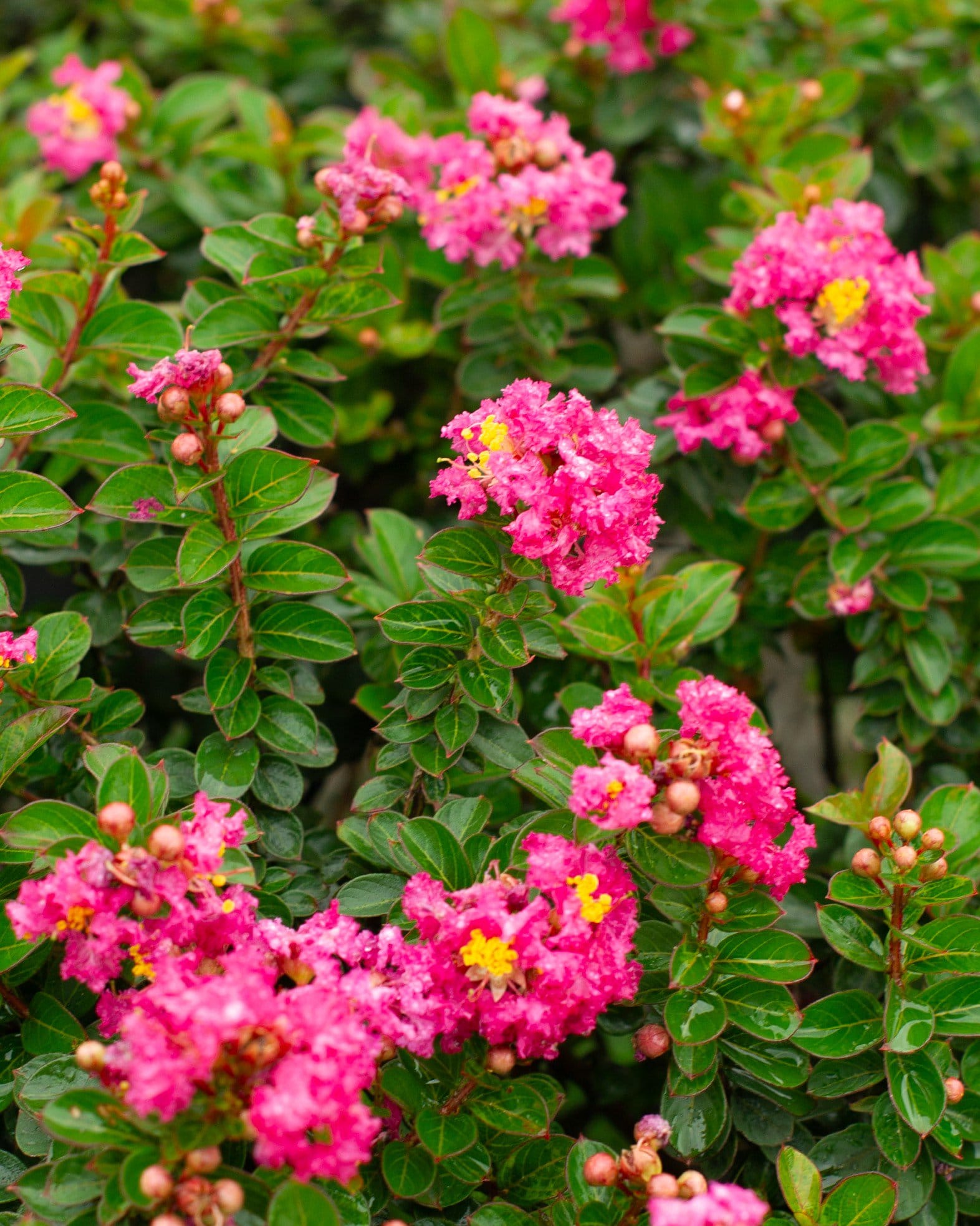
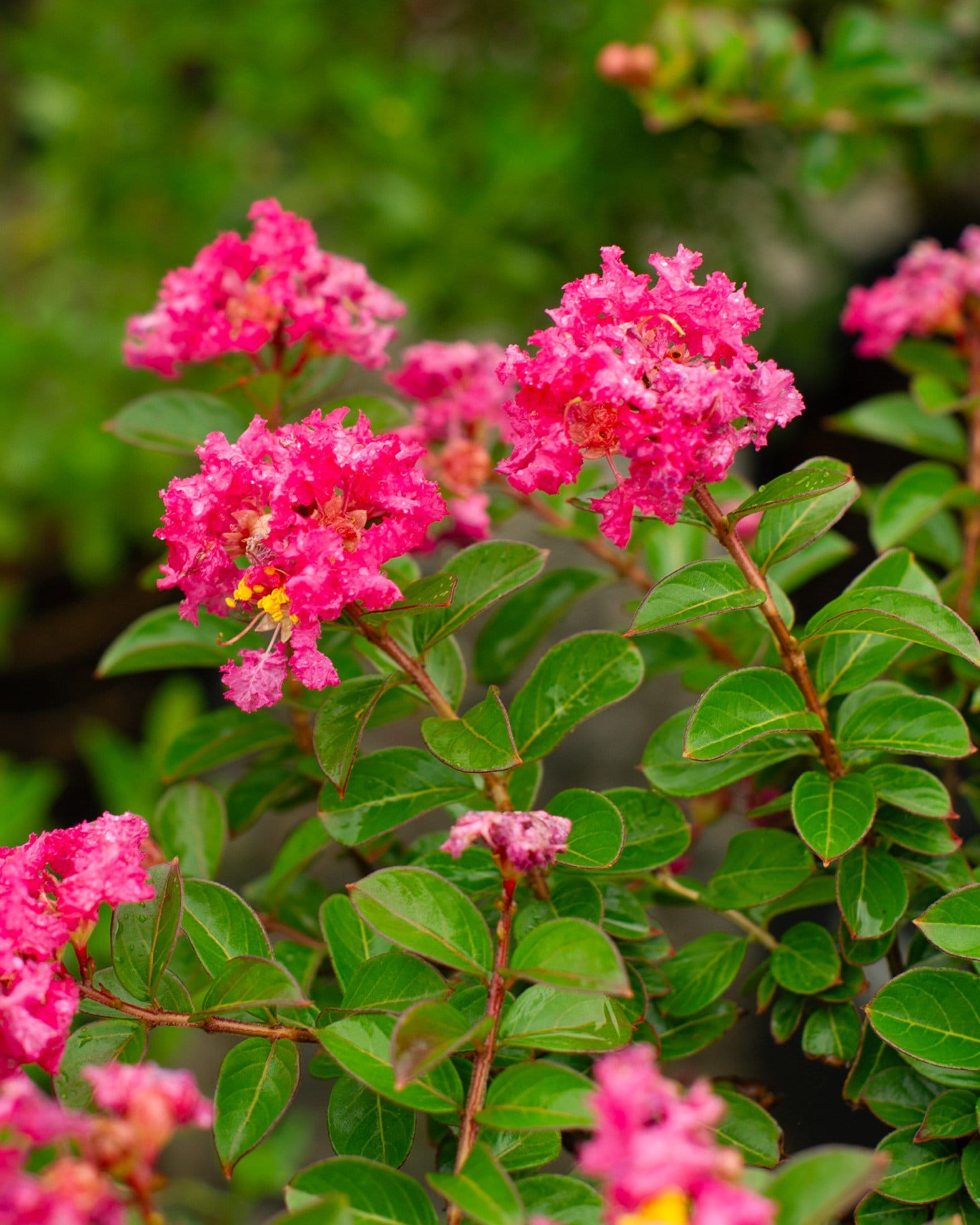
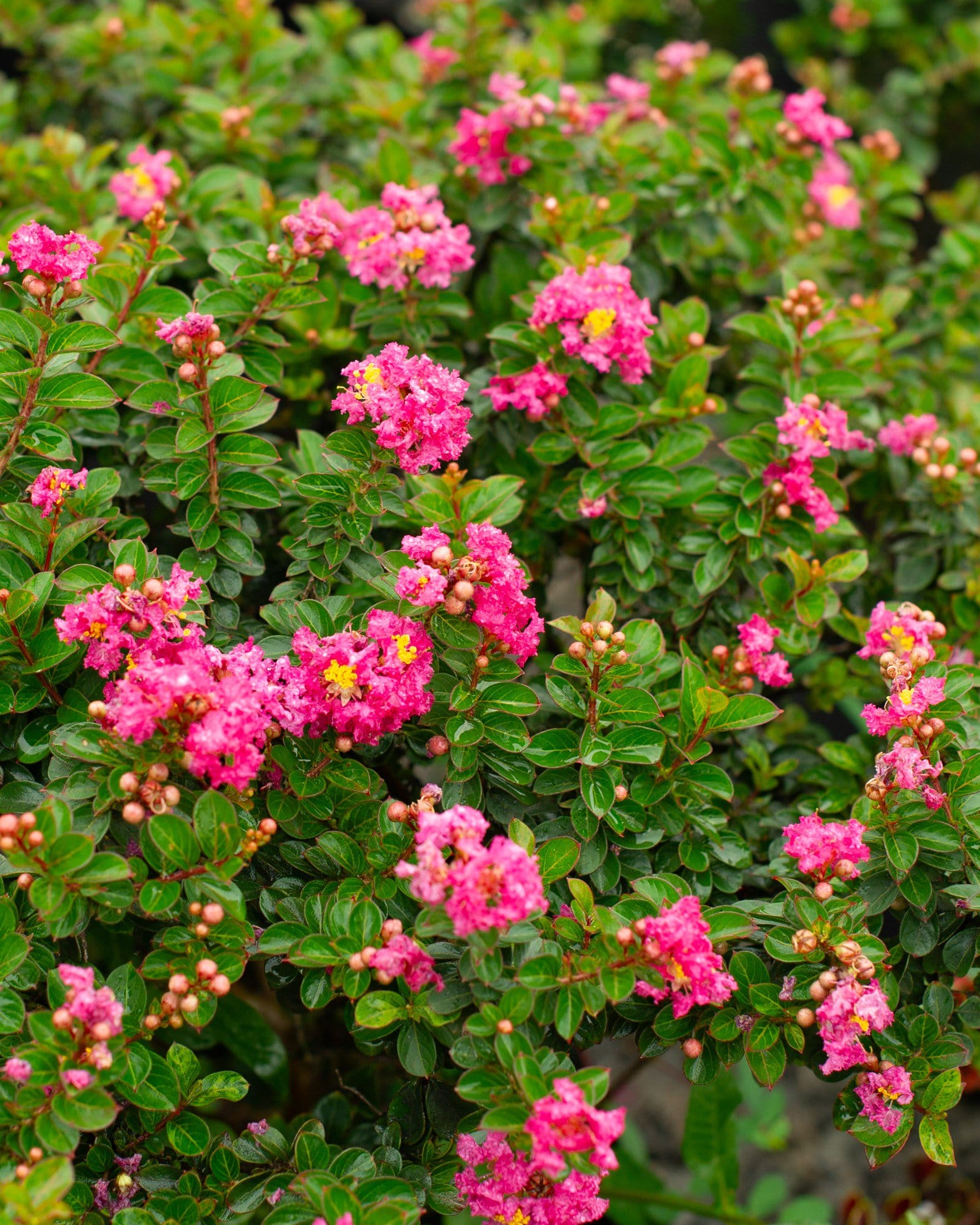
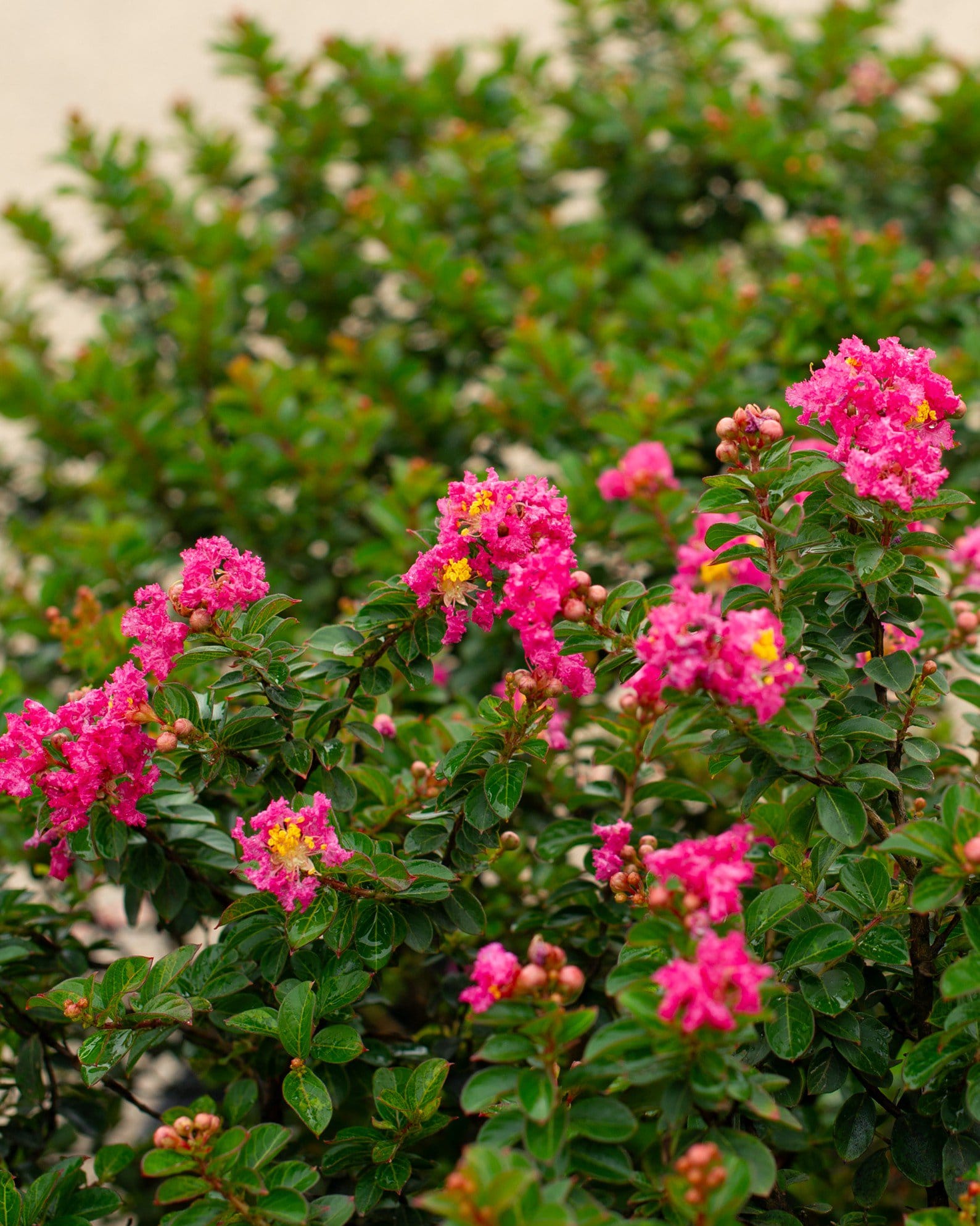
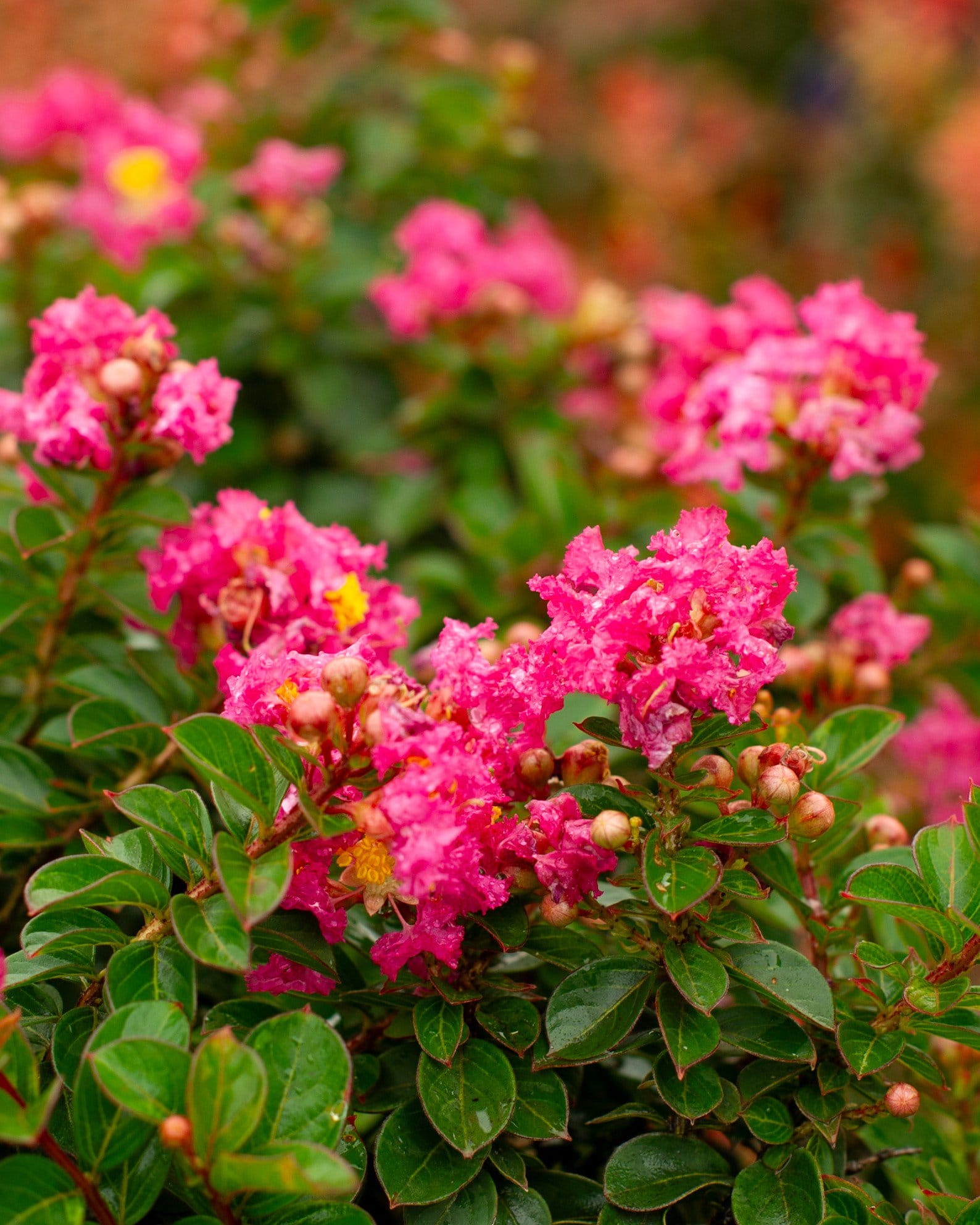
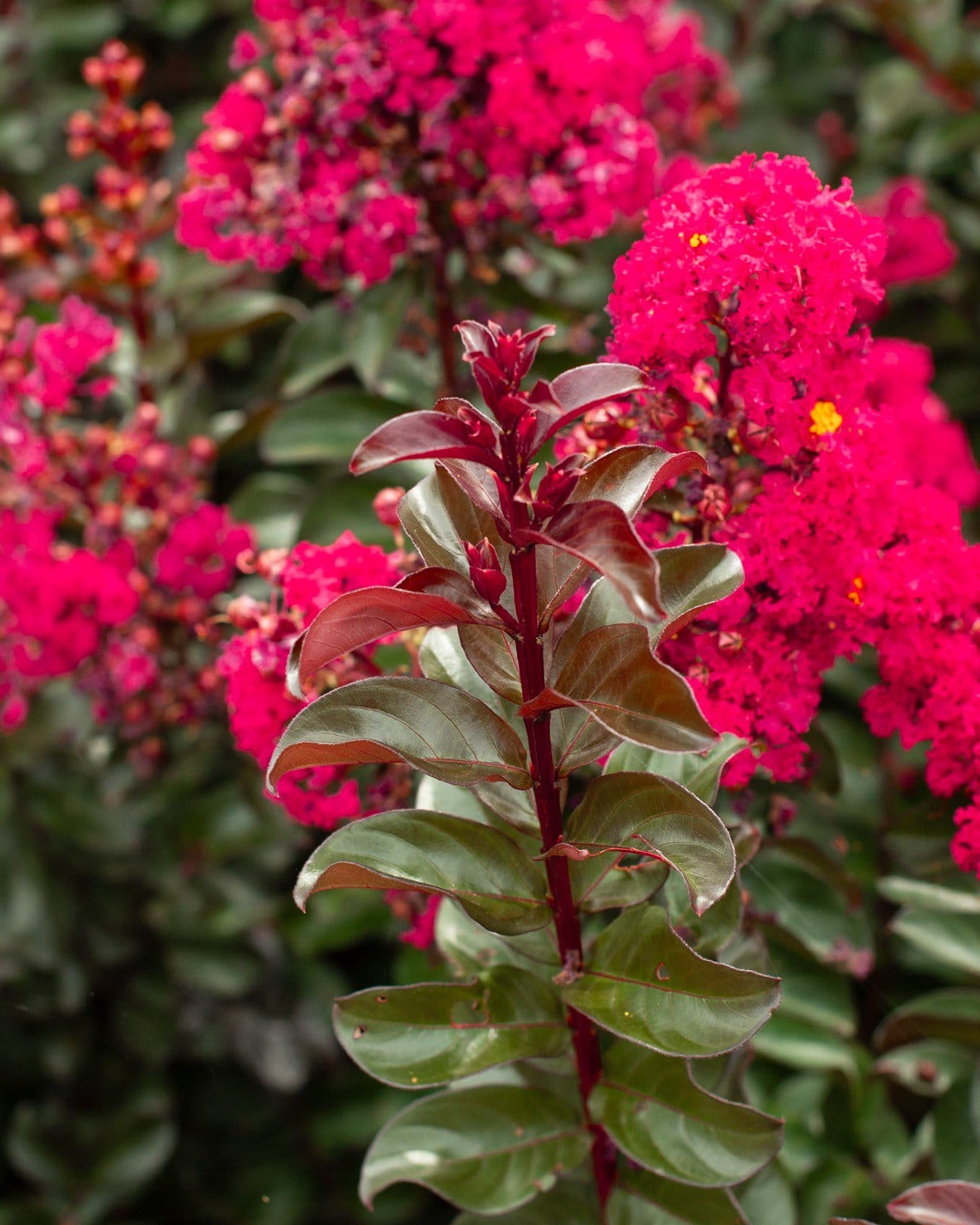
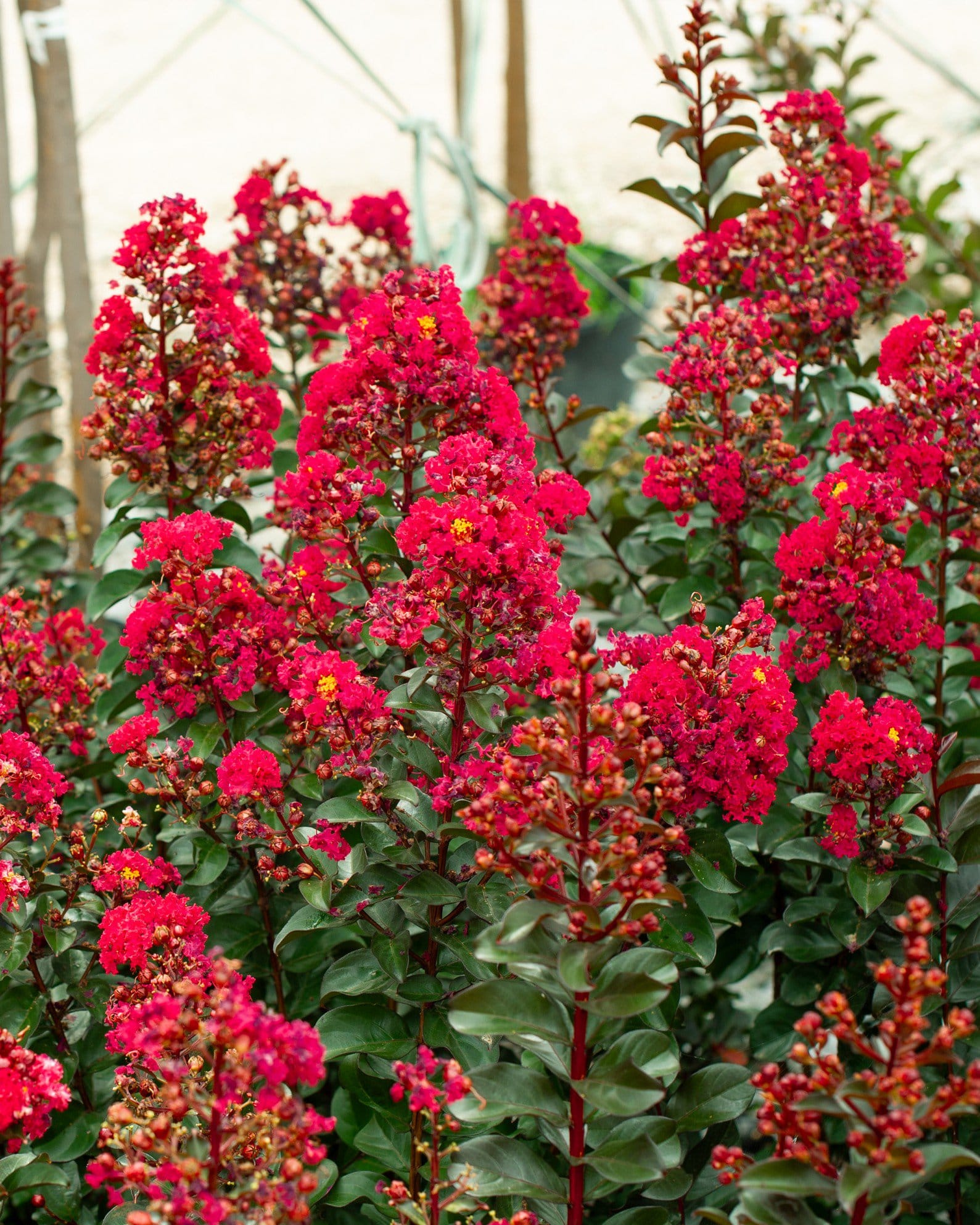
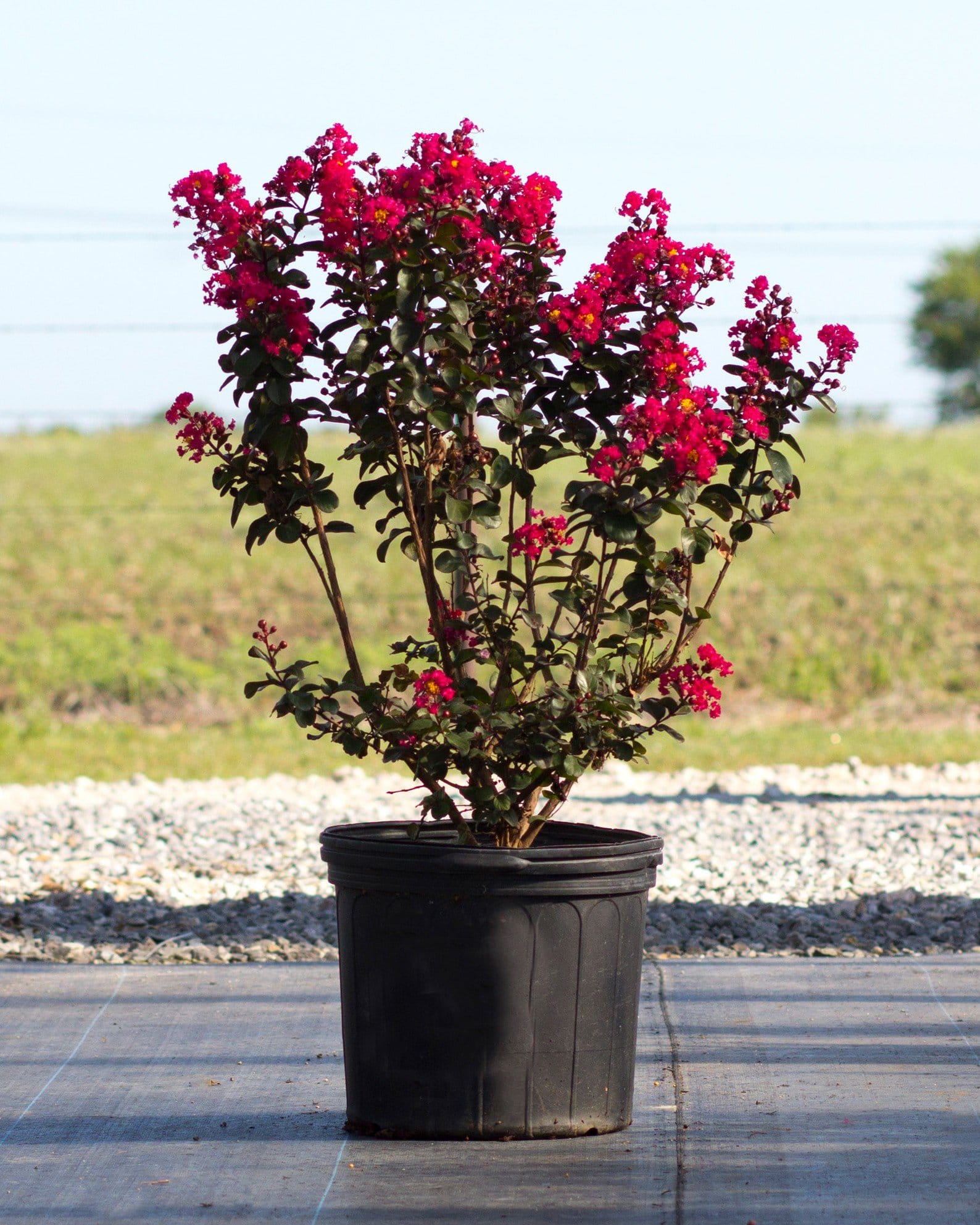
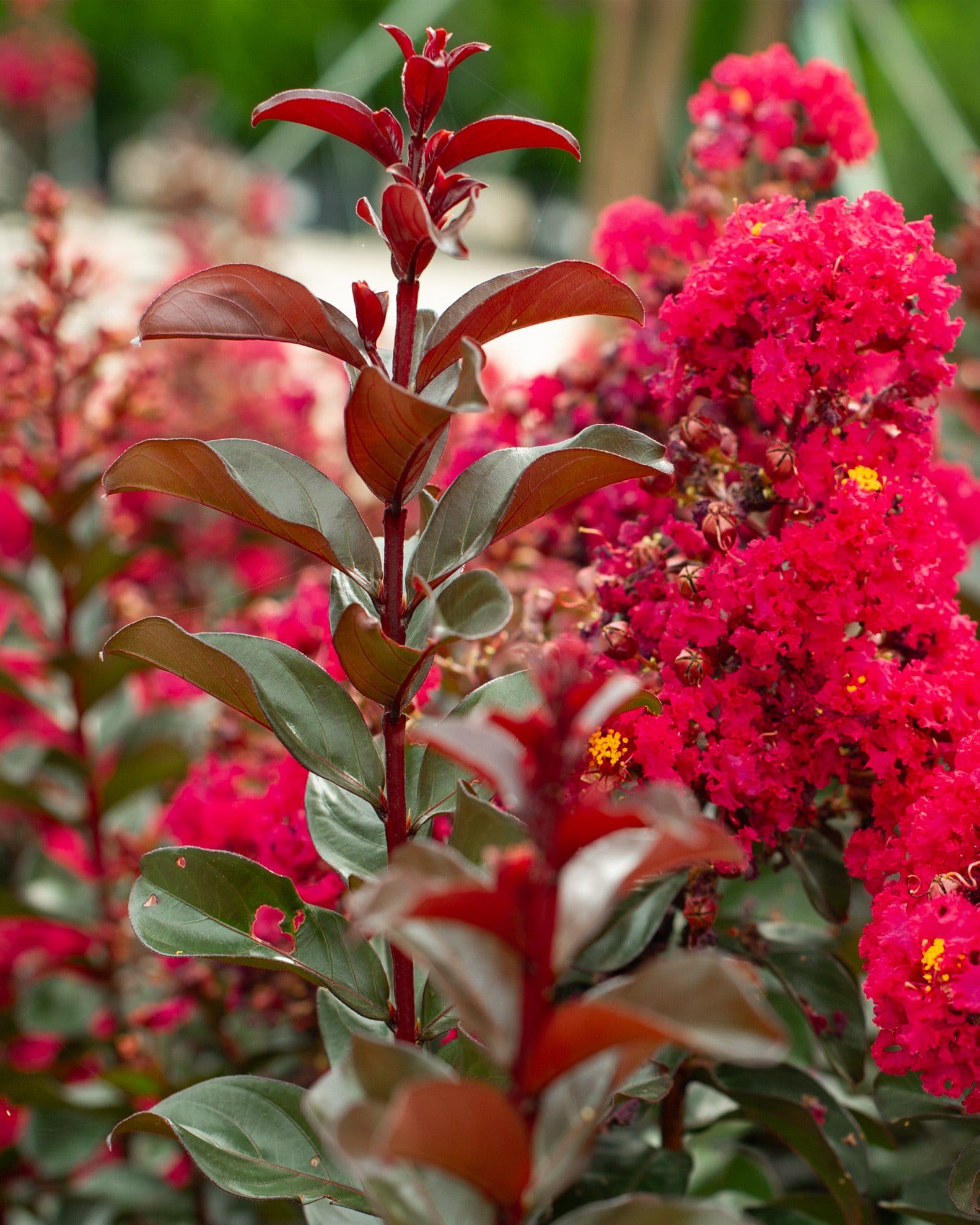
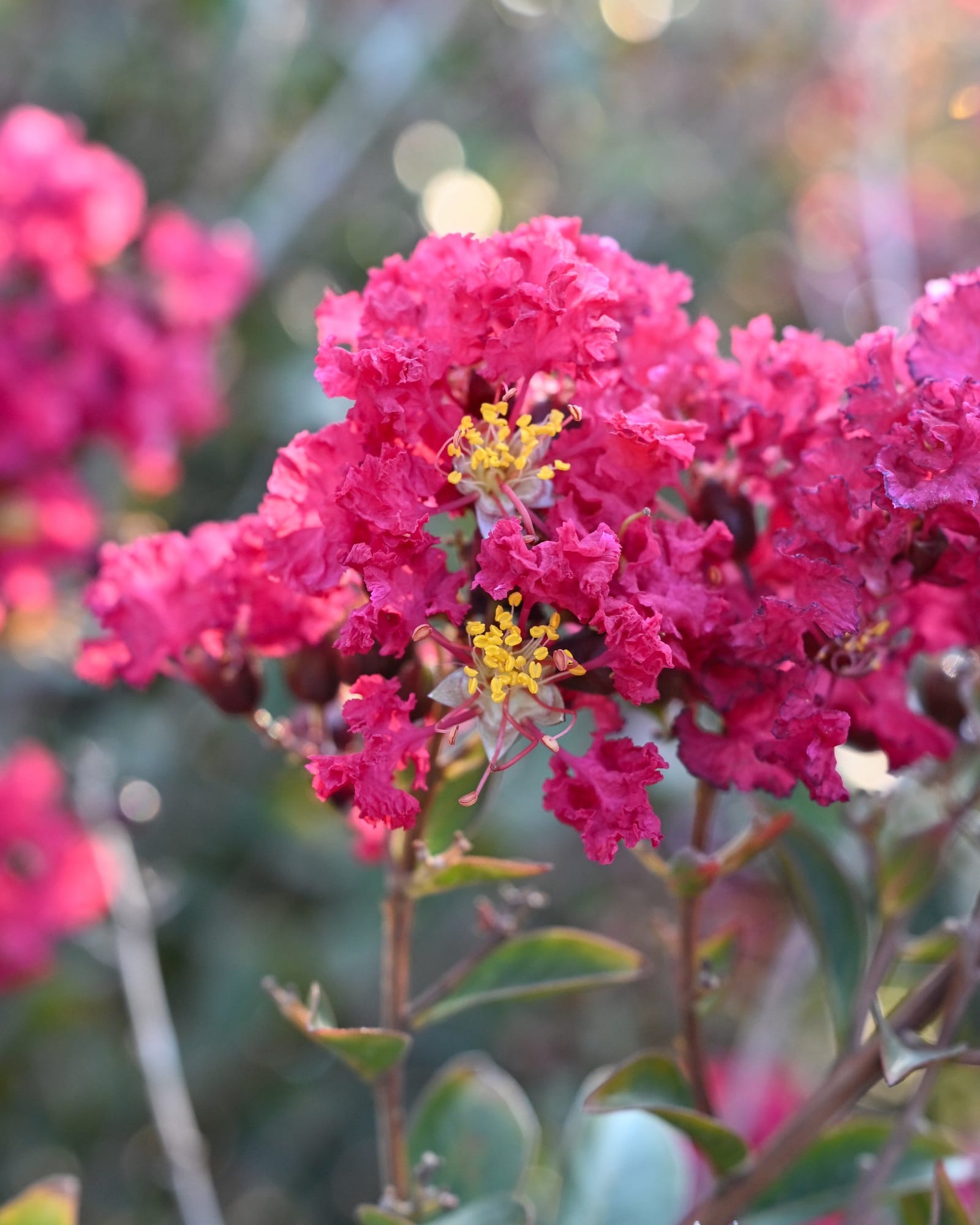
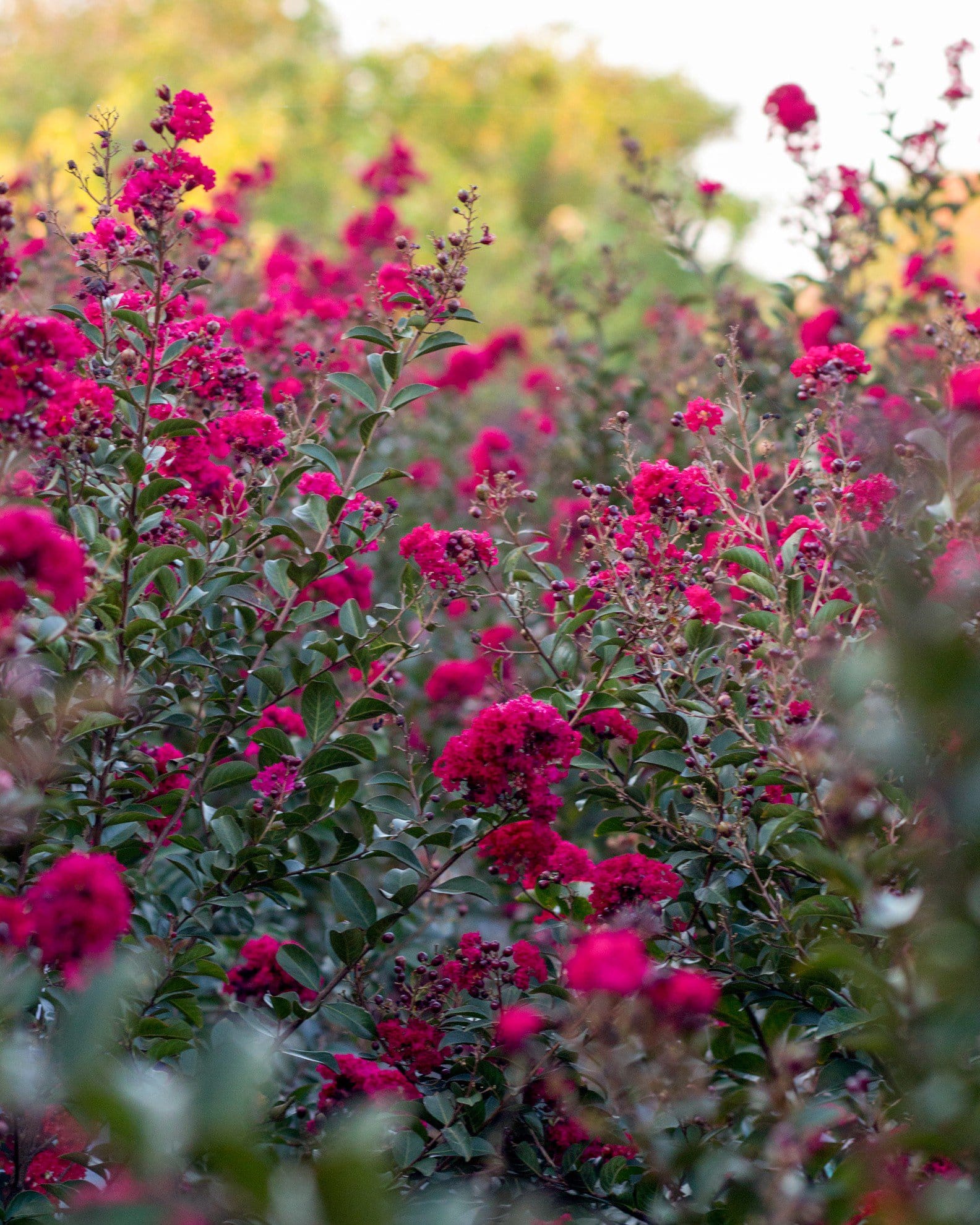
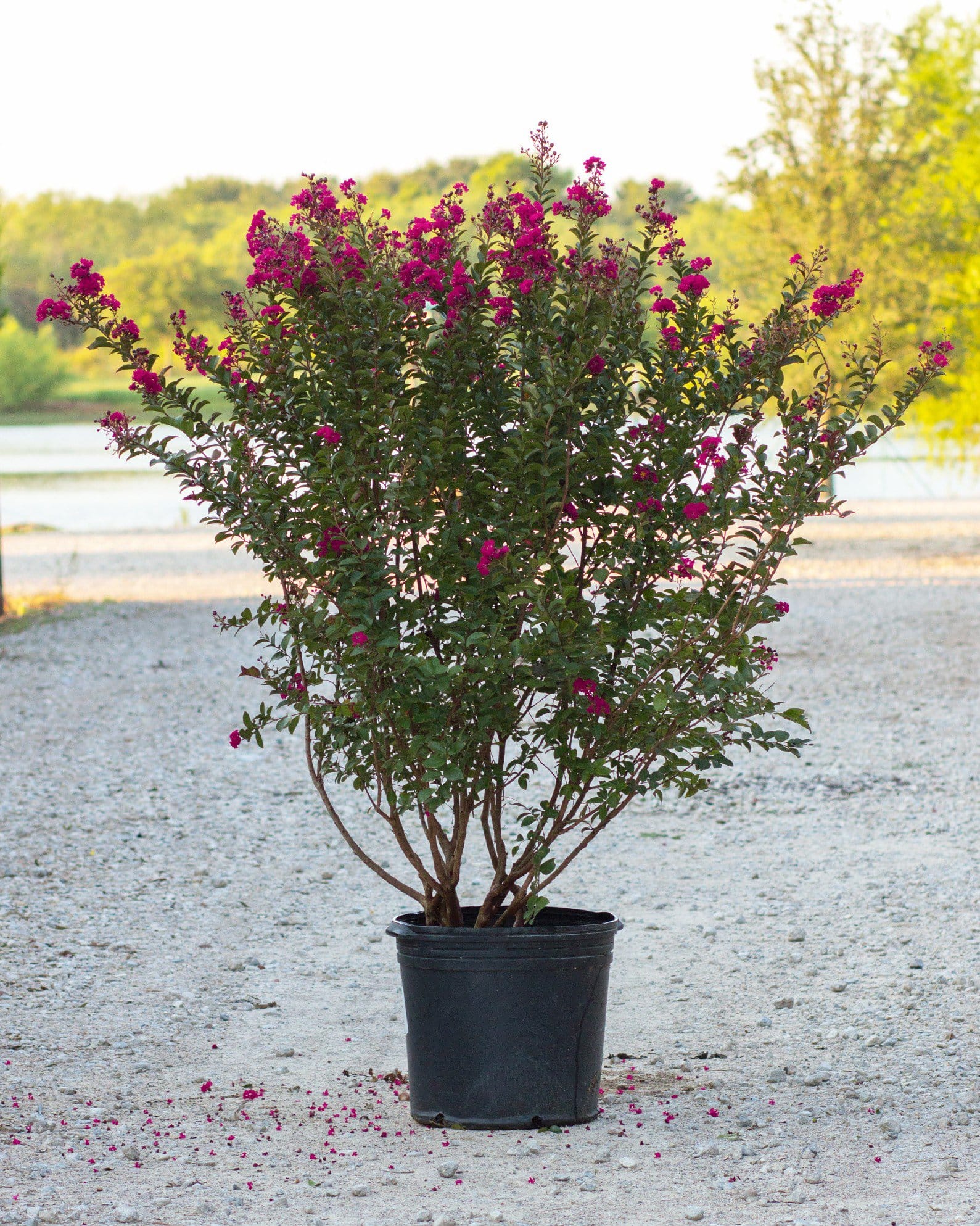
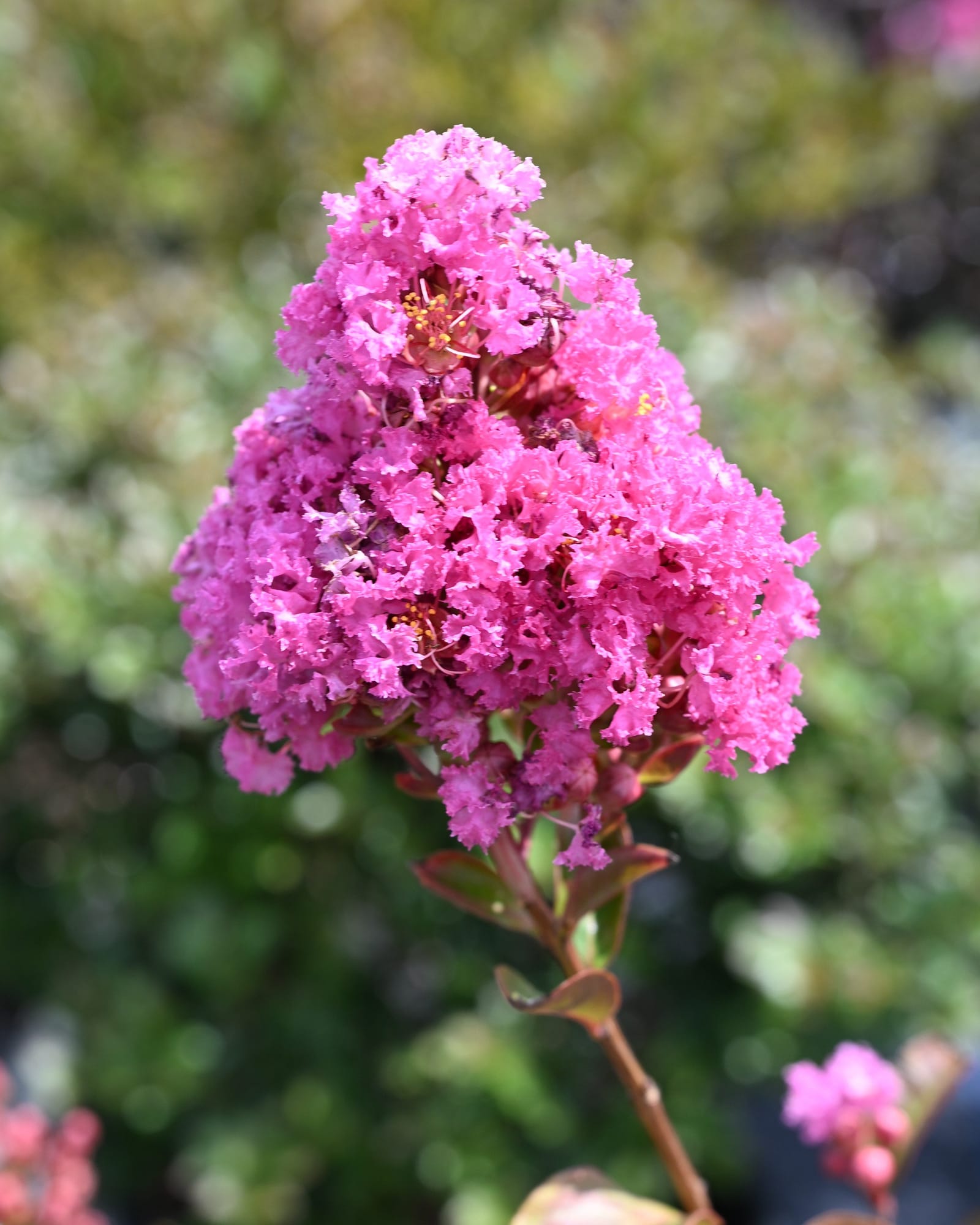
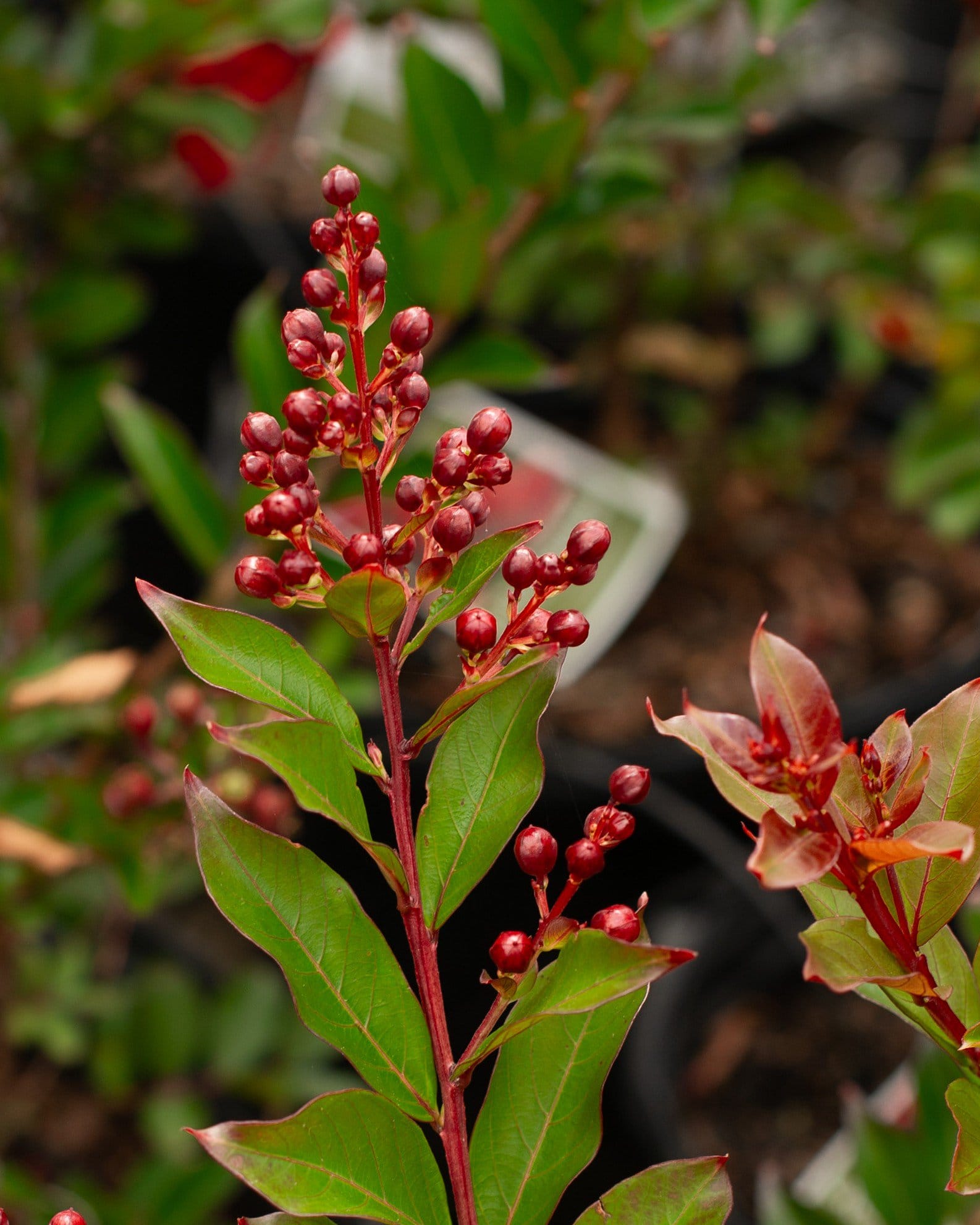
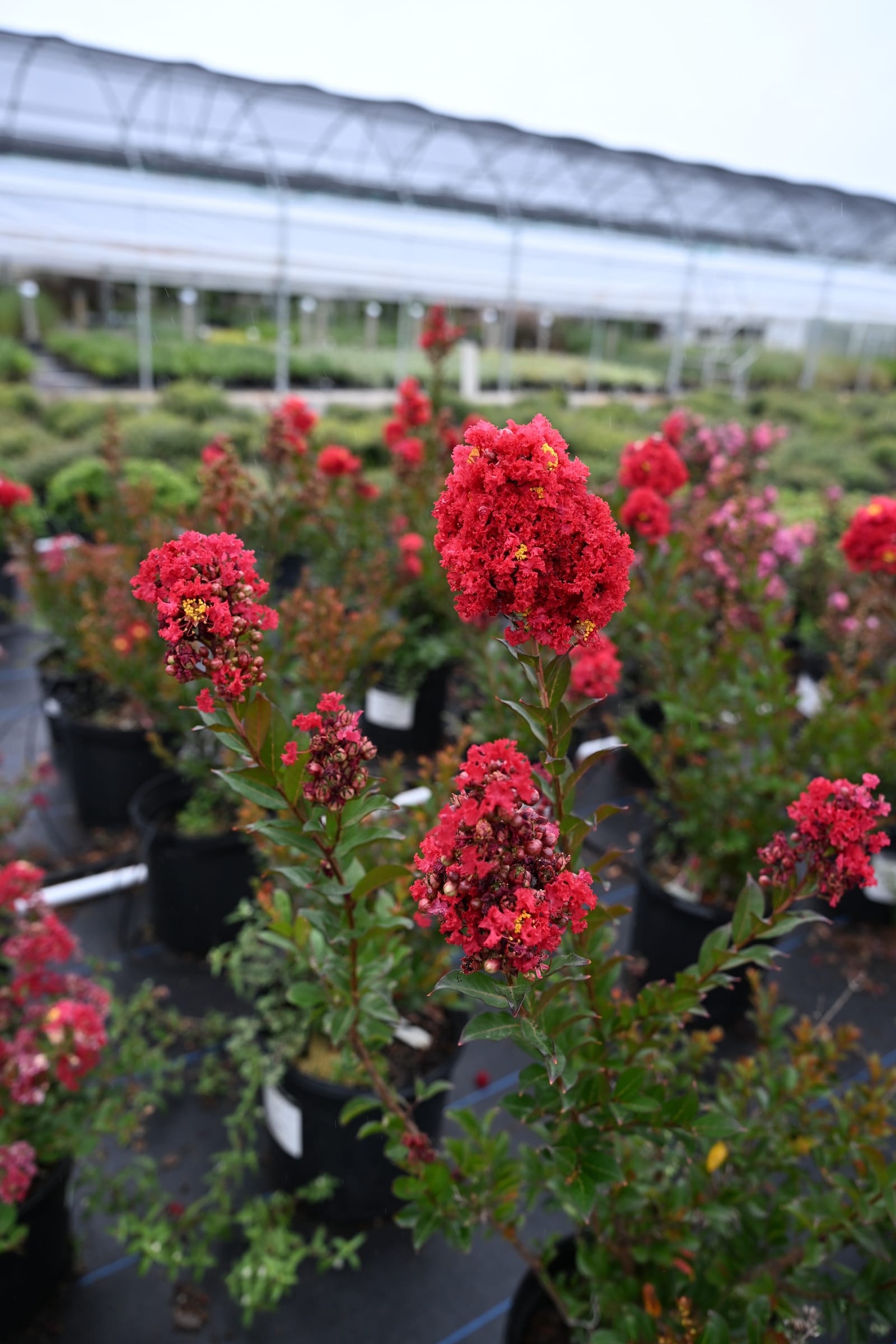
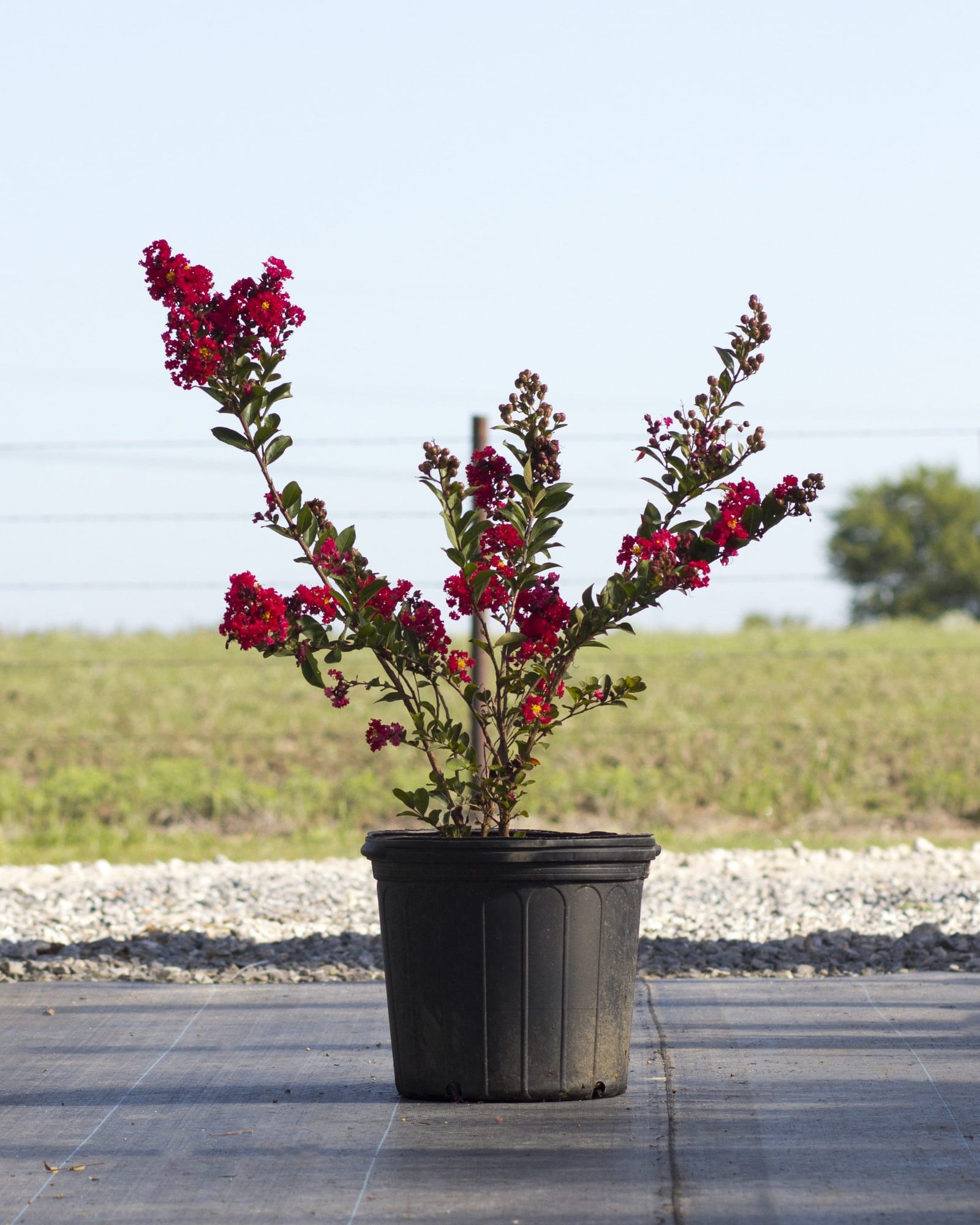
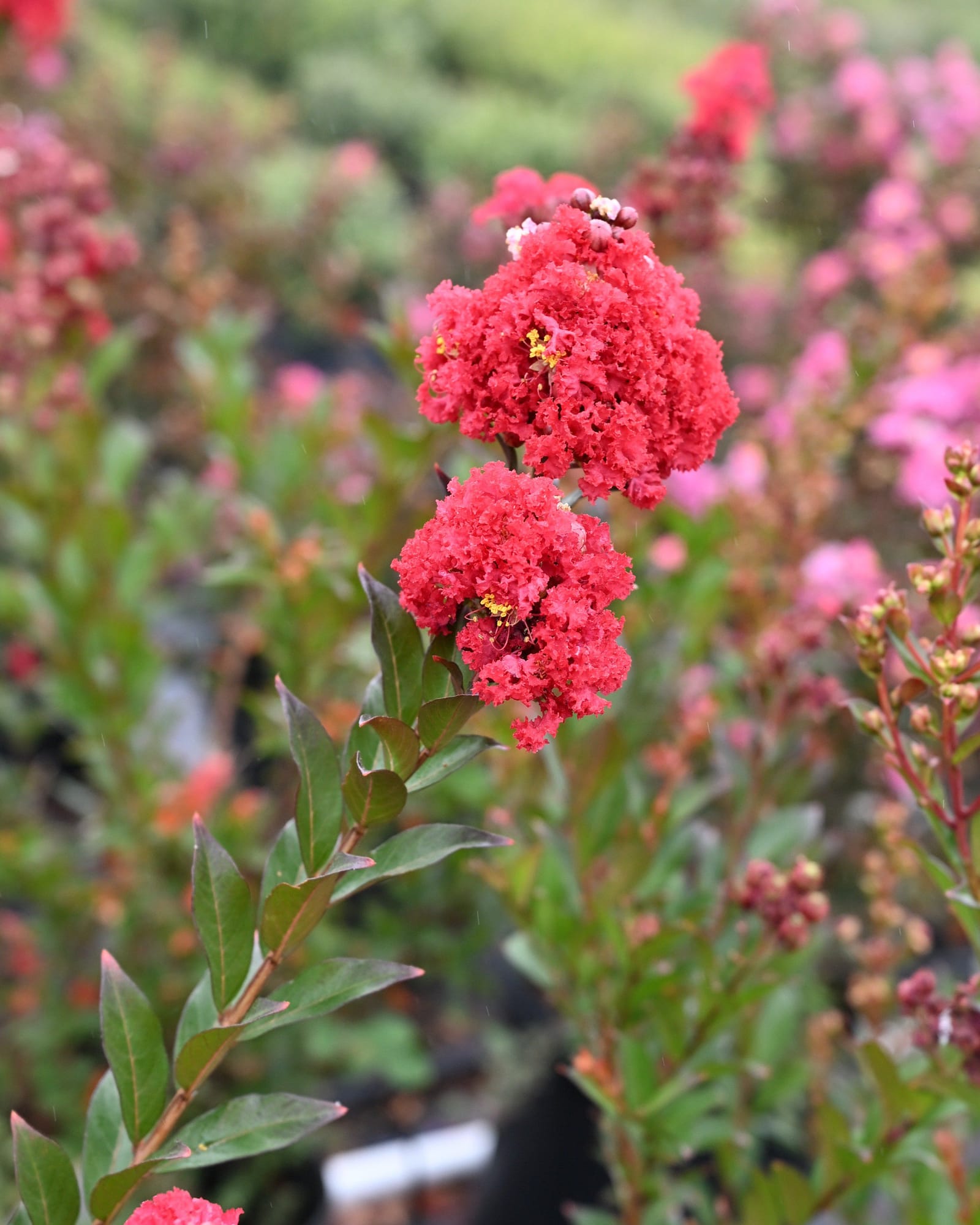
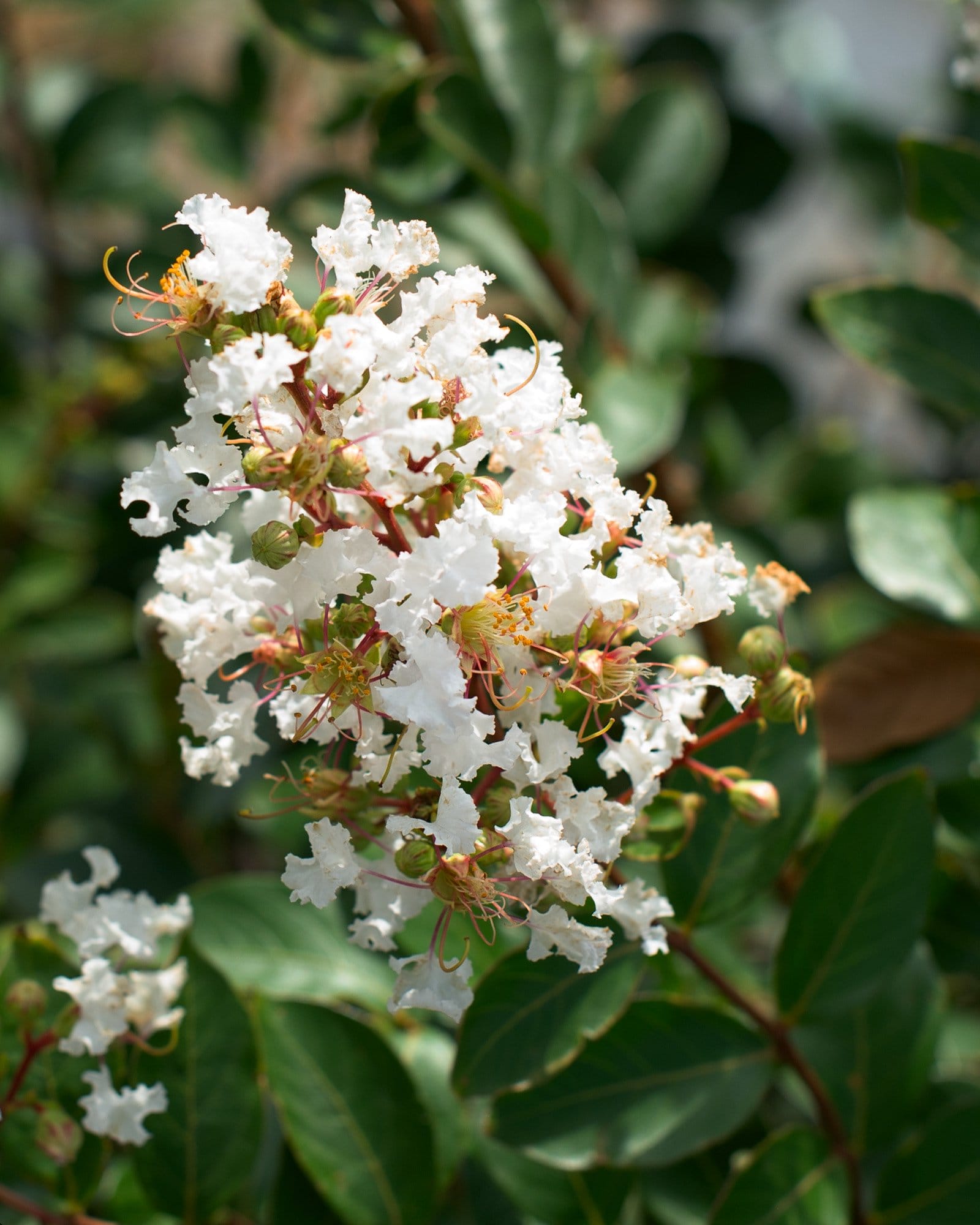
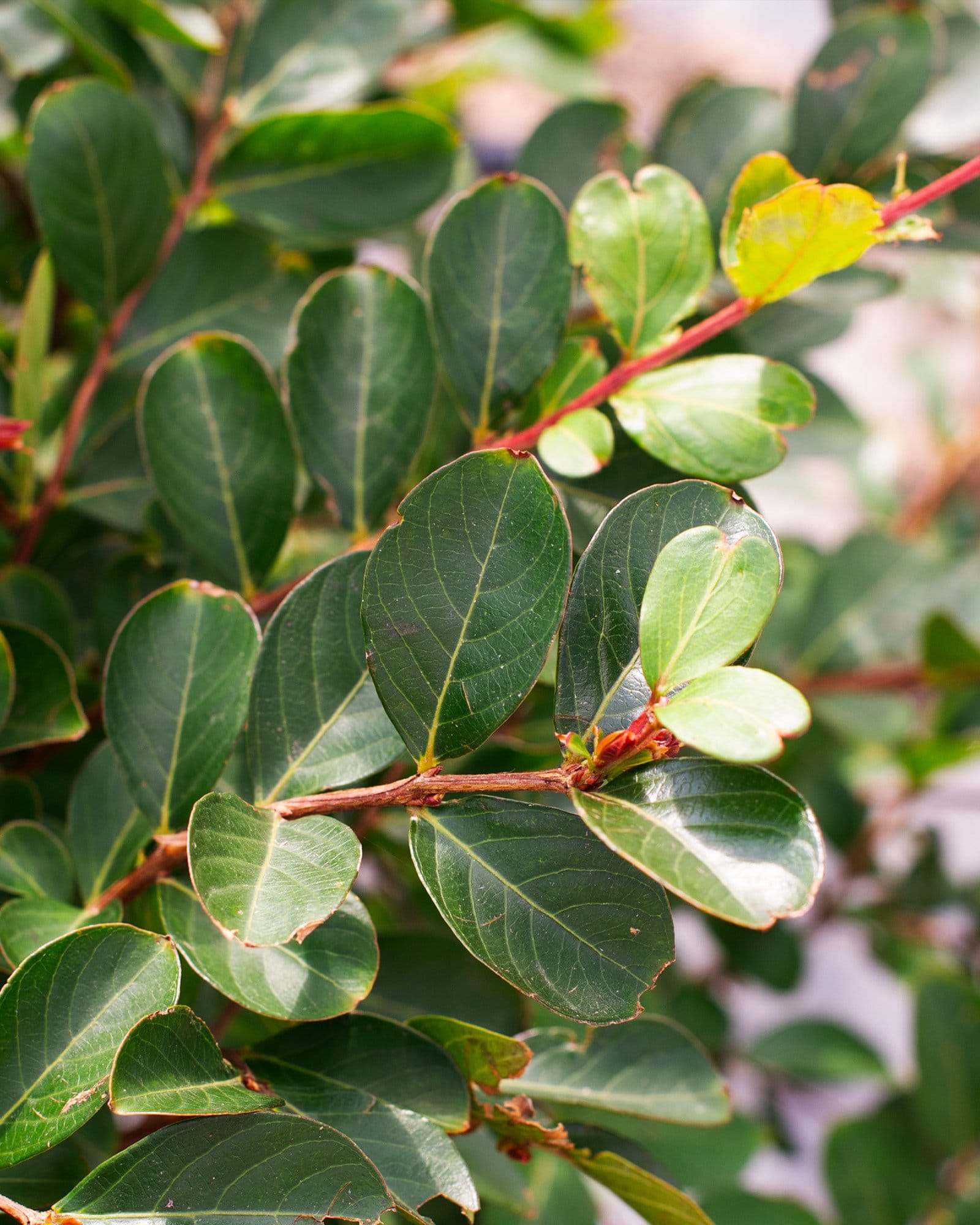
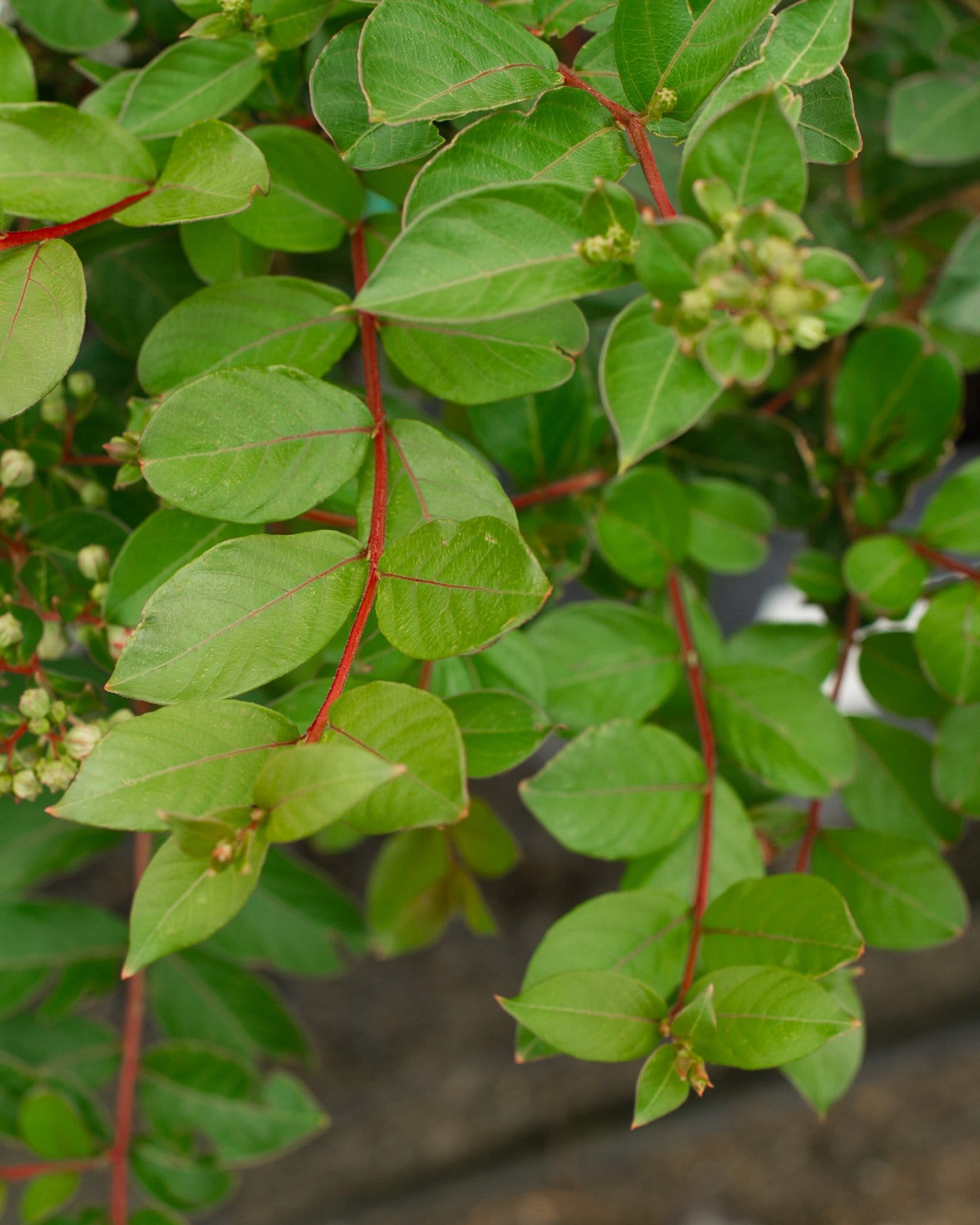
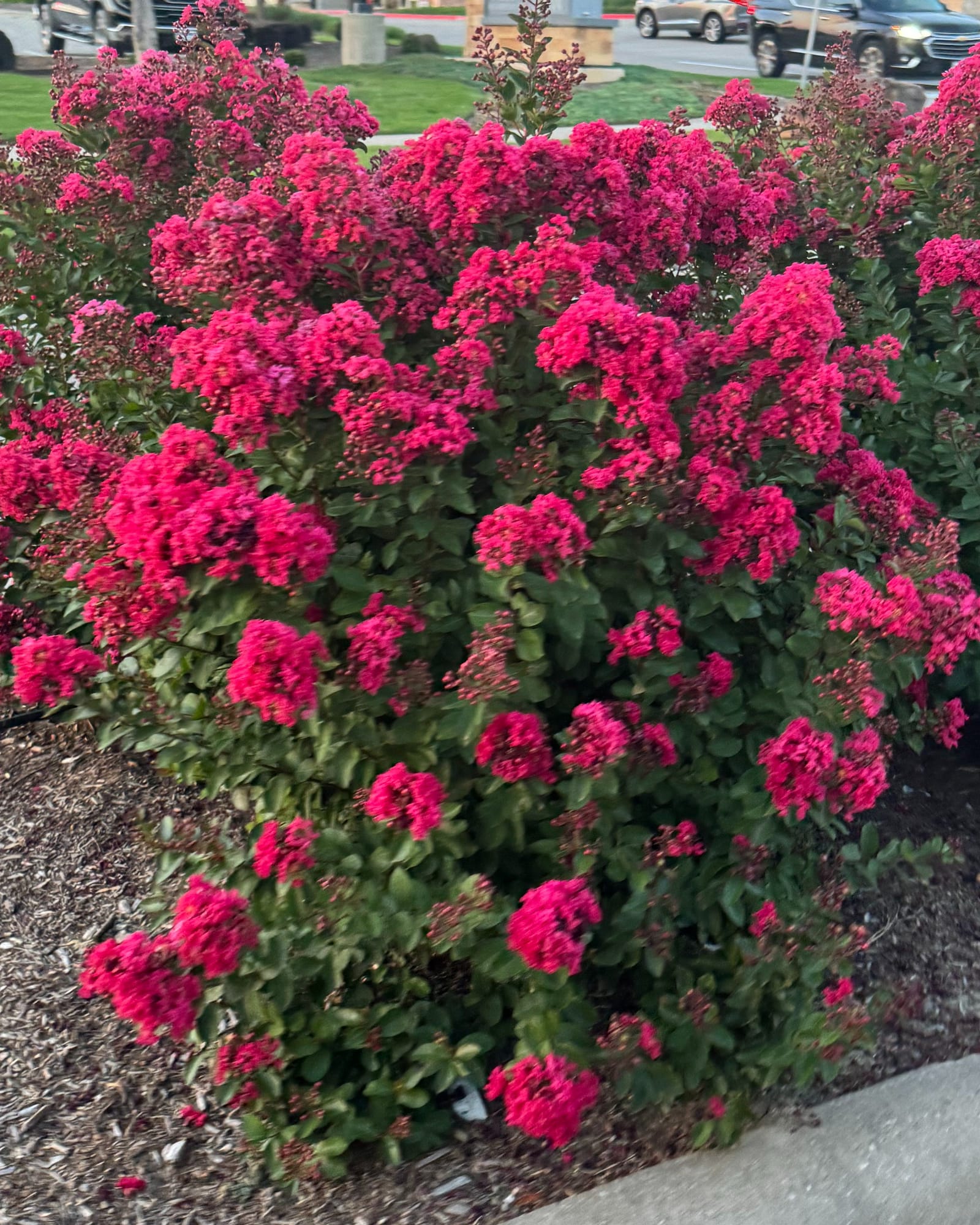
Lagerstroemia indica 'Conlagras'Bellini Raspberry Crape Myrtle delivers lush, saturated color on a dwarf-sized shrub. Its flowers appear in tight clusters of raspberry-pink, blooming throughout the summer. The foliage is a rich green that contrasts beautifully with the bright blooms, while the rounded shape holds its form without much trimming. Reaching to 3 feet in both height and width, this variety is perfect for front-layer plantings, patio borders, or commercial applications needing seasonal impact with a small footprint. Bark becomes lightly exfoliated as it matures, adding subtle winter interest to its warm-season show. It works especially well in massed plantings or as a colorful hedge.
- Deciduous shrub
- Moderate growth rate
- Bright pinkish red blooms in summer
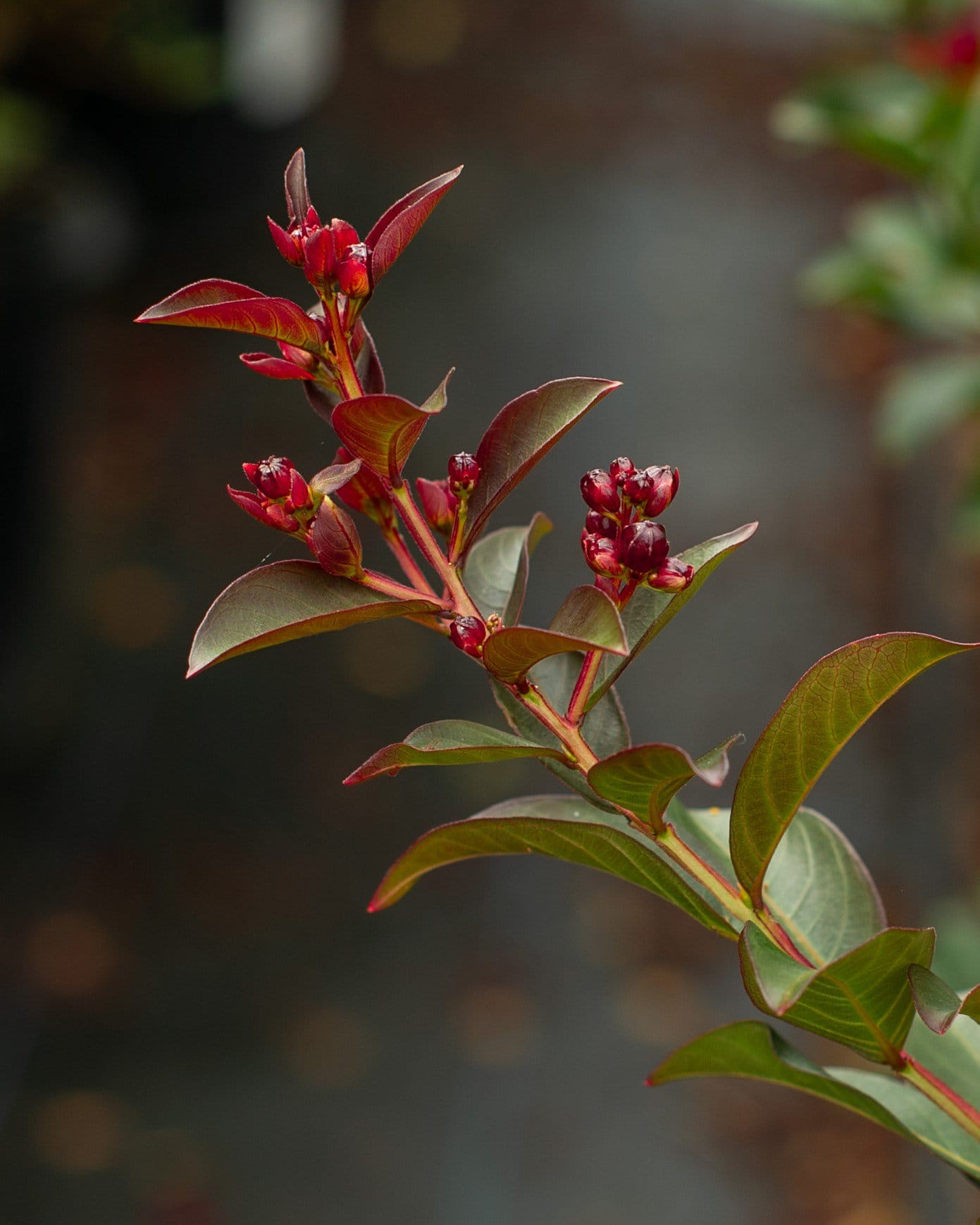
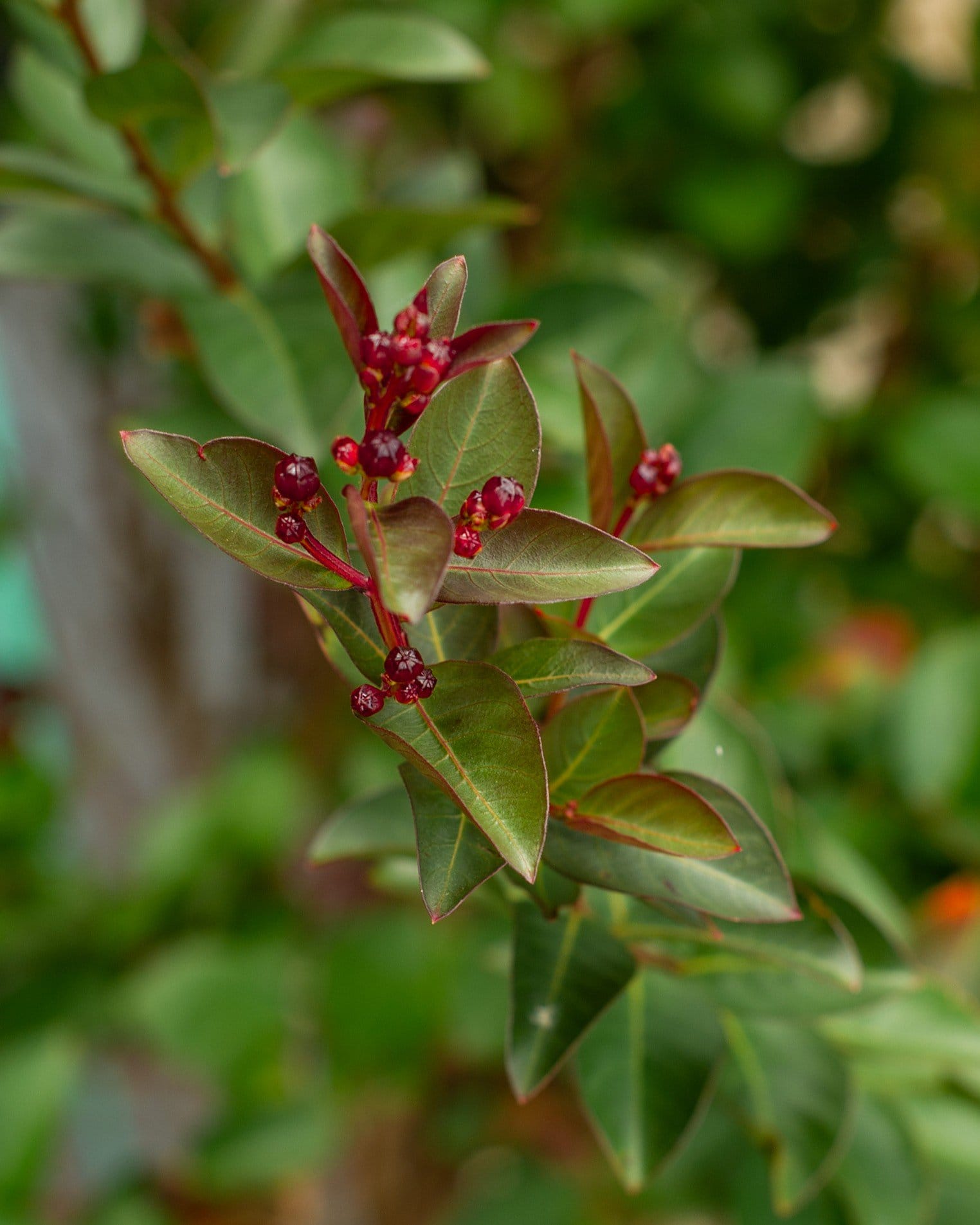
- Rich green foliage with seasonal contrast
- Useful in borders, planters, or small landscapes
Bellini Raspberry thrives in full sun and well-drained soil. Hardy in USDA zones 5-9, this crape myrtle performs well in North Texas with minimal trimming and seasonal cleanup.
Raspberry Bellini Crape Myrtle offers extended summer color with minimal maintenance, needing only simple care to thrive in landscapes across Texas. These practices are all it requires:
- Watering: During the first growing season, water consistently to establish a deep, resilient root system. Once established, Raspberry Bellini is moderately drought-tolerant but performs best with occasional deep watering during prolonged dry periods. Avoid overwatering, which can lead to root rot or reduced flowering. Deep, infrequent watering promotes strong growth and vibrant blooms.
- Pruning: Light pruning in late winter or early spring helps maintain a tidy shape and encourages branching for more flowers. Remove dead, damaged, or crossing branches, and trim spent flower panicles after bloom to extend flowering and encourage a more compact form. Avoid heavy pruning in late fall to protect tender new growth from frost damage.
- Fertilizing: Feed lightly with a balanced, slow-release fertilizer in early spring if soil is poor. Over-fertilization can result in leggy growth and reduced flower production. In well-draining soils, supplemental feeding is often unnecessary. Avoid high-nitrogen fertilizers, which encourage excessive foliage at the expense of blooms.
- Mulching: Apply a 2-3 inch layer of coarse mulch, gravel, or pine bark around the base to retain moisture, suppress weeds, and regulate soil temperature. Keep mulch slightly away from the trunk to prevent crown rot. Organic mulch will enrich the soil over time, while inorganic mulch helps maintain a clean, dry root zone.
- Winter Care: Raspberry Bellini Crape Myrtle is hardy in USDA zones 7-9. In colder regions or during unusual freezes, a light mulch around the base protects roots. Container-grown plants may require temporary shelter during frost events.
- Powdery Mildew: A fungal disease may appear on leaves in humid conditions. Ensure good air circulation and remove affected foliage. Avoid overhead watering.
- Aphids or Scale: These pests may appear during hot, dry periods. Treat infestations with insecticidal soap or gently rinse leaves with water.
- Leggy Growth: Excessive shade or over-fertilization can cause sparse, stretched growth. Light pruning in early spring encourages fuller branching and a more compact habit.
Leaf Drop: Drought stress, overwatering, or sudden temperature changes may cause leaves to drop. Maintain consistent watering and avoid waterlogged soil.
It is a moderate grower, typically reaching 4-6 feet tall and 3-5 feet wide within 3-5 years. Its upright, compact form suits borders, accent plantings, or small gardens.
With proper care, Raspberry Bellini can thrive 15-25 years or longer. Proper pruning, soil conditions, and consistent watering maintain health and flowering performance.
Yes. Its compact size and upright habit make it ideal for large containers or patio planters. Ensure excellent drainage and avoid water pooling at the crown.
Yes. Its vibrant flowers attract bees, butterflies, and other pollinators, while the seeds provide food for birds in the fall.
Once established, it tolerates moderate dry conditions. Occasional deep watering during hot, dry spells encourages prolonged flowering.
It prefers well-draining soils and can tolerate rocky or sandy conditions. Avoid heavy clay or poorly drained soils, which may reduce bloom performance and increase susceptibility to root diseases.
Light pruning annually helps maintain a tidy form, encourages branching, and promotes abundant flowering. Deadheading spent blooms prolongs the bloom period.
Yes. Its bright raspberry-red flowers, long bloom period, and tidy habit make it perfect for mass plantings, borders, or accent groupings.
Provide consistent deep watering during dry periods, remove spent flowers regularly, and prune lightly in late winter or early spring. Avoid excessive fertilization.
Its raspberry-red blooms, attractive bark, compact upright habit, and long-lasting color make it a standout choice for sunny, low-maintenance landscapes. It delivers extended summer interest with minimal care, ideal for both formal and naturalistic gardens.
Special Features
You might also like
Cotton Candy Crape Myrtle
Maturity: 2' H x 2' W
Dark Roast Crape Myrtle
Maturity: 3' H x 3' W
Peppermint Mocha Crape Myrtle
Maturity: 3' H x 3' W
Pocomoke Crape Myrtle
Maturity: 3' H x 3' W
Cherry Mocha Crape Myrtle
Maturity: 3' H x 3' W
Double Feature Crape Myrtle
Maturity: 6' H x 6' W
Enduring Fuchsia Crape Myrtle
Maturity: 4' H x 4' W
Enduring Lavender Crape Myrtle
Maturity: 4' H x 4' W
Enduring Red Crape Myrtle
Maturity: 4' H x 4' W
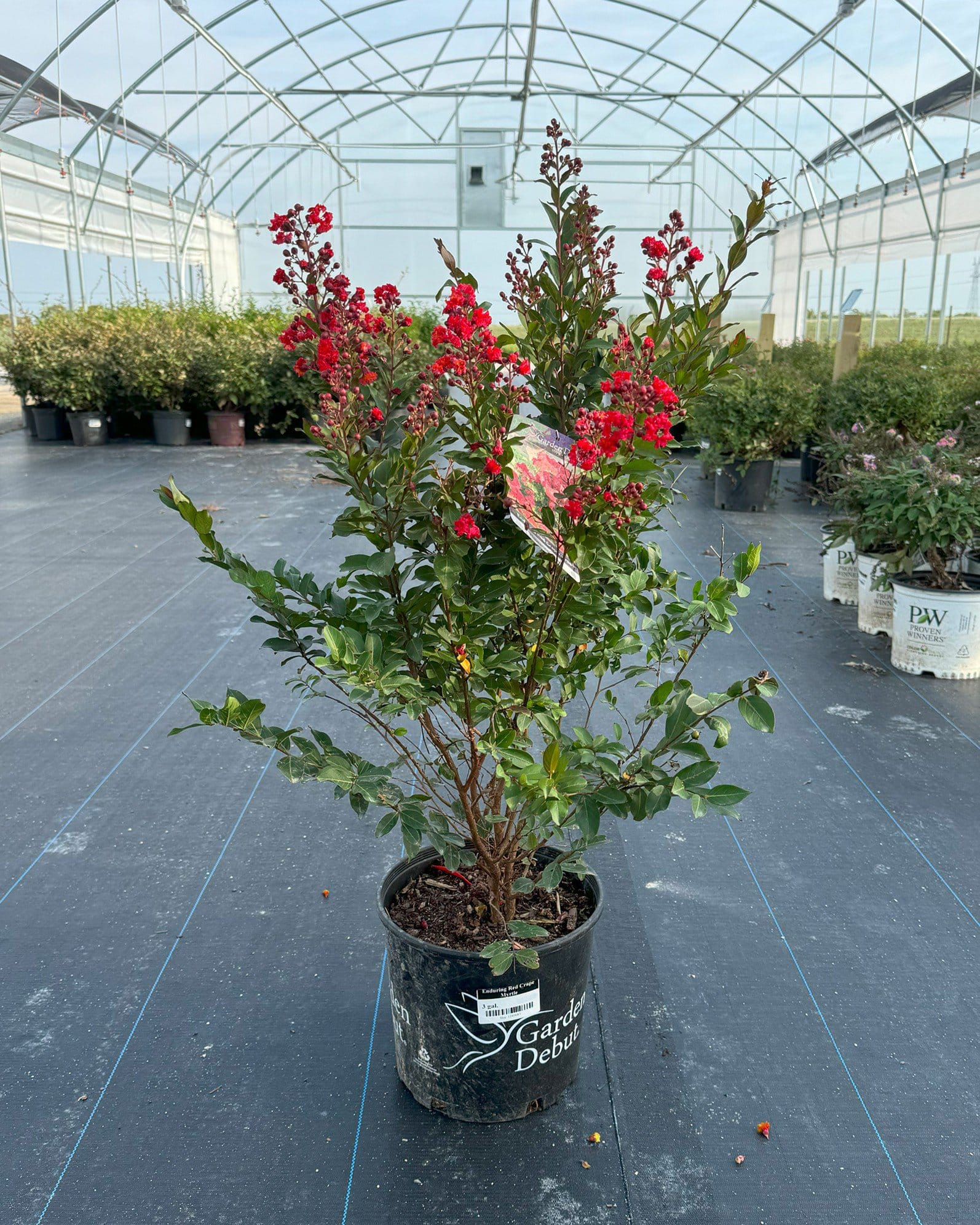
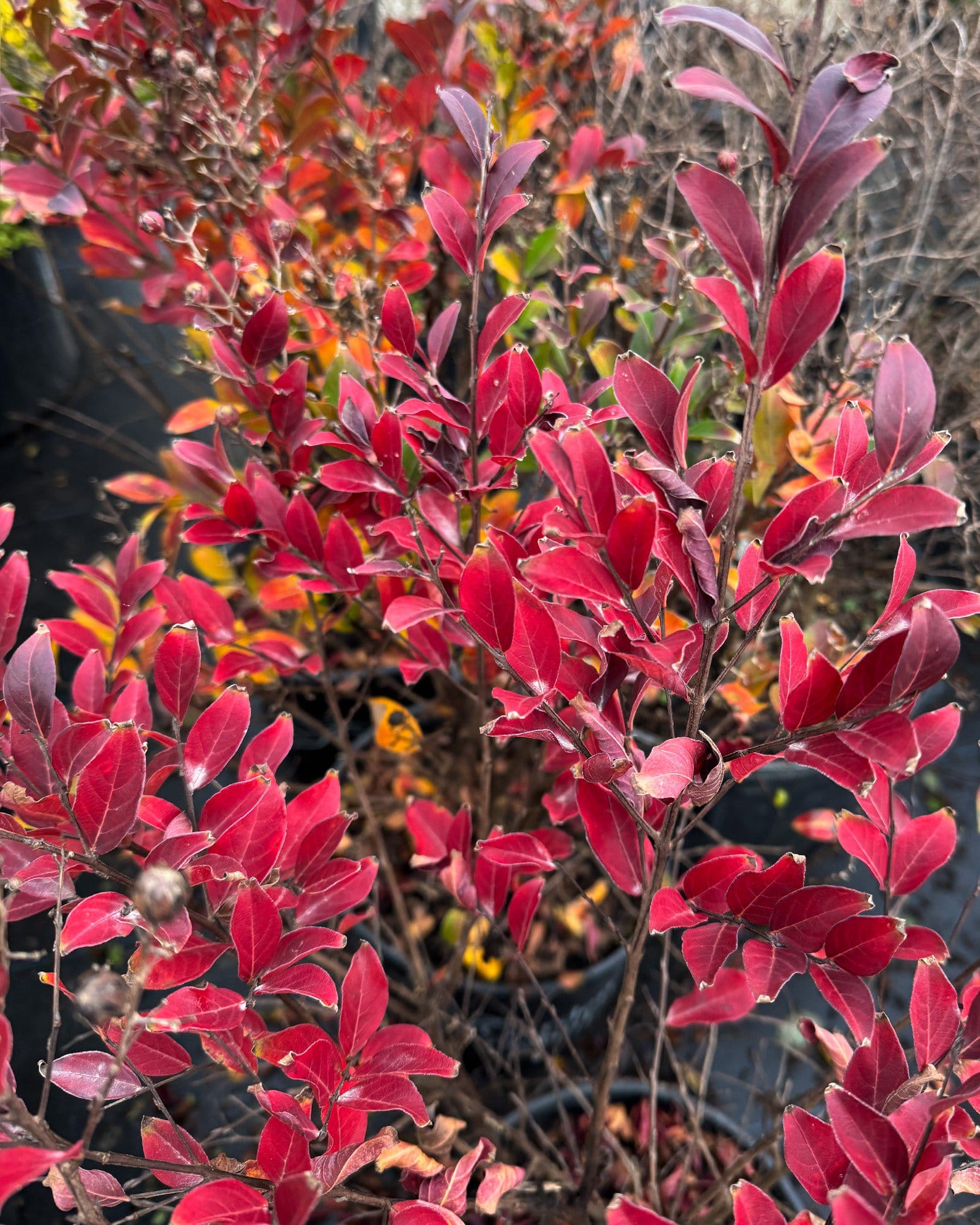
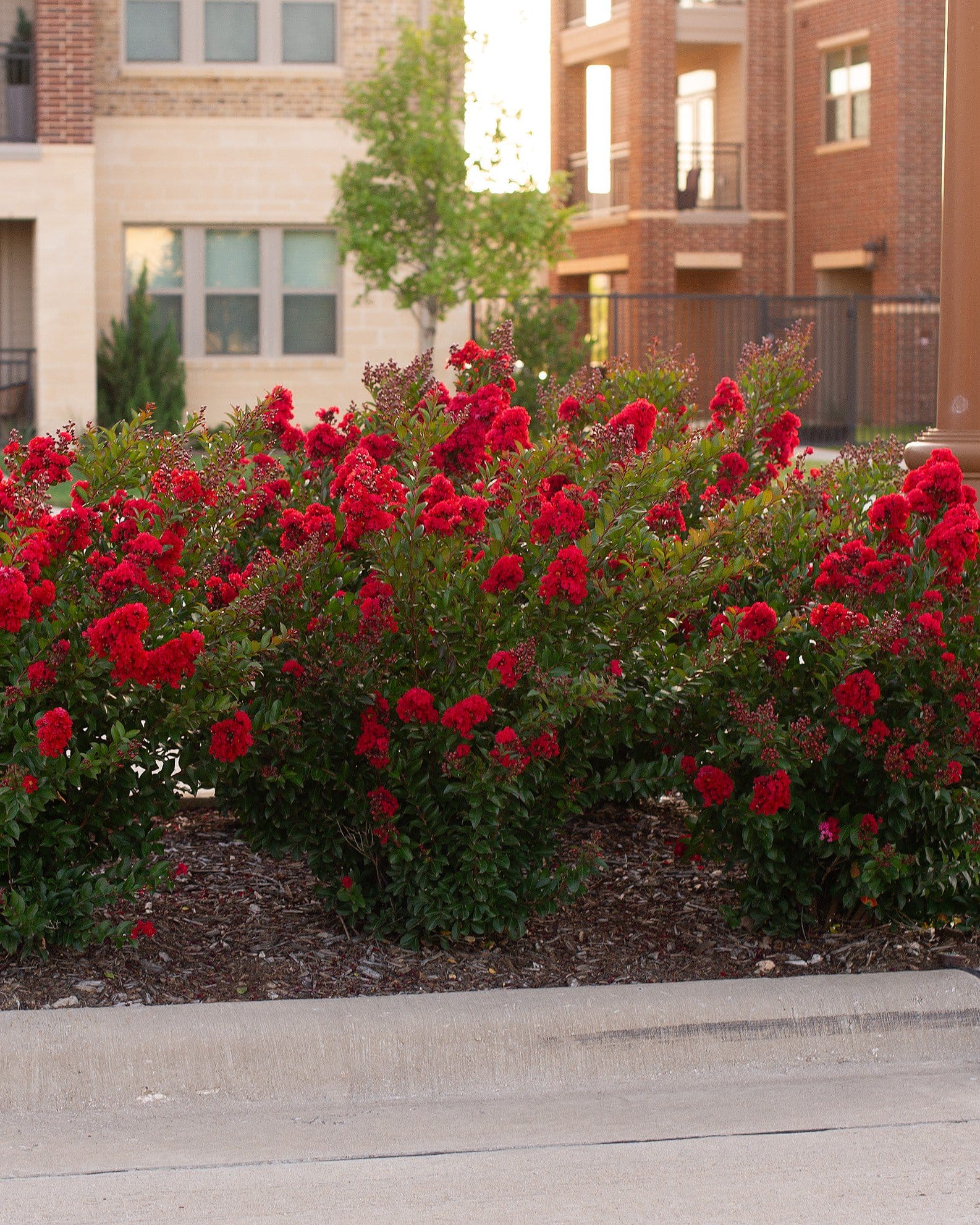
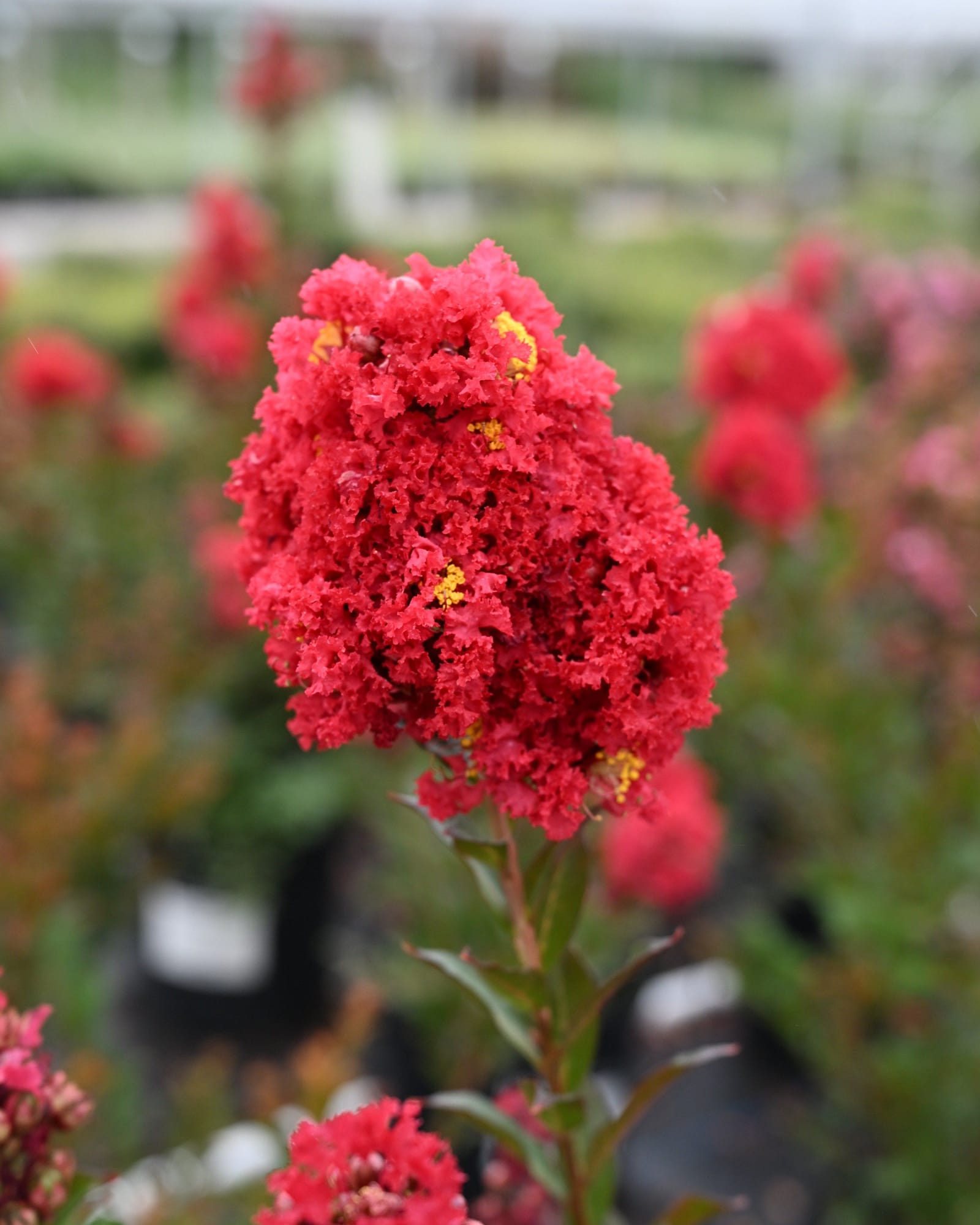
Enduring Summer Red Crape Myrtle
Maturity: 4' H x 4' W
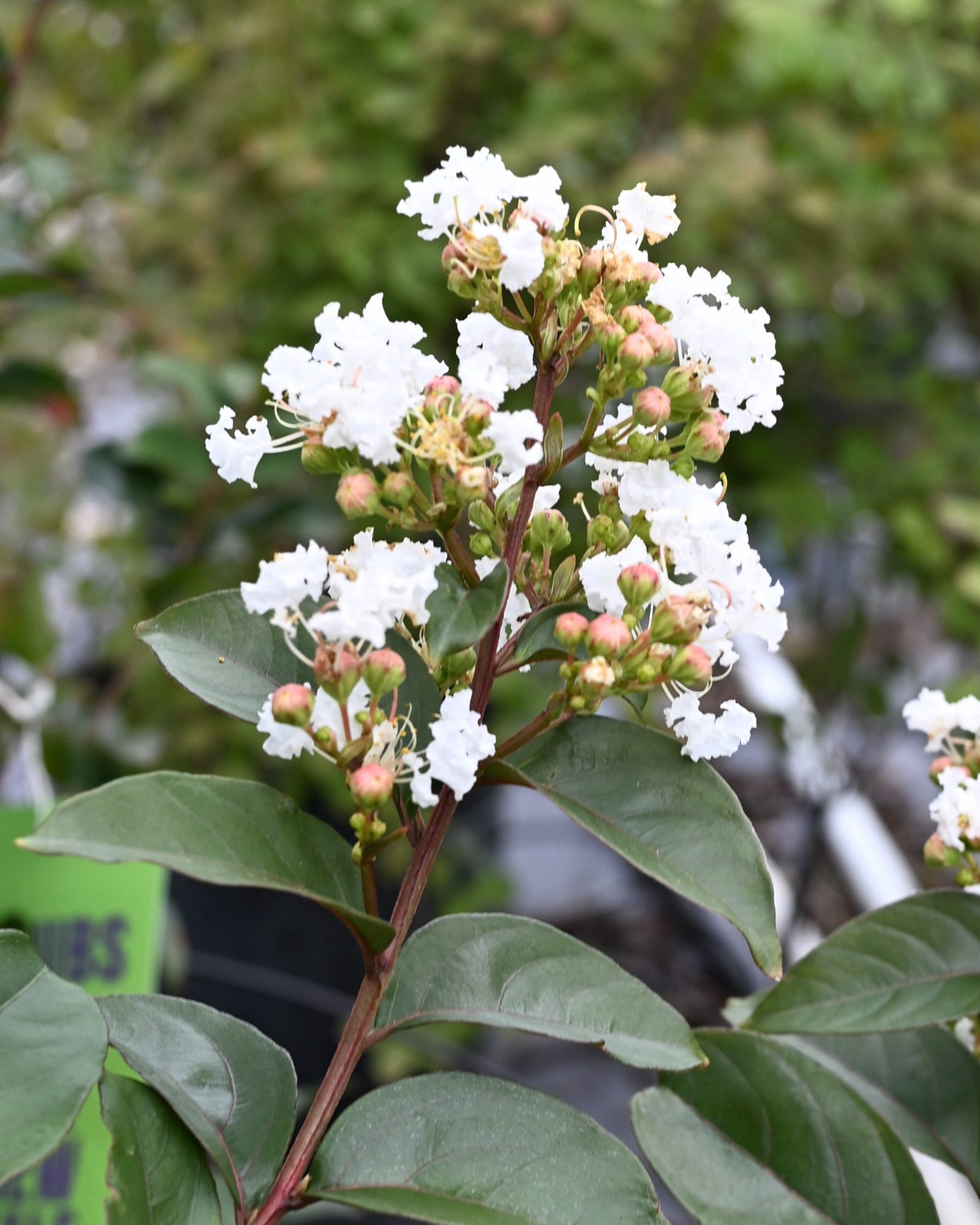
Enduring White Crape Myrtle
Maturity: 4' H x 4' W
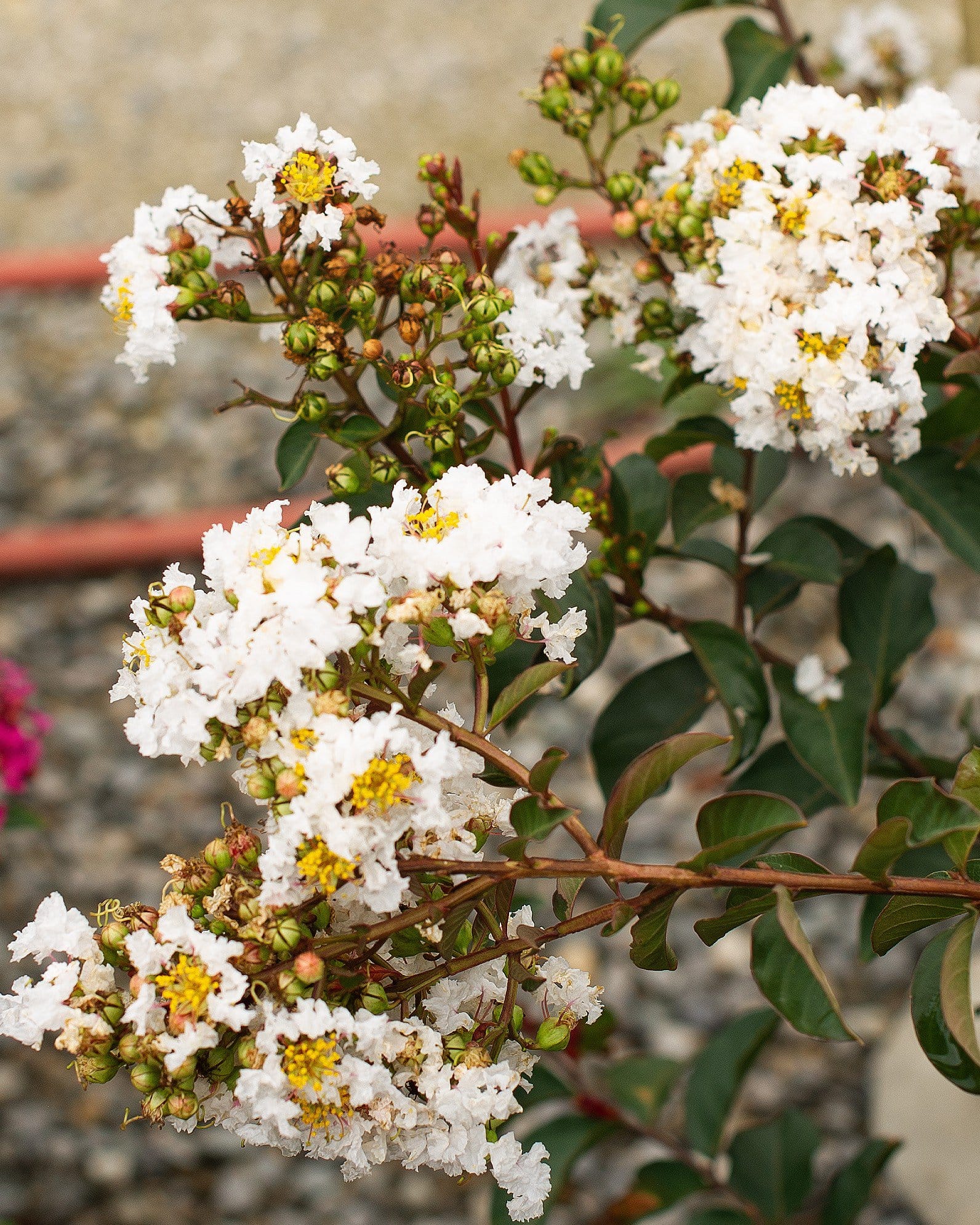
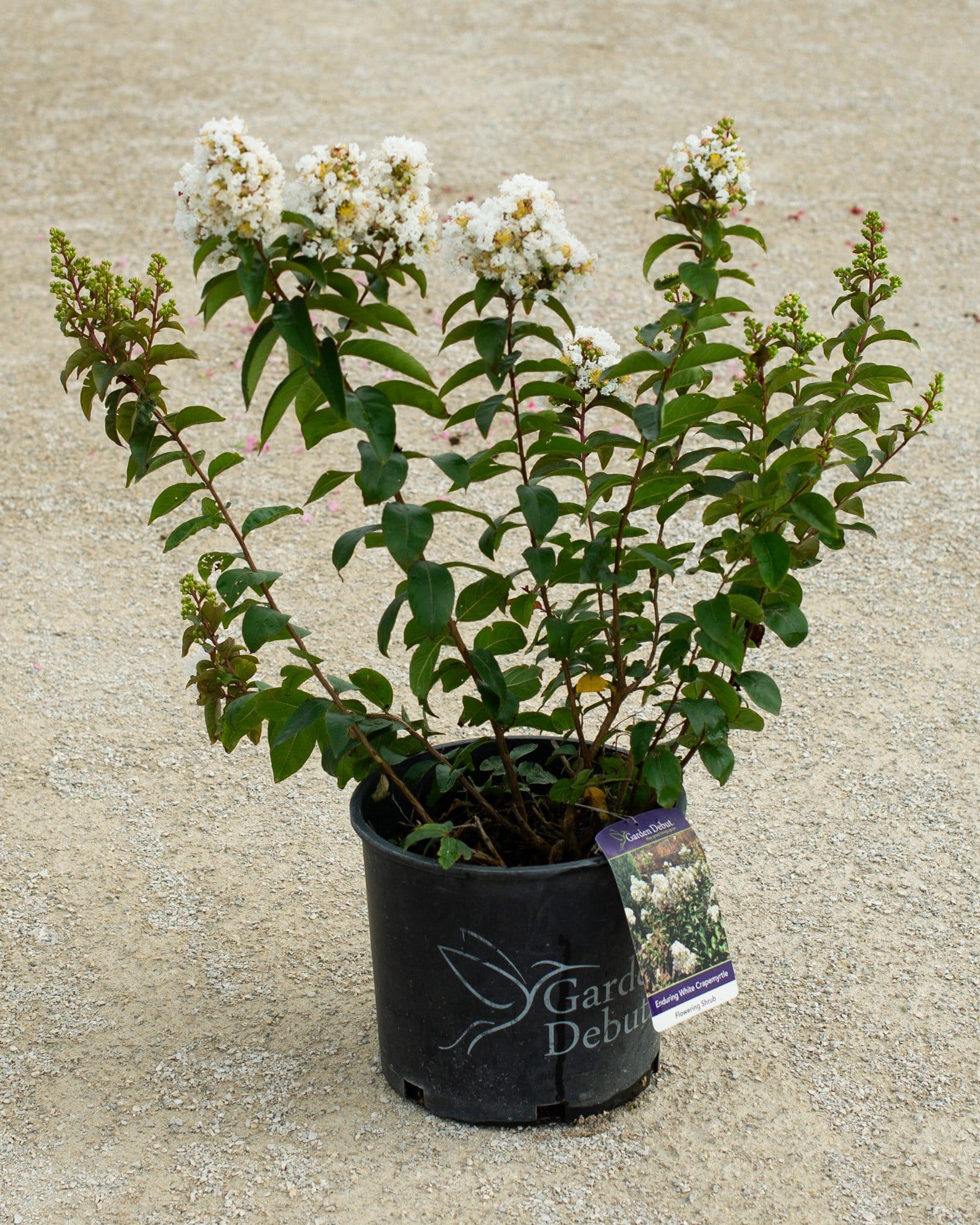
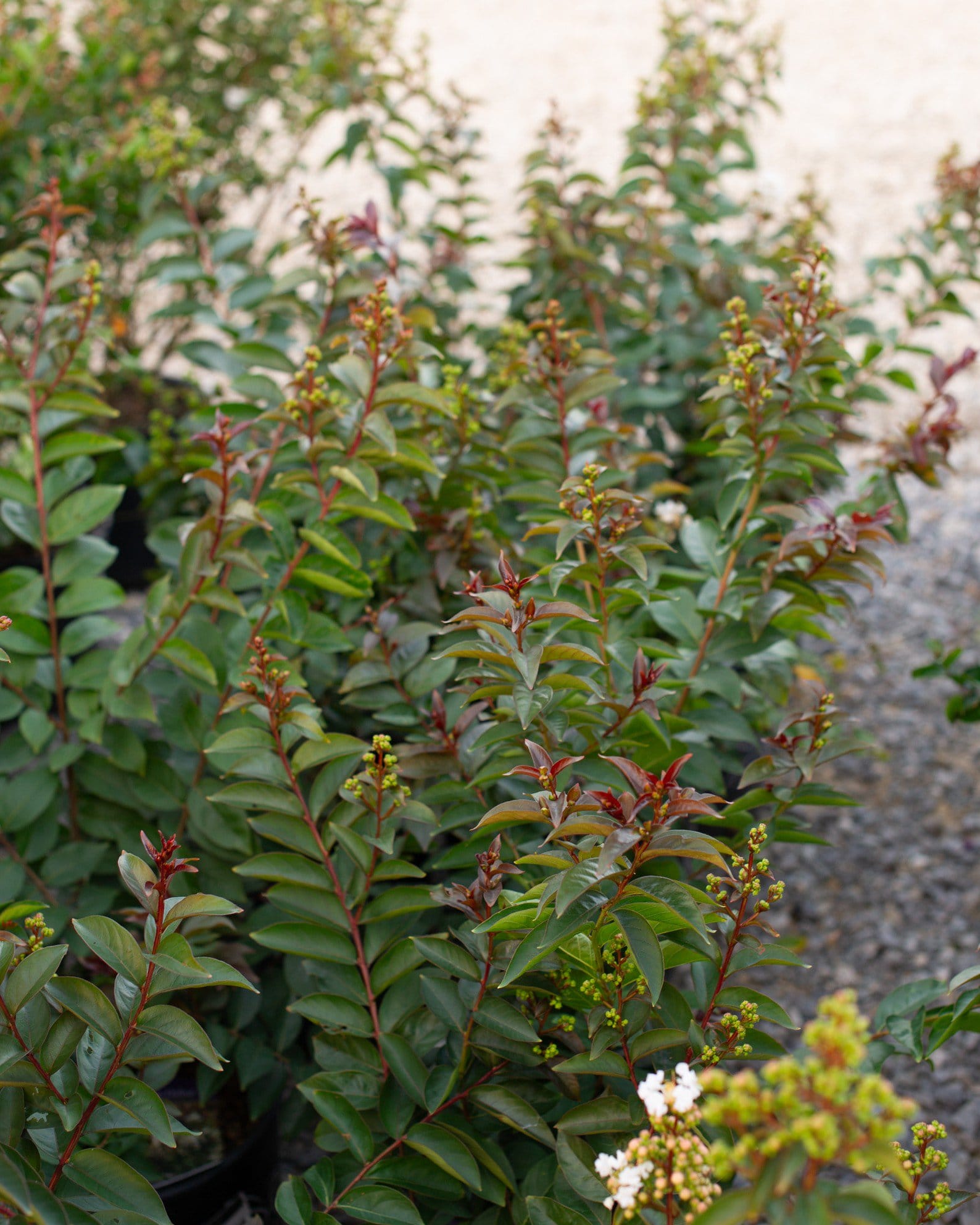
French Vanilla Crape Myrtle
Maturity: 2' H x 2' W
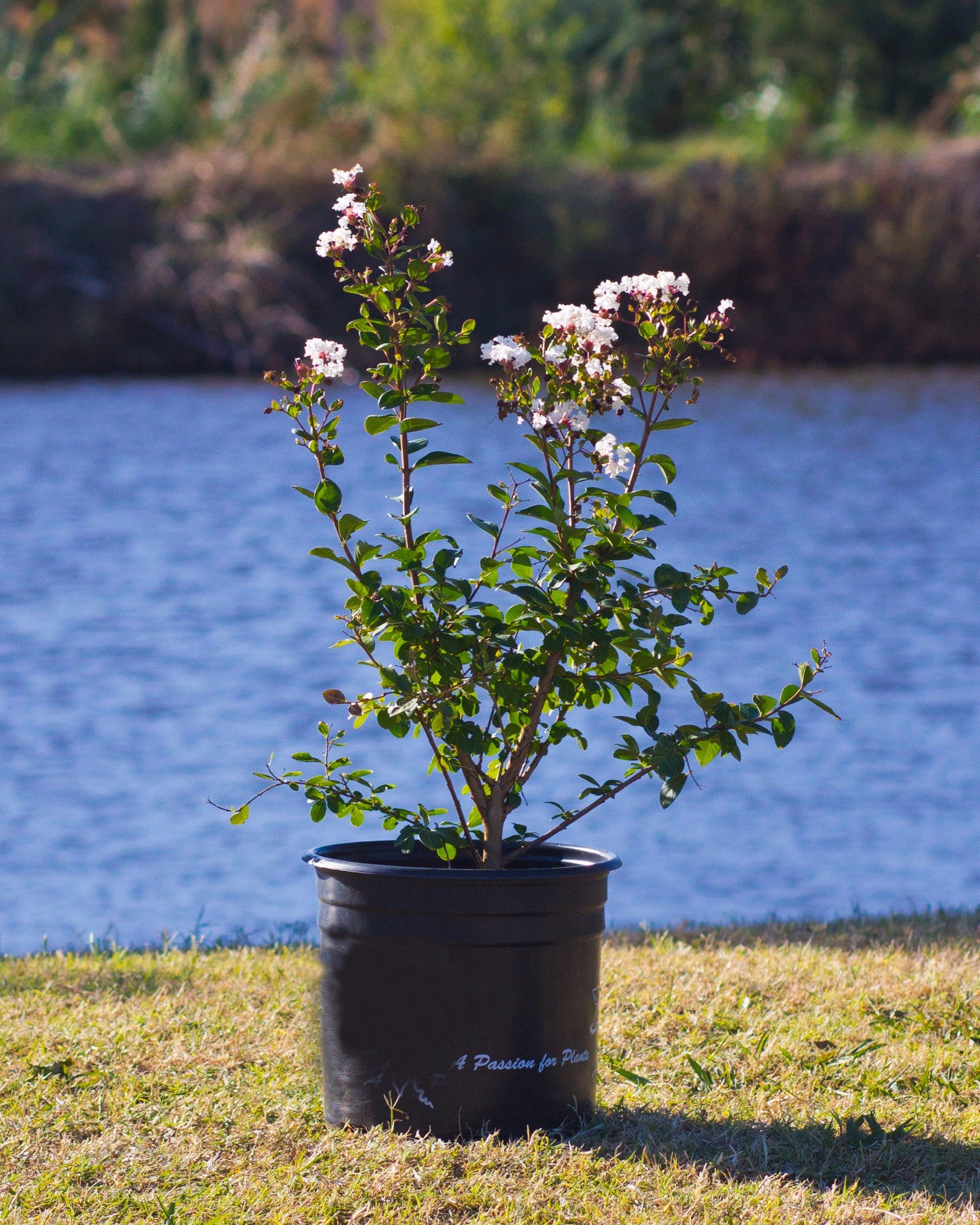
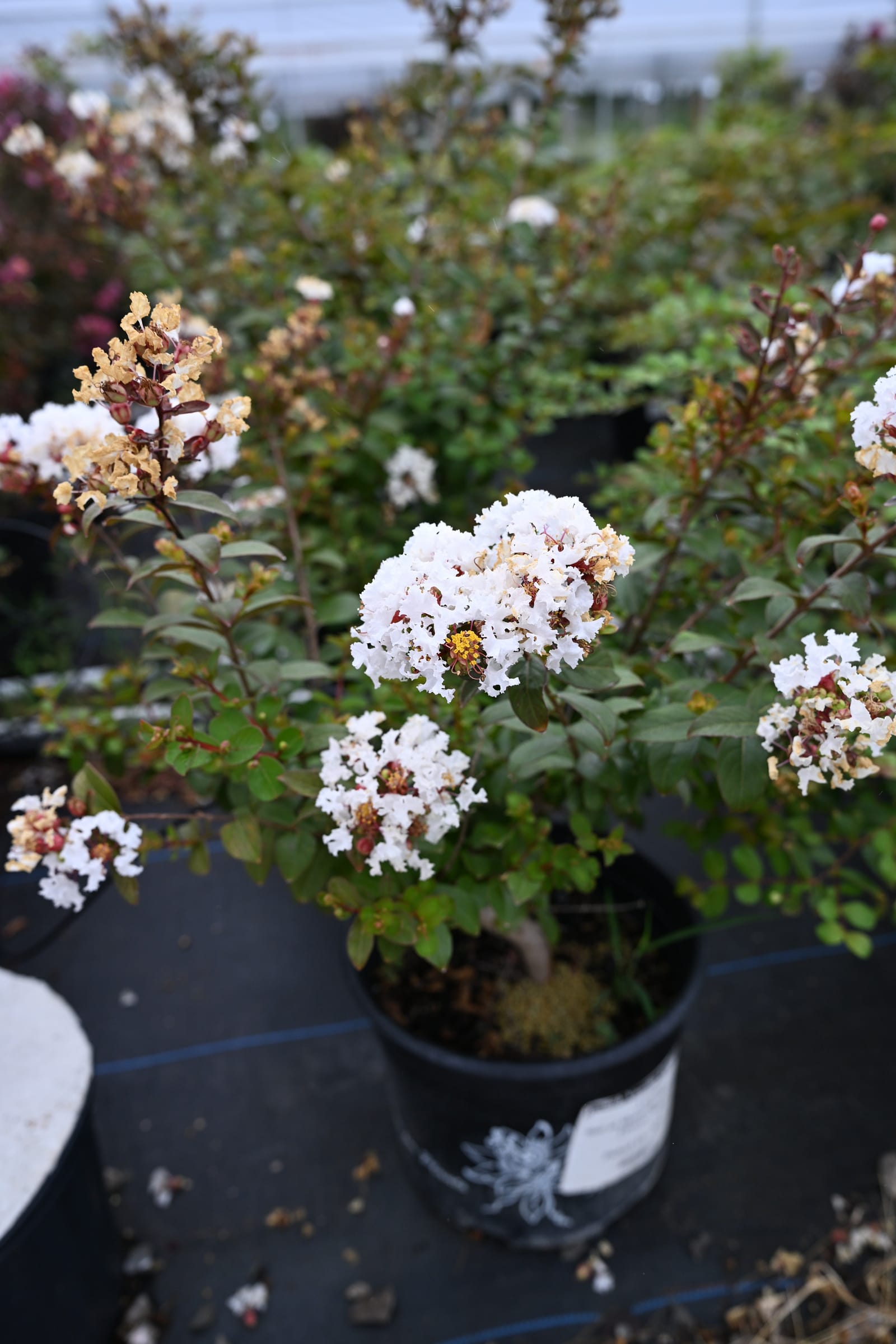
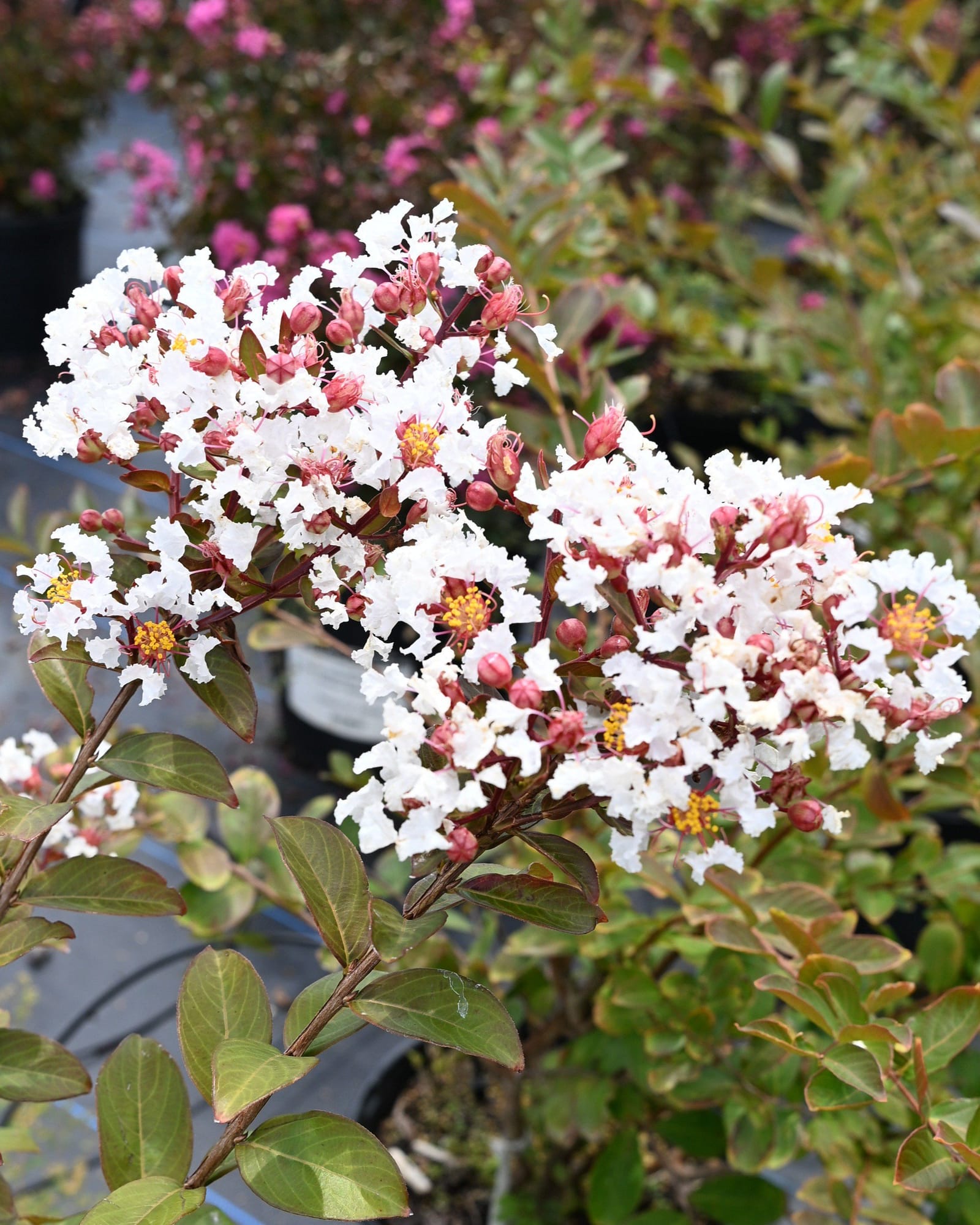
Like a Latte Crape Myrtle
Maturity: 3' H x 3' W
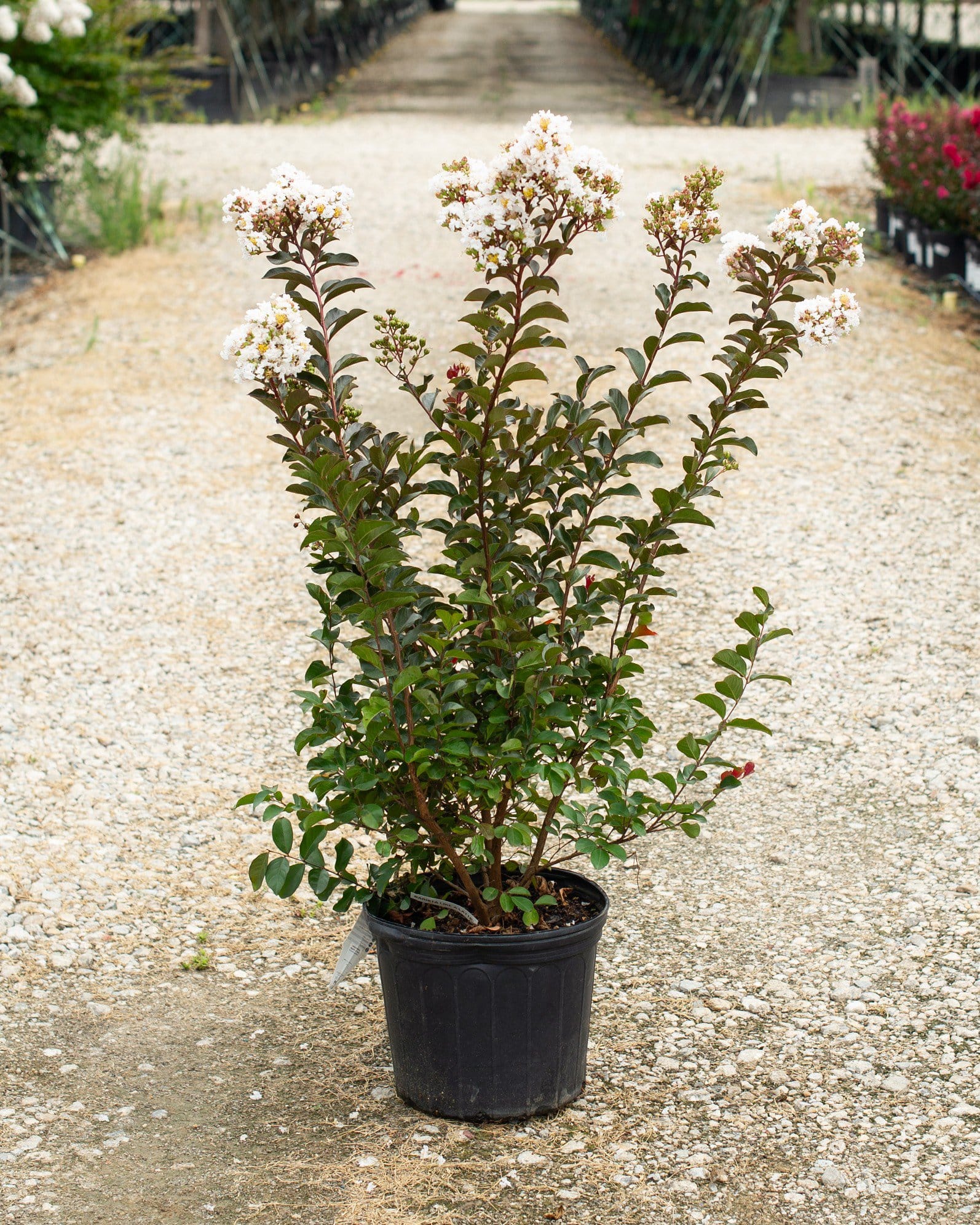
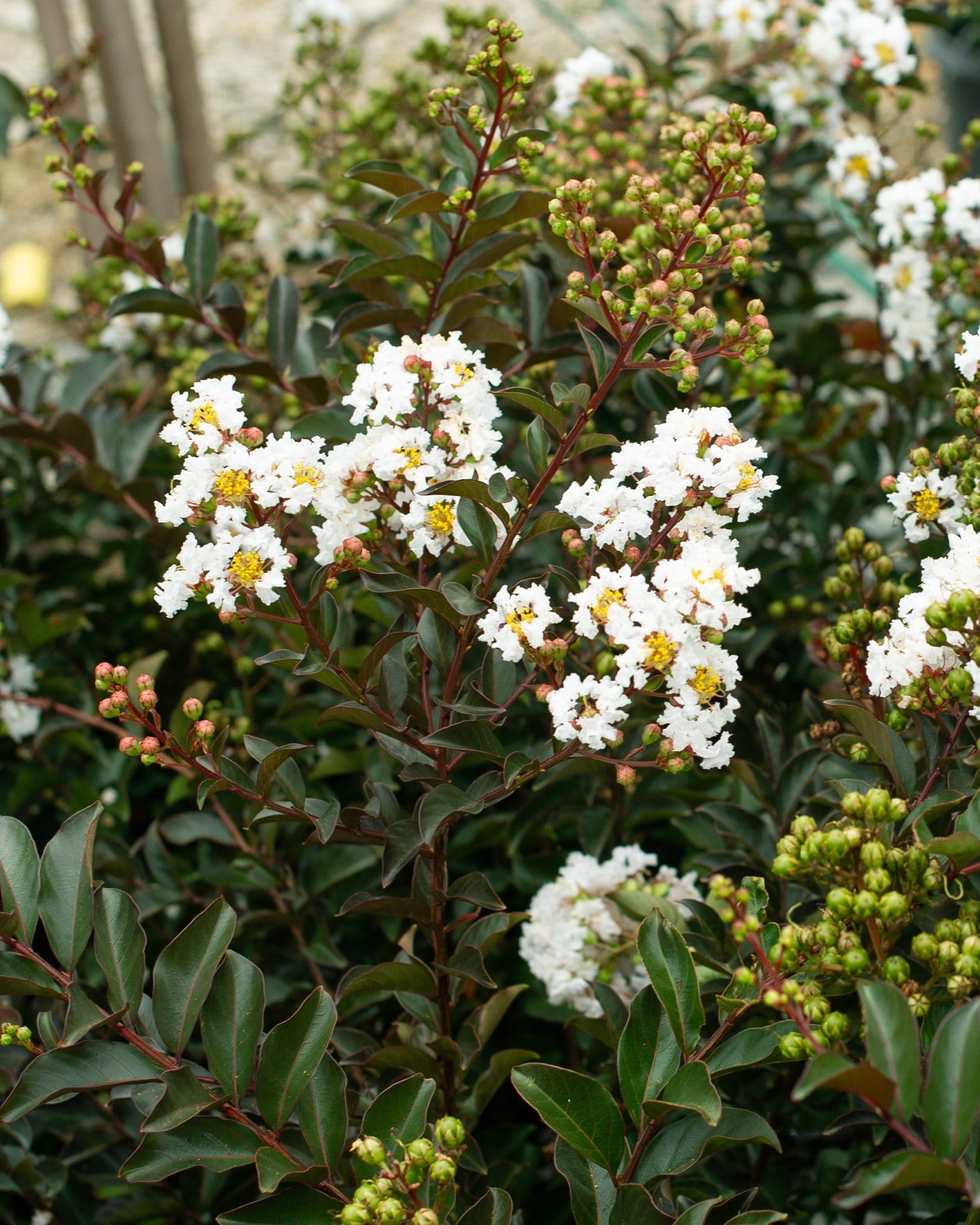
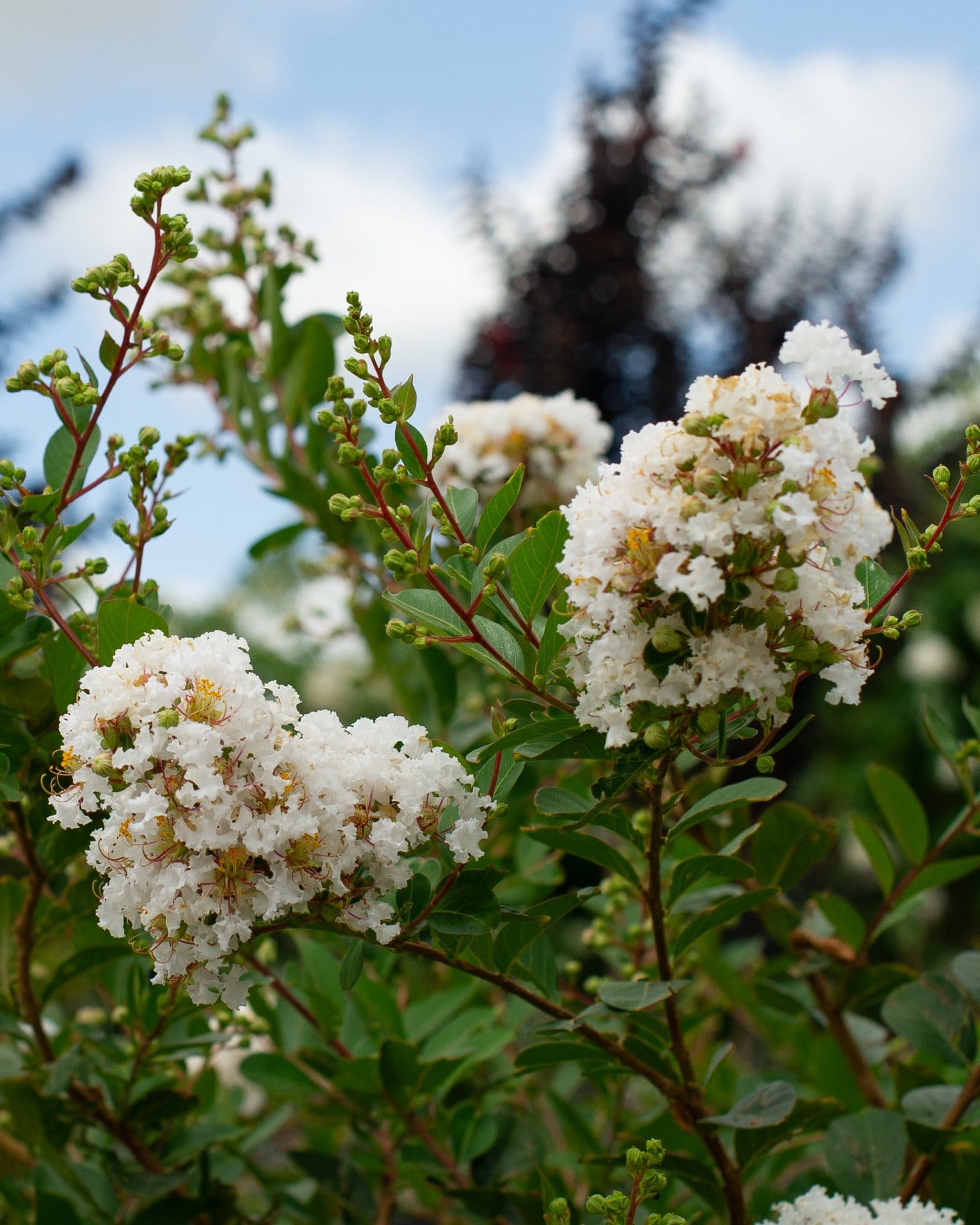
Acoma Crape Myrtle
Maturity: 7' H x 6' W
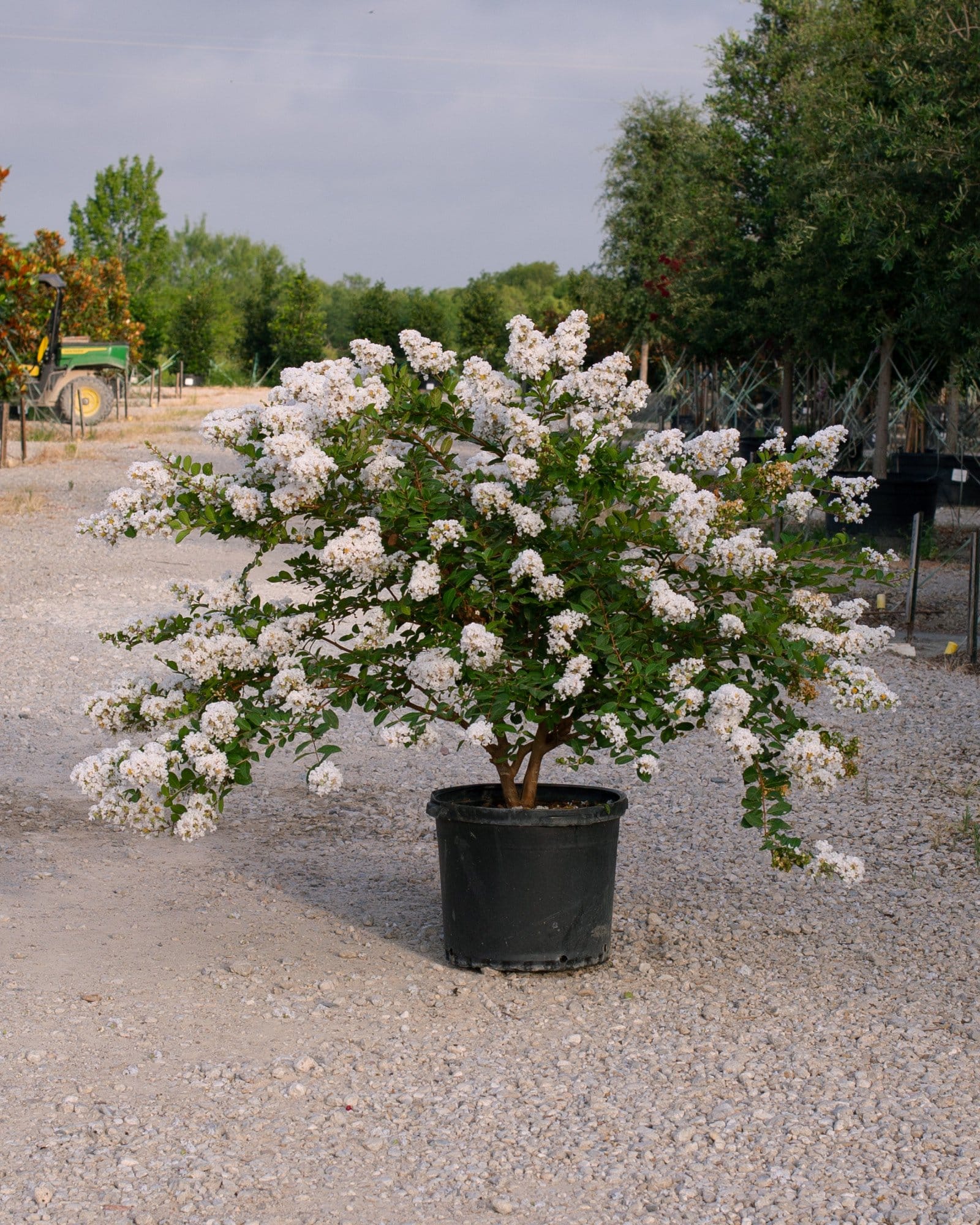
Lava Java Crape Myrtle
Maturity: 3' H x 3' W
Compare Similar Plants
Bellini Raspberry Crape Myrtle This plant | ||
|---|---|---|
| Scientific Name | Lagerstroemia indica 'Conlagras' | Lagerstroemia indica ‘Cotton Candy’ |
| Size at Maturity | 3' H x 3' W | 2' H x 2' W |
| Leaf Retention | Deciduous | Deciduous |
| Fall Color | — | Yellow |
| Flower Color | Pink | Pink |
| Bloom Times | Summer | Summer |
| Sizes Available | 3 gal | 3, 7 gal |


Our 1-Year Planting Guarantee
We take pride in our plants and installation services. If any plants or trees installed by Treeland fail to thrive within the first year, we'll provide a replacement credit in accordance with our guarantee program.
Learn More About Our Guarantee