
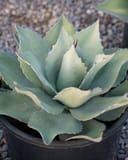
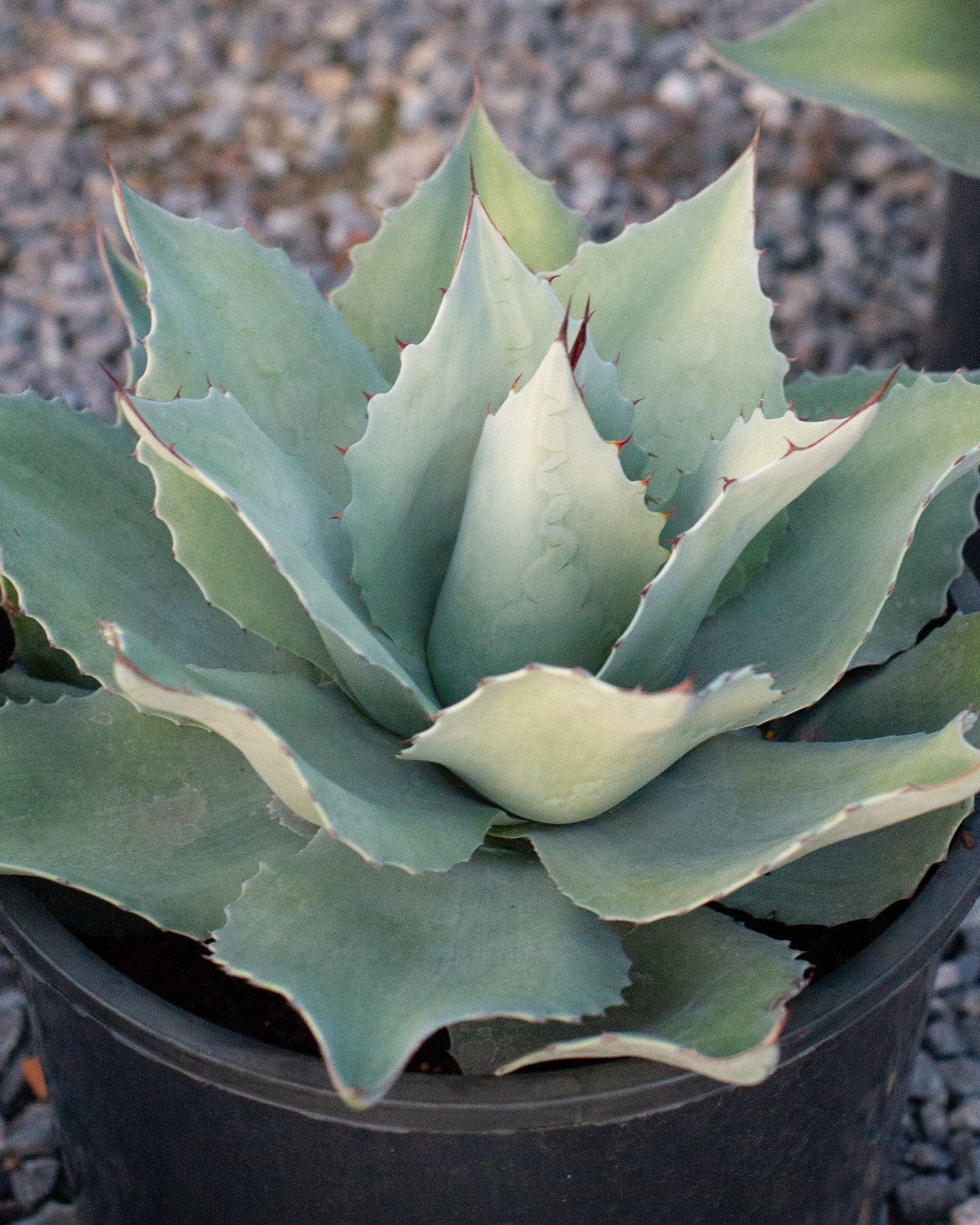
Whale's Tongue Agave Frosty Blue
Agave ovatifolia ‘Frosty Blue’Local DFW Delivery Only
Product Details
Whale's Tongue Agave Frosty Blue
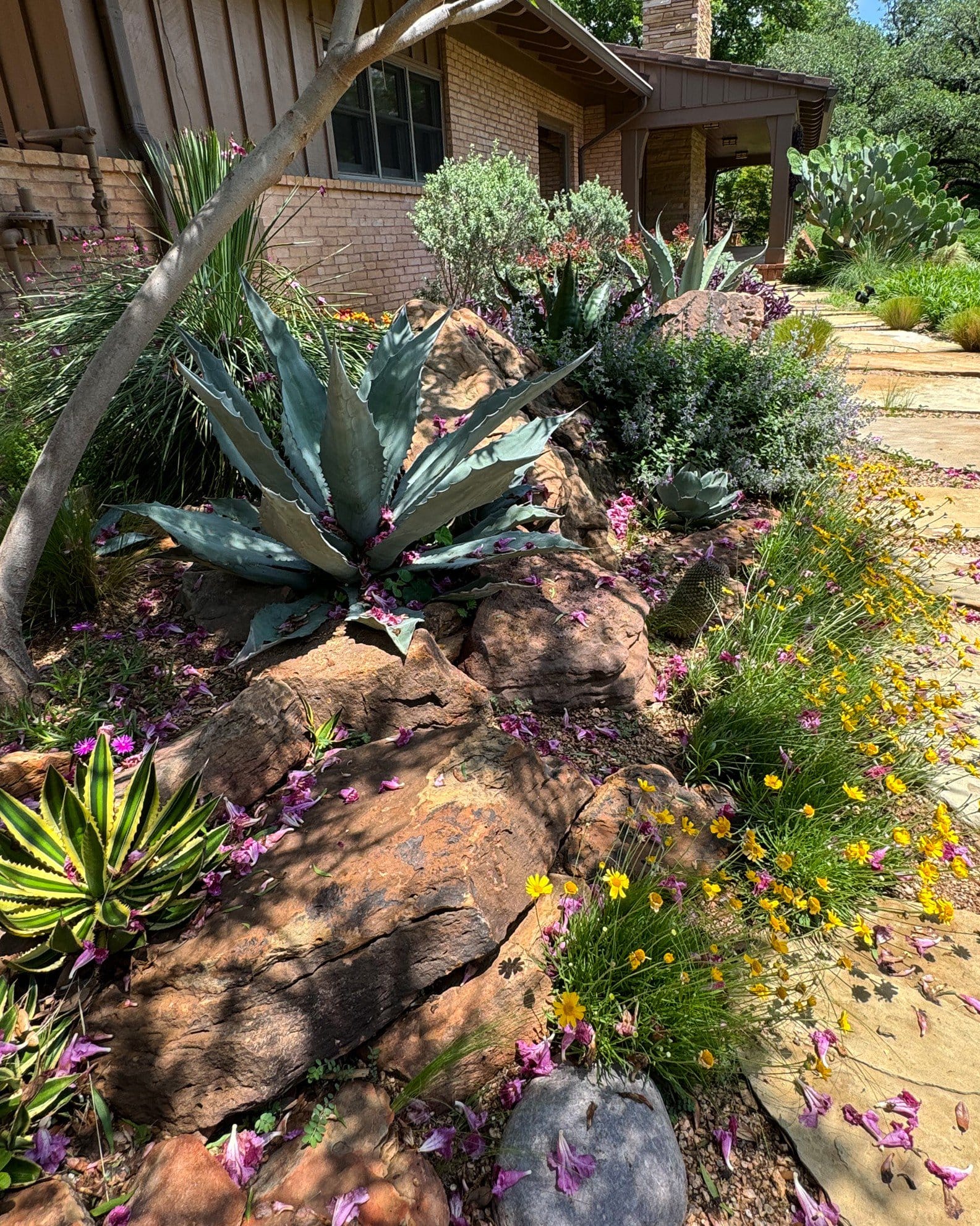
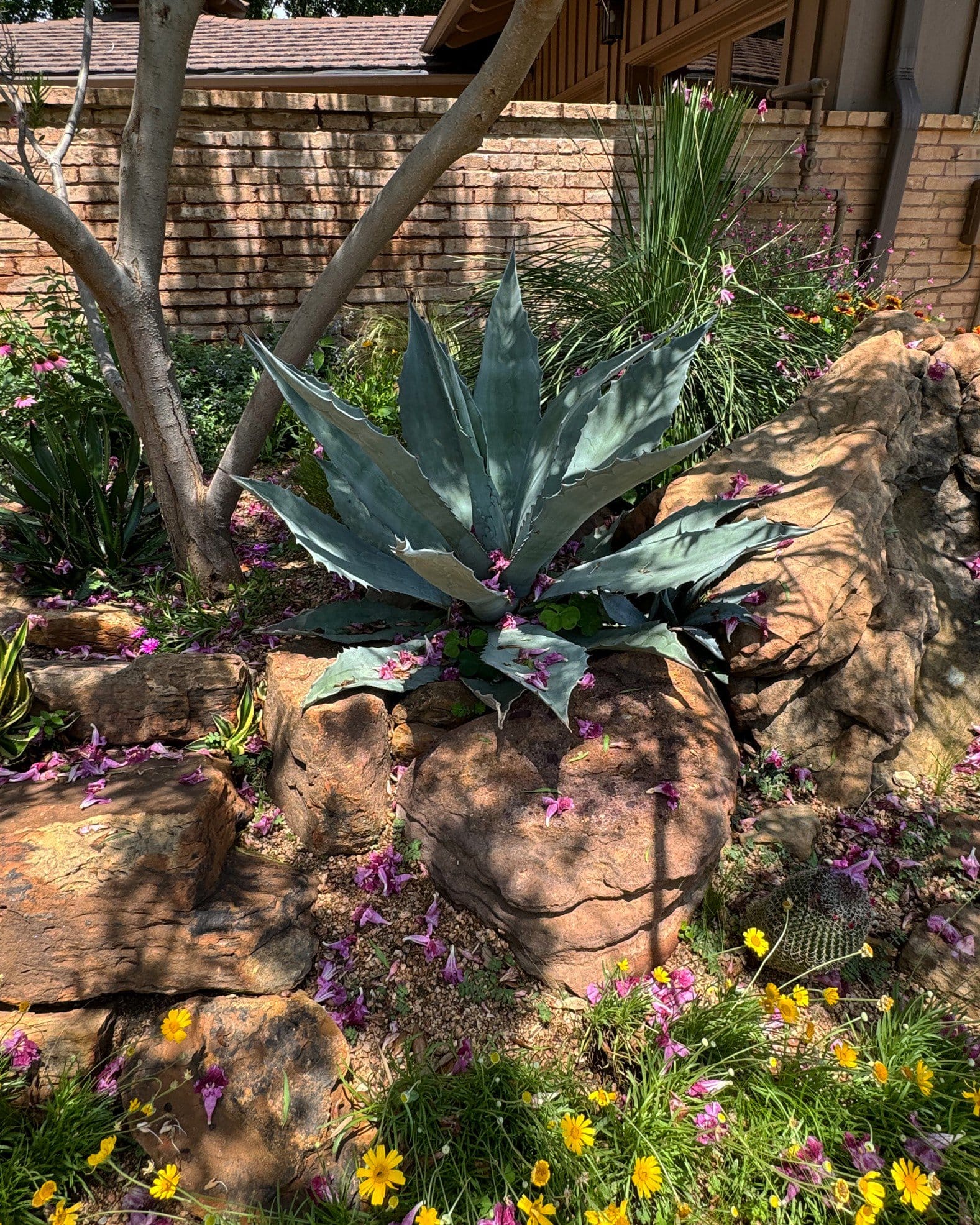
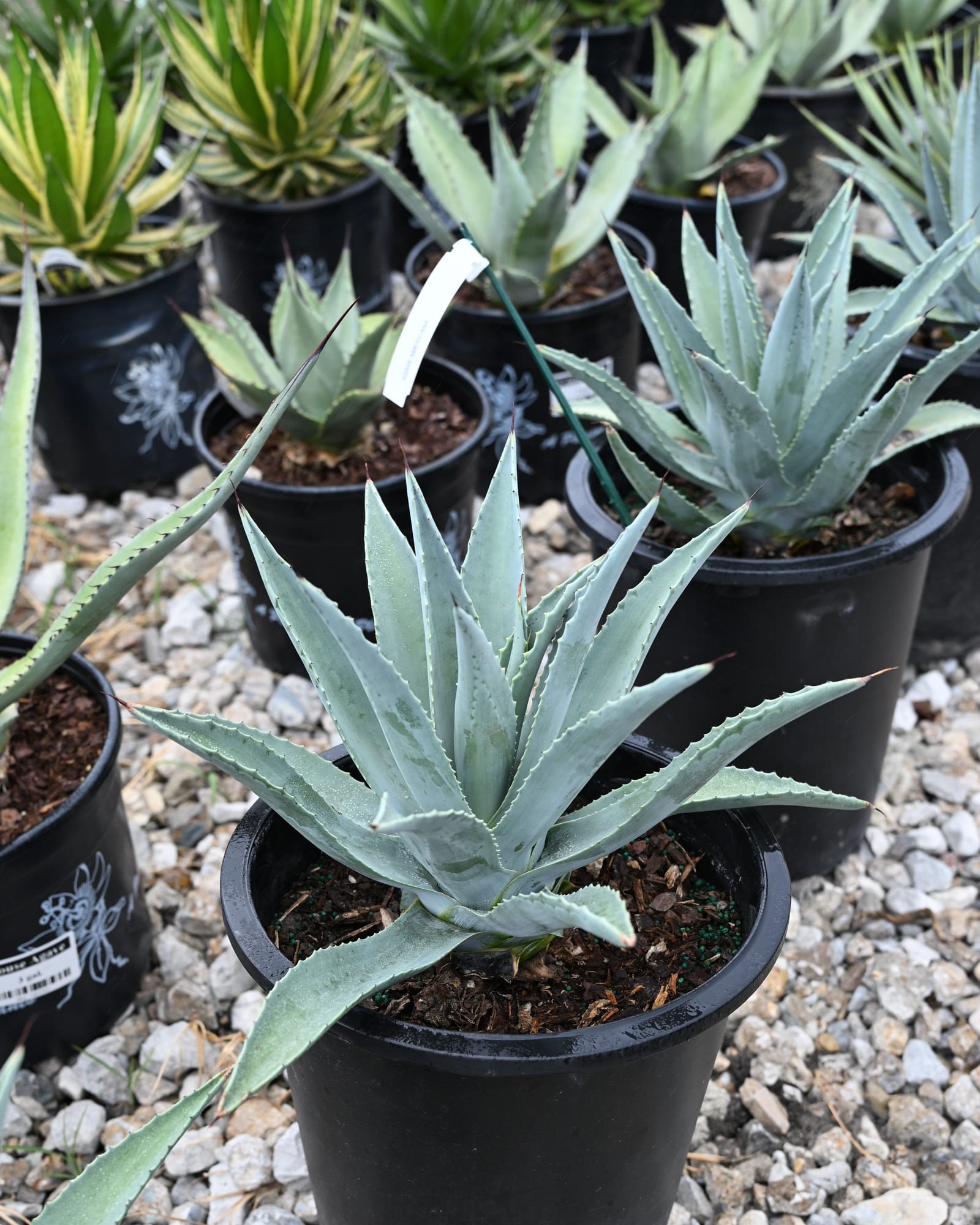
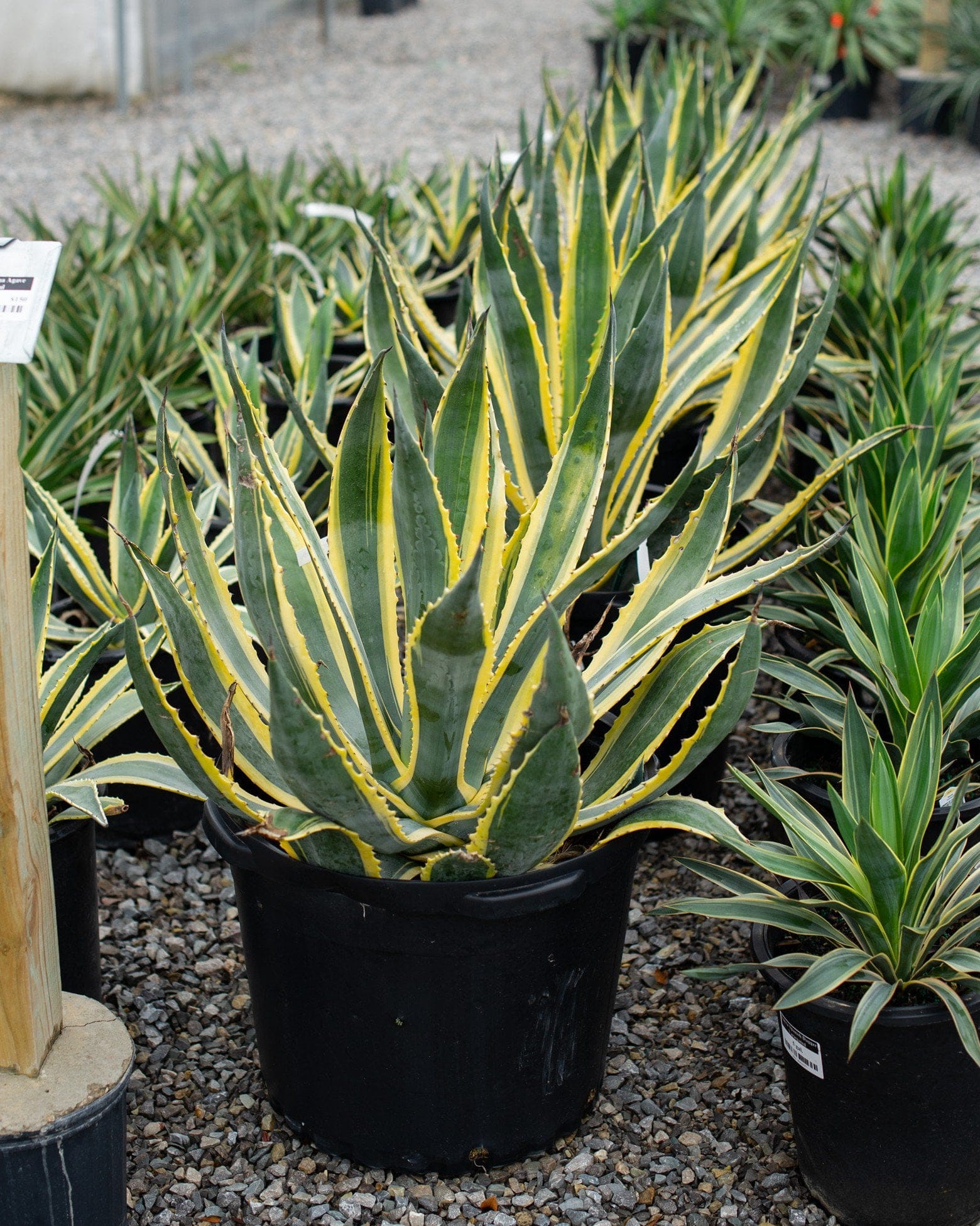
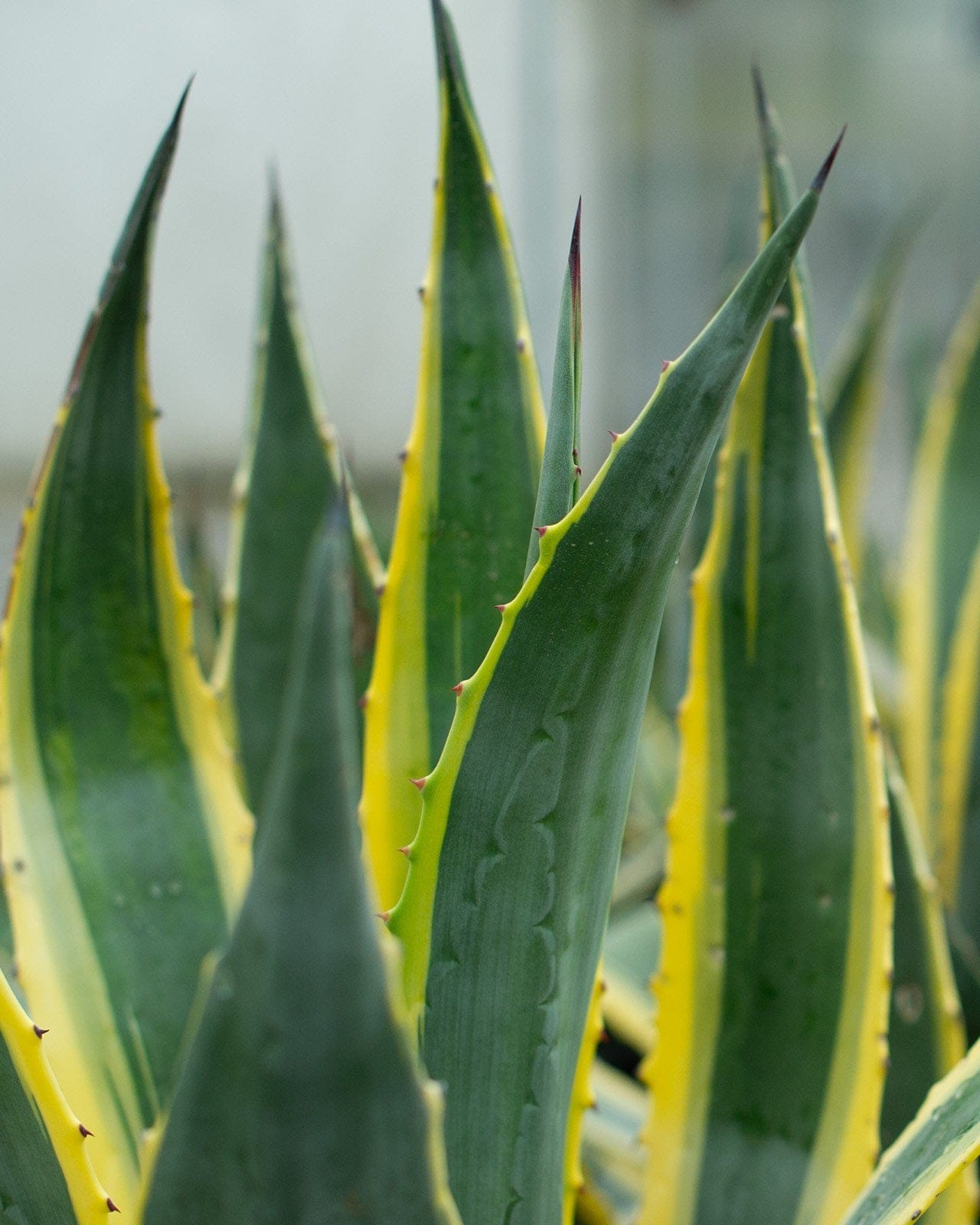
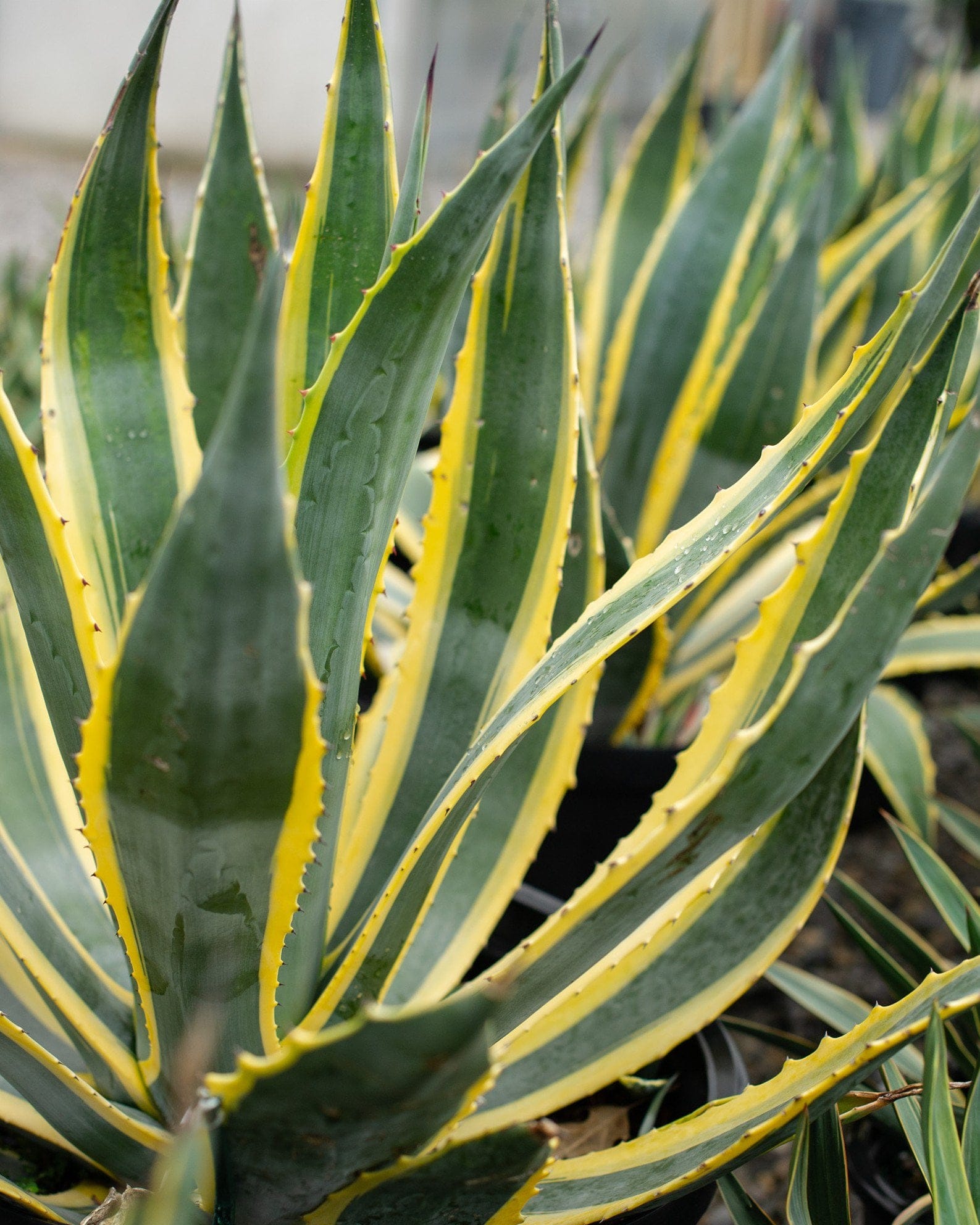
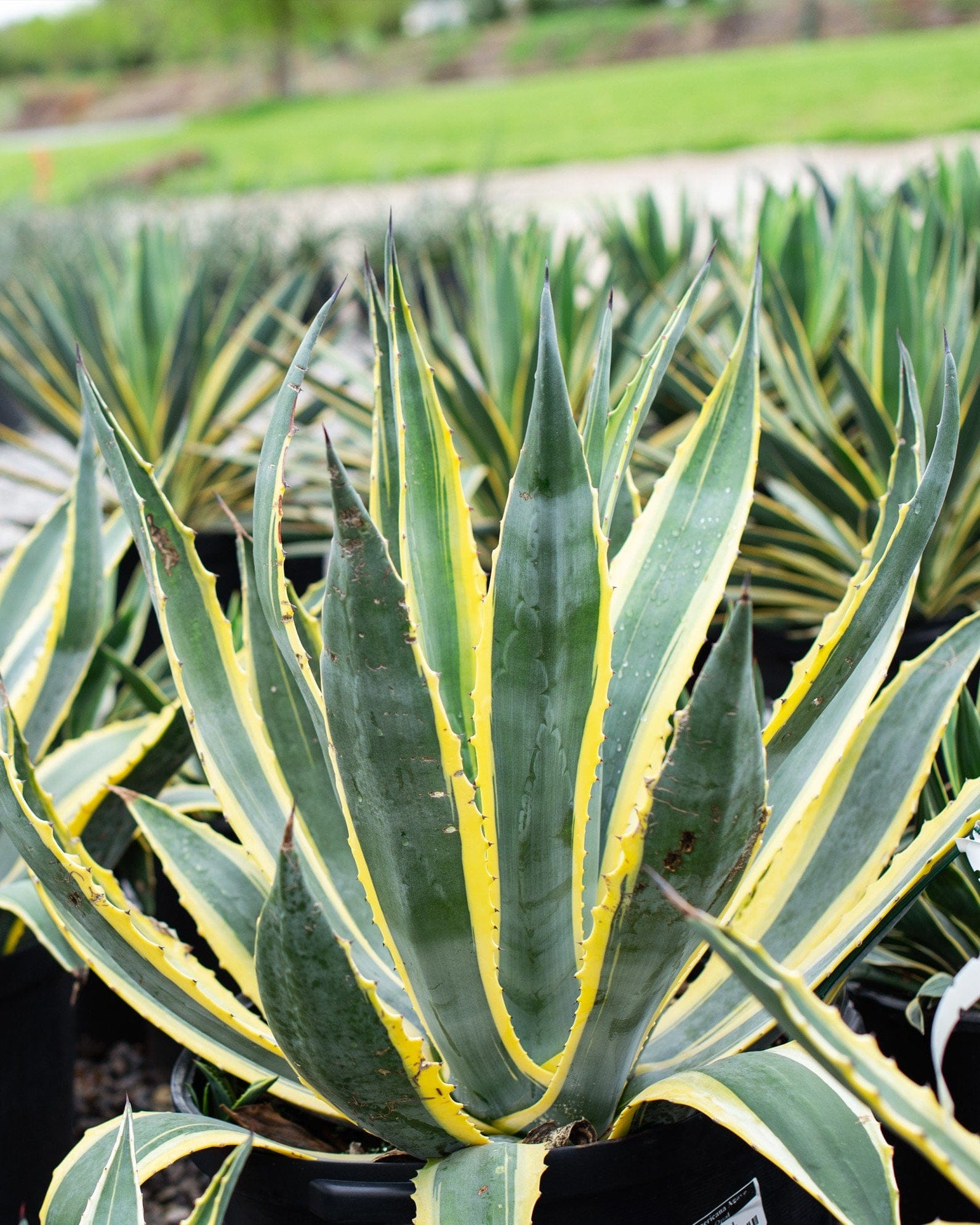
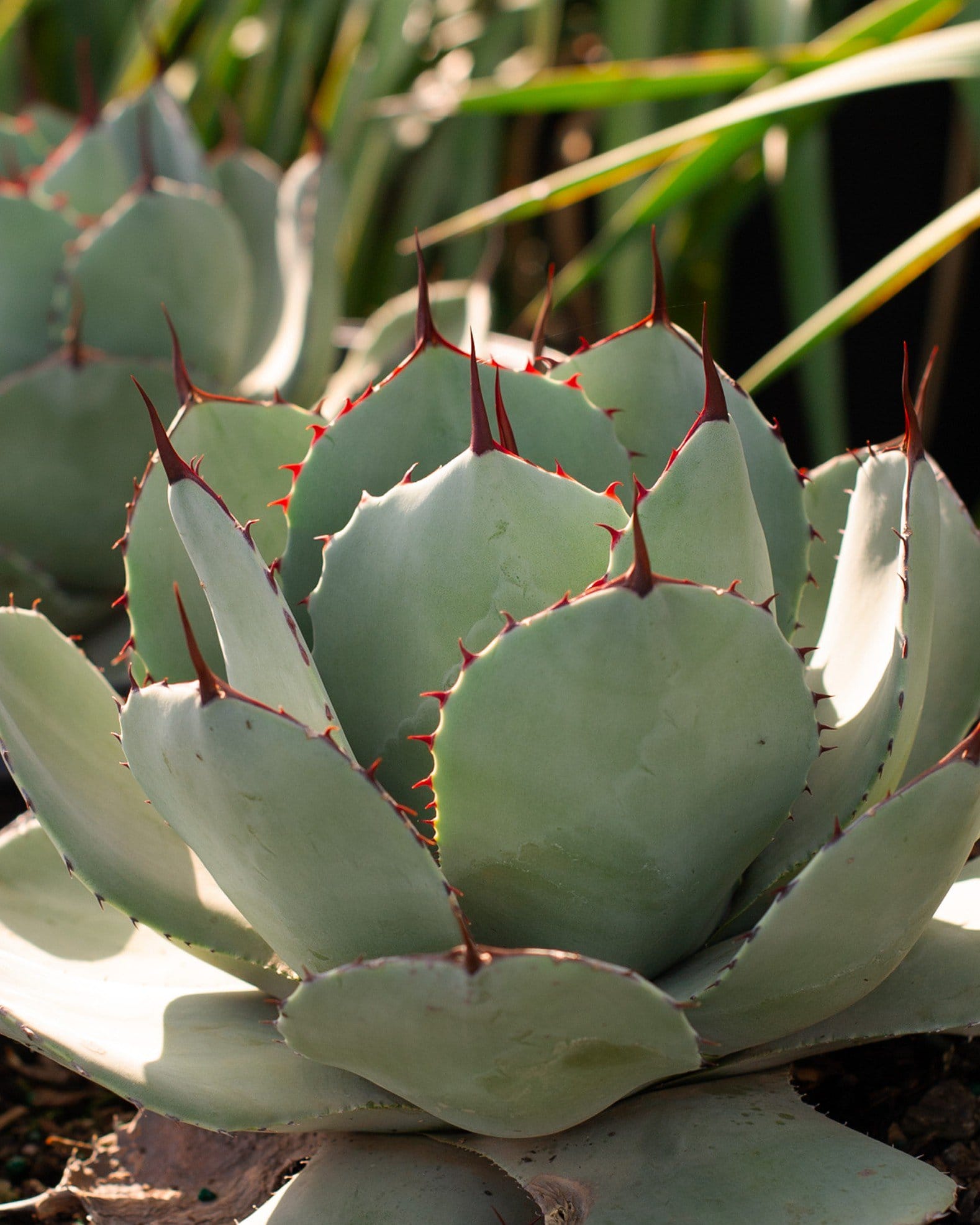
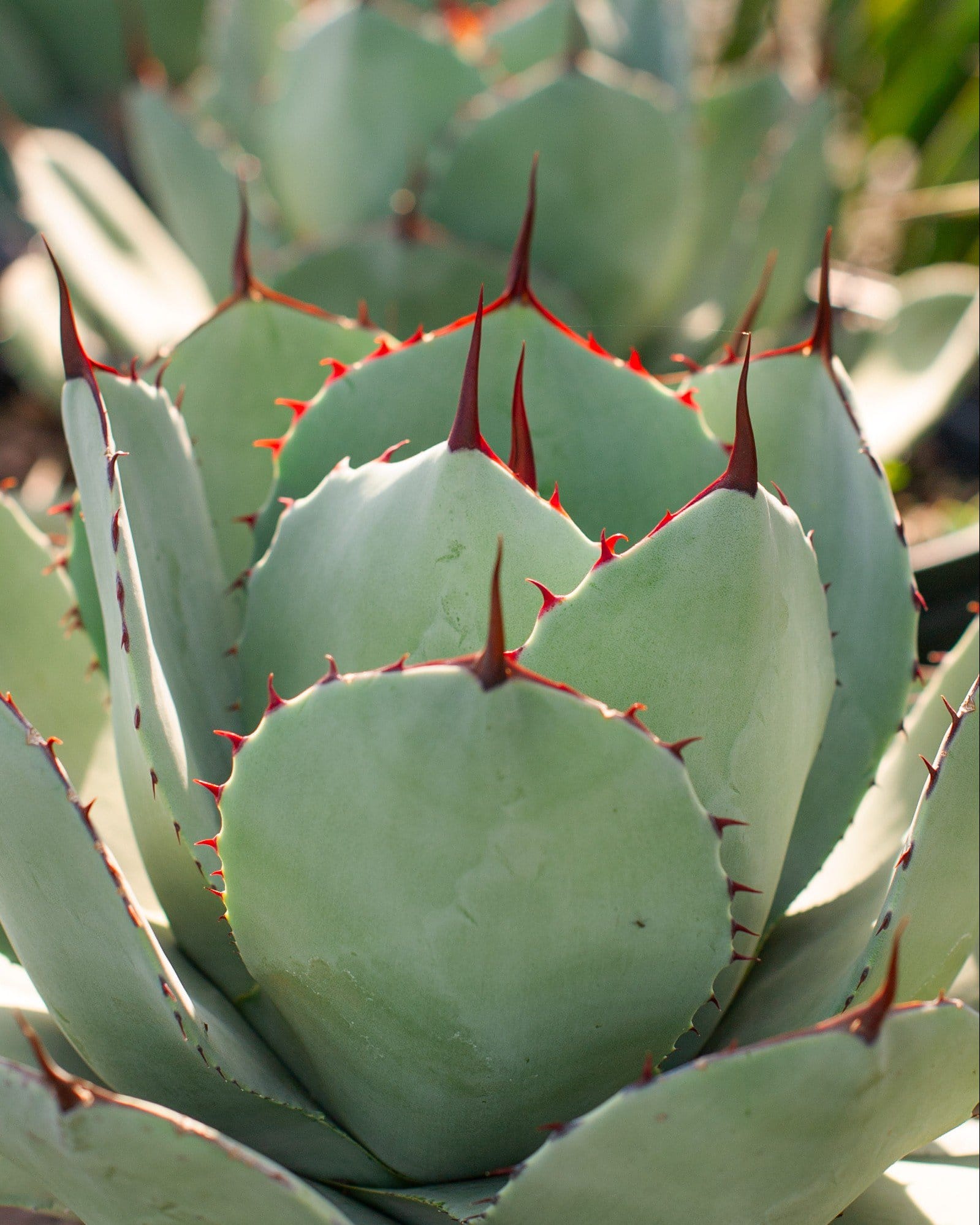
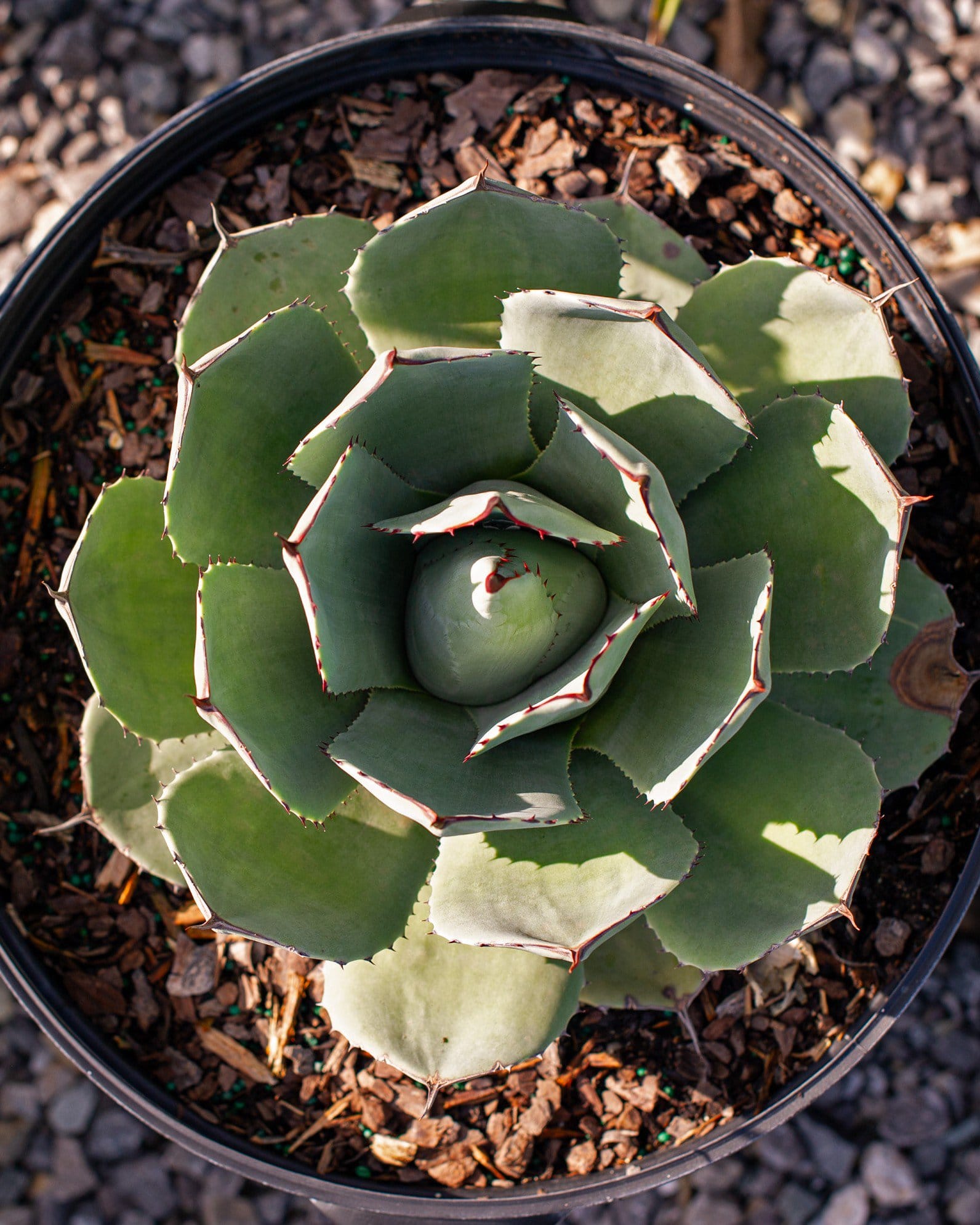
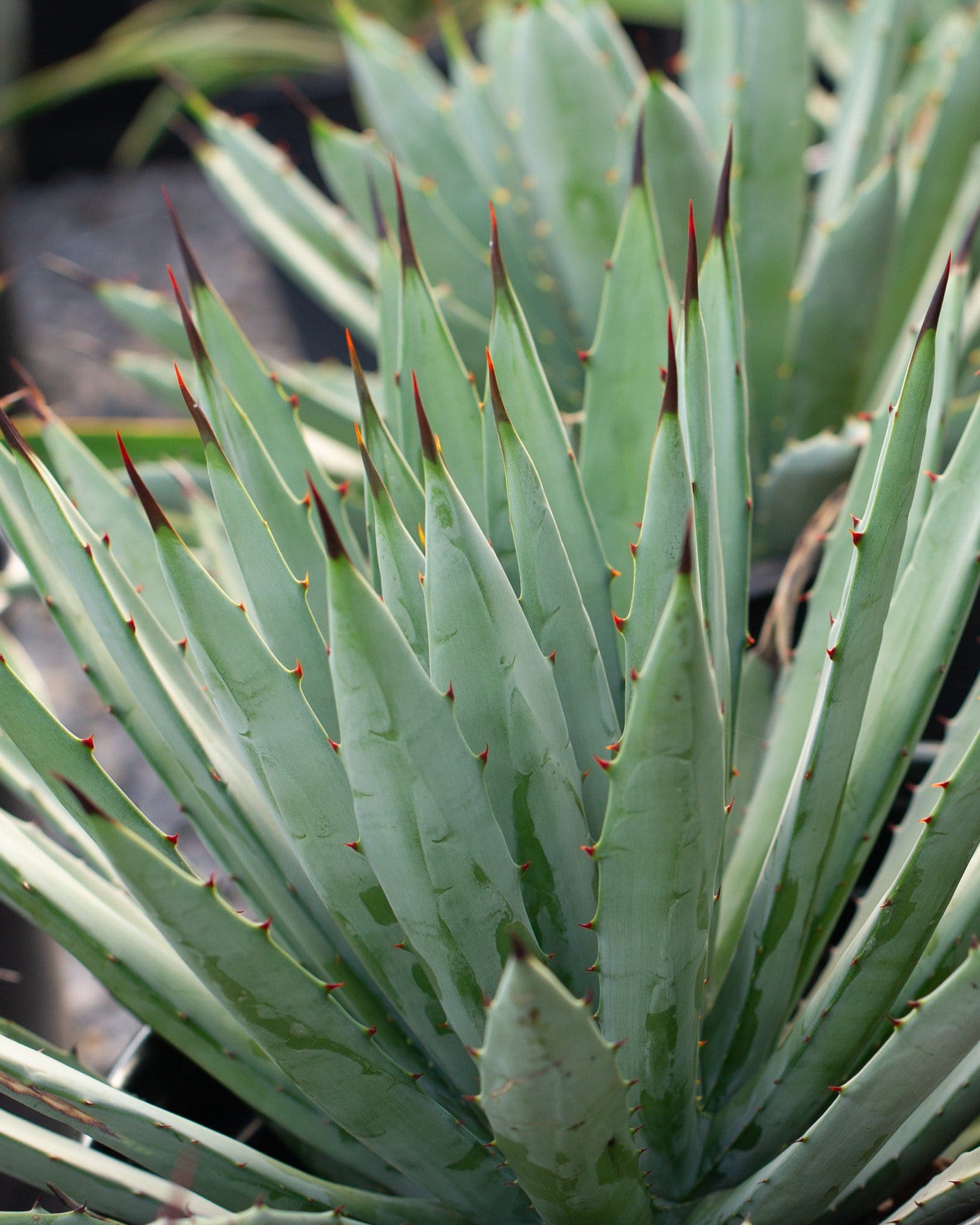
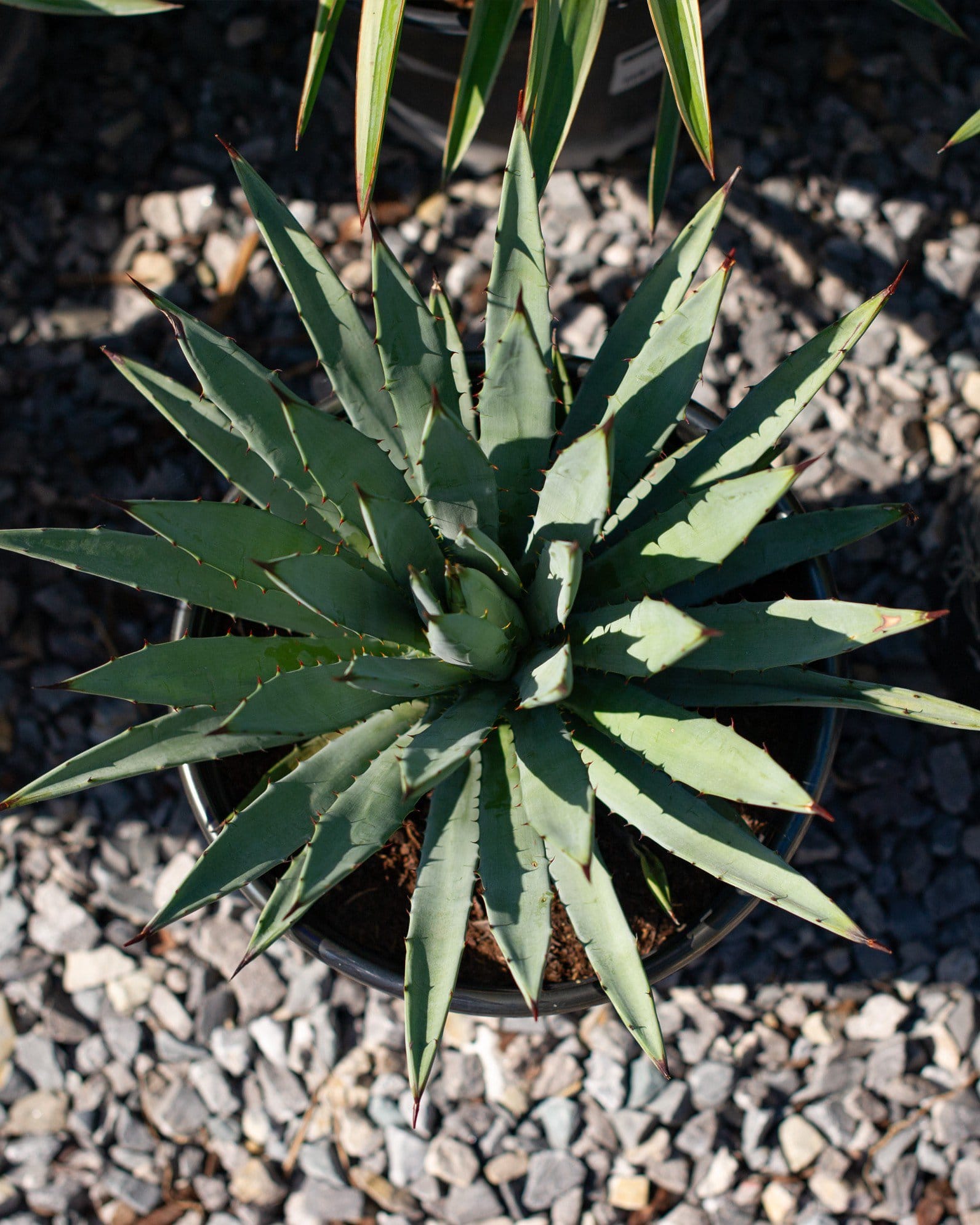
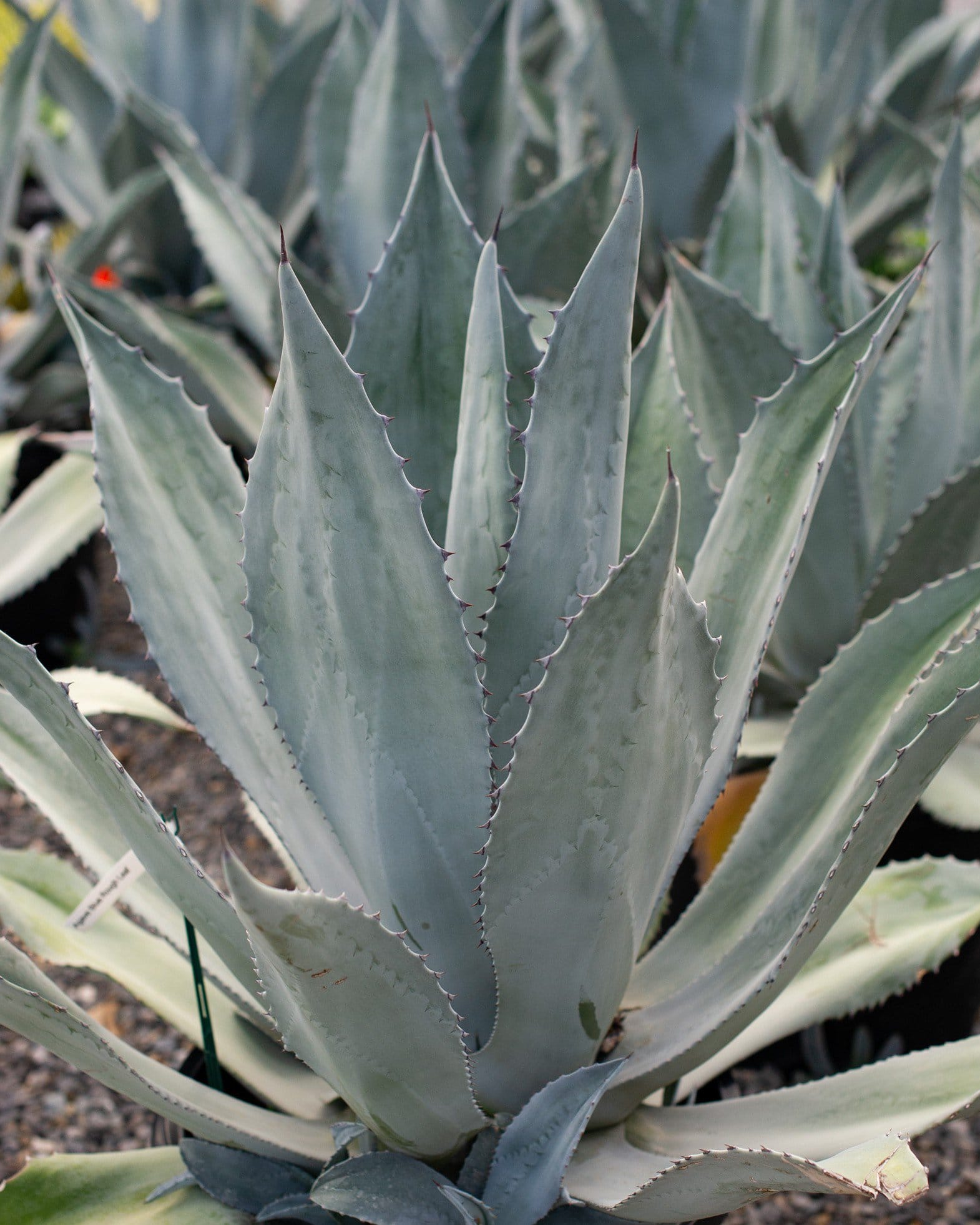
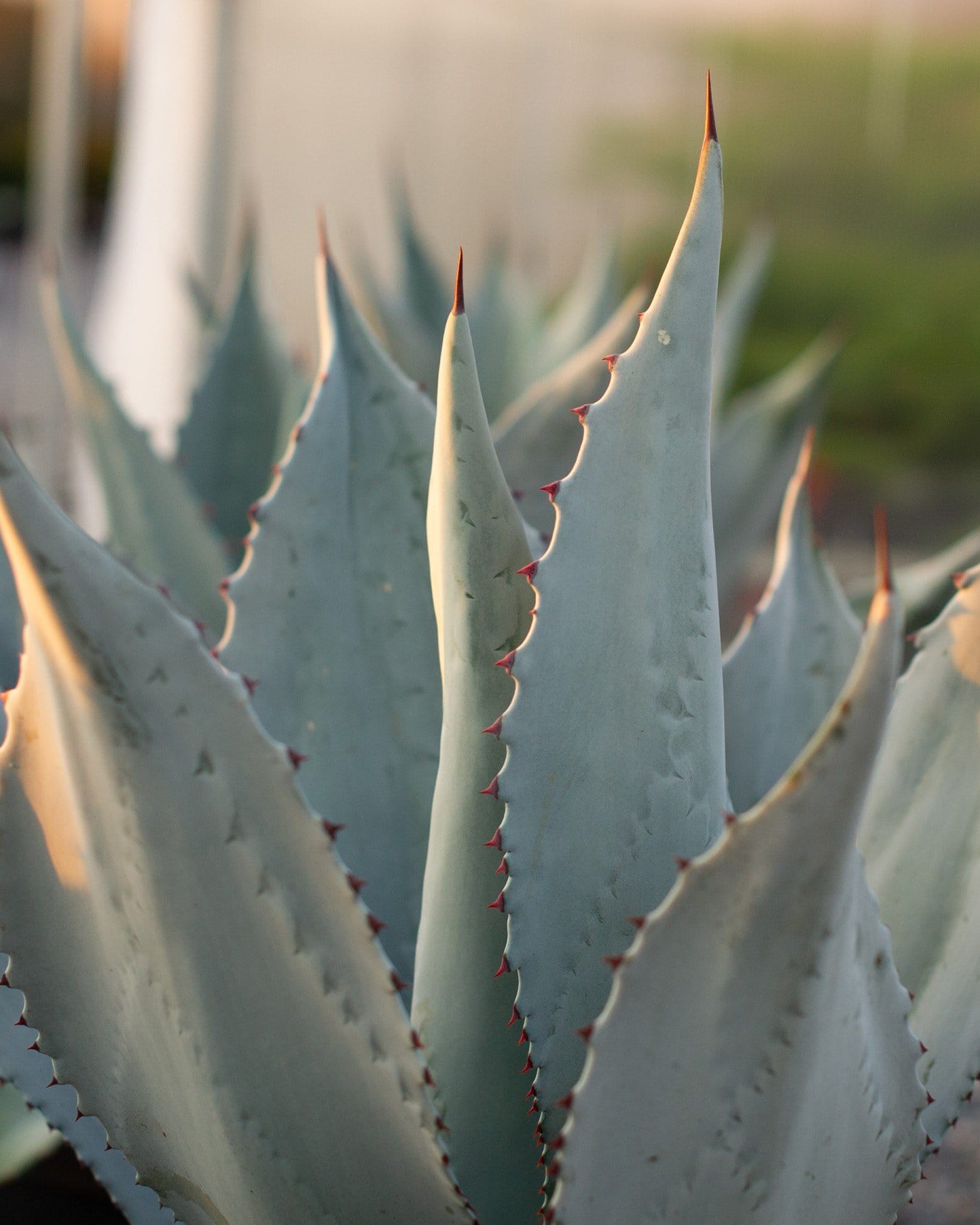
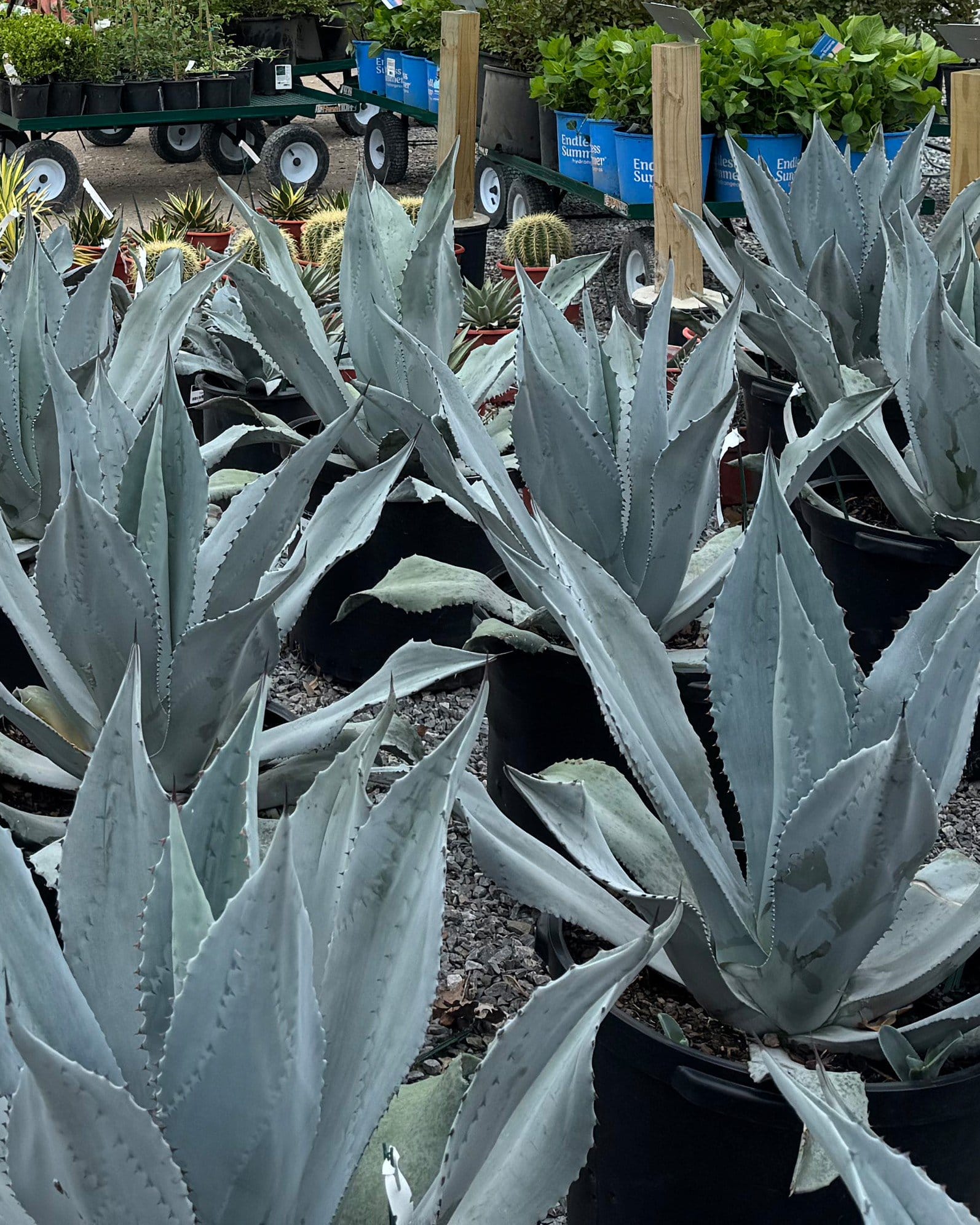
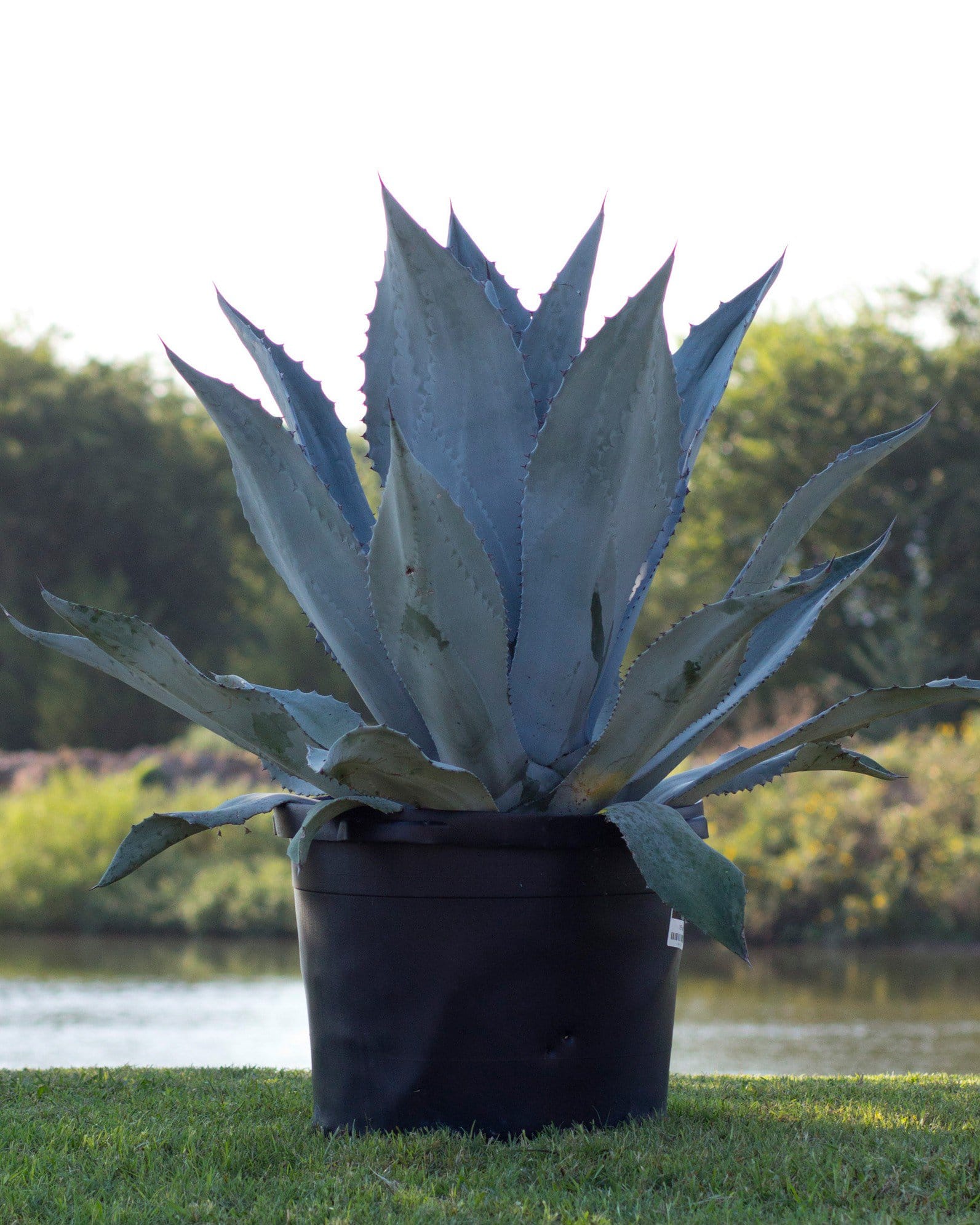
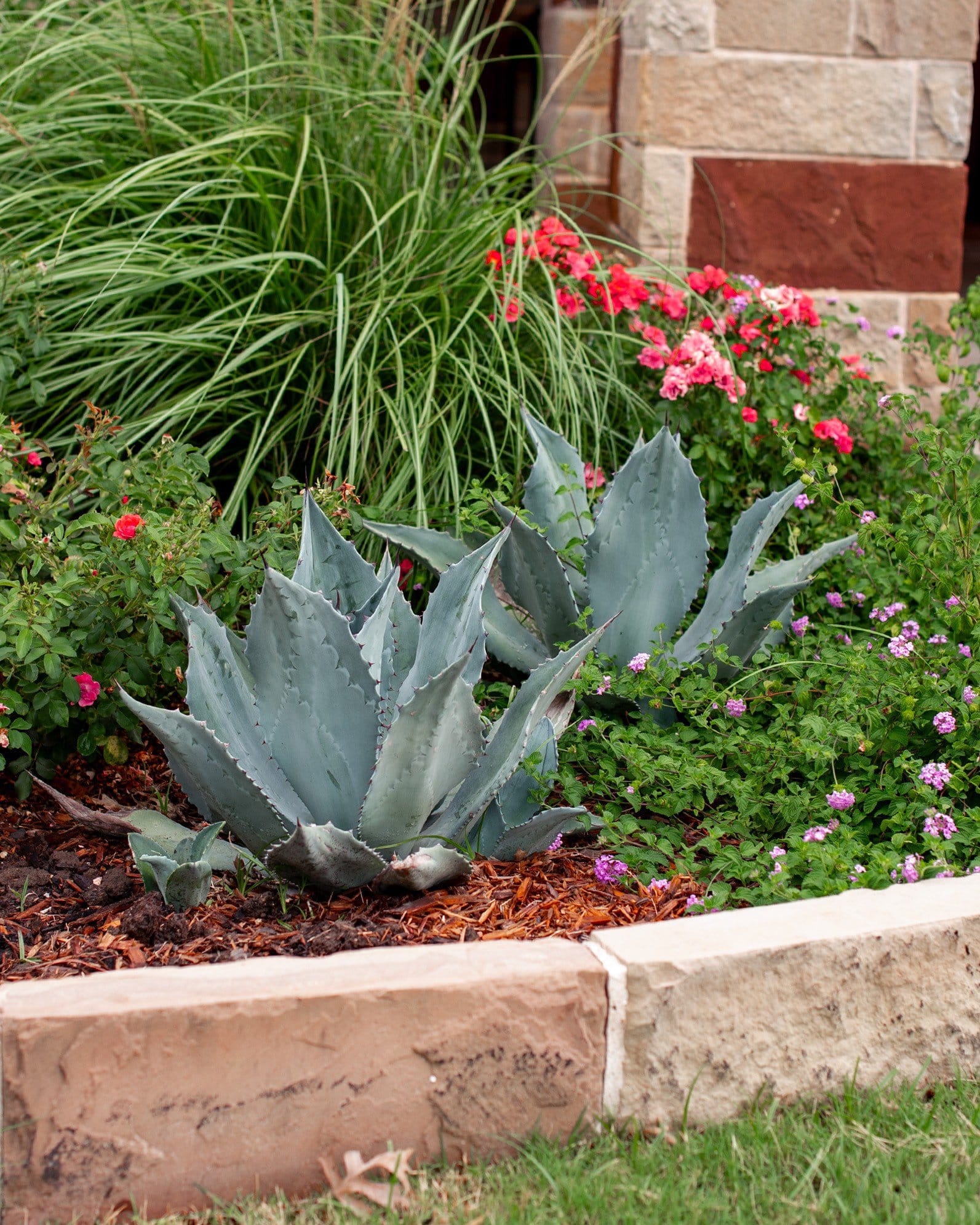
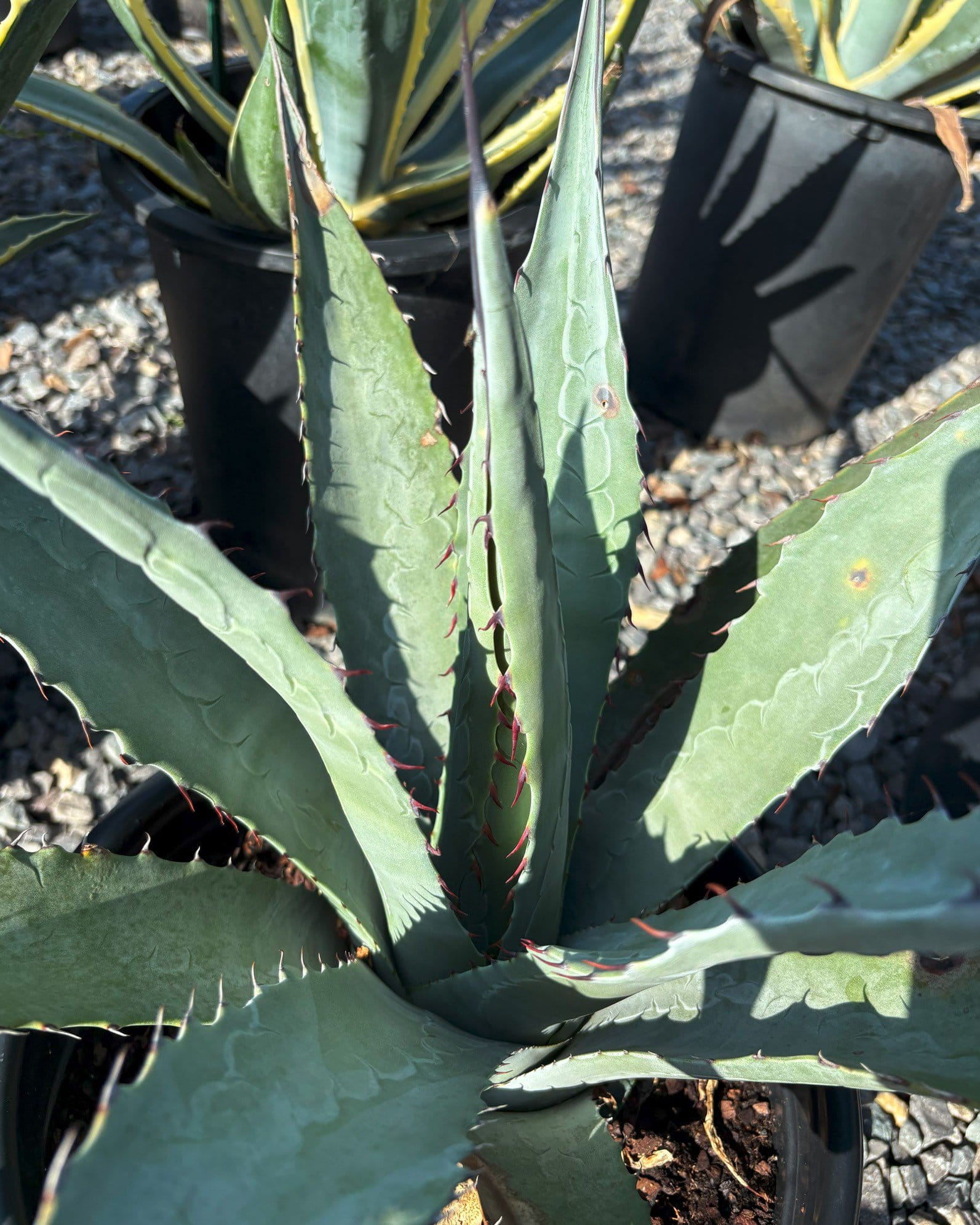
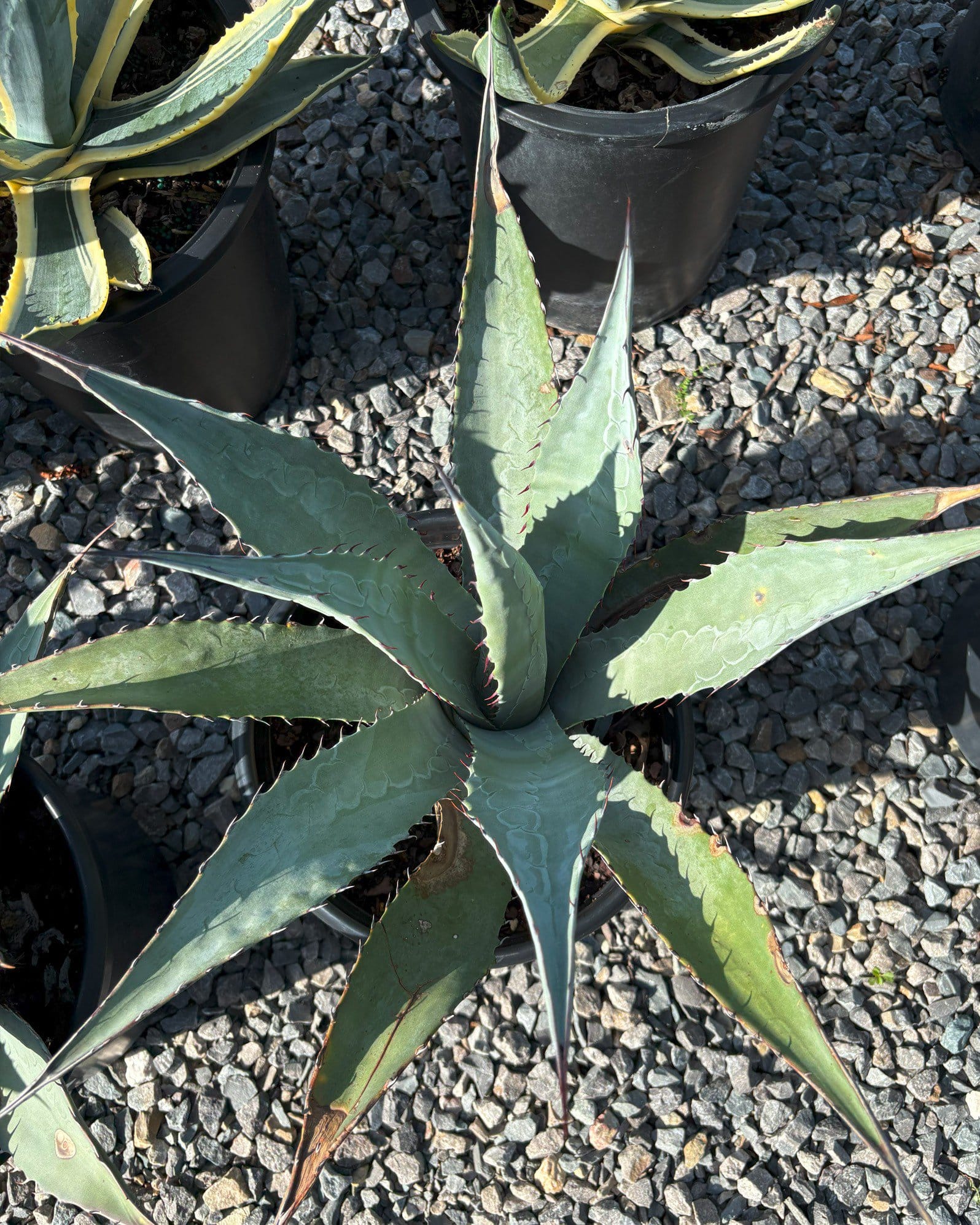
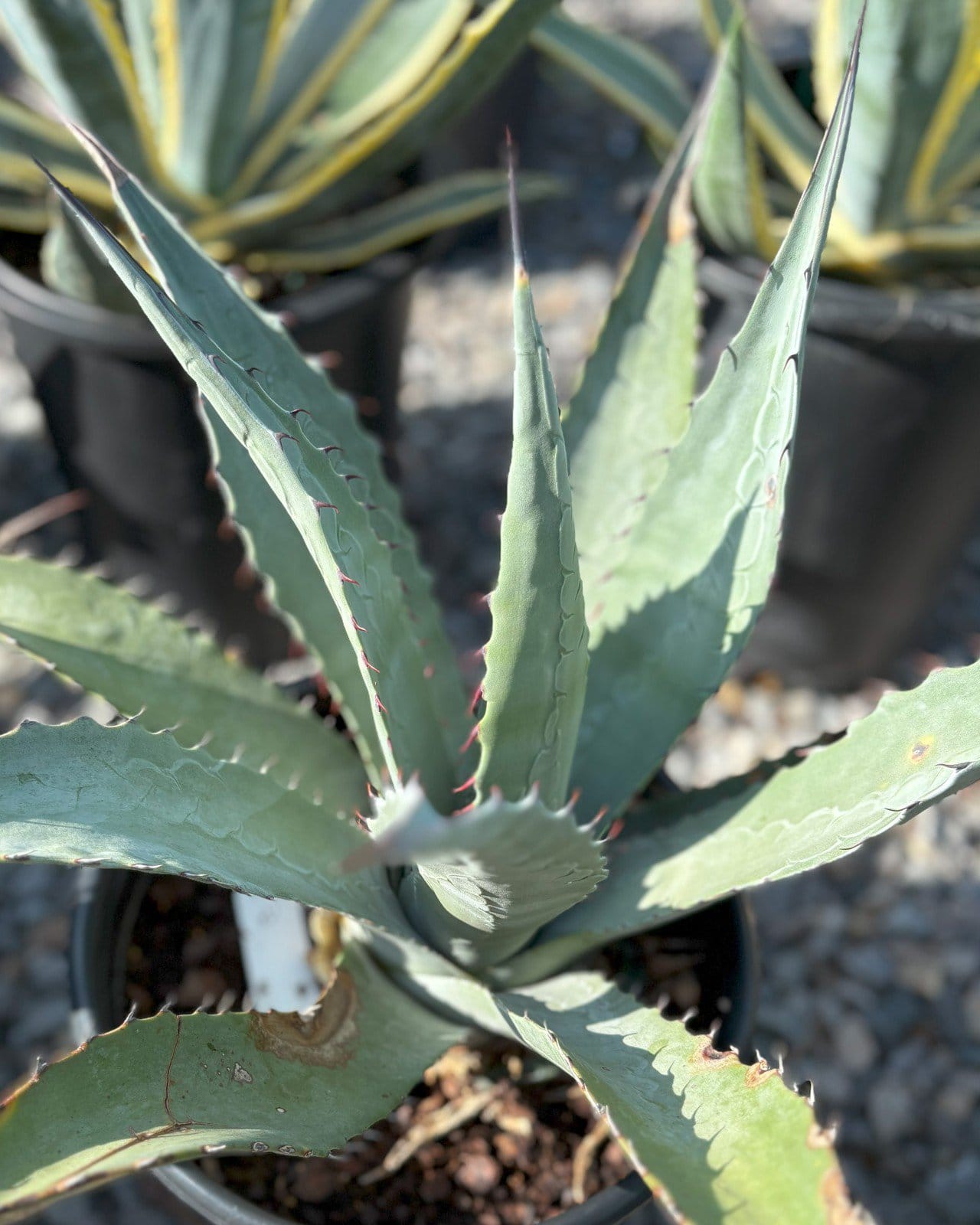
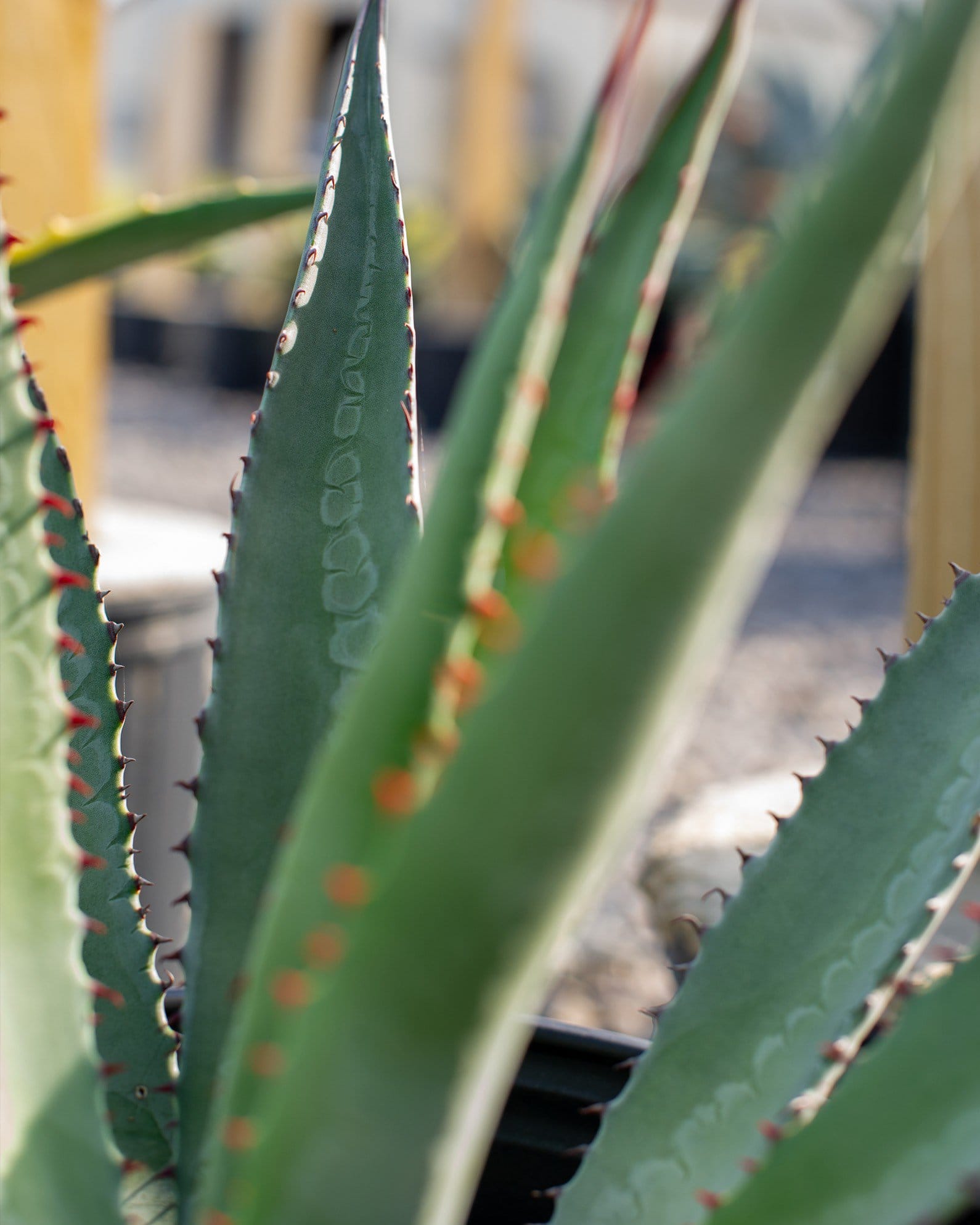
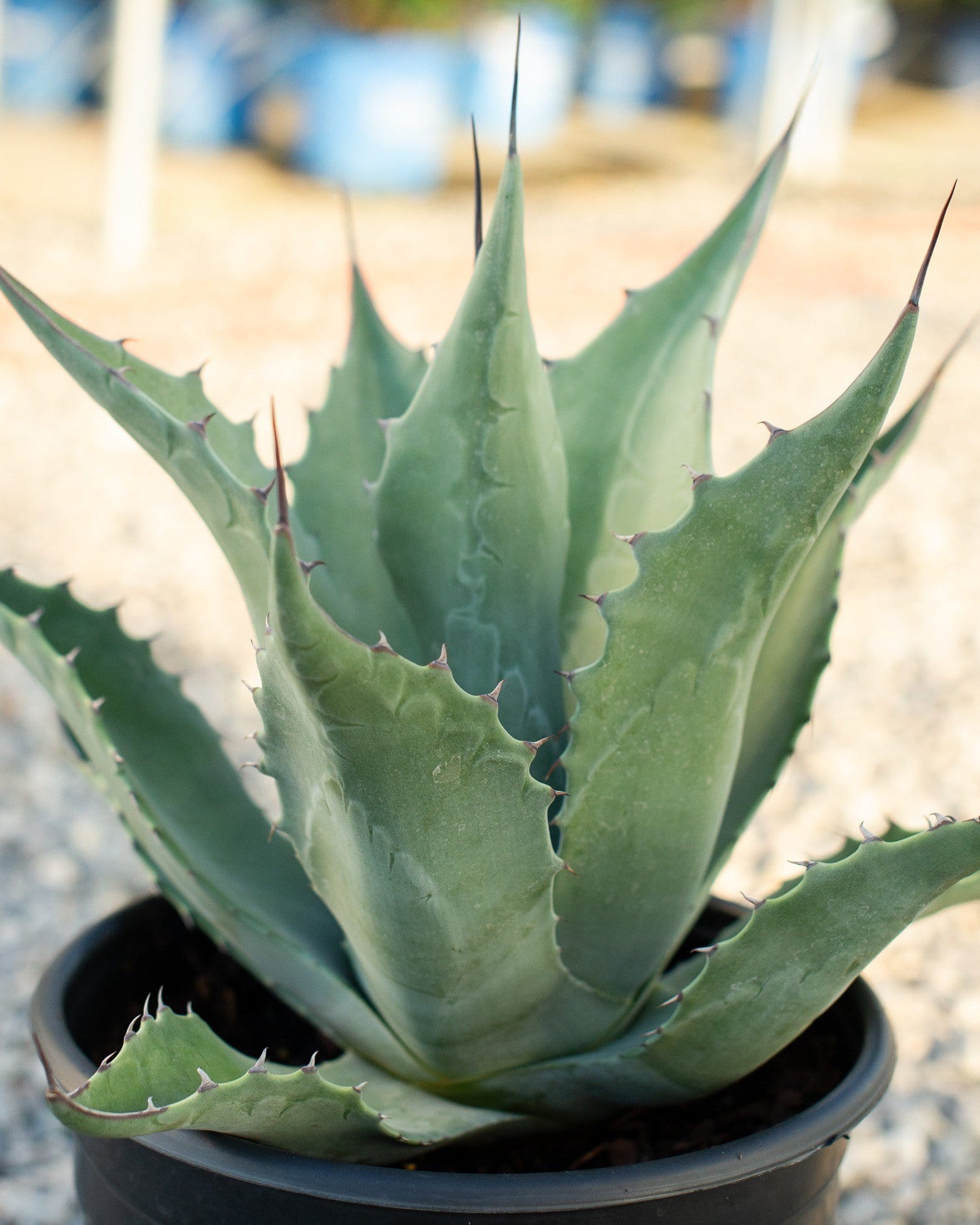
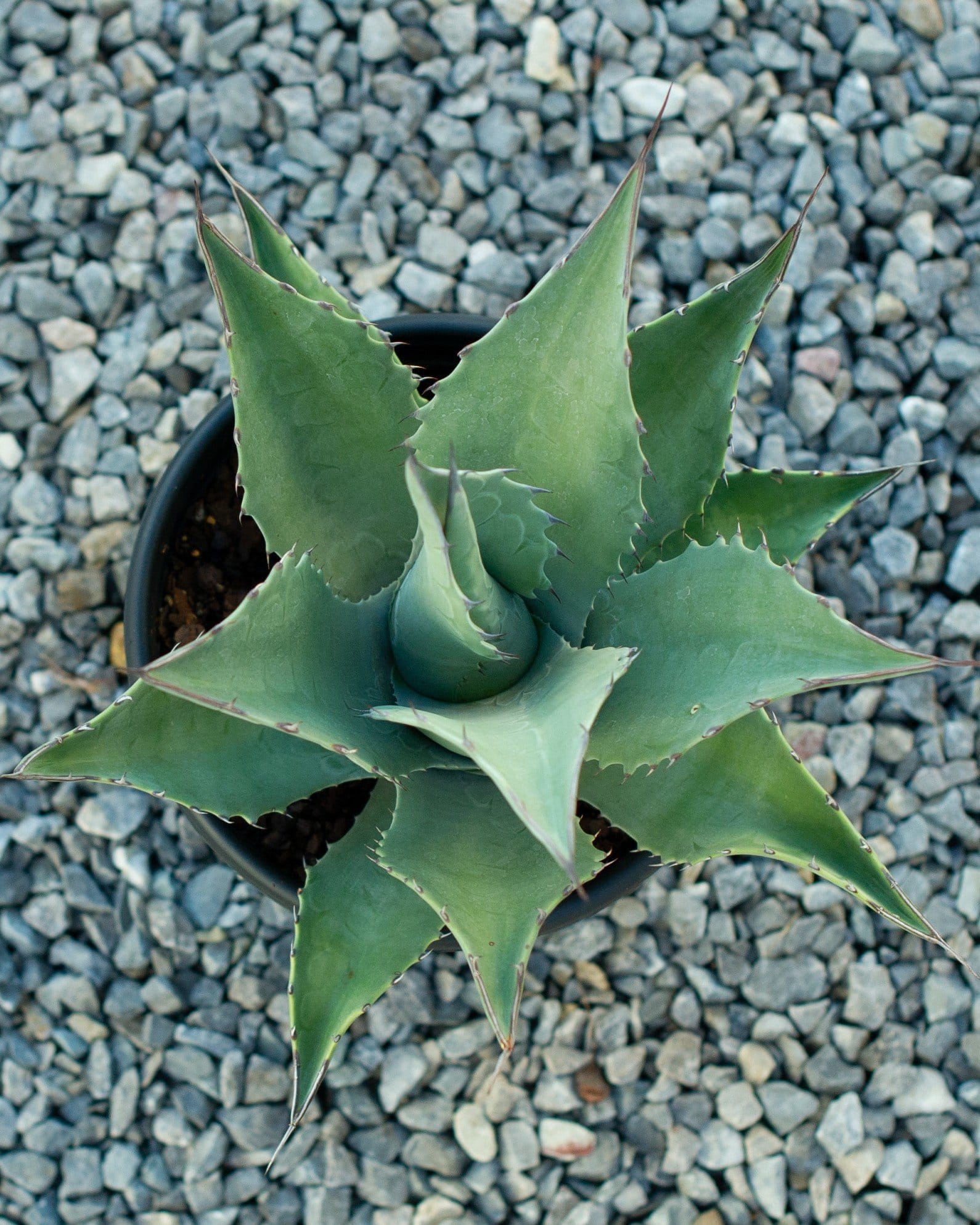
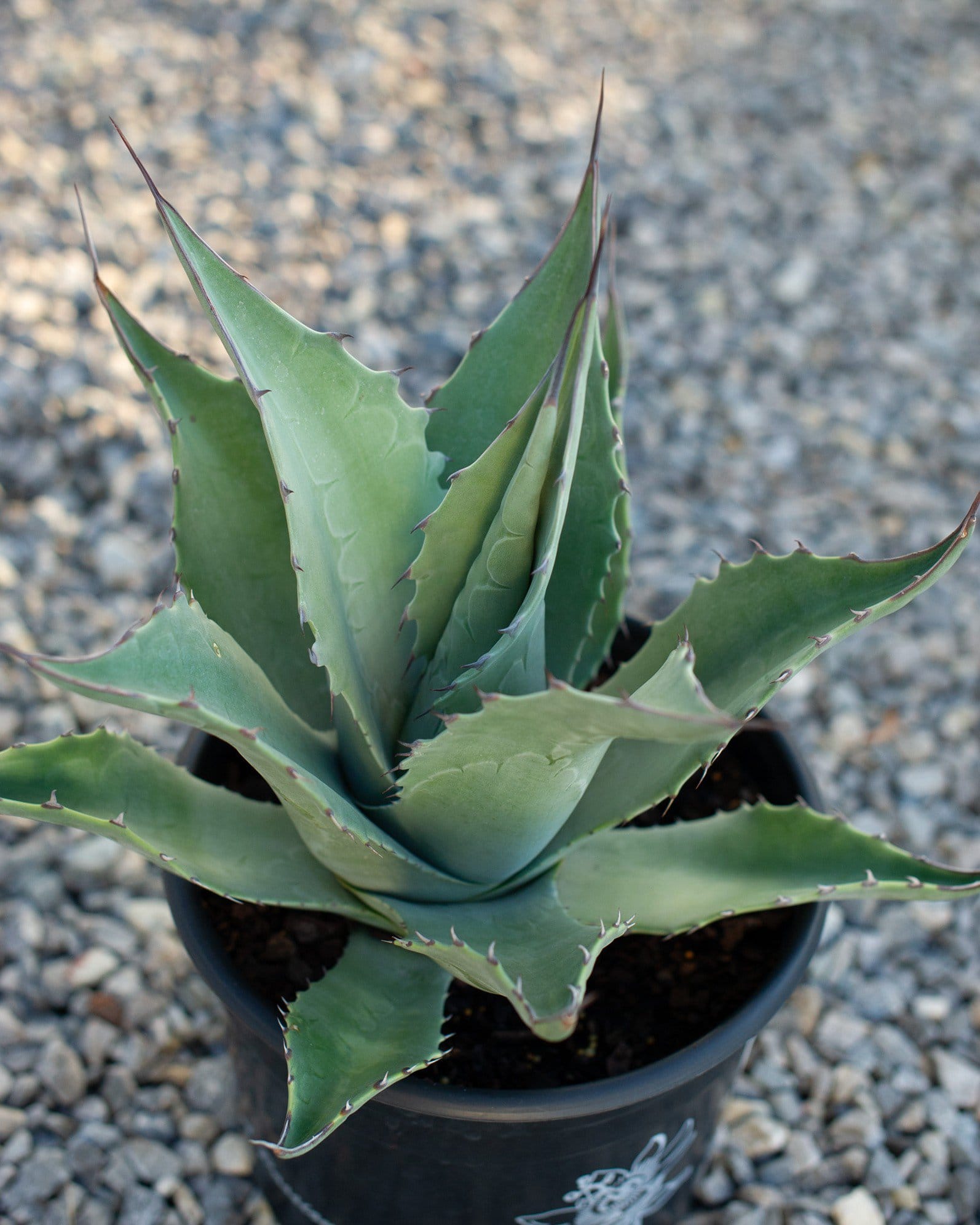
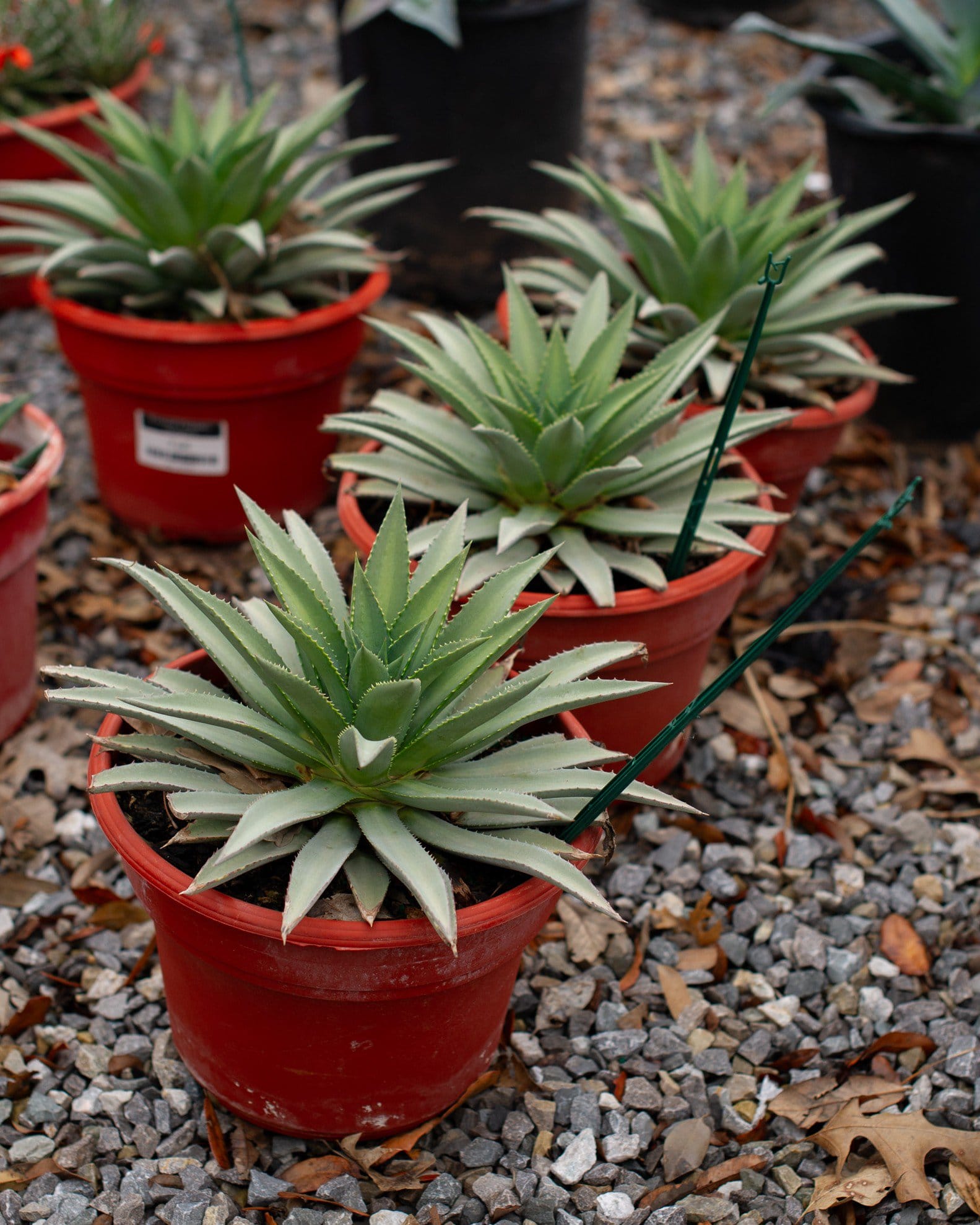
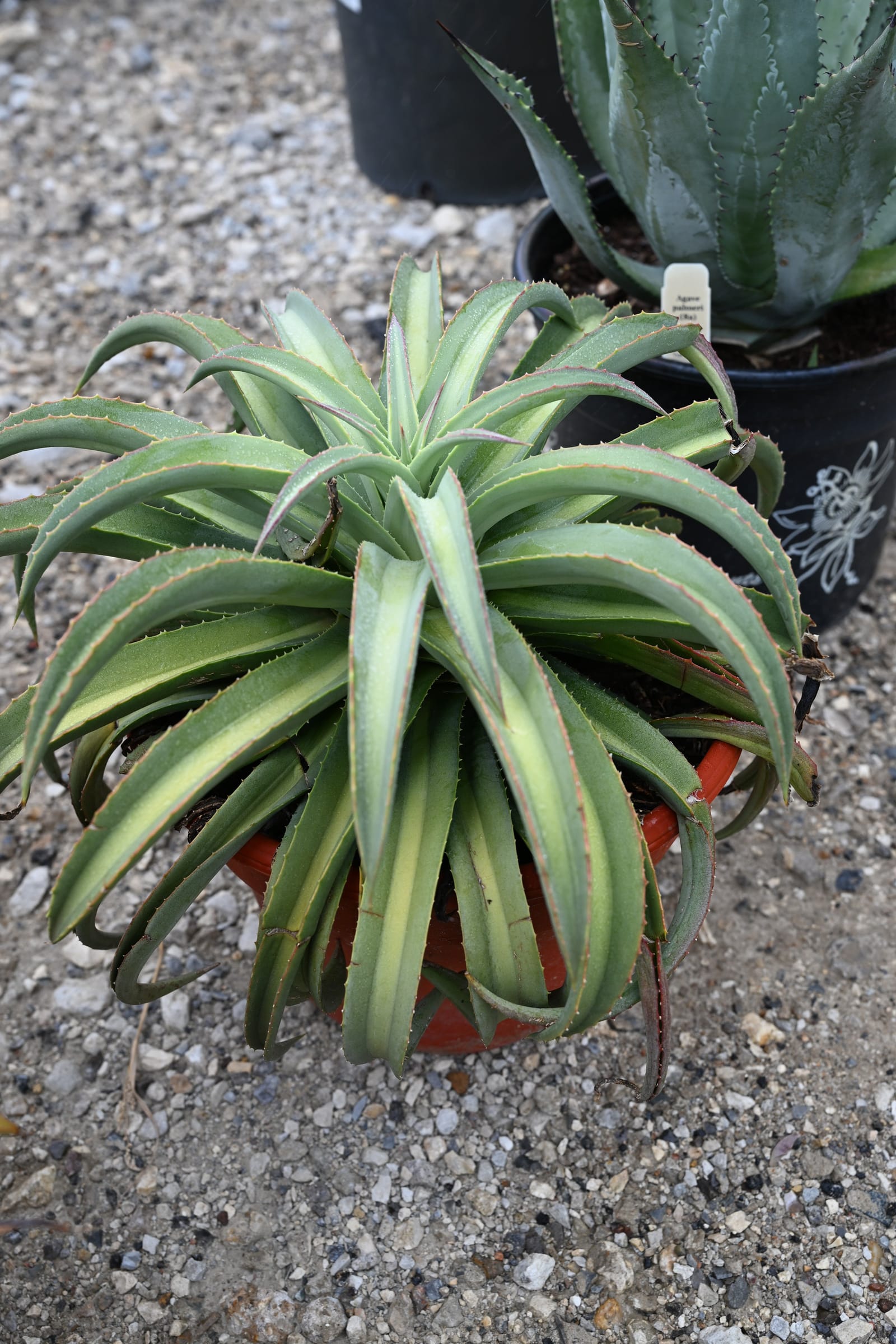
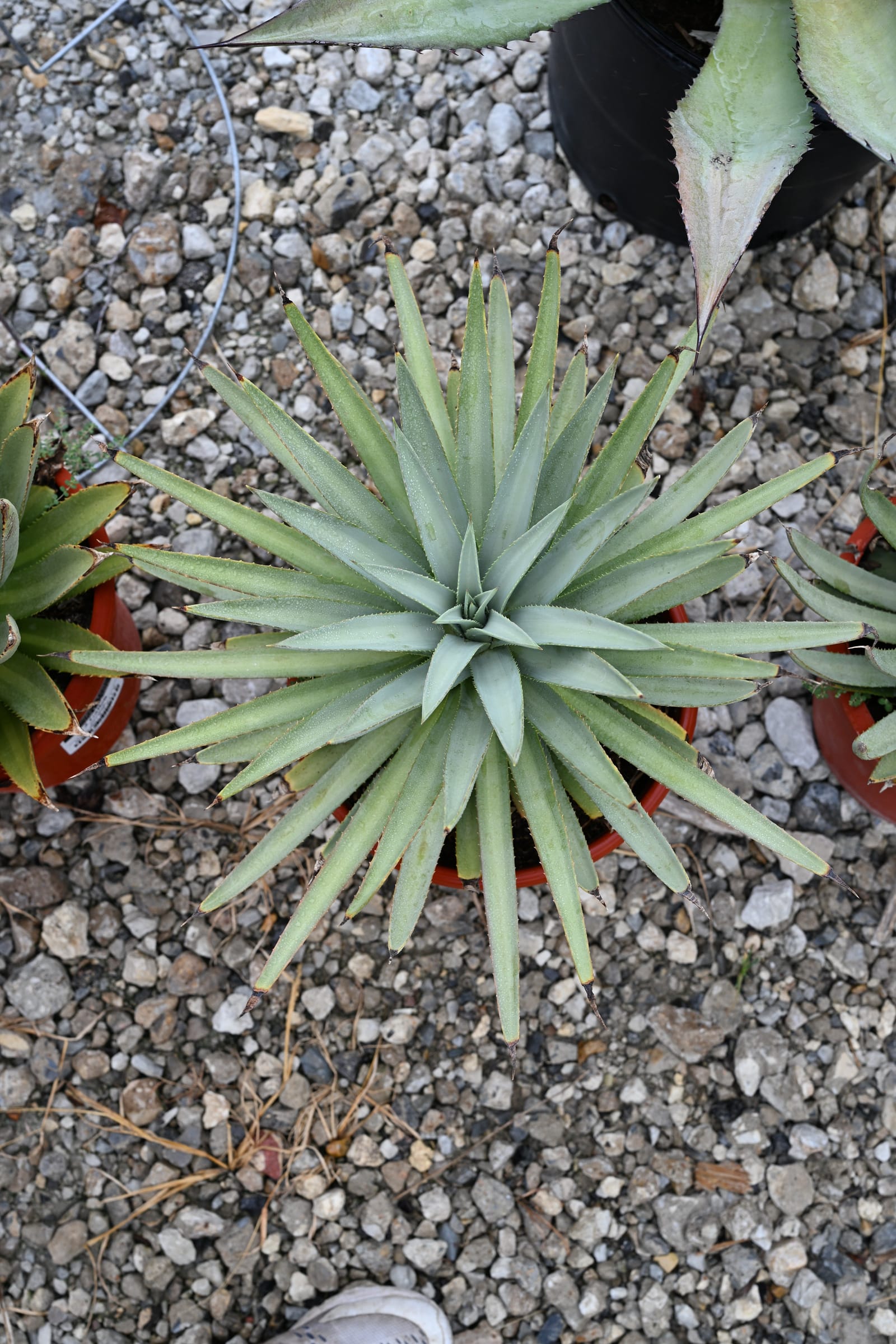
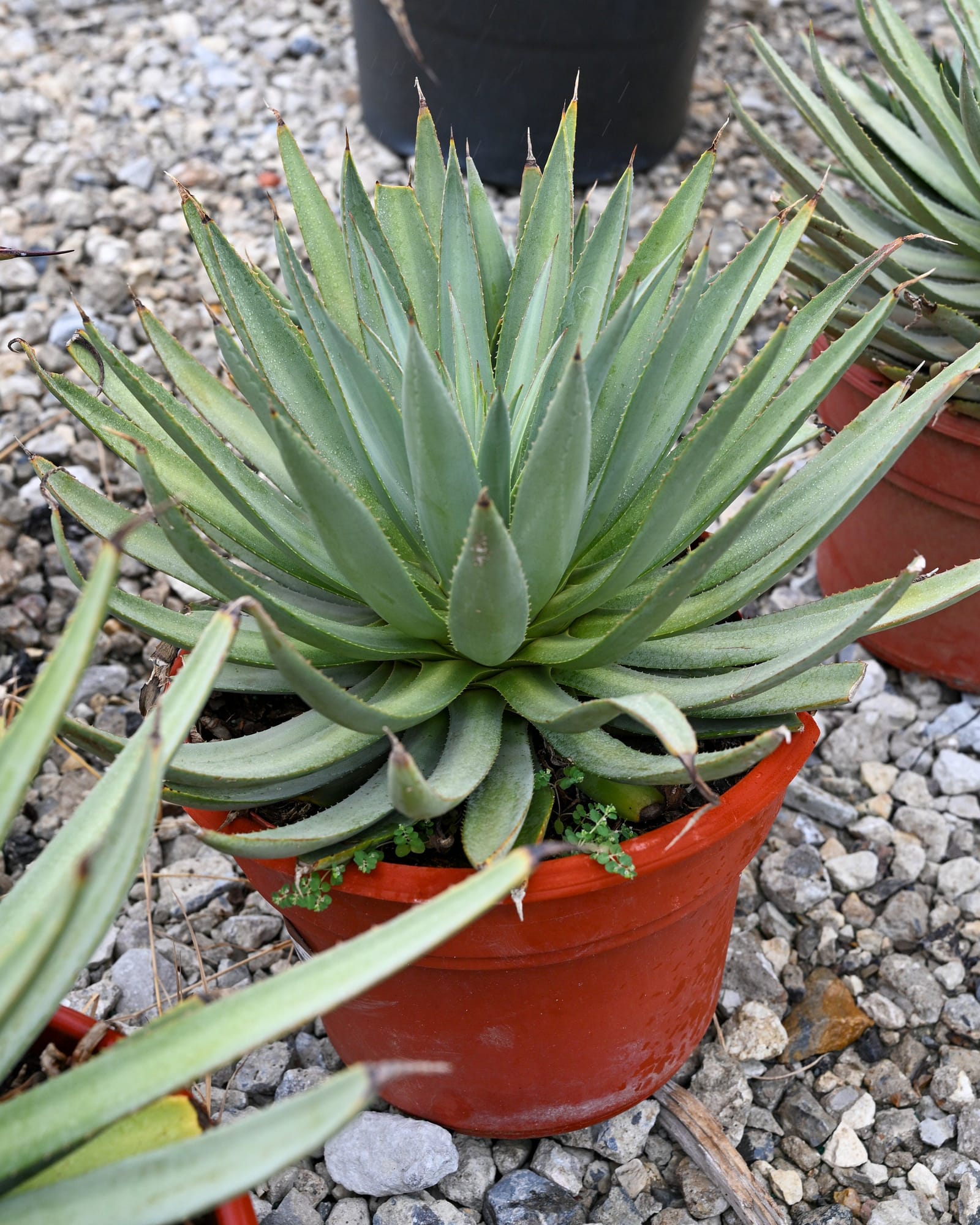
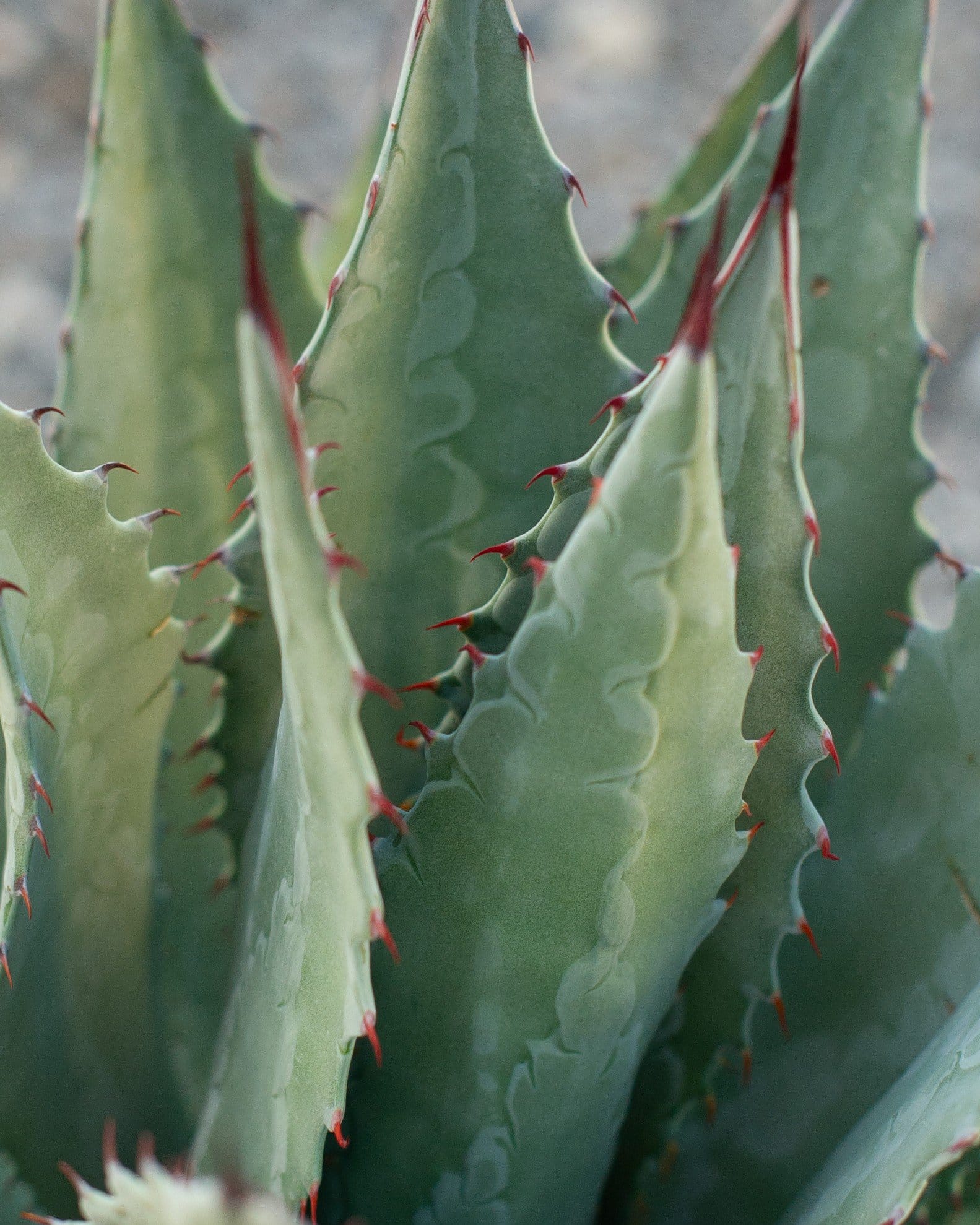
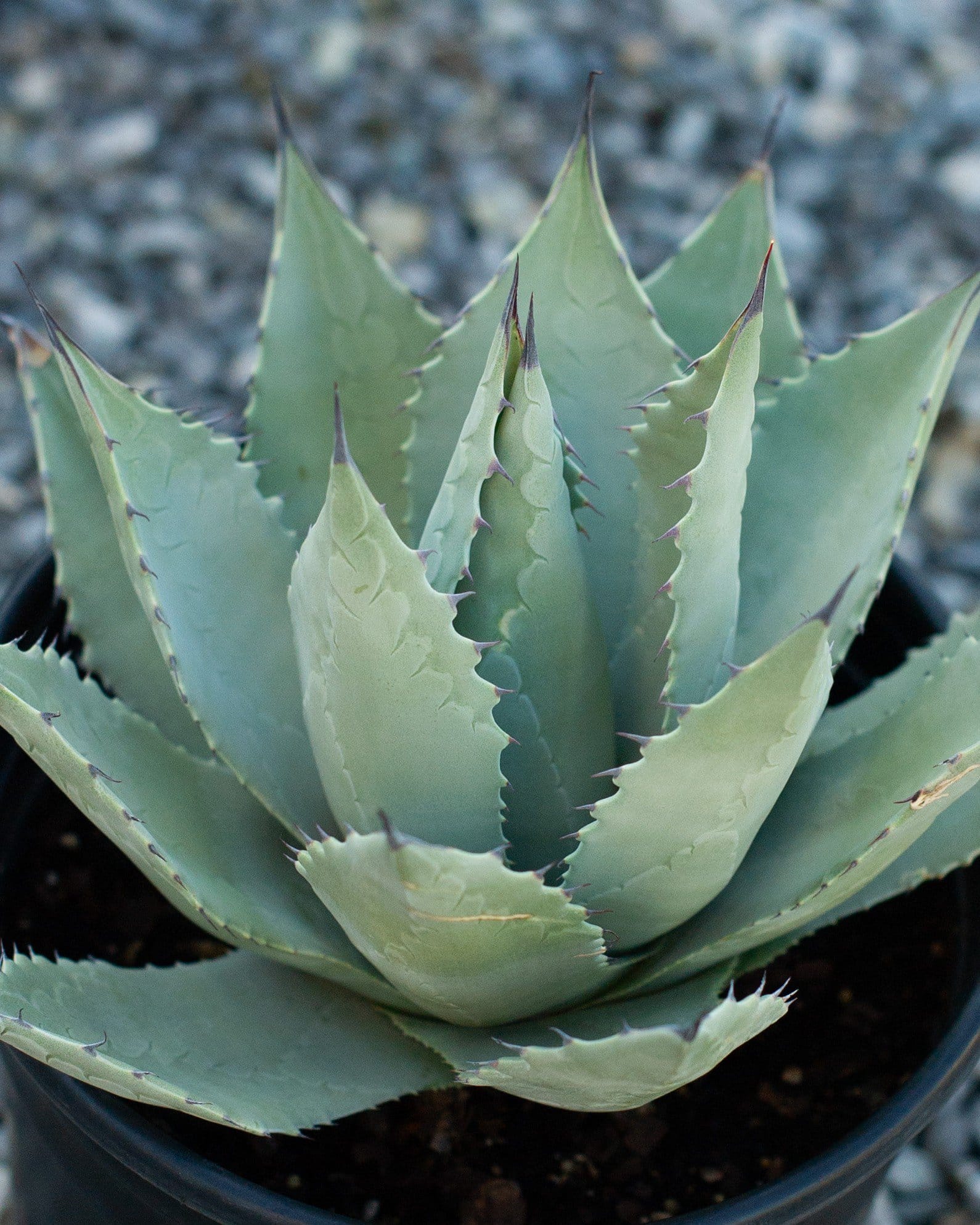
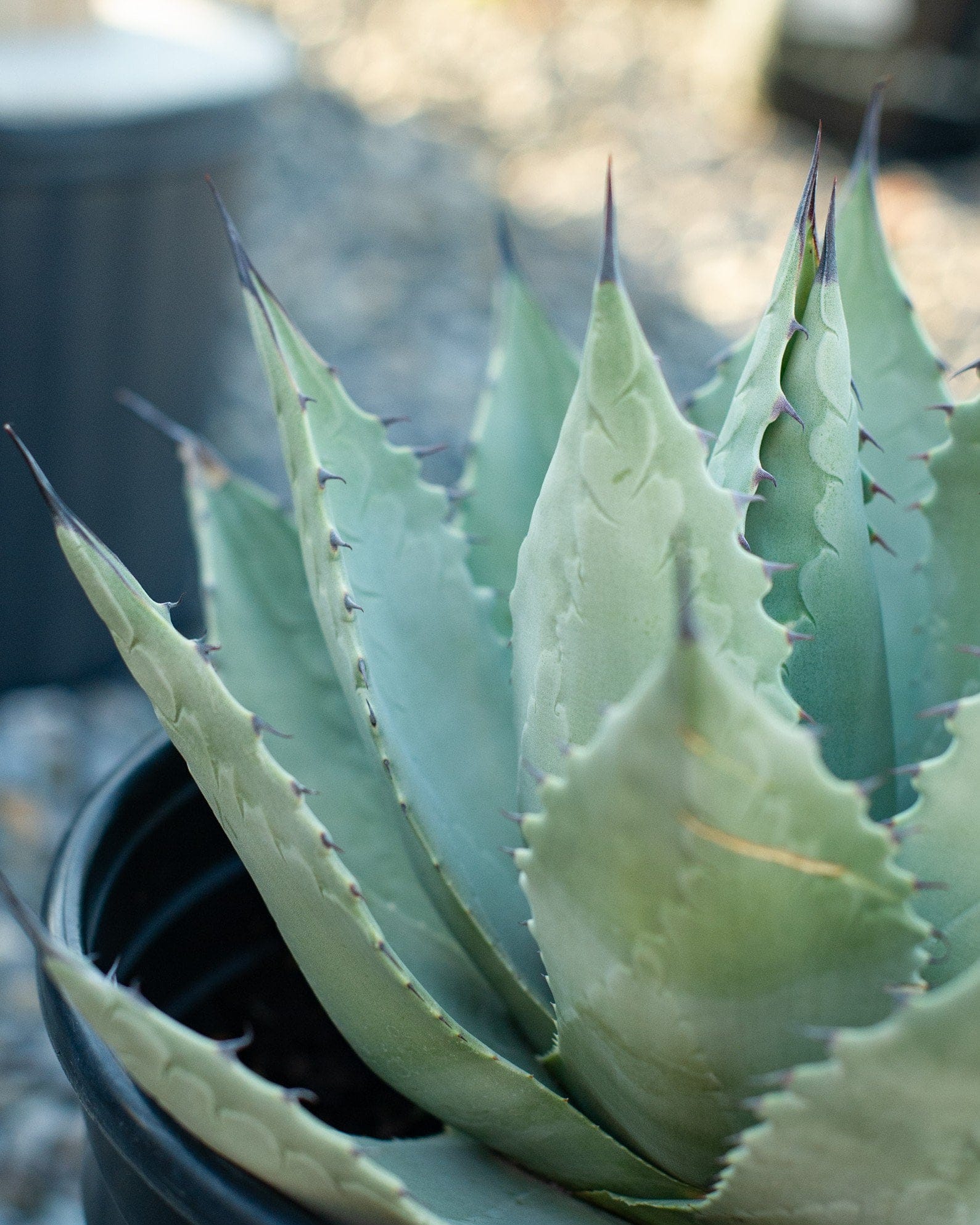
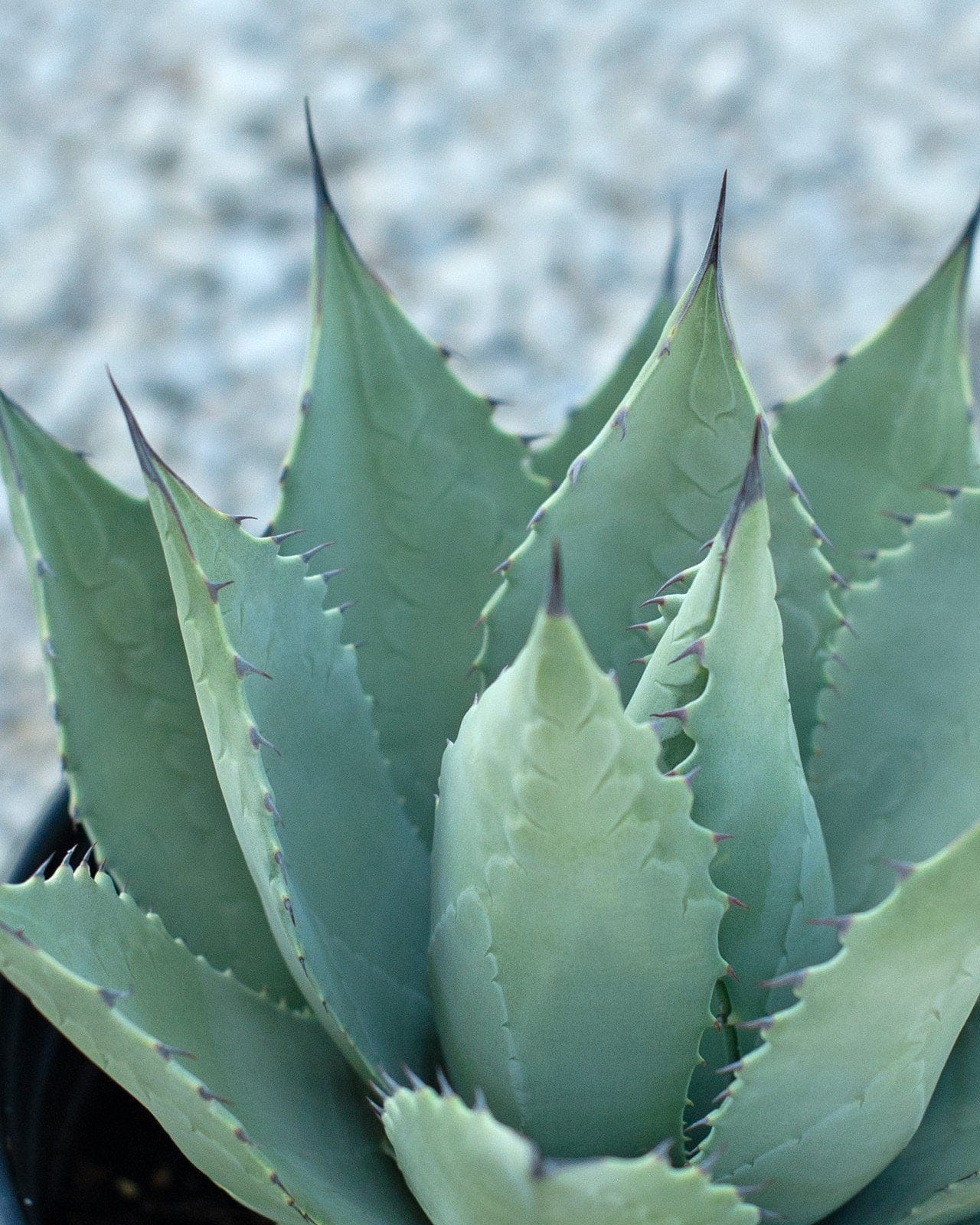
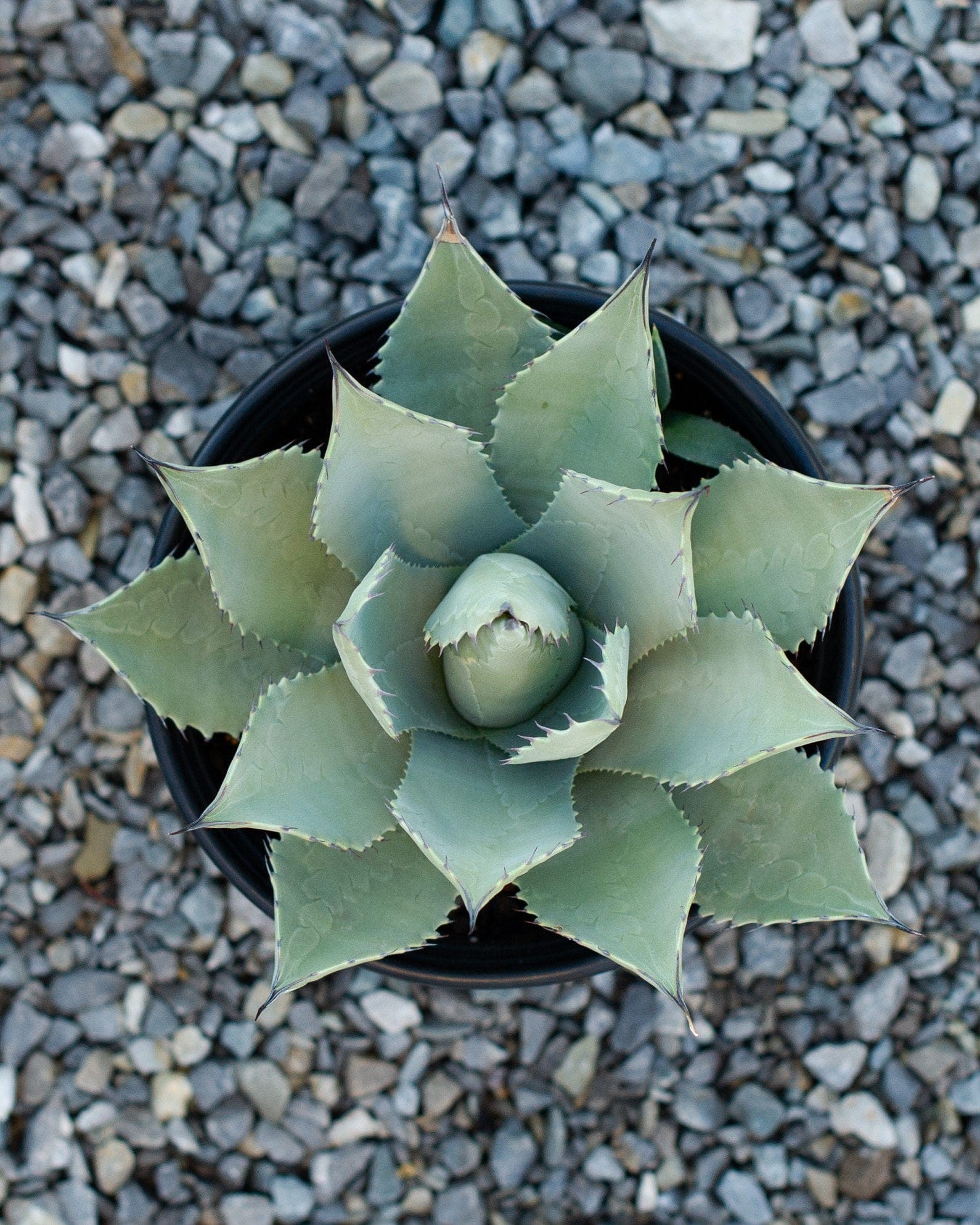
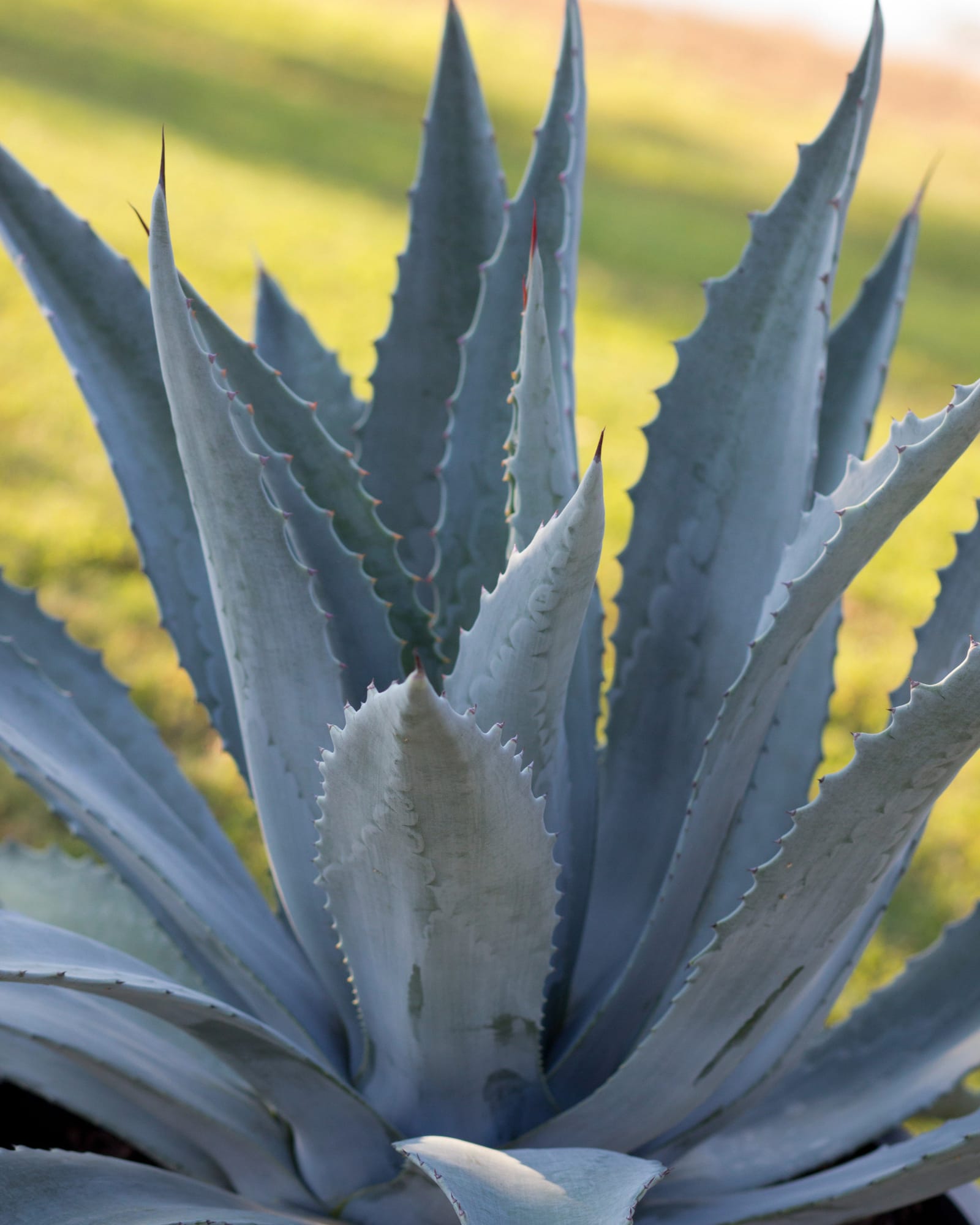
Agave ovatifolia ‘Frosty Blue’'Frosty Blue’ is a cultivated version of Whale’s Tongue, selected for its cool, frosted appearance. The leaves are a luminous powdery blue with sharply defined edges and gentle cupping, impressively wide, forming a dense, evergreen rosette up to 3 feet tall and 4 feet wide. The color softens surrounding plantings and contrasts beautifully against stonework, gravel, or dark-leaved companions.
- Silvery blue leaves with frosted finish
- Compact size, 3 feet tall by 4 feet wide
- Evergreen structure with strong visual presence
- Soft tone complements bold plantings or rockwork
- Great for containers or dry design repetition
Plant in full sun with excellent drainage. This variety is hardy in USDA zones 7–10, exceptionally well drought-adapted, and performs especially well in North Texas. It also responds well to elevated planting mounds, which enhance its form and improve drainage naturally. Minimal grooming is needed beyond occasional removal of outer foliage.
Once established in sharply drained soil, Whale’s Tongue Agave Frosty Blue is remarkably low-maintenance and performs reliably in both hot summers and cold winters. Here’s hot to help it thrive:
- Watering: Water consistently during the first growing season to encourage deep root establishment. Once established, Frosty Blue is highly drought-tolerant and typically requires irrigation only during extended periods of severe dryness. Allow soil to dry thoroughly between waterings to prevent crown rot.
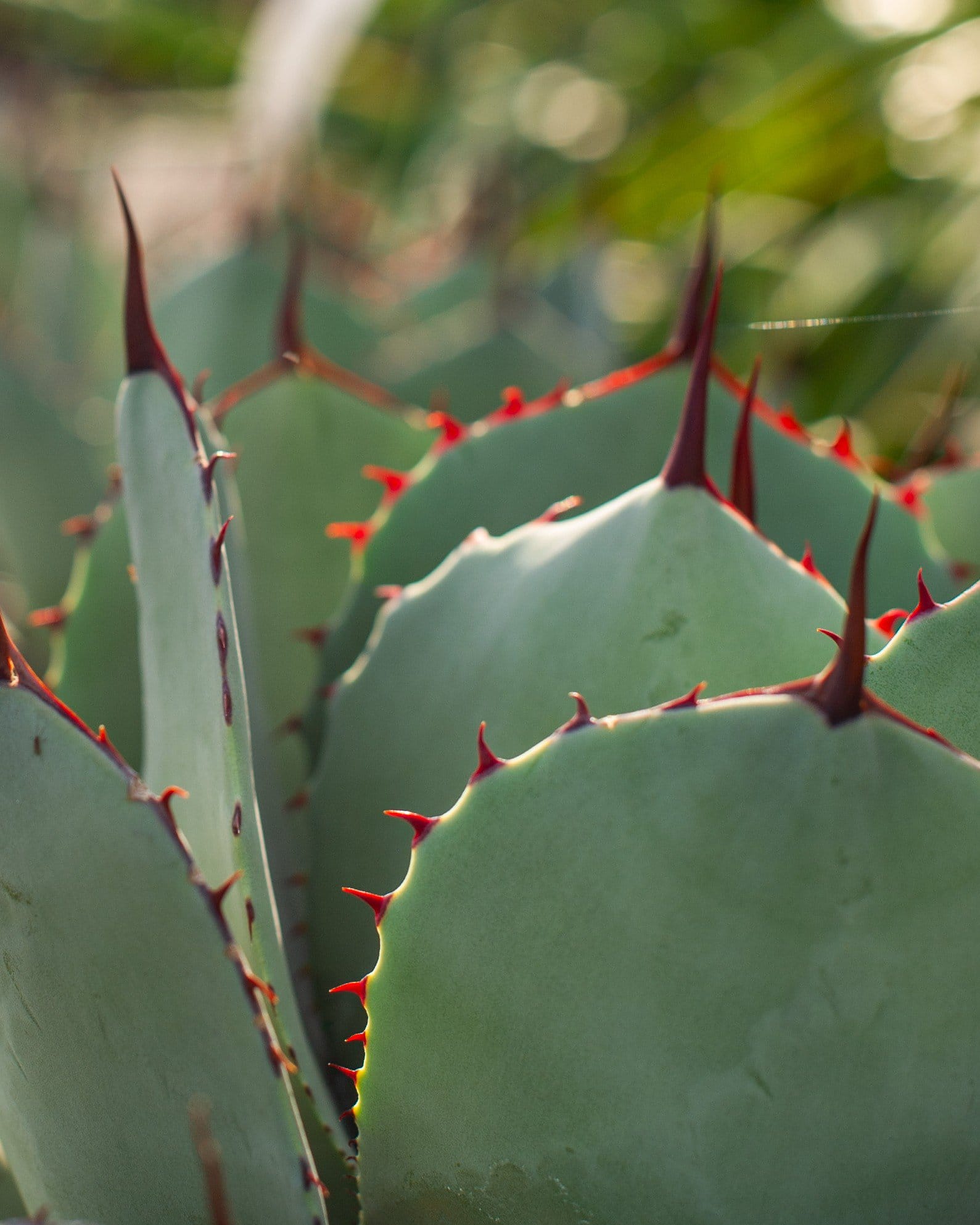
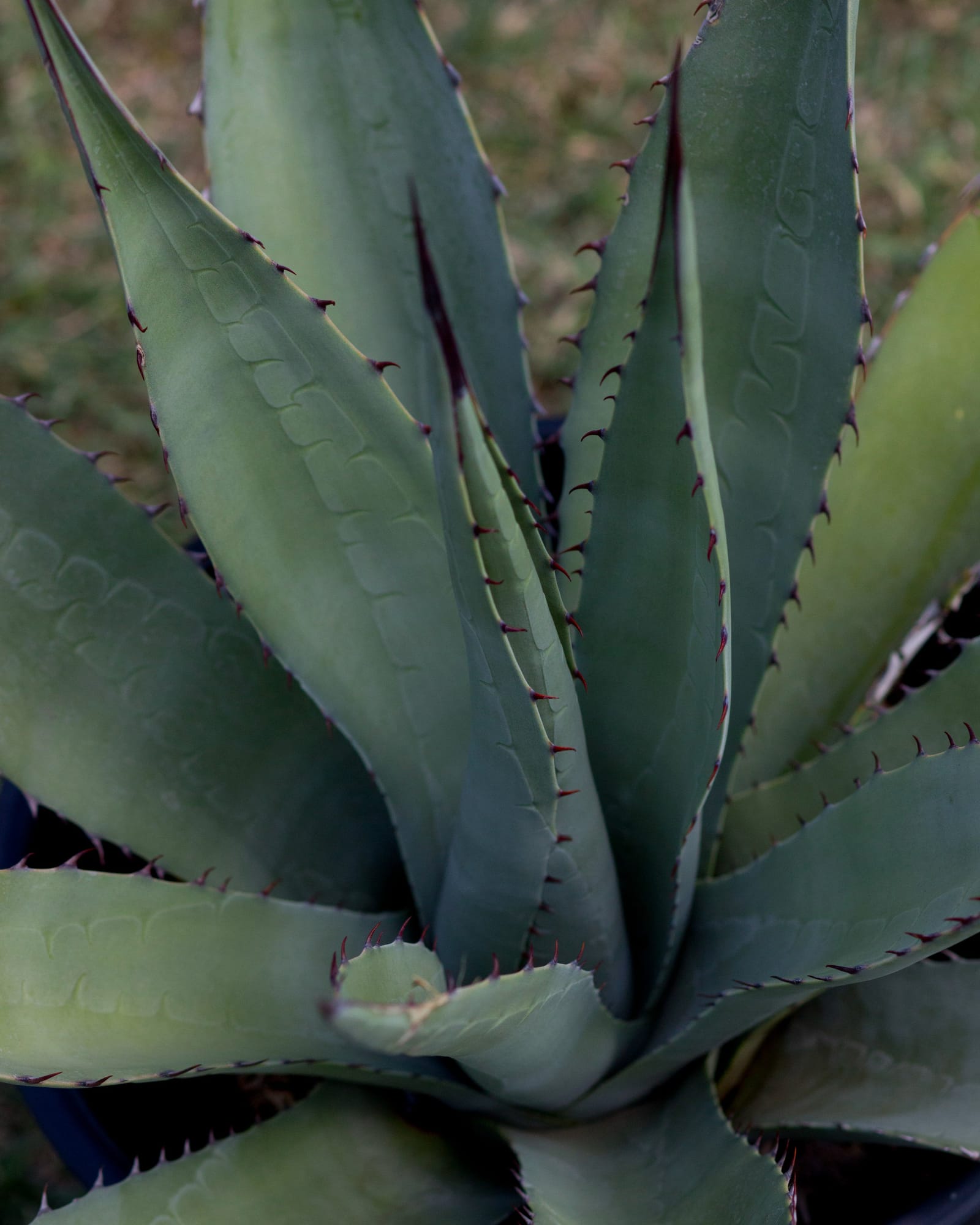
- Pruning: Pruning is minimal and usually limited to removing aging lower leaves to maintain a clean base. Wear gloves when handling due to strong leaf margins and a firm terminal spine. Avoid disturbing the central rosette to preserve its tight architectural form.
- Fertilizing: This agave thrives in lean, well-drained soils and rarely requires feeding. If growth appears sluggish, a very light spring application of balanced fertilizer may be used. Overfertilization can cause looser growth and reduce structural density.
- Mulching: Use gravel or mineral mulch to enhance drainage and prevent moisture buildup near the crown. Avoid organic mulch that retains water. Airflow and dry soil conditions are critical for long-term health.
- Winter Care: Whale’s Tongue Agave Frosty Blue is notably cold-hardy compared to many agaves. Excellent winter drainage is essential to prevent rot during wet freezes. Mature plants tolerate significant cold when soil remains dry.
Whale’s Tongue Agave Frosty Blue is exceptionally resilient, though a few meaningful concerns may occasionally arise.
- Crown Rot in Poor Drainage: Softening at the center of the rosette may indicate trapped moisture. Improving soil drainage prevents most rot issues.
- Agave Snout Weevil: Sudden decline can occur if infested by this destructive insect. Prompt removal of affected plants helps limit spread.
- Cold Moisture Stress: Leaf tissue may darken during prolonged wet freezes. Ensuring sharp drainage significantly reduces winter damage.
- Nutrient Deficiency in Extremely Lean Soil: Leaves may appear pale or growth may slow in severely depleted soil. A light spring feeding can restore vigor.
- Sunburn After Transplanting: Recently planted specimens may develop pale patches if exposed abruptly to intense sun. Gradual acclimation reduces stress.
Whale’s Tongue Agave Frosty Blue typically lives 15-30 years before flowering. After blooming once, the primary rosette completes its life cycle. It may produce a few offsets beforehand, though it is less prolific than many clumping agaves.
Growth averages 6-12 inches per year under favorable conditions. A mature, fully developed rosette typically forms within 6-10 years. Its steady growth builds impressive structure over time.
Yes, it is among the most cold-tolerant ornamental agaves. When planted in well-drained soil, it withstands significantly lower temperatures than many tropical types. Dry winter conditions are key to success.
It generally grows as a solitary rosette. Offset production is limited compared to species like A. angustifolia. This makes it ideal for bold, standalone focal points.
At maturity, it produces a towering flower stalk that can reach 12-15 feet tall. The bloom is highly architectural and striking. After flowering, the main rosette declines naturally.
Its broad, paddle-like leaves create strong sculptural lines. The powdery blue tone pairs beautifully with stone and minimalist architecture. It functions as a dramatic focal point.
Its firm leaves and strong terminal spine discourage browsing. Deer damage is uncommon. Wildlife typically avoids it.
Young plants can adapt to large containers with excellent drainage. Containers allow easier winter protection in colder regions. Long-term performance is often best achieved in-ground.
Leaf coloration may intensify during cooler weather, developing deeper blue-gray tones. Mild stress can enhance its powdery appearance. Seasonal shifts add subtle depth.
Its massive, symmetrical rosette naturally draws attention. It performs best when given space to showcase its form. The plant anchors landscapes with strong visual weight.
Special Features
You might also like
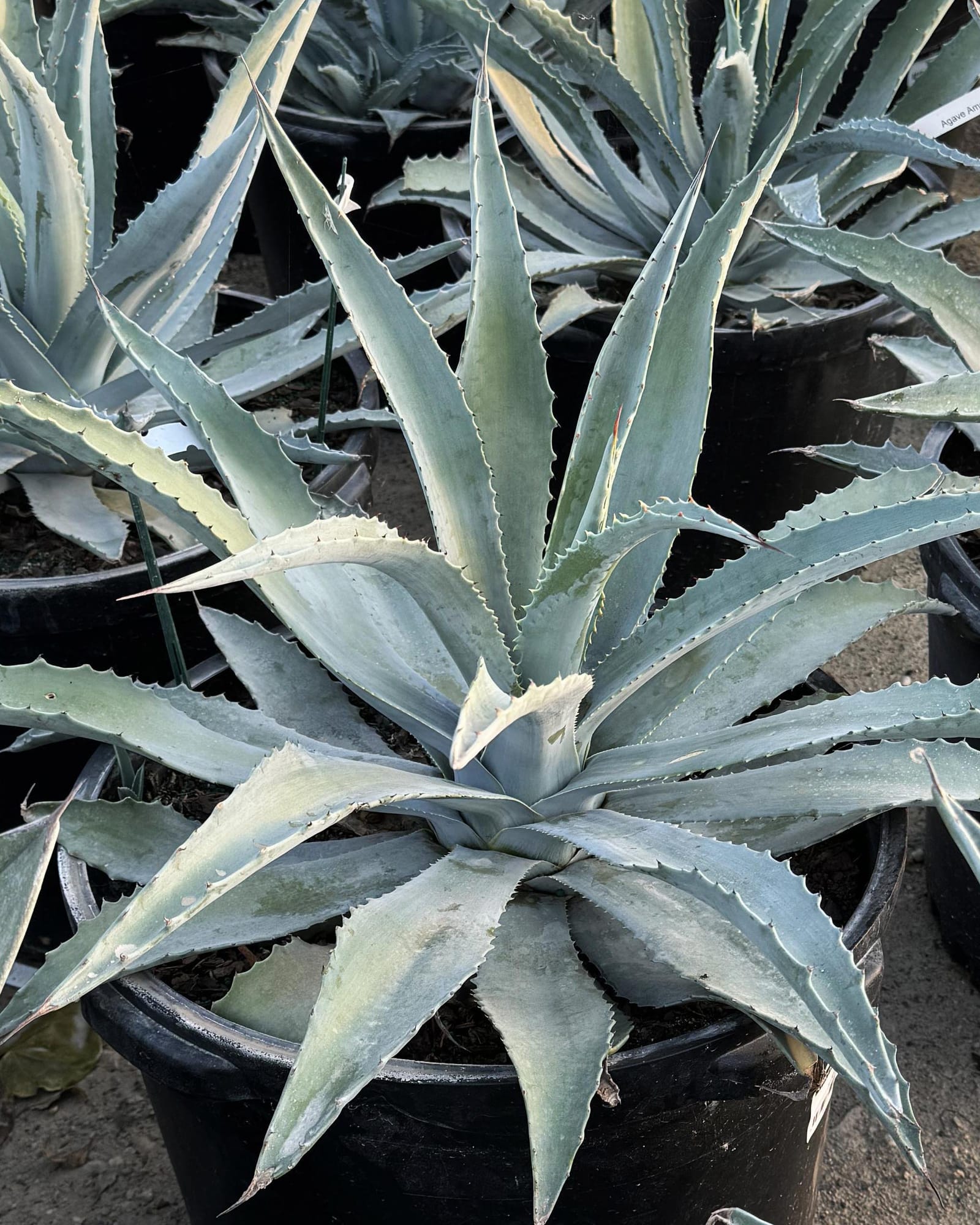
Americana Agave
Maturity: 6' H x 8' W
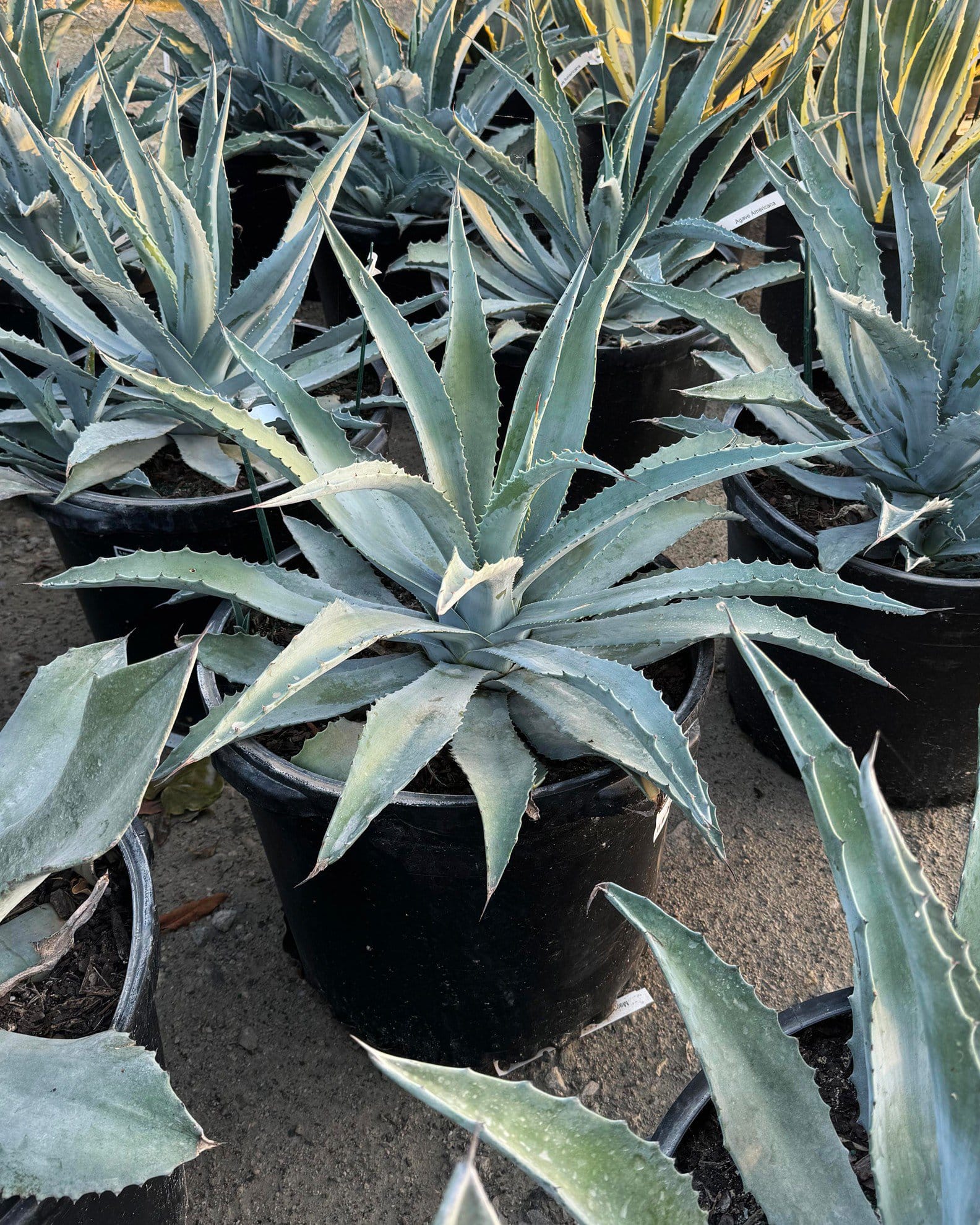
Americana Agave Opal
Maturity: 4' H x 6' W
Artichoke Agave
Maturity: 3' H x 5' W
Black-Spined Agave
Maturity: 1.5' H x 2' W
Blue Rough Leaf Agave
Maturity: 3' H x 3' W
Goldenflower Agave
Maturity: 3' H x 6' W
Havardiana Agave
Maturity: 2' H x 3' W
Mangave Agave Frosted Elegance
Maturity: 0.75' H x 1' W
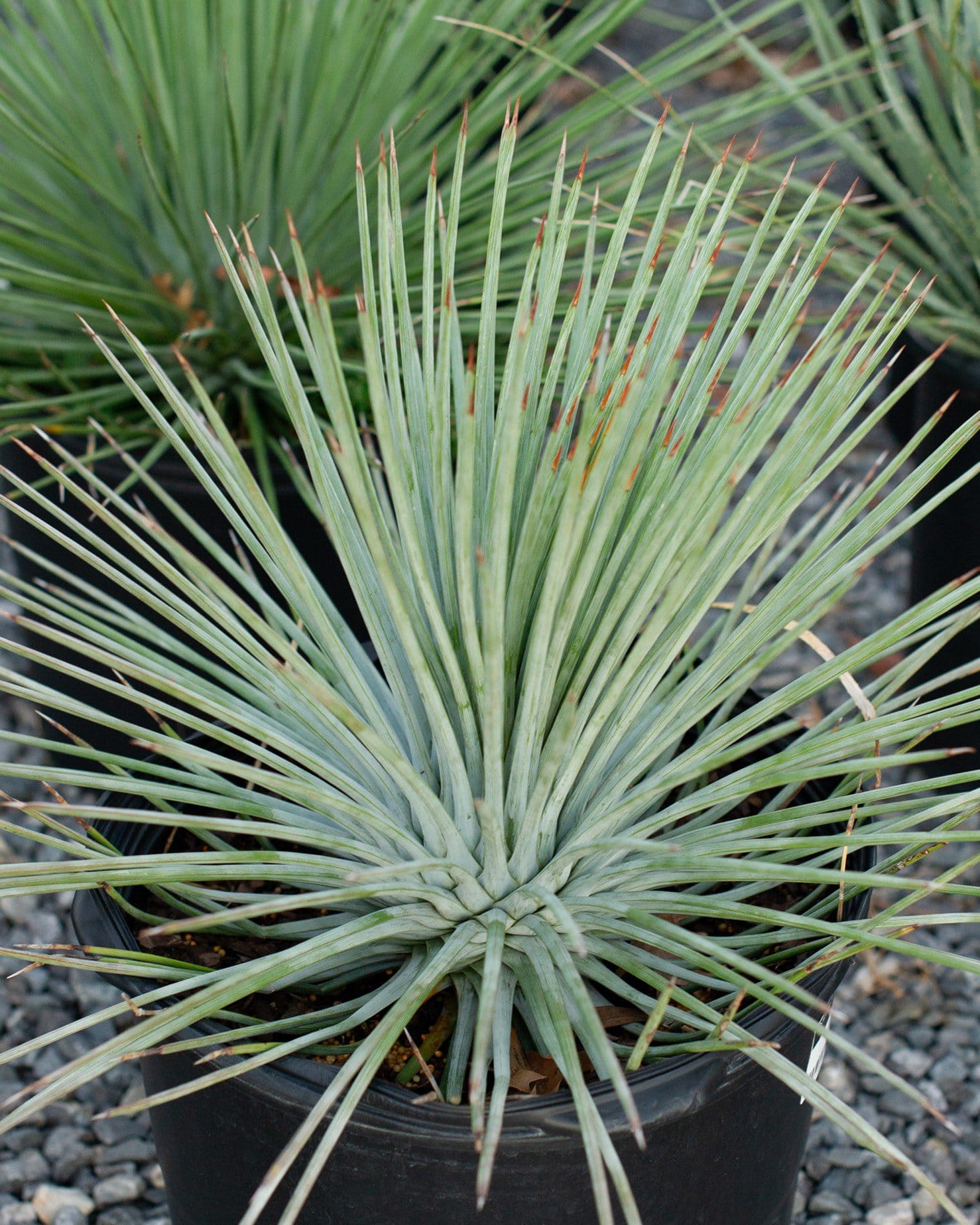
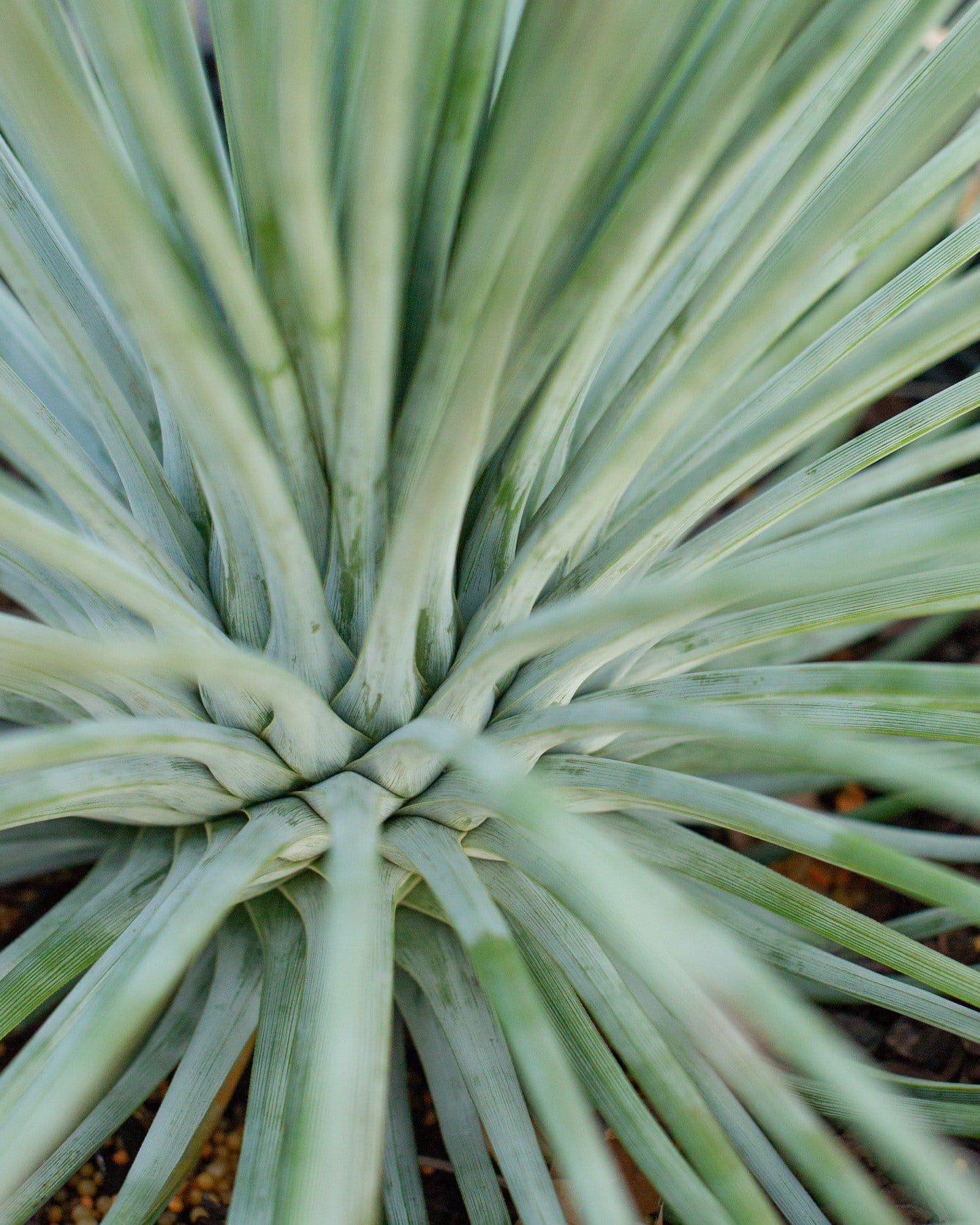
Narrow Leaf Agave Azul
Maturity: 1' H x 2' W
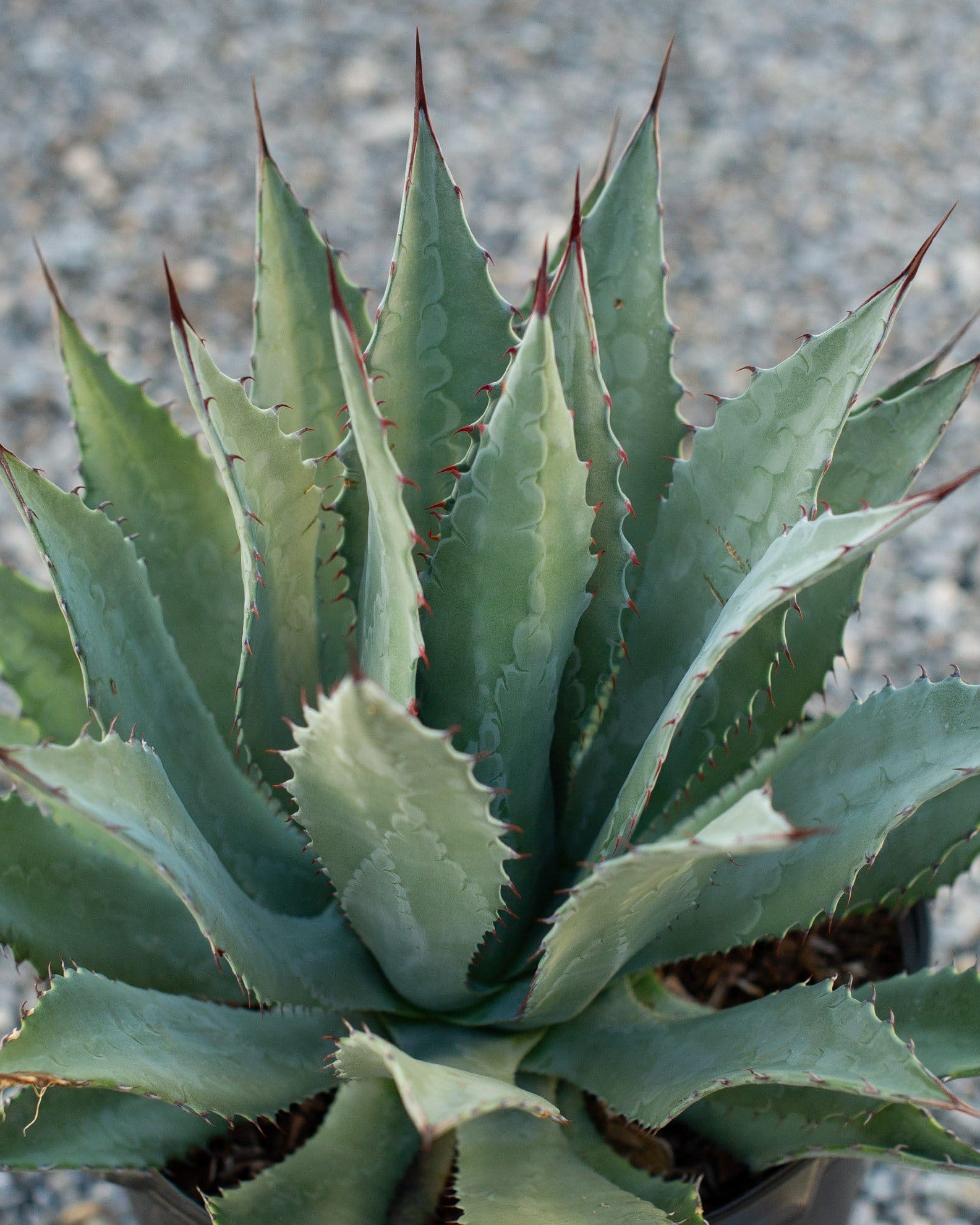
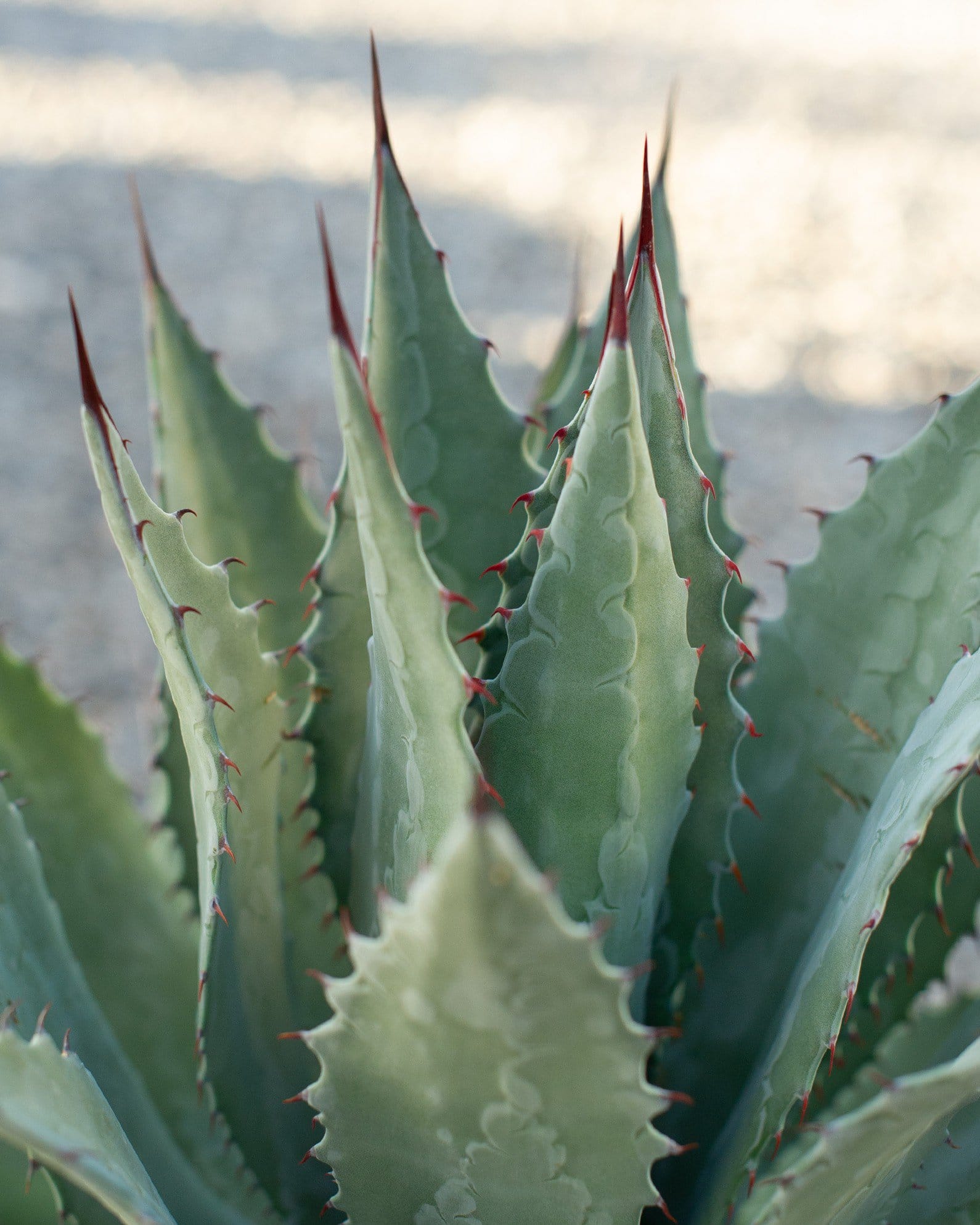
Palmer's Agave
Maturity: 4' H x 4' W
Parry's Agave
Maturity: 1.5' H x 2' W
Quadricolor Agave
Maturity: 1.5' H x 2' W
Royal Flush Agave
Maturity: 1' H x 1.5' W
Splendida Agave
Maturity: 1.5' H x 3' W
Tequila Agave
Maturity: 5' H x 5' W
Compare Similar Plants
Whale's Tongue Agave Frosty Blue This plant | ||
|---|---|---|
| Scientific Name | Agave ovatifolia ‘Frosty Blue’ | Agave americana |
| Size at Maturity | 3' H x 4' W | 6' H x 8' W |
| Leaf Retention | Evergreen | Evergreen |
| Sizes Available | 3, 7 gal | 5, 7, 15 gal |


Our 1-Year Planting Guarantee
We take pride in our plants and installation services. If any plants or trees installed by Treeland fail to thrive within the first year, we'll provide a replacement credit in accordance with our guarantee program.
Learn More About Our Guarantee