
Rhapsody in Pink Crape Myrtle
Lagerstroemia indica 'Whit VIII'Local DFW Delivery Only
Product Details
Rhapsody in Pink Crape Myrtle
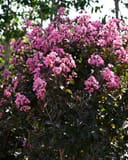
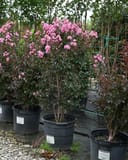
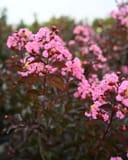
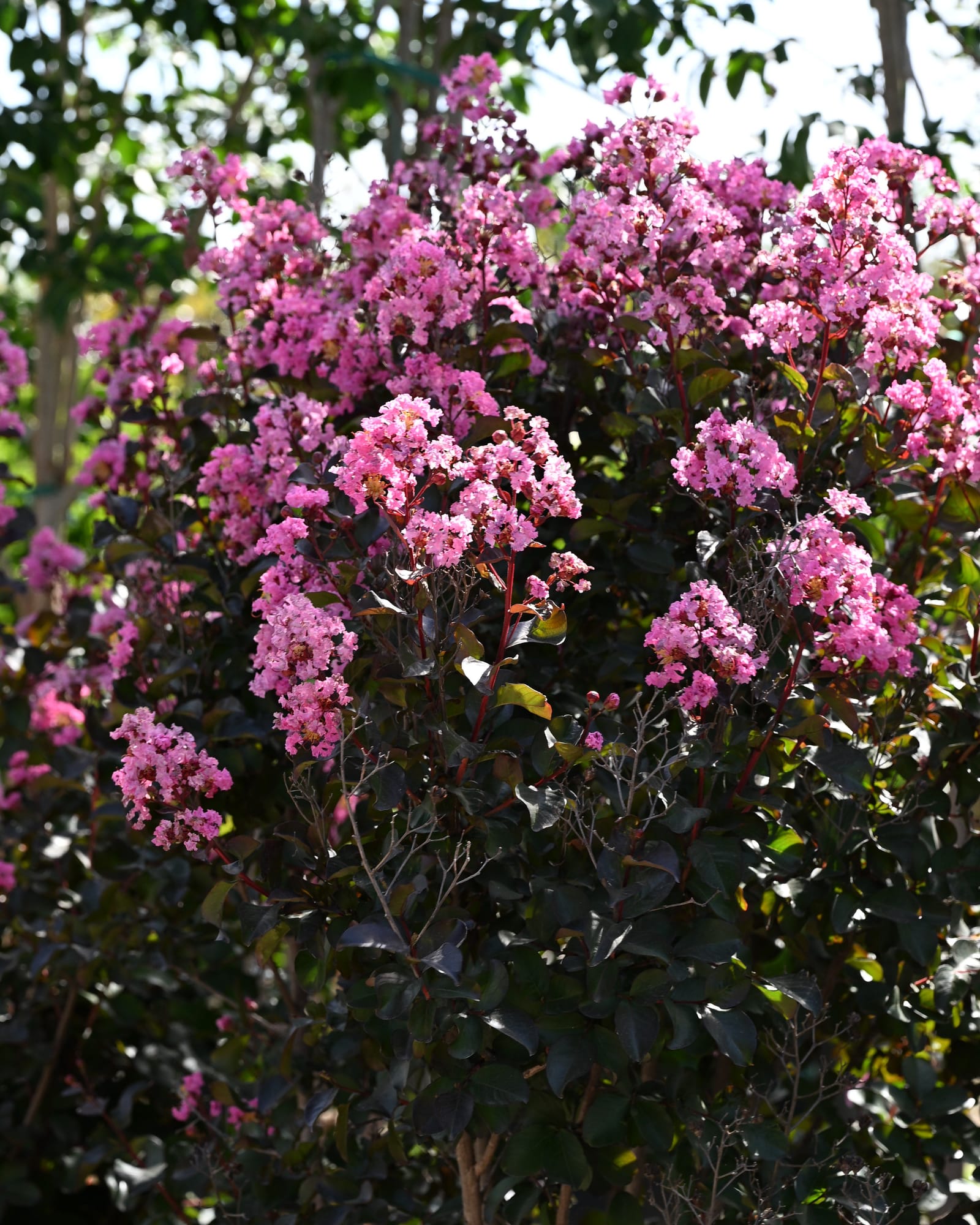
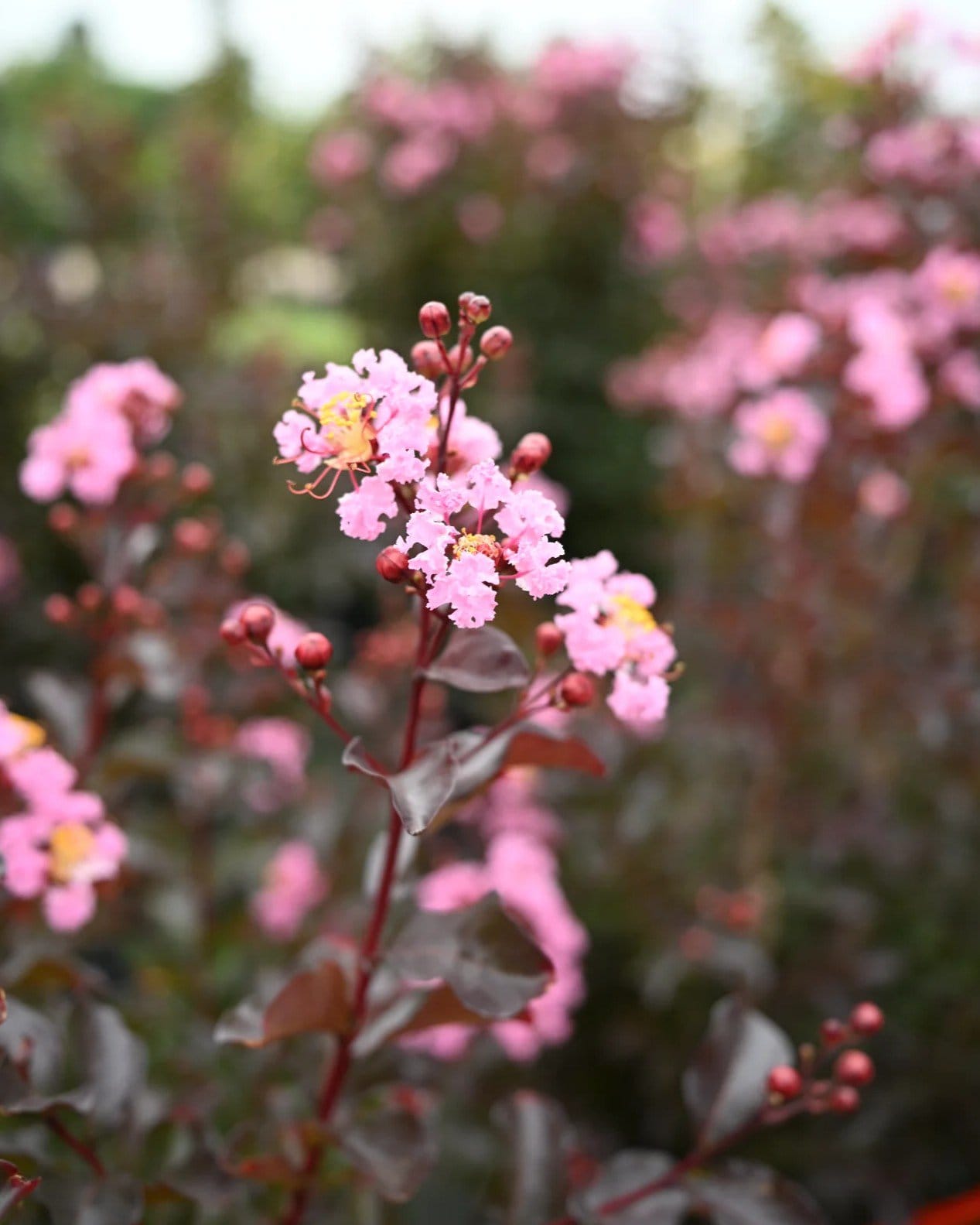
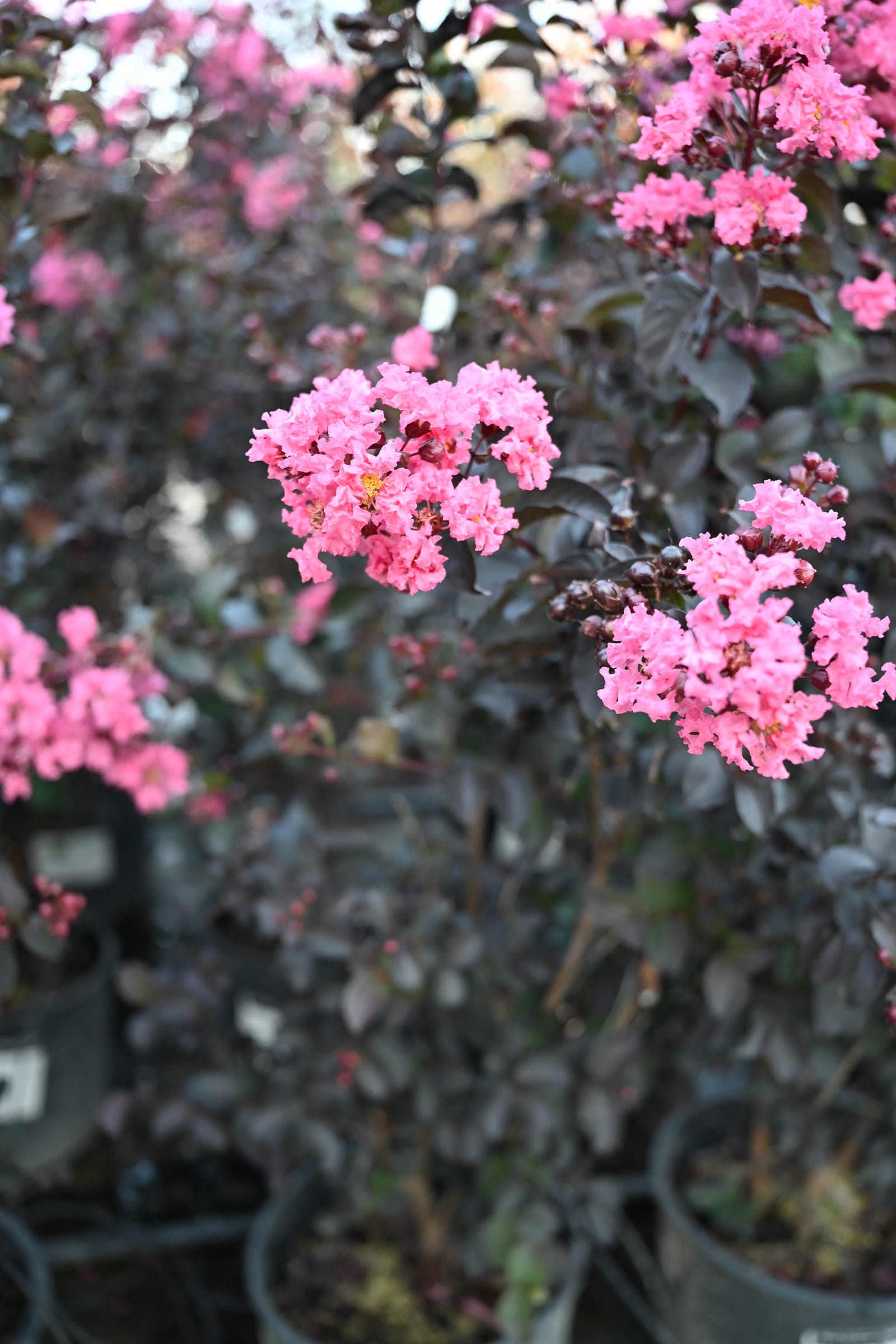
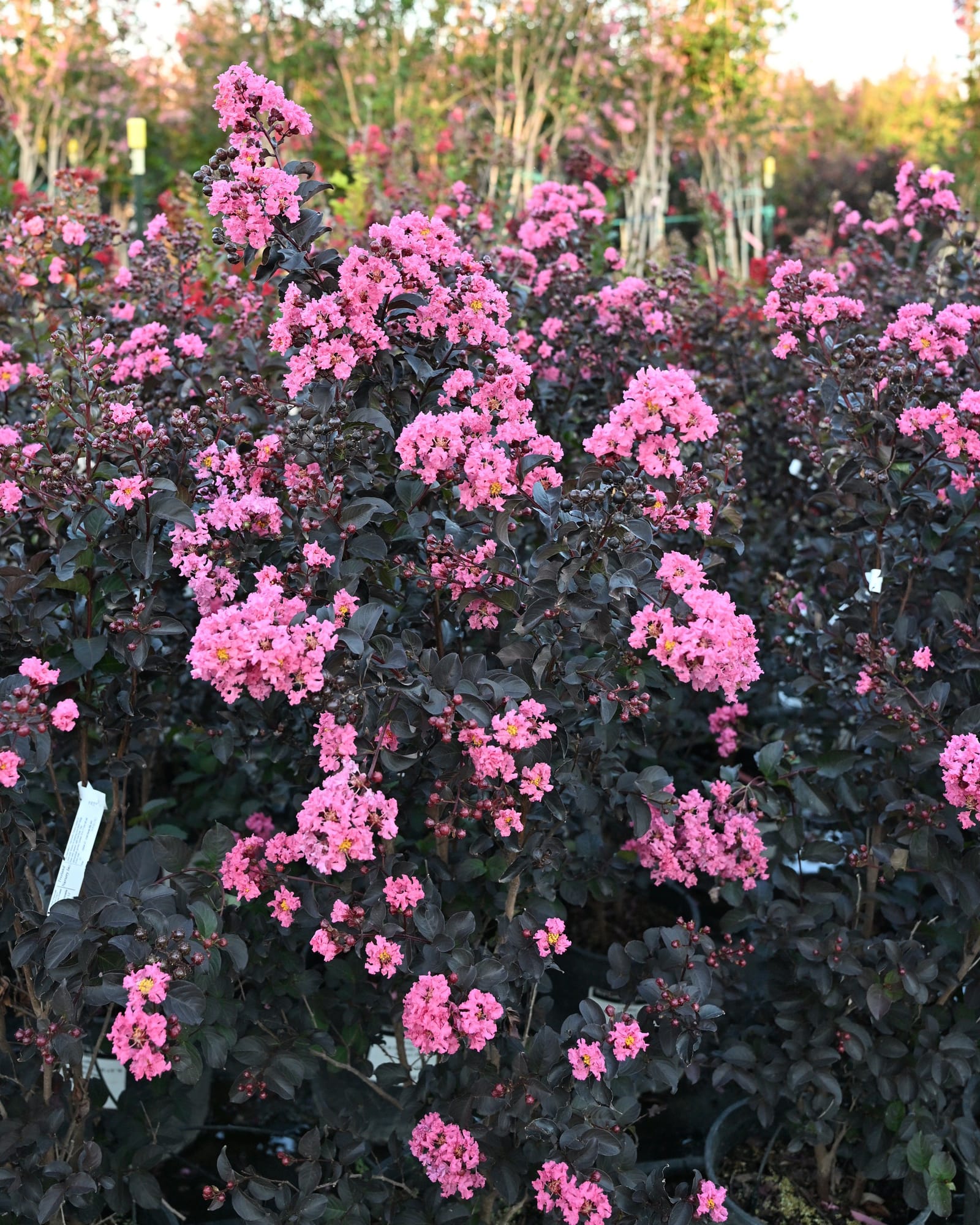
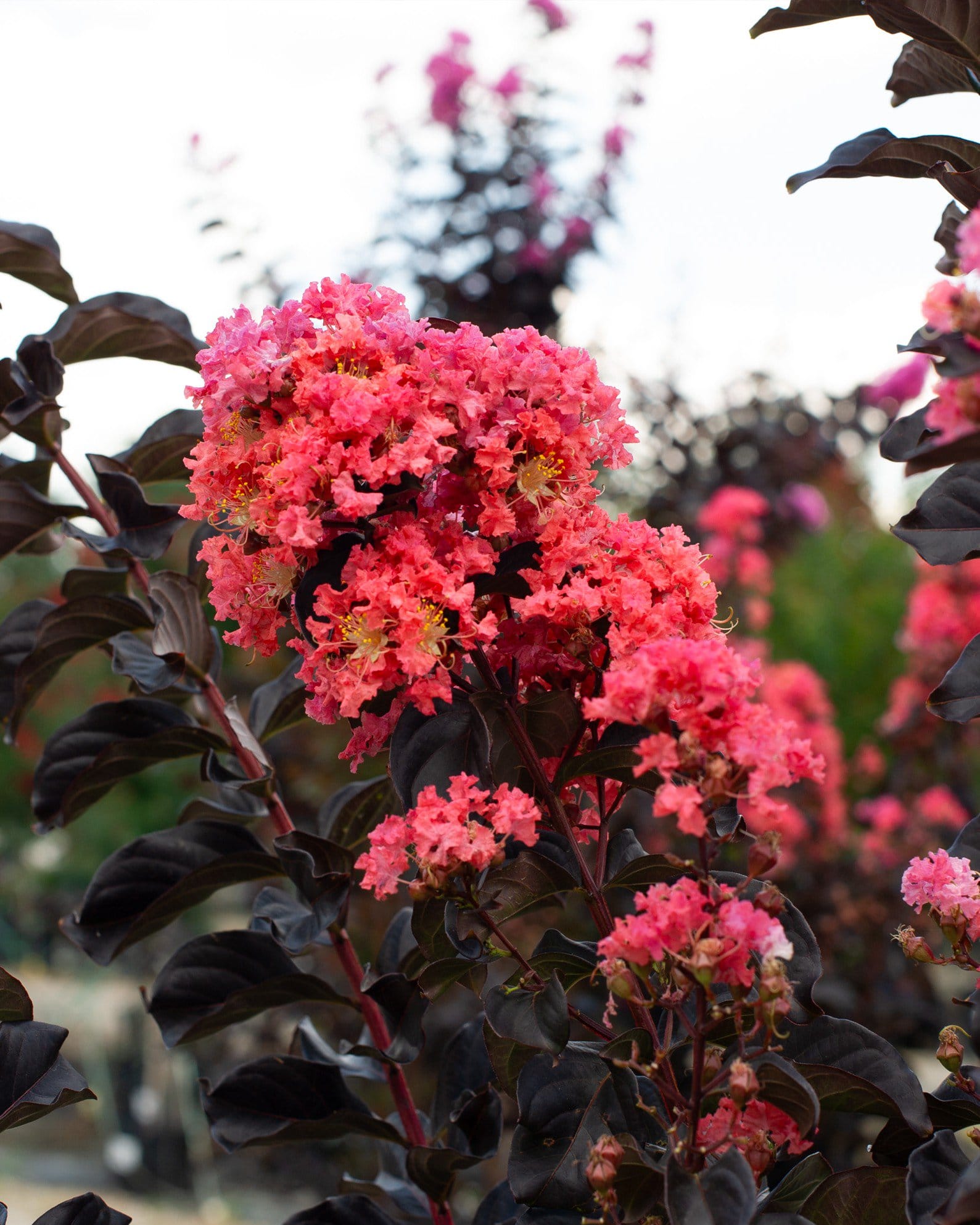
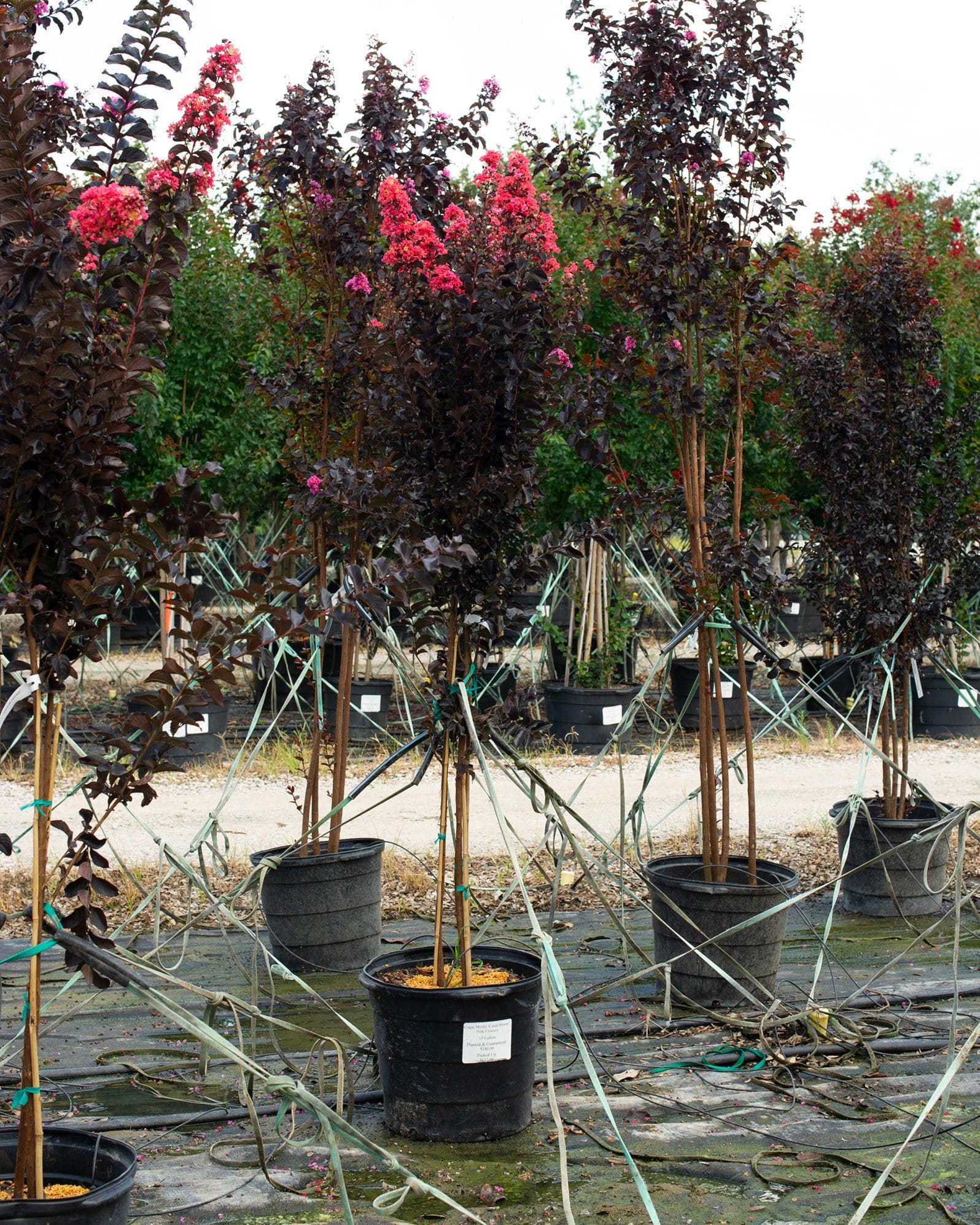
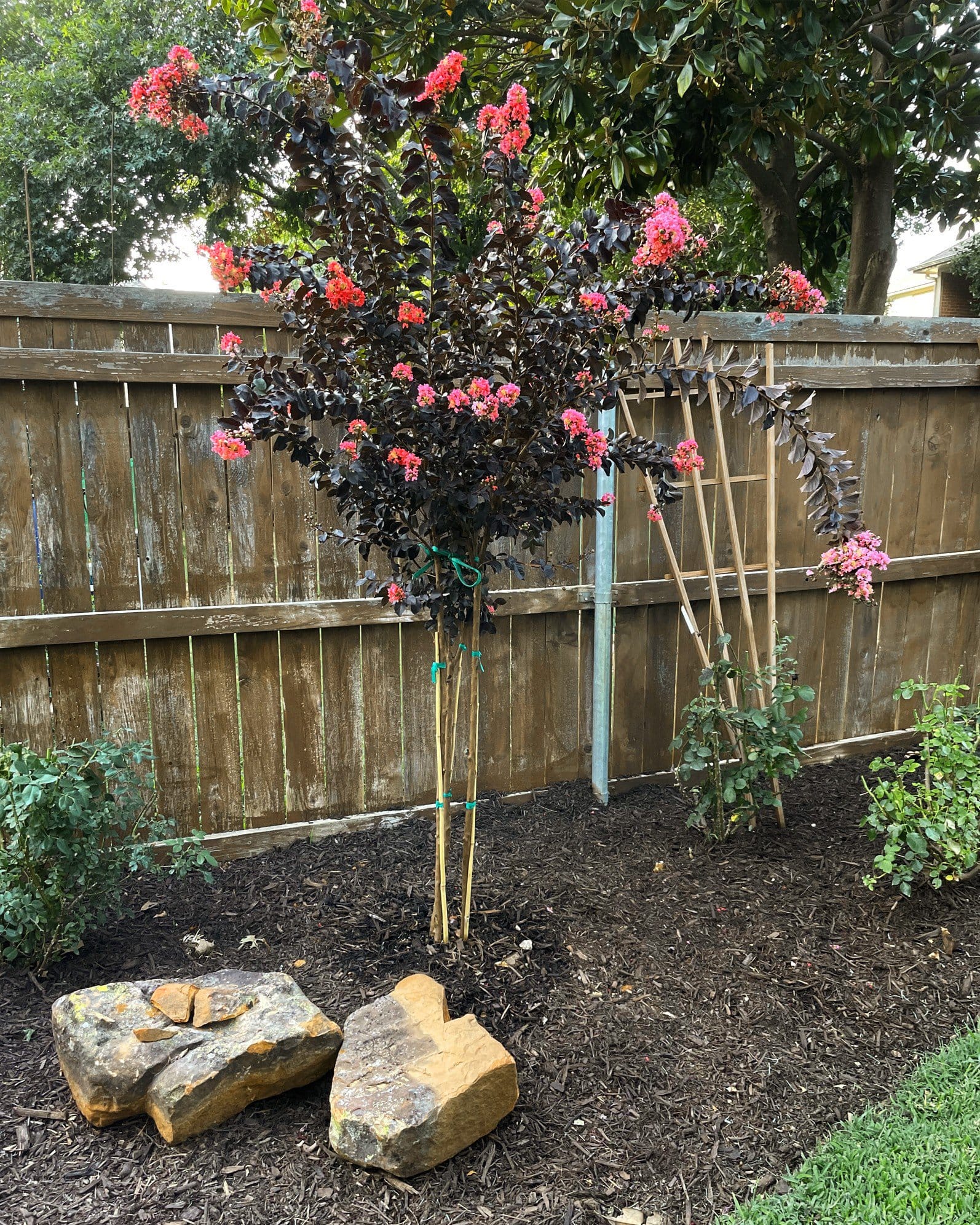
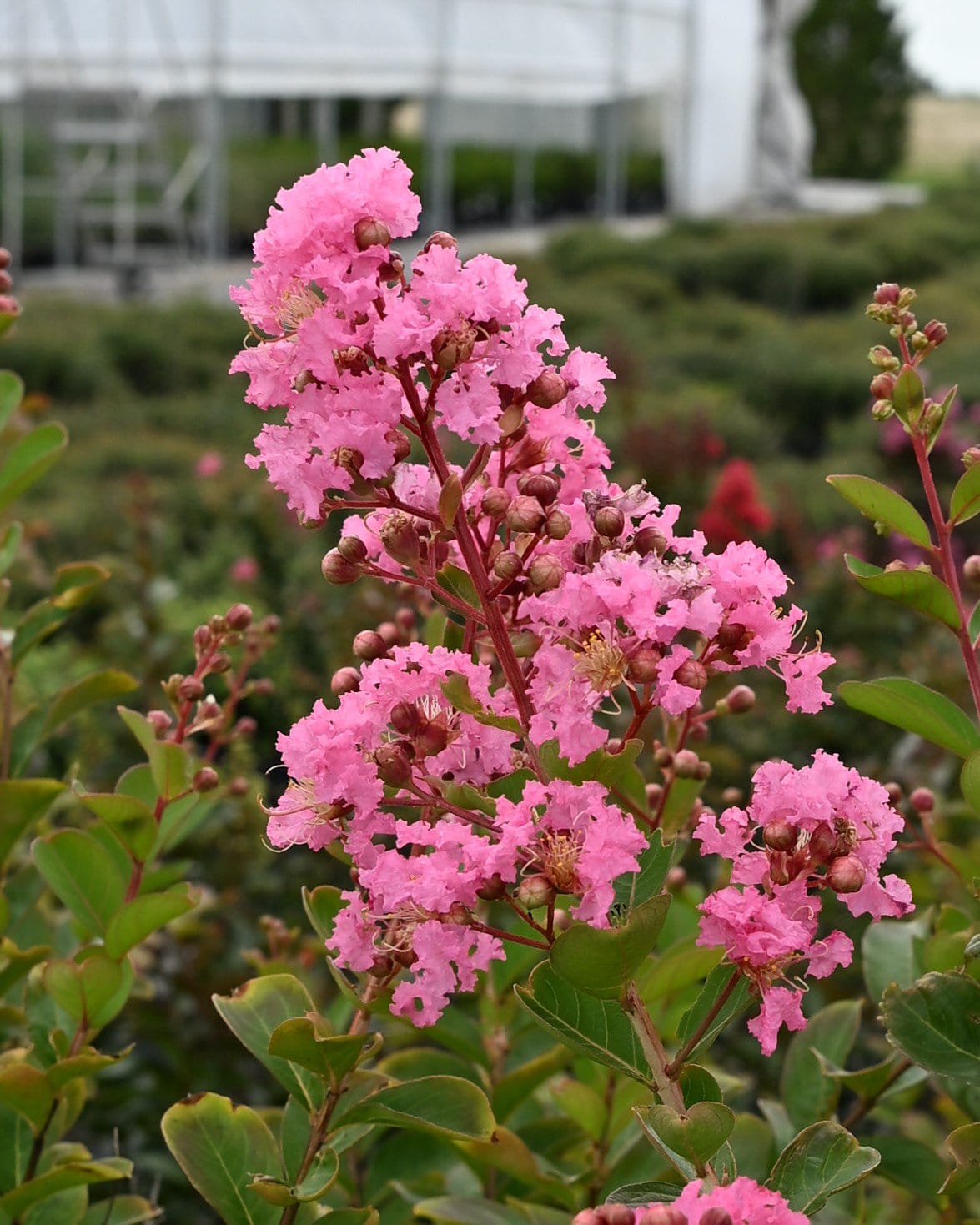
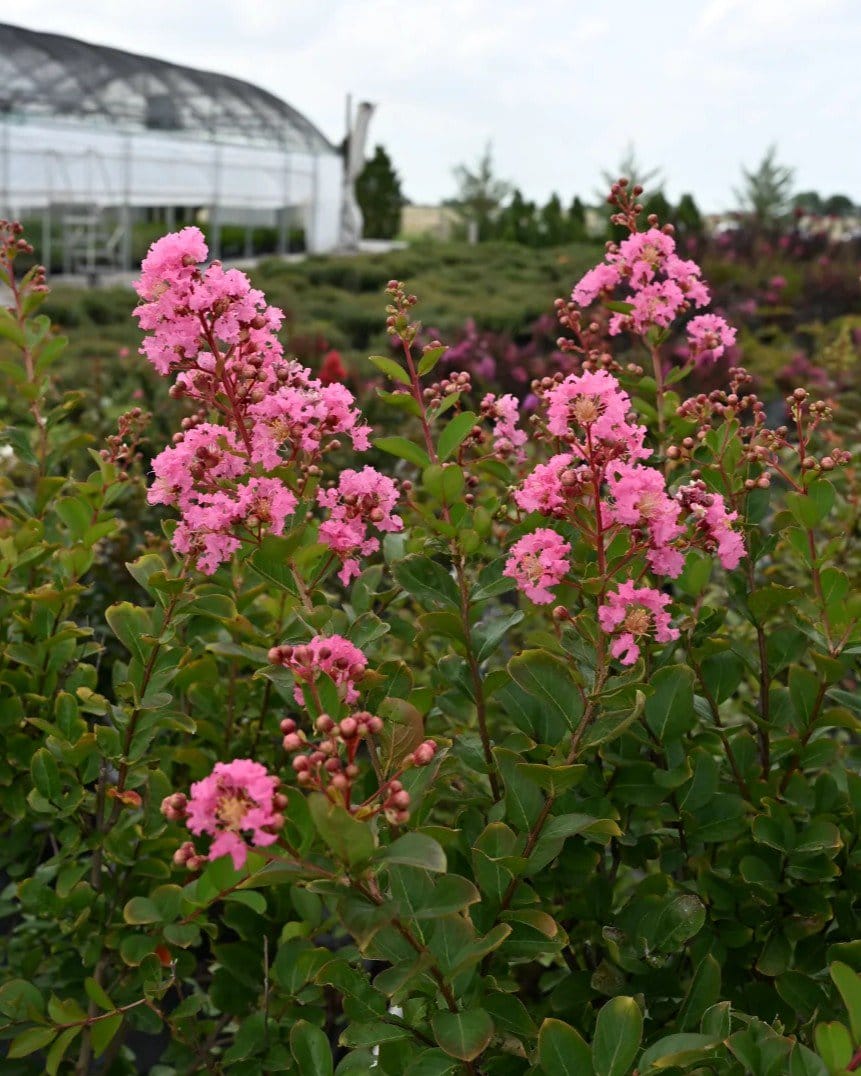
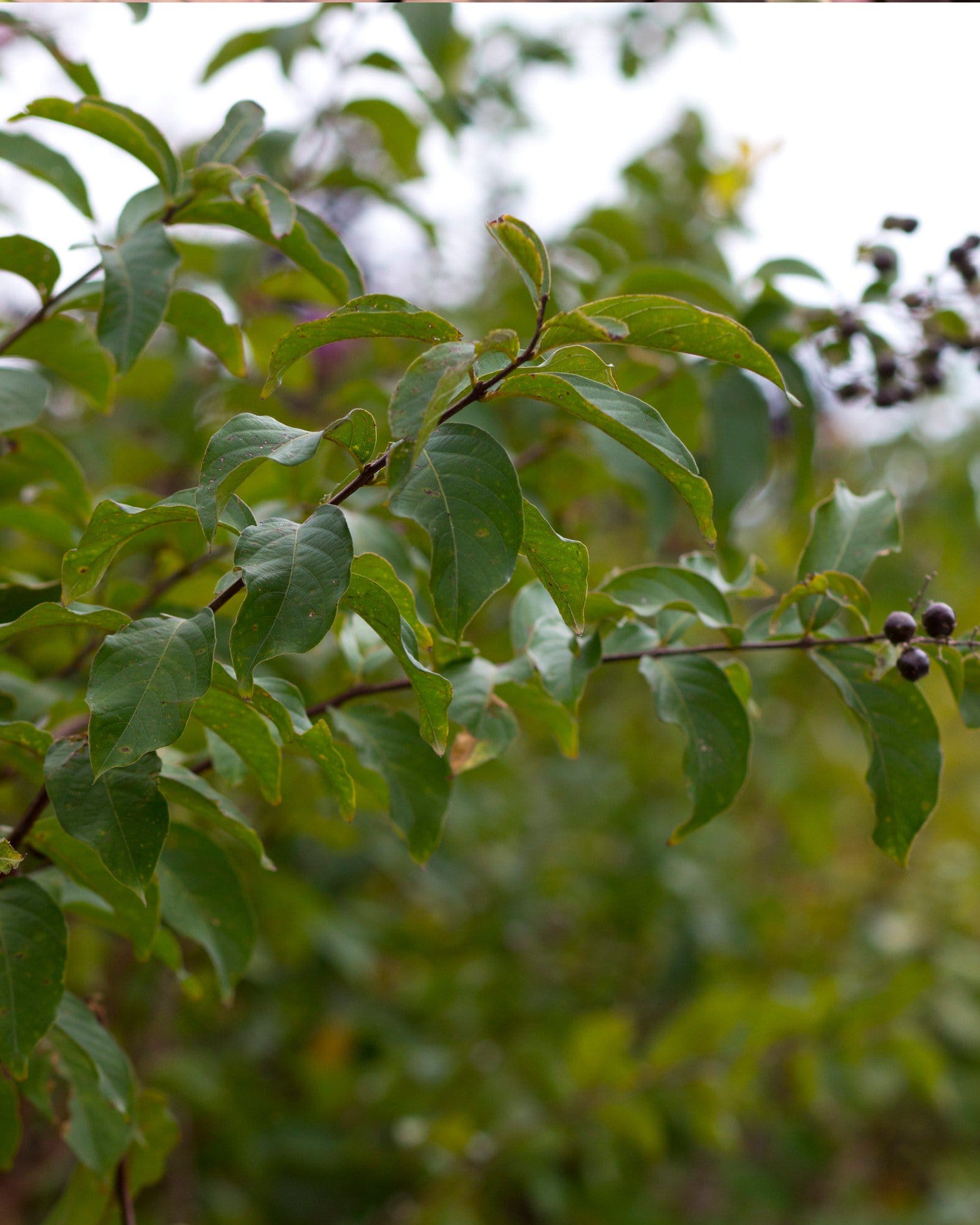
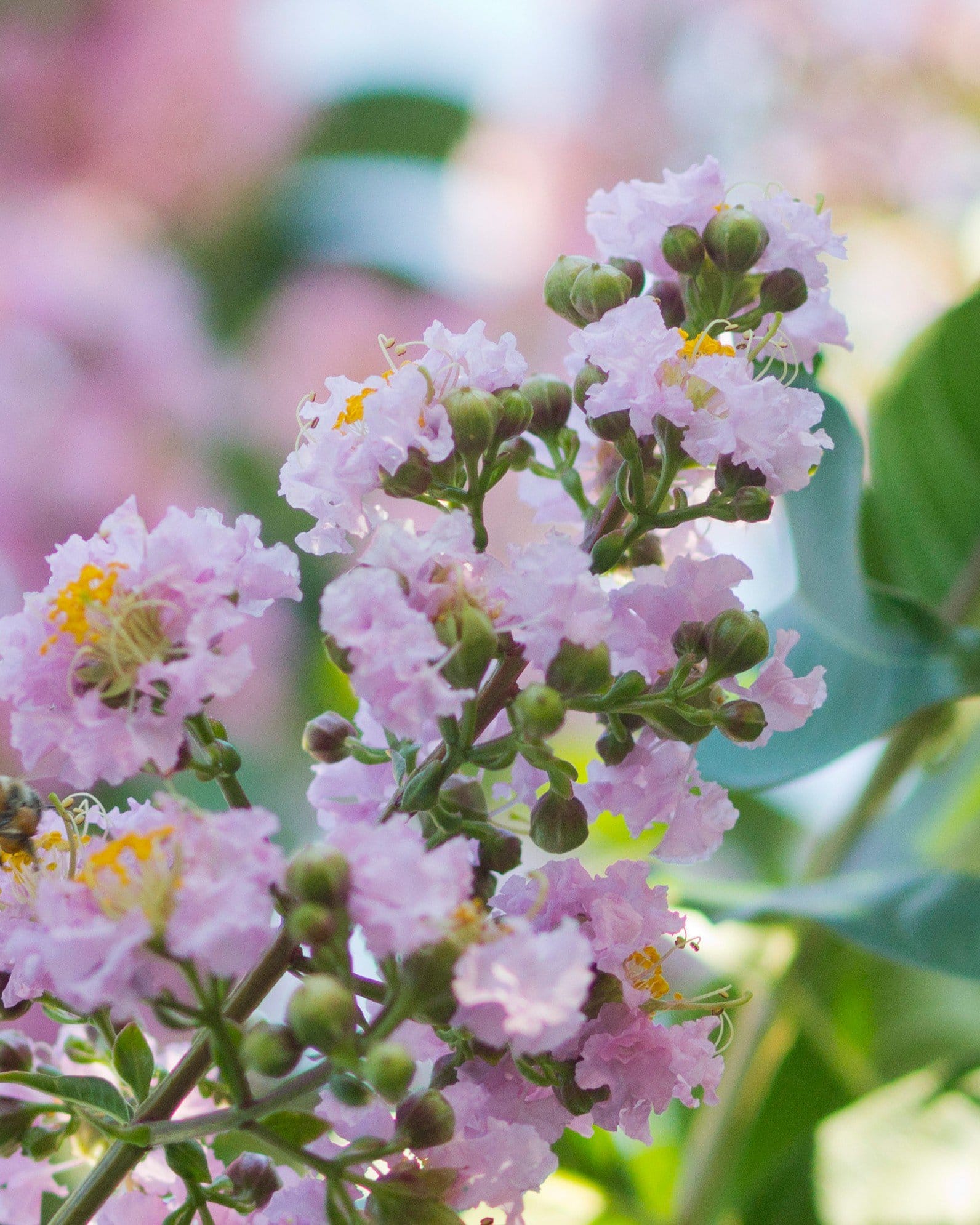
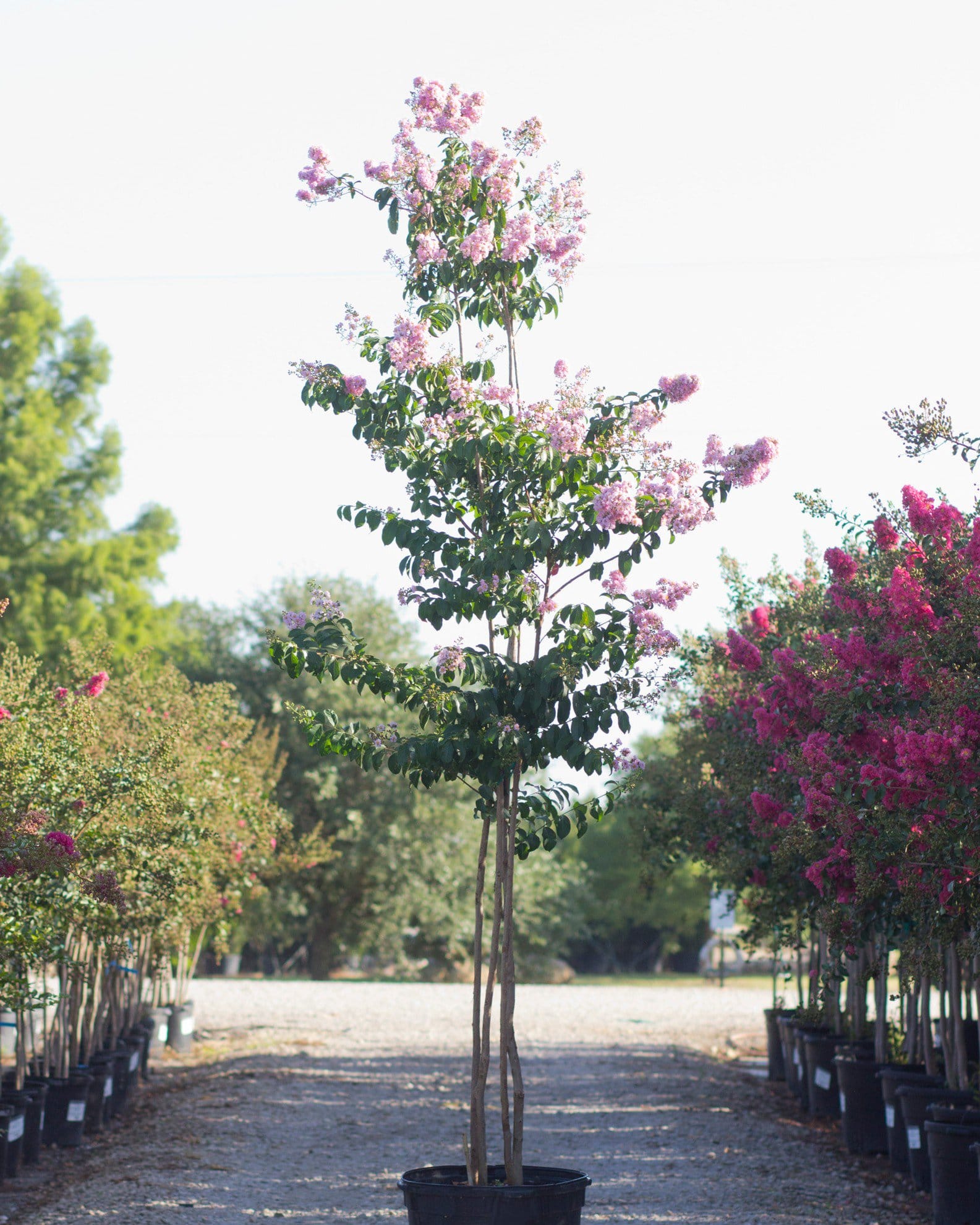
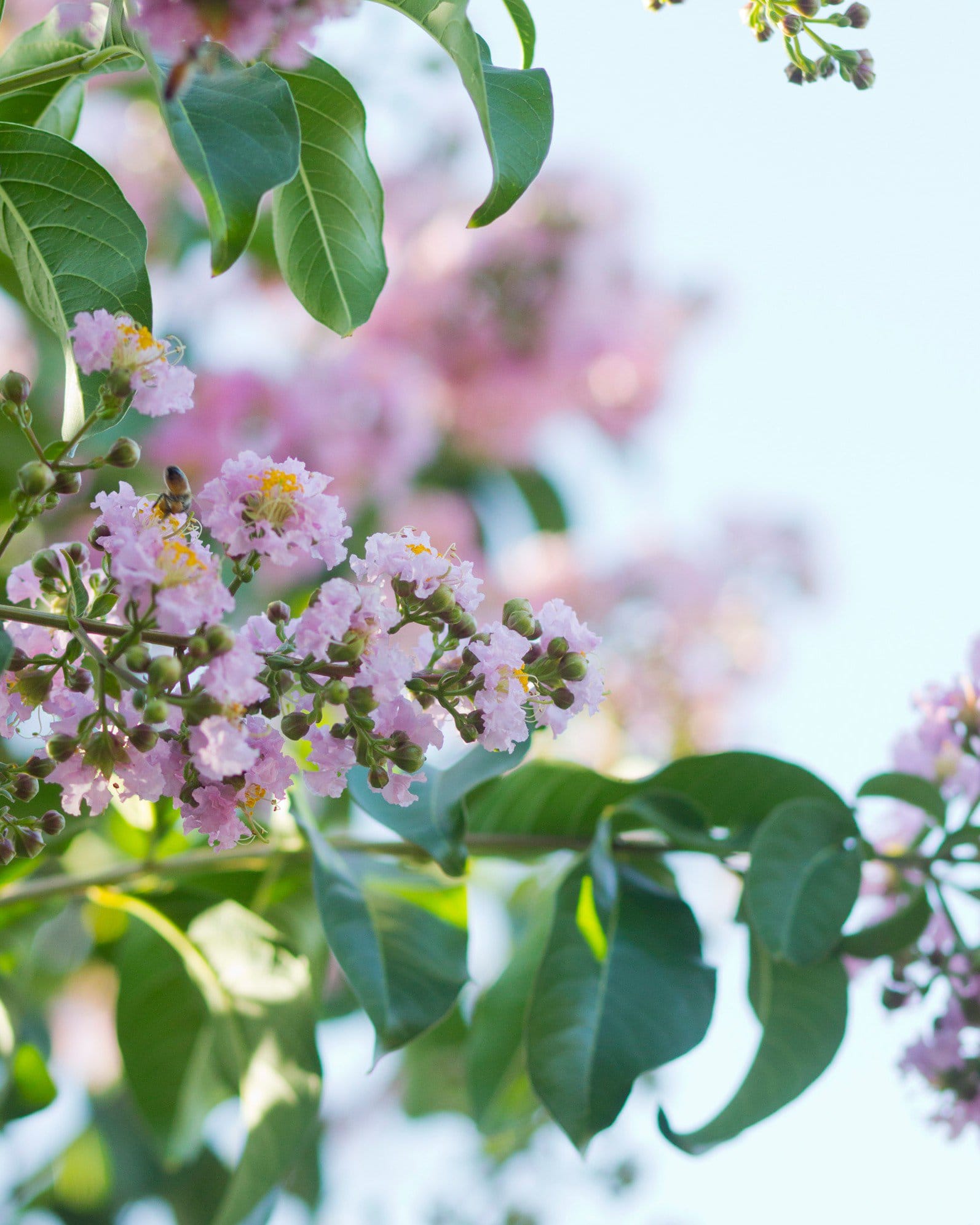
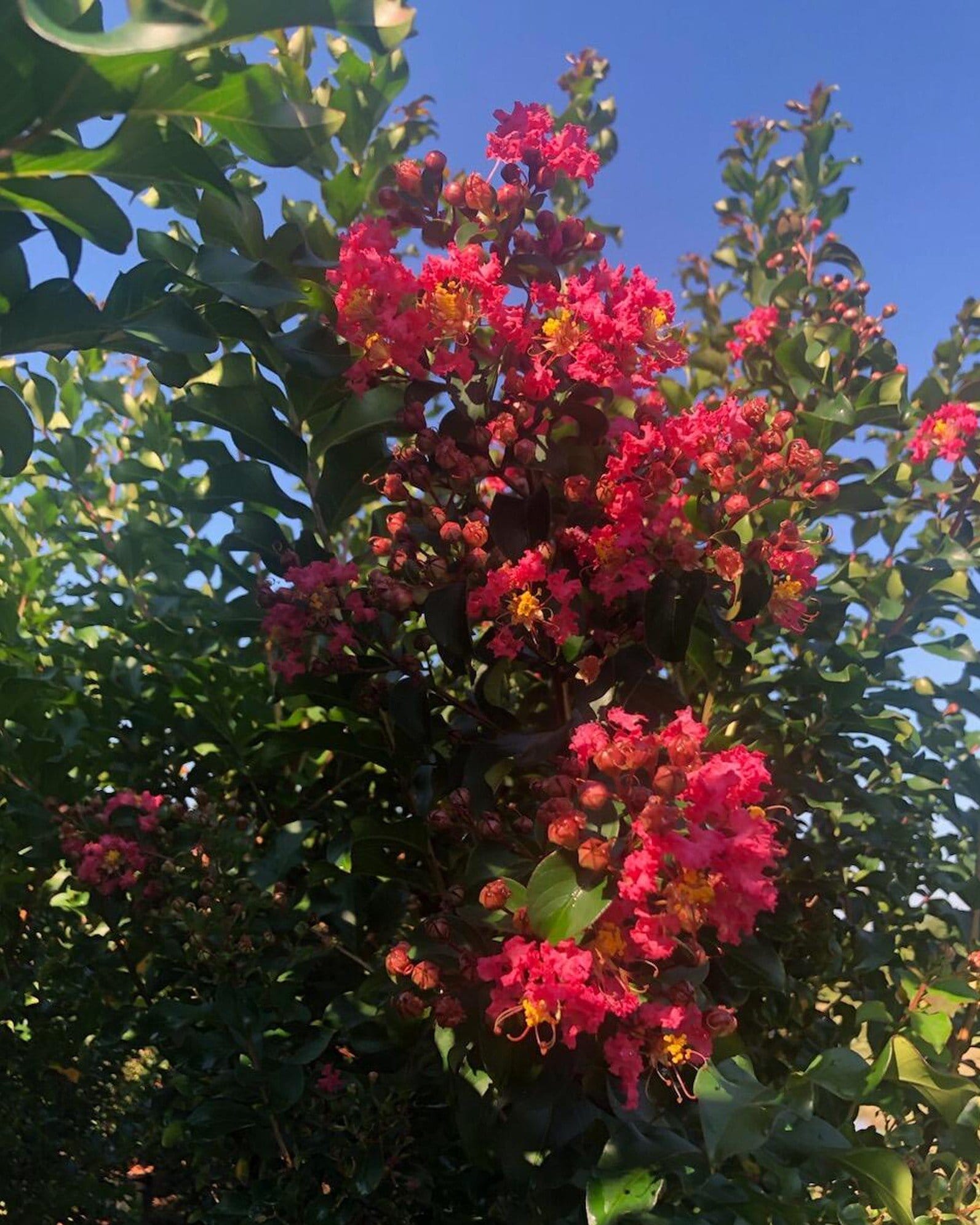
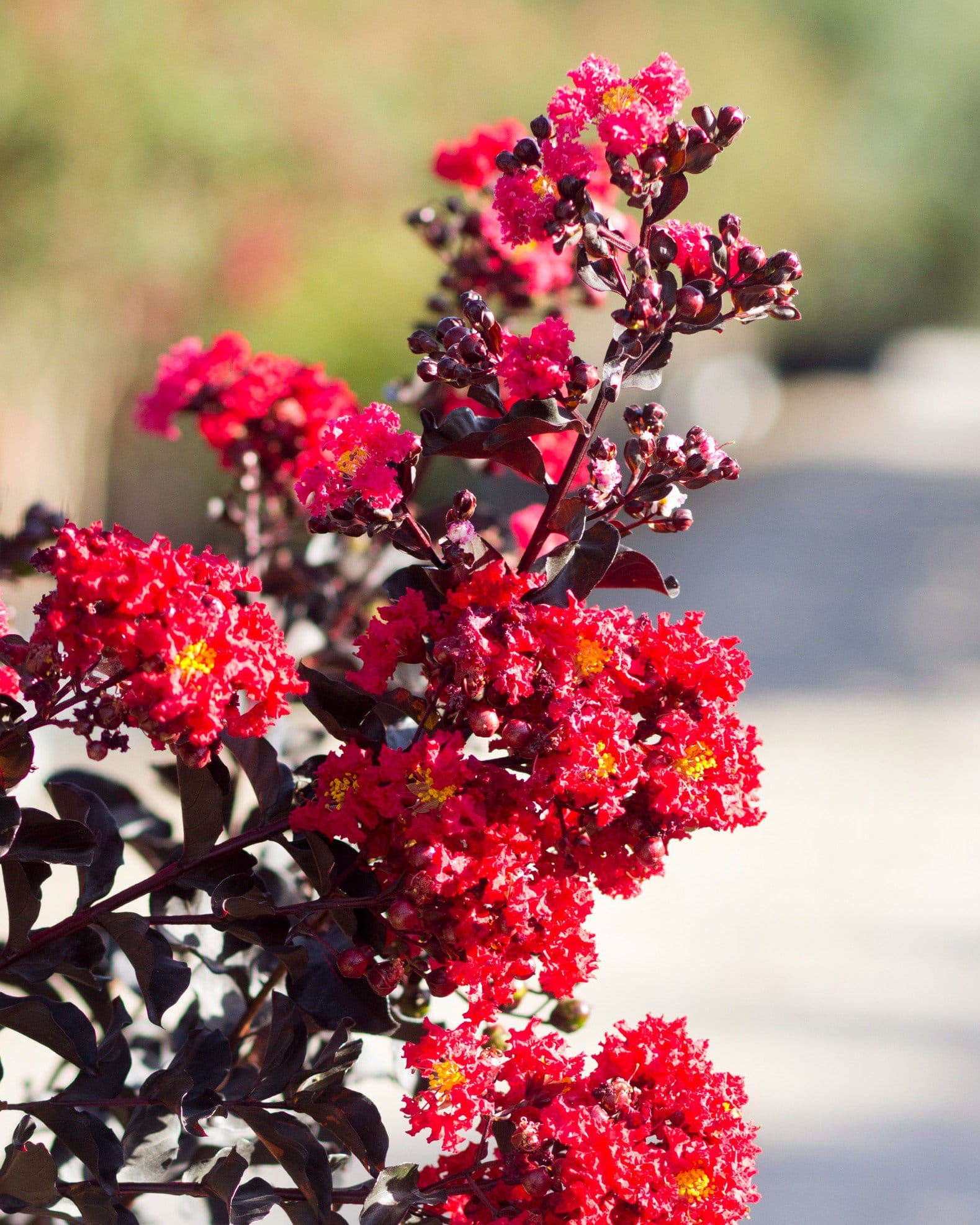
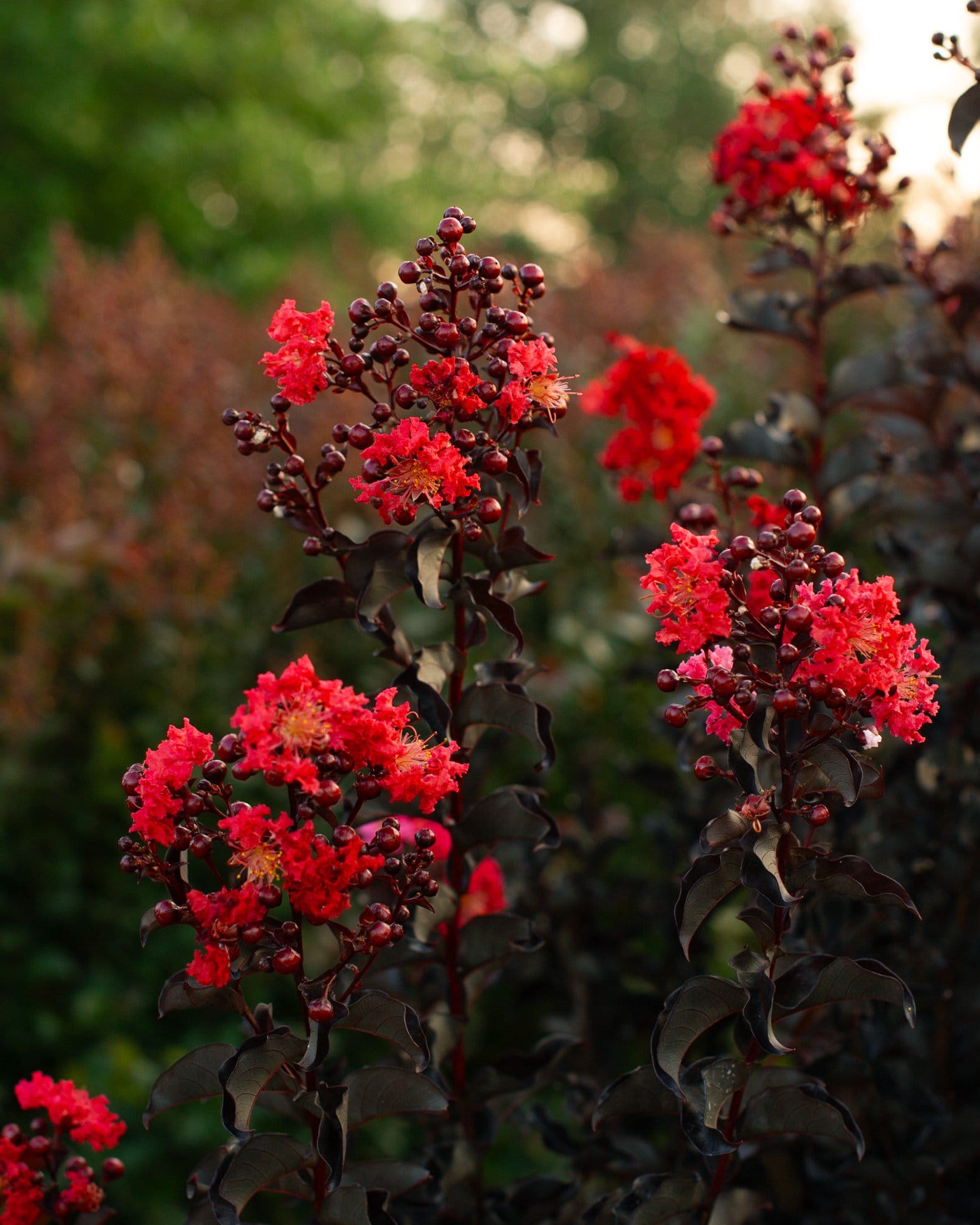
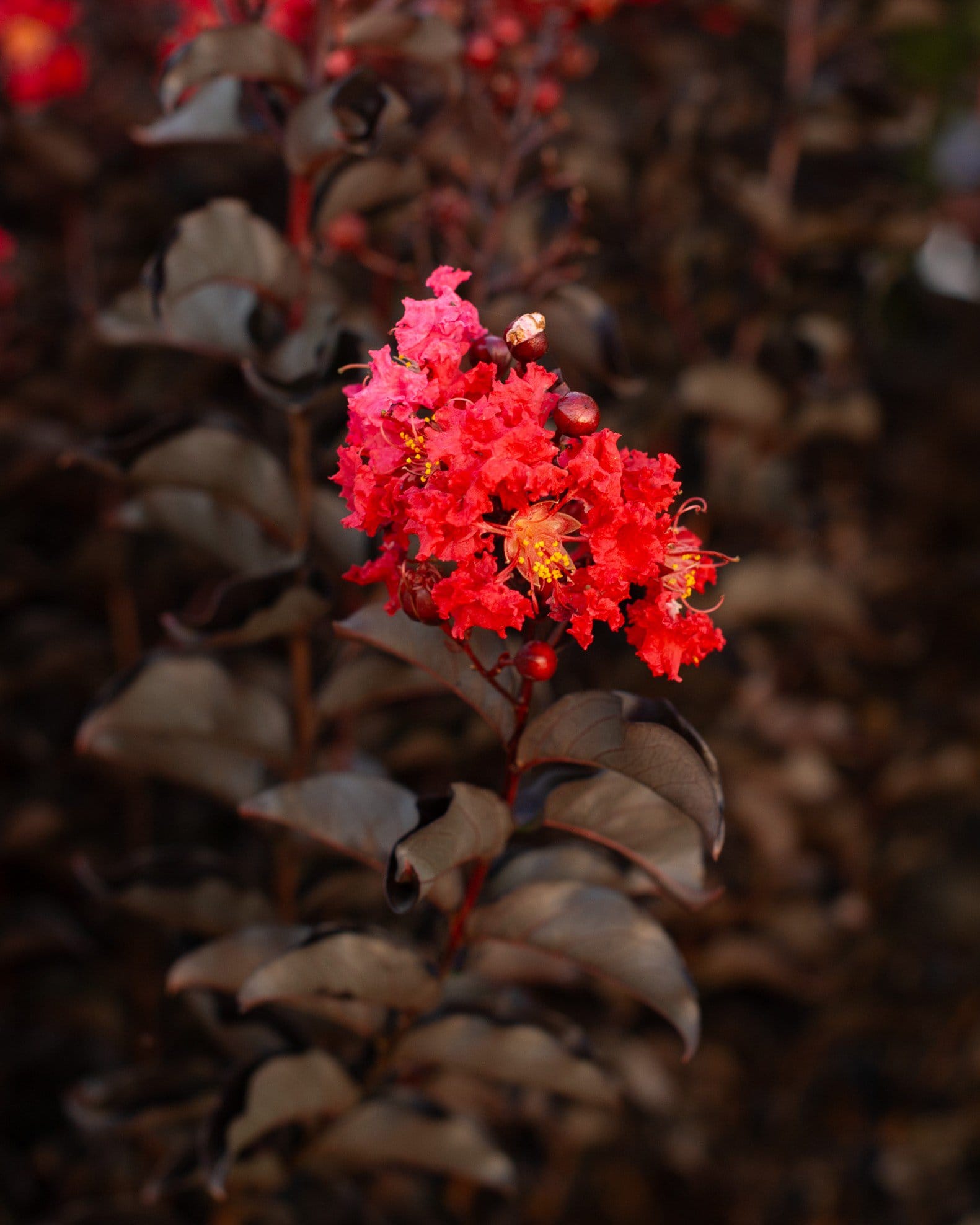
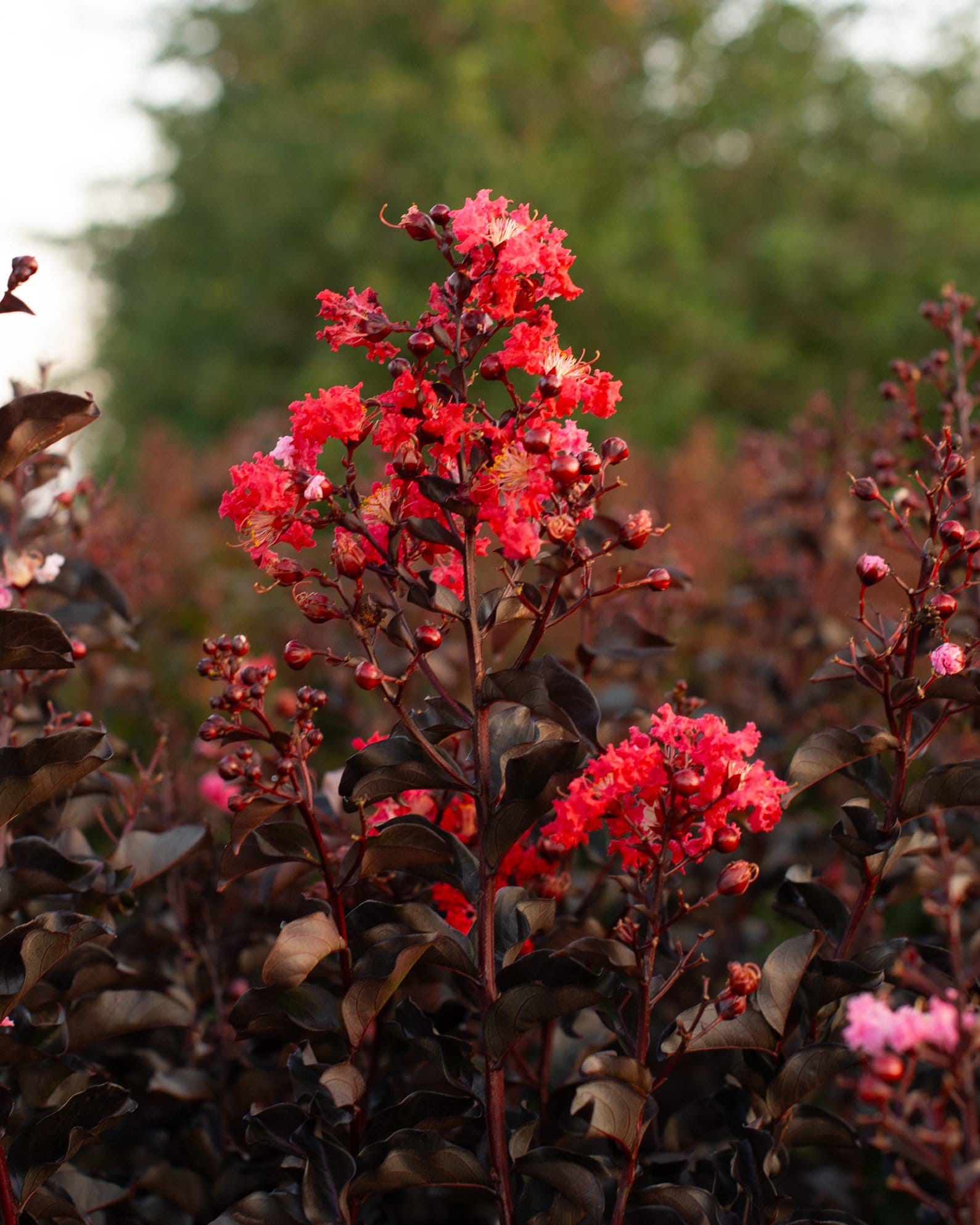
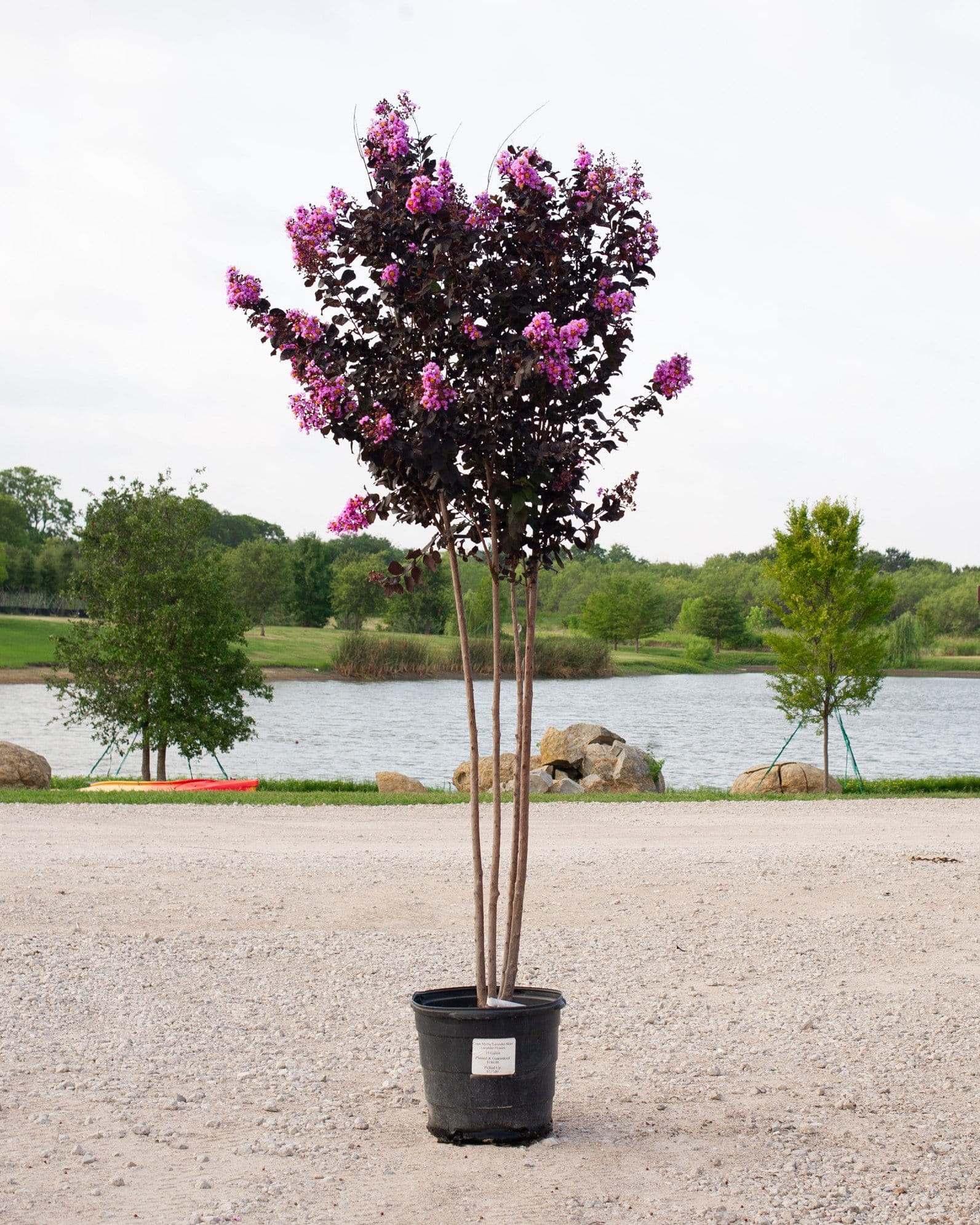
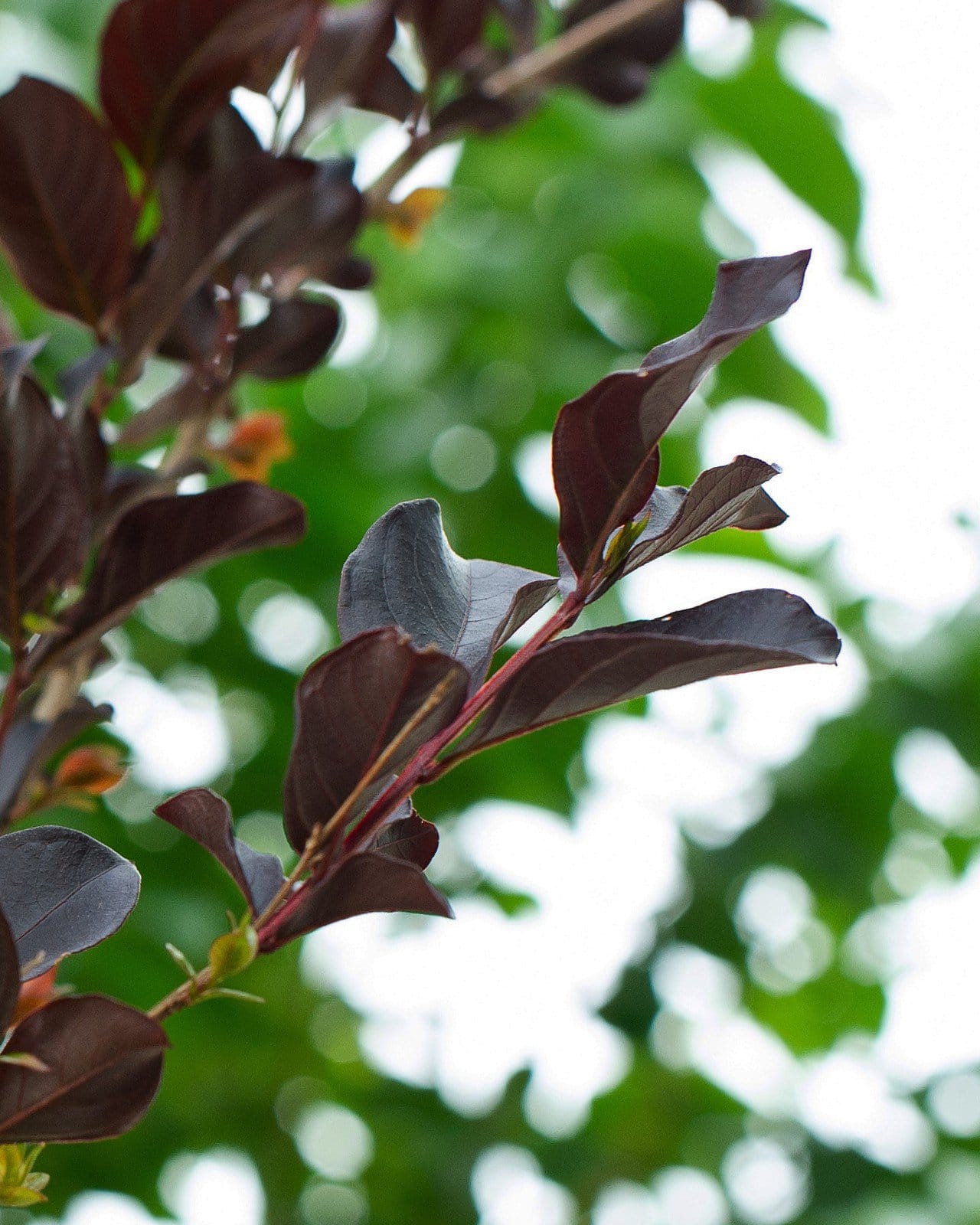
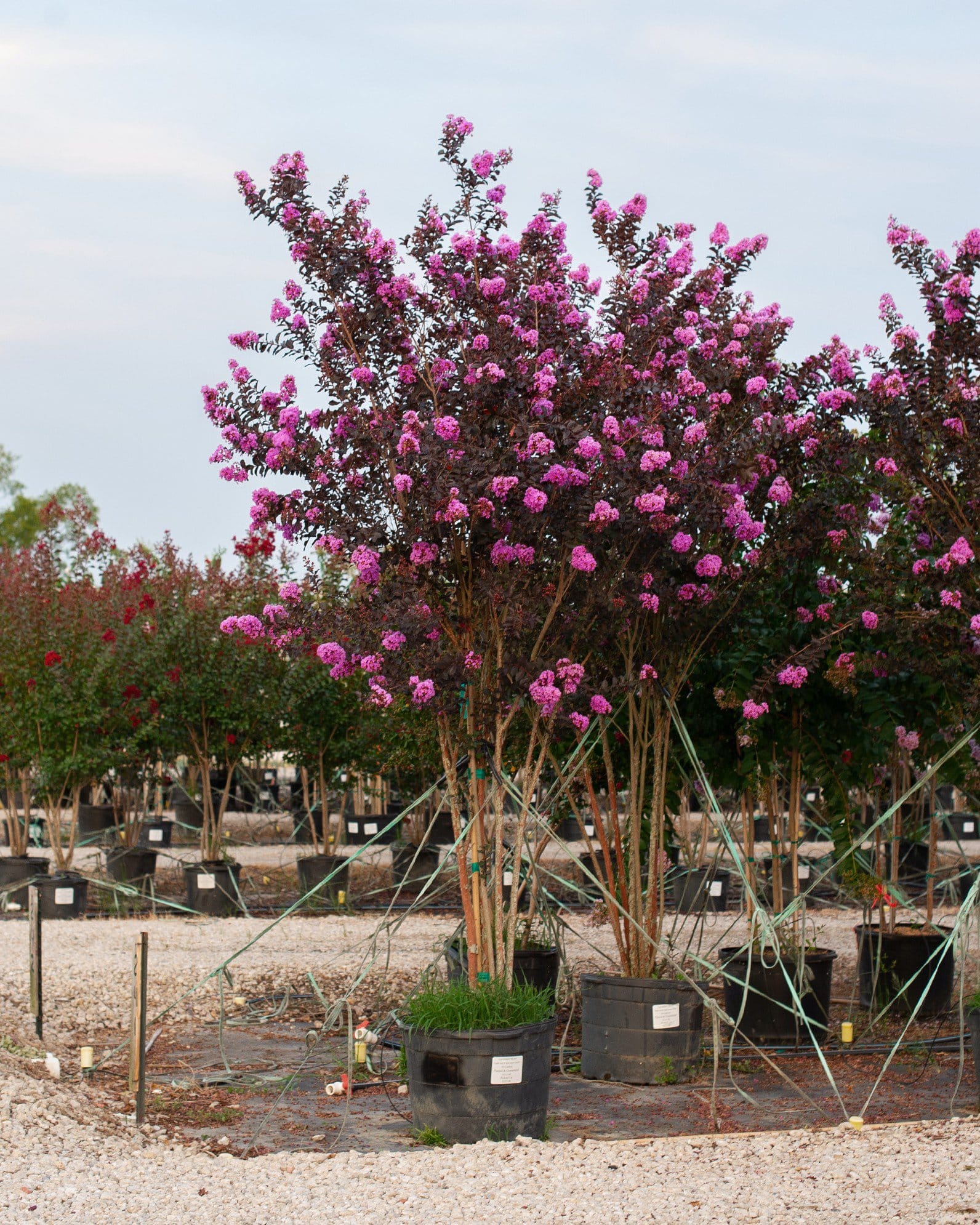
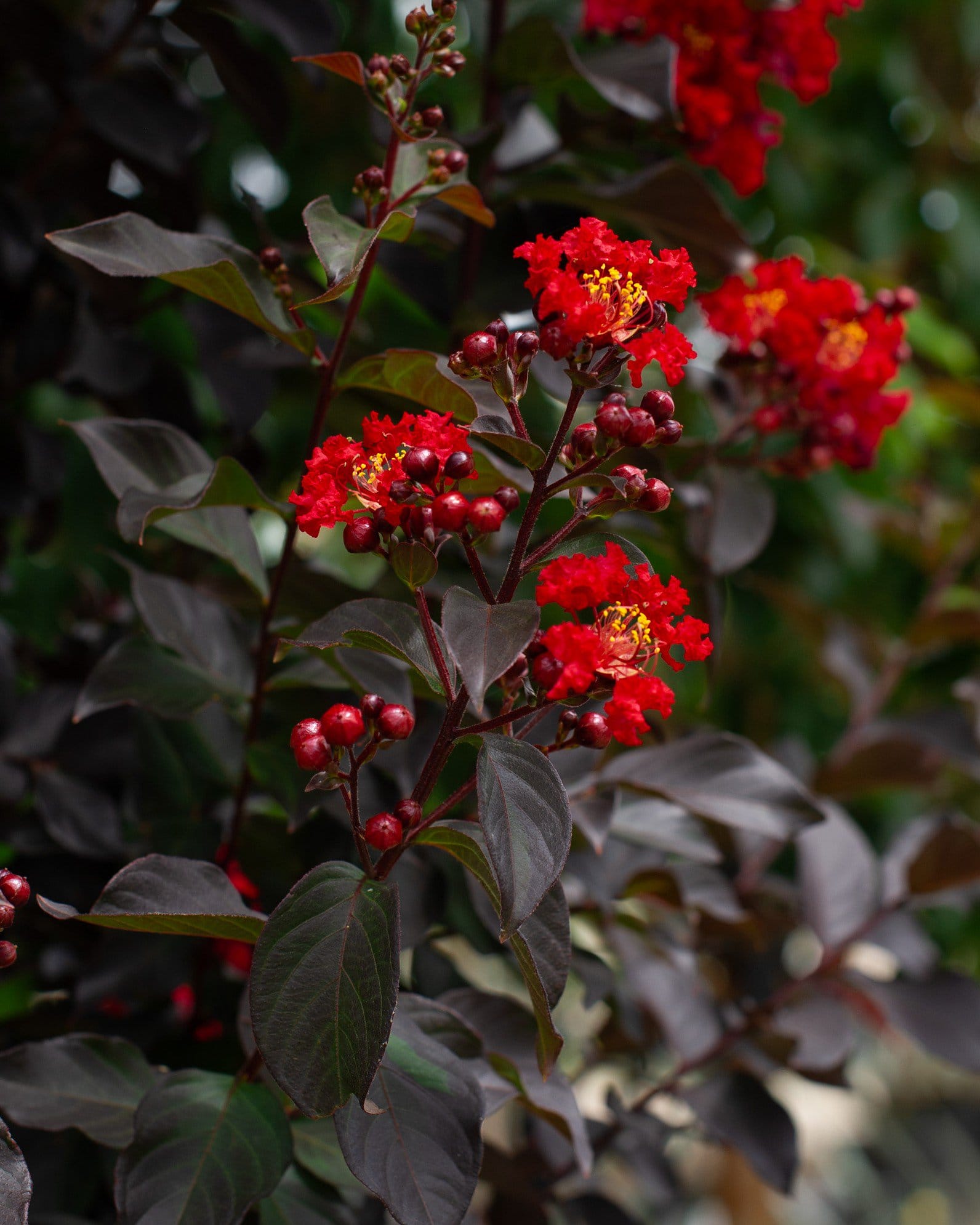
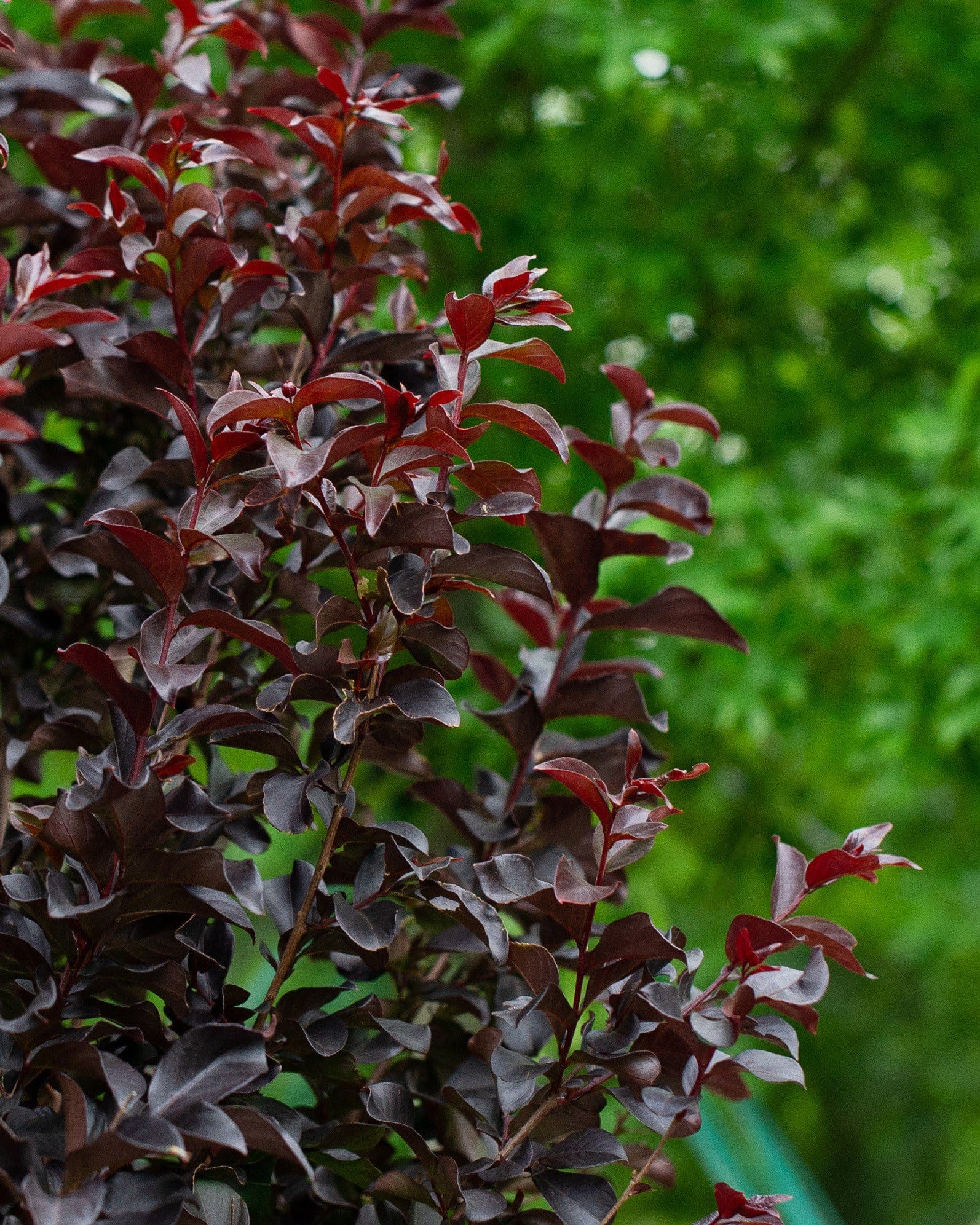
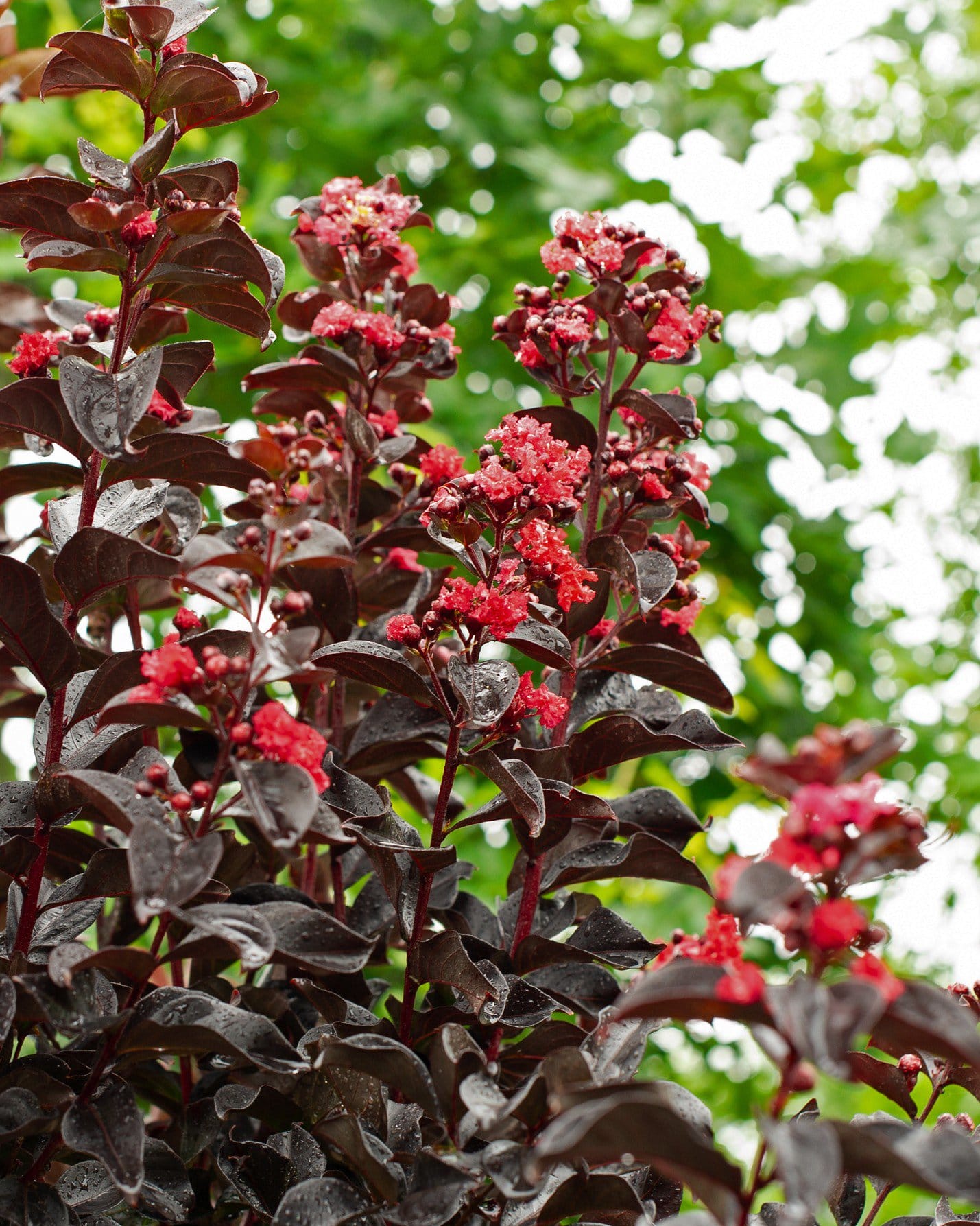
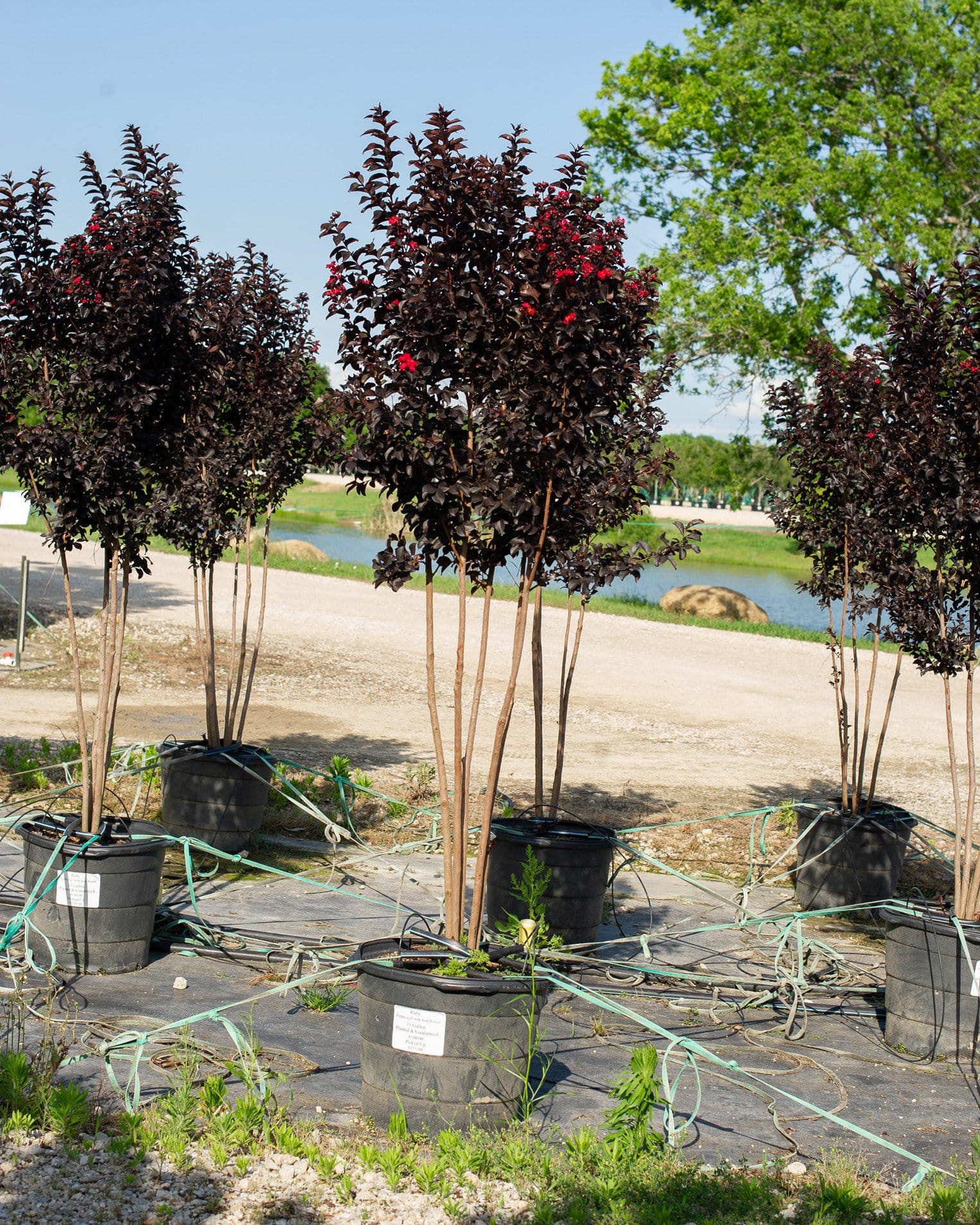
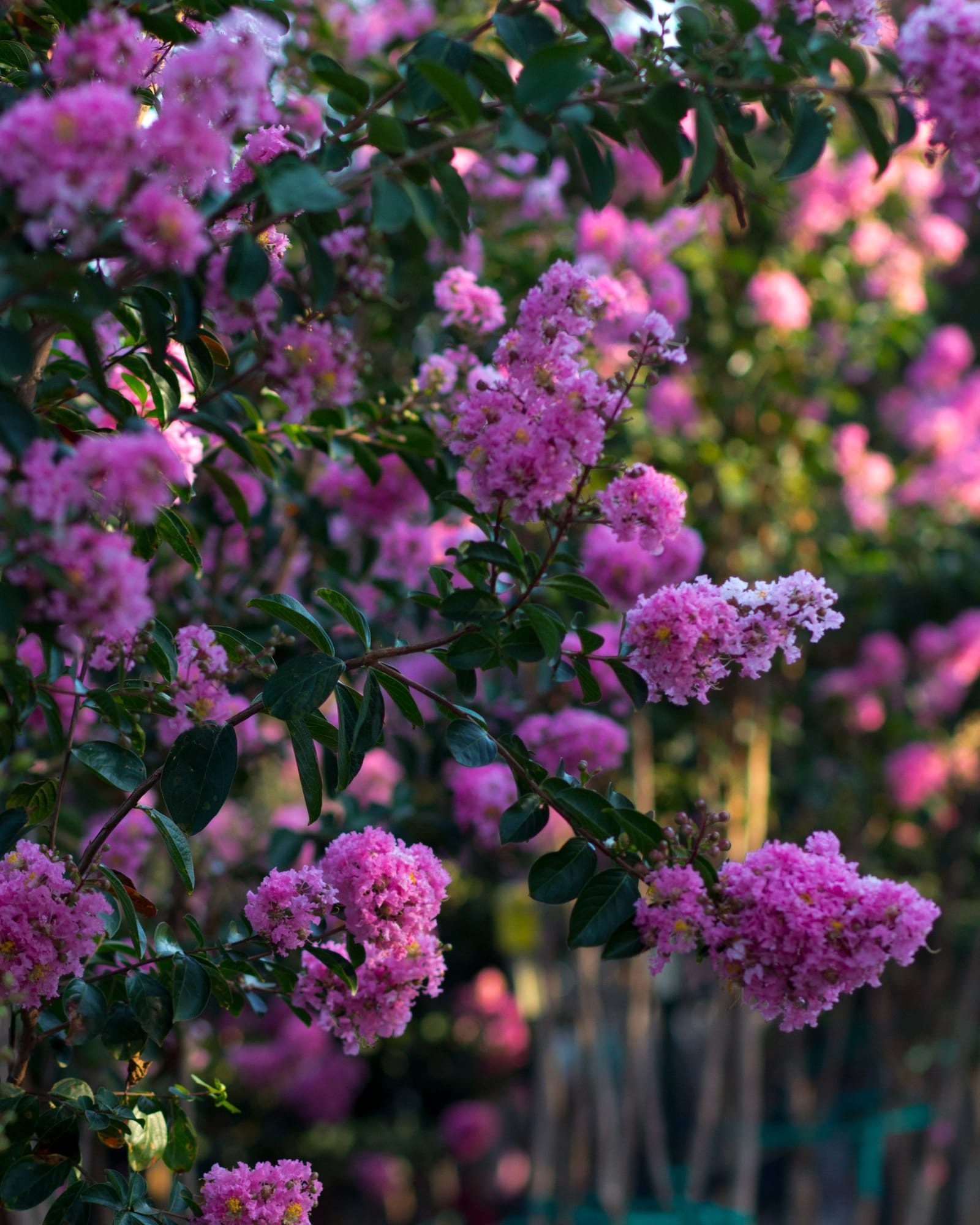
Lagerstroemia indica 'Whit VIII'Rhapsody in Pink Crape Myrtle offers an abundant display of bright pink blooms that cover the plant all throughout summer. Its dense, dark green and purple leaves provide a lush backdrop to the vivid flowers. Grows 12 feet tall and 8 feet wide at maturity, this tree features a rounded, bushy habit that fits perfectly in smaller beds, containers, or as a colorful border. It attracts pollinators and adds a cheerful pop of color.
- Deciduous tree
- Fast growth rate with compact, rounded growth habit
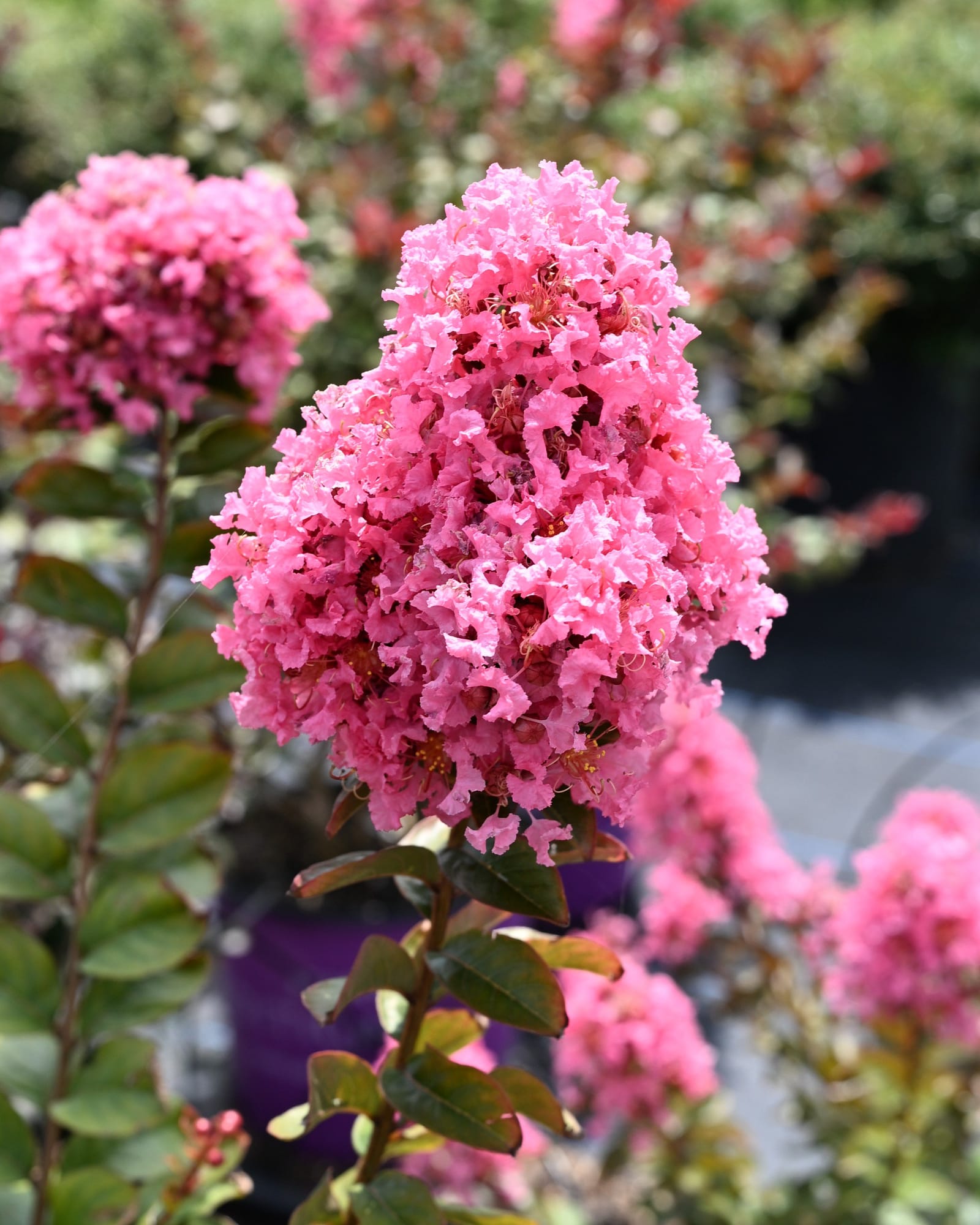
- Soft pink flower clusters all summer long
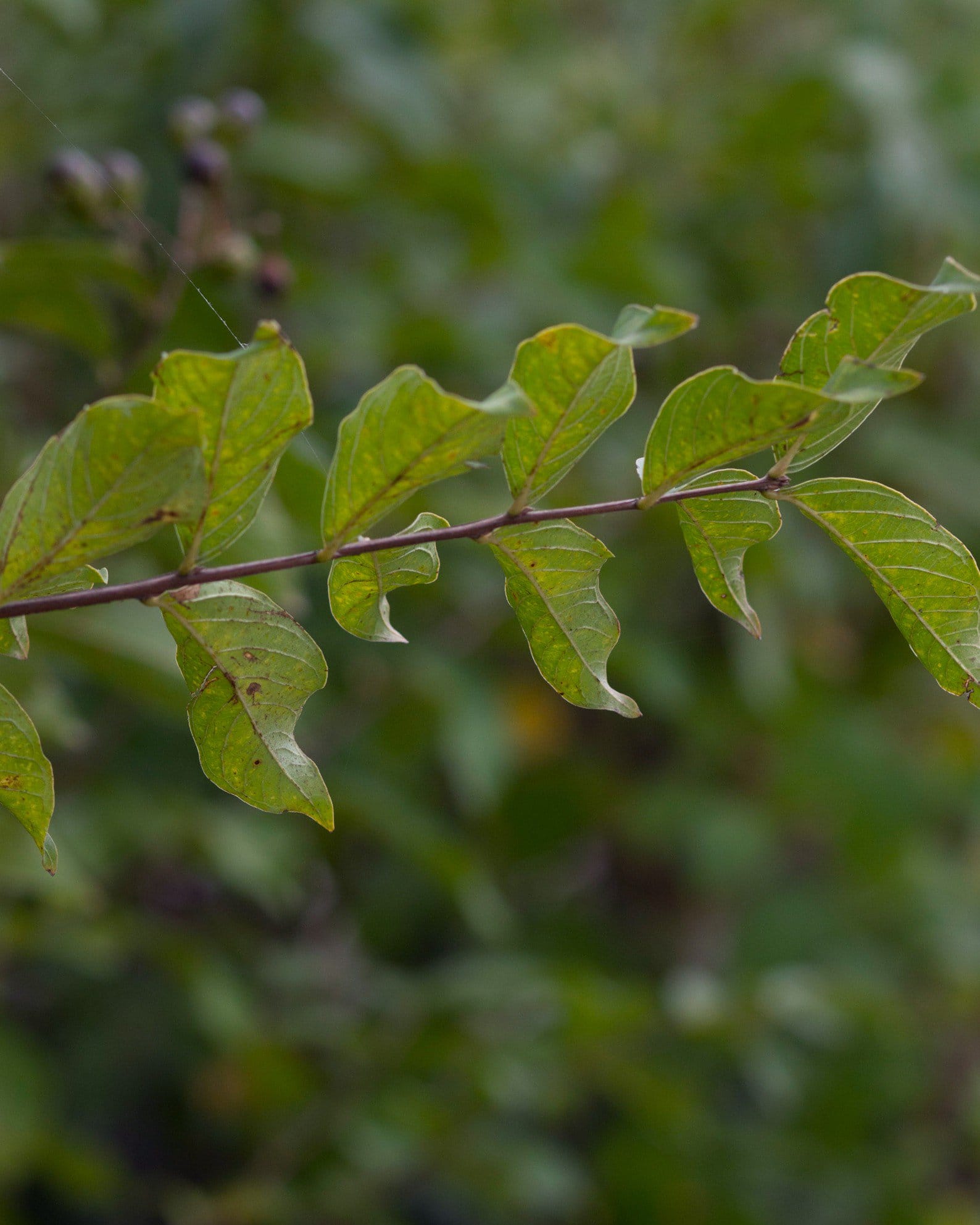
- Deep purple foliage turning orange in autumn
- Attracts pollinators
Rhapsody in Pink thrives in full sun with well-drained soil. It tolerates heat and drought once established and grows well in USDA zones 7 through 9. Trimming in late winter encourages new growth and vibrant blooms, making it a versatile and reliable choice for Texas beds.
Once established, Rhapsody in Pink Crape Myrtle becomes reliably low-maintenance and develops into a durable ornamental tree with minimal seasonal care. This is how you help it grow beautifully:
- Watering: Water deeply during the first growing season to encourage a strong root system. After establishment, occasional deep watering during extended dry periods helps maintain healthy foliage and consistent flowering.
- Pruning: Prune in late winter while the tree is dormant to remove damaged or crossing branches and maintain a well-spaced canopy. Light structural pruning helps preserve the tree’s natural form while supporting healthy branch development.
- Fertilizing: Fertilizer is rarely needed in average soils. When additional vigor is desired, a balanced fertilizer applied in early spring supports steady growth without encouraging overly soft shoots.
- Mulching: Maintain a 2-3 inch mulch layer around the root zone to stabilize soil moisture and moderate temperature changes. Keep mulch slightly away from the trunk to avoid moisture buildup against the bark.
- Winter Care: Established trees tolerate seasonal cold within their recommended zones. Young plants may benefit from a protective mulch layer during their first winters to help stabilize soil temperatures.
Rhapsody in Pink Crape Myrtle typically grows with few problems, though occasional pests or environmental stress may appear.
- Crape Myrtle Bark Scale: Small white patches may appear on stems as these insects feed on plant sap. Dormant oil treatments and removal of heavily affected branches help reduce populations.
- Leaf Margin Browning: Edges of leaves may occasionally brown due to inconsistent watering. Maintaining steady soil moisture helps prevent this condition.
- Stem Canker: Small sunken areas on branches may develop if bark becomes damaged. Removing affected branches during dormancy helps stop the spread.
- Bud Deformation: Developing buds may occasionally appear distorted if insects feed early in the season. Monitoring new growth and managing insect activity helps prevent damage.
Rhapsody in Pink Crape Myrtle typically lives around 30-50 years when grown in suitable conditions. Mature trees remain structurally strong for many decades. Routine pruning helps maintain healthy branching.
Growth usually averages about 12-18 inches per year. Structural maturity often develops within 6-9 years. A fully developed canopy typically forms within about 12 years.
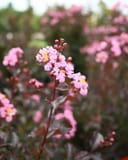
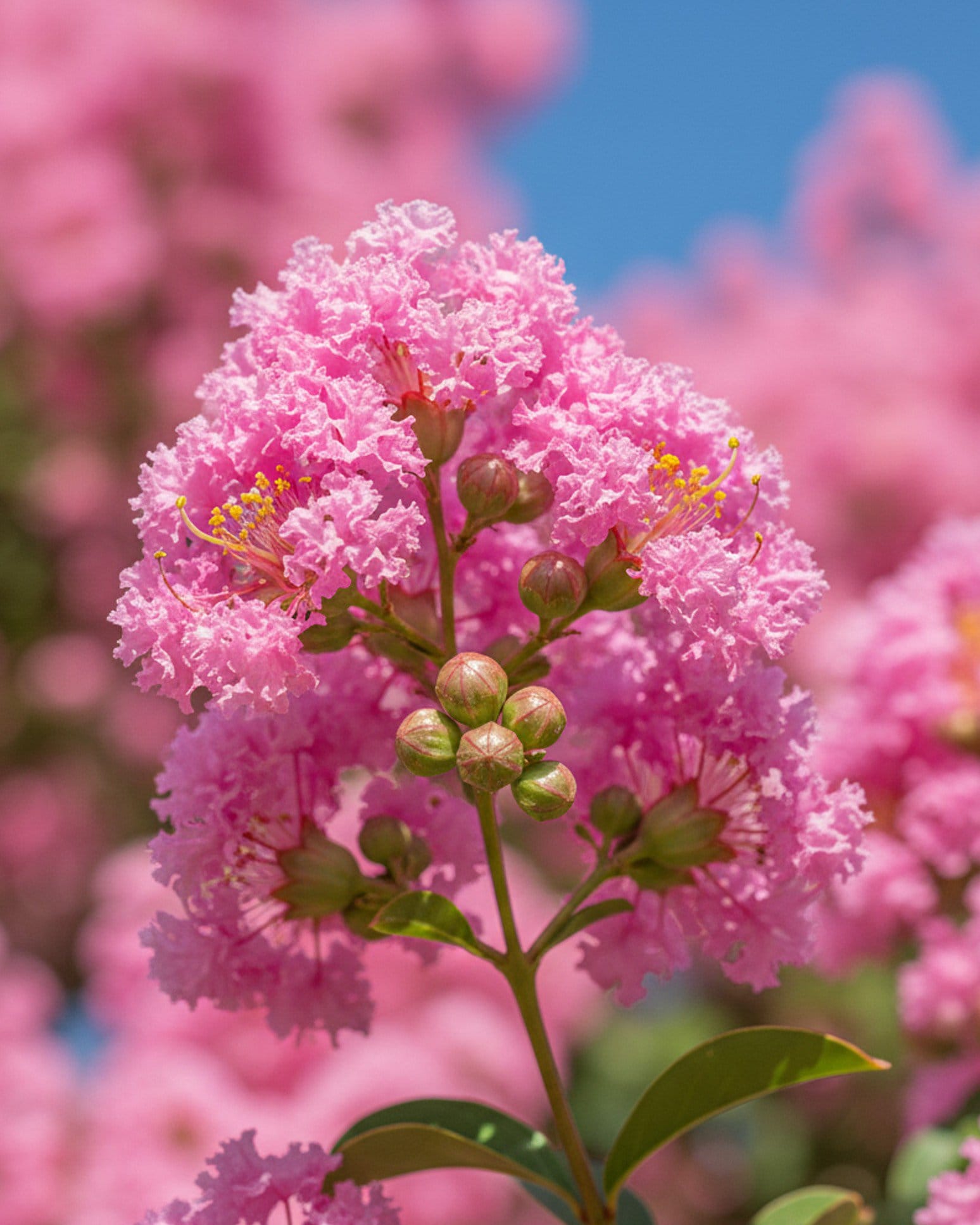
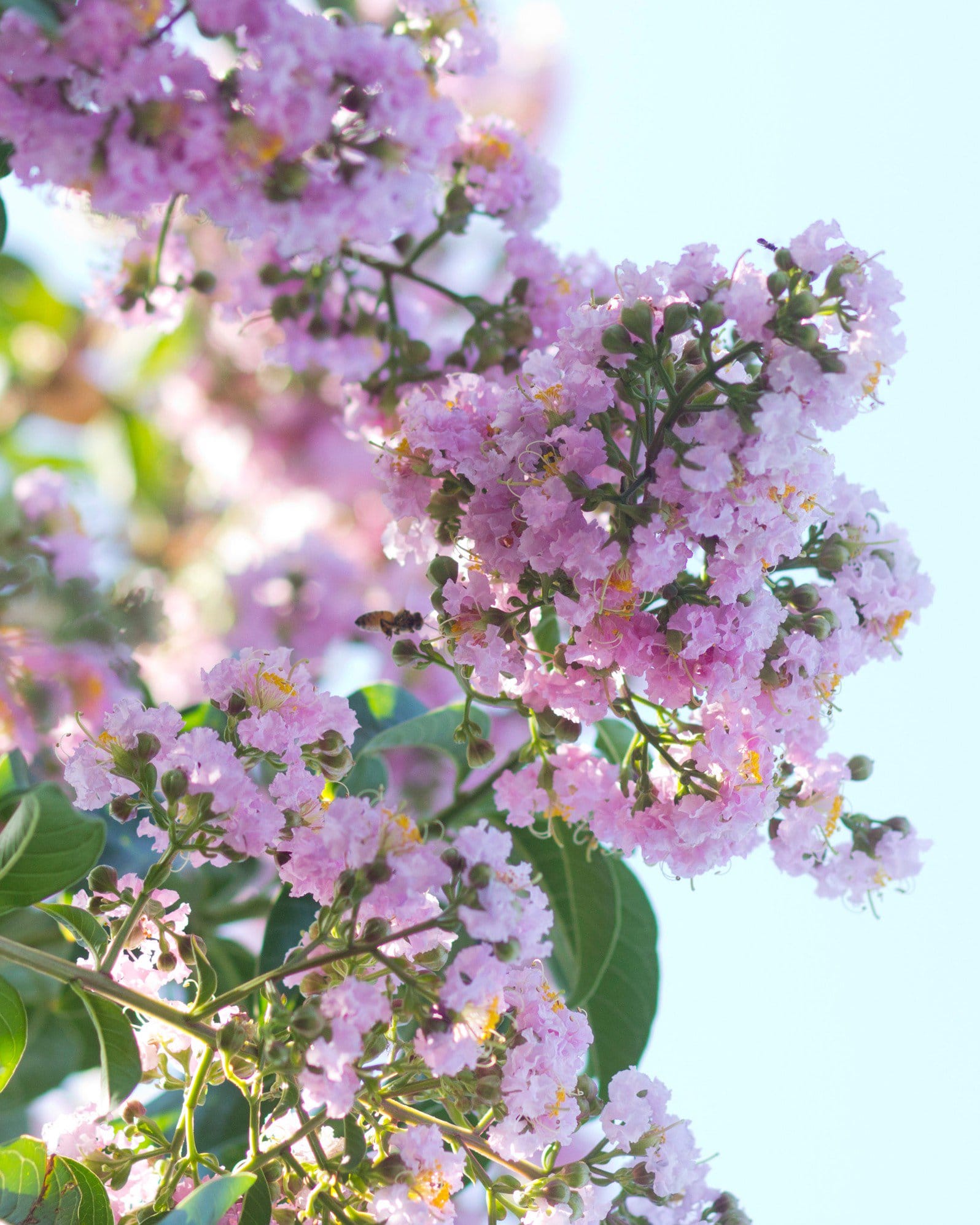
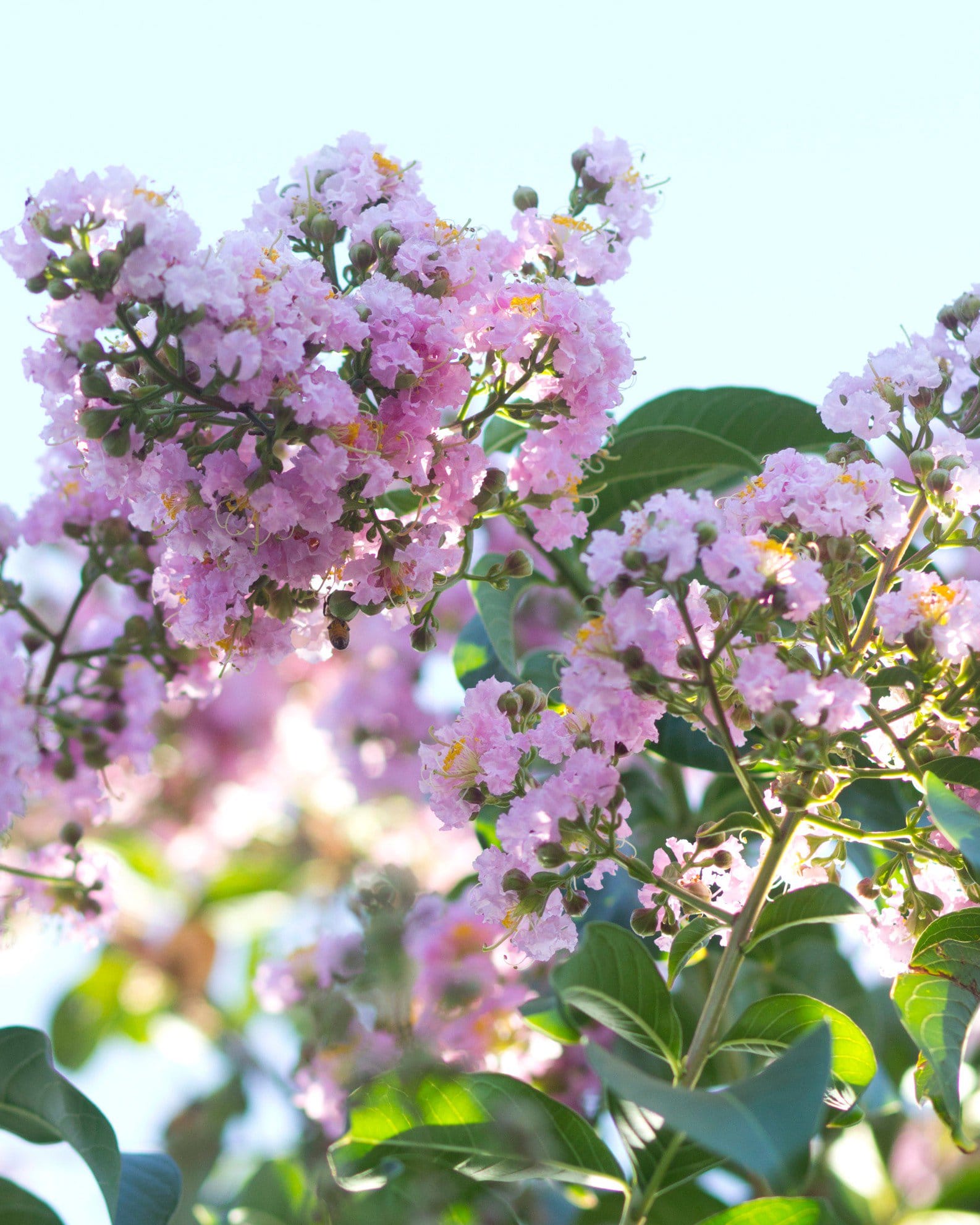
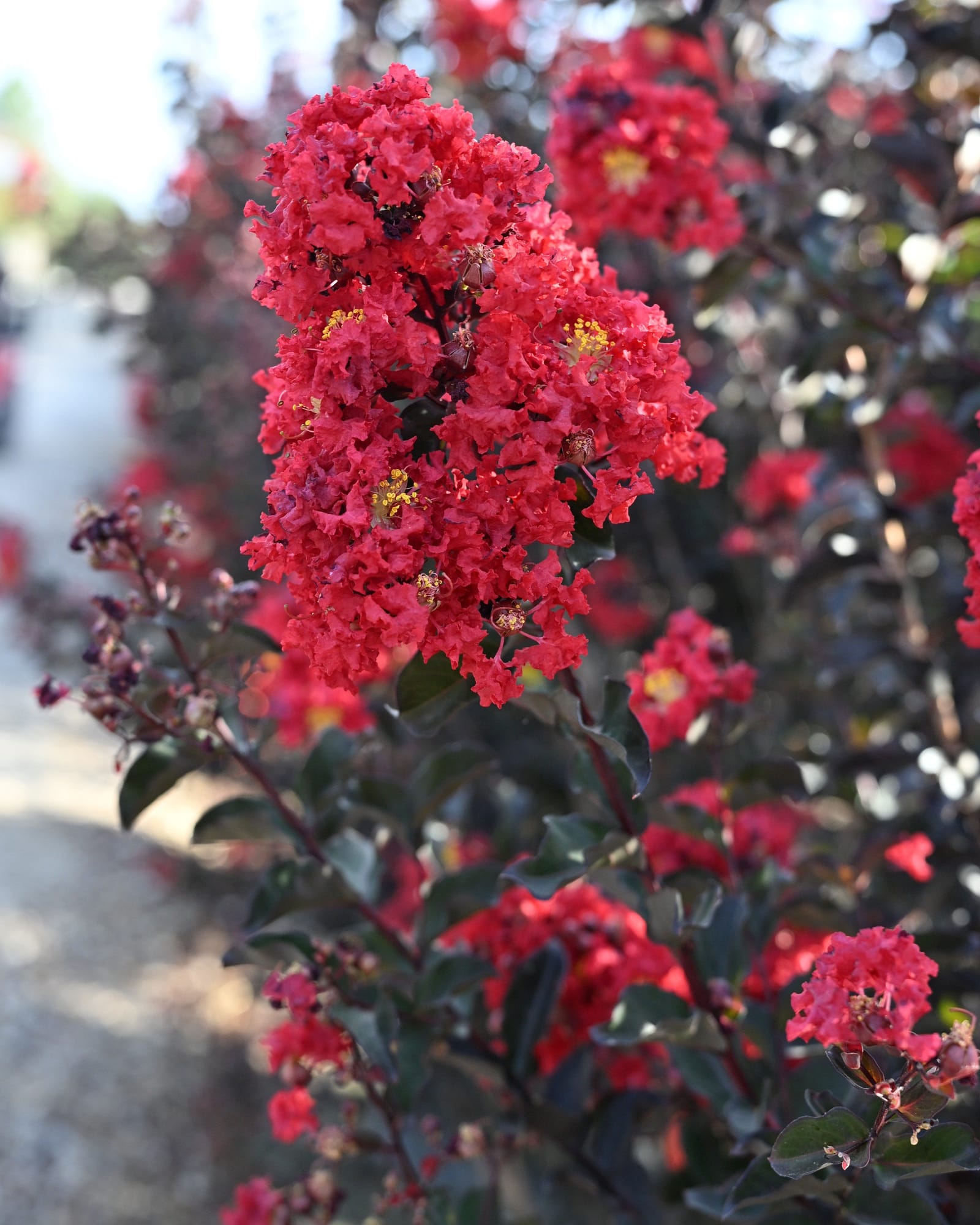
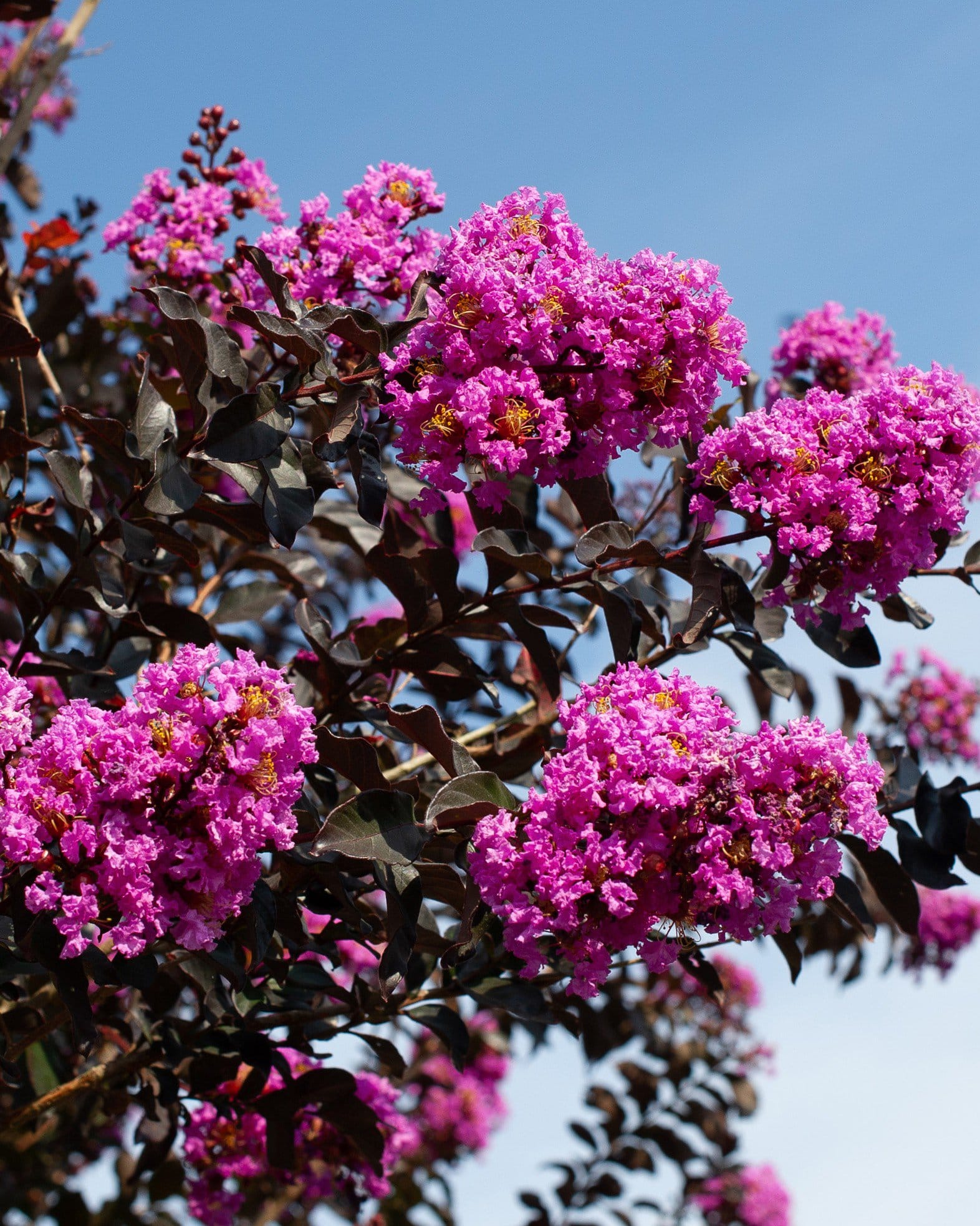
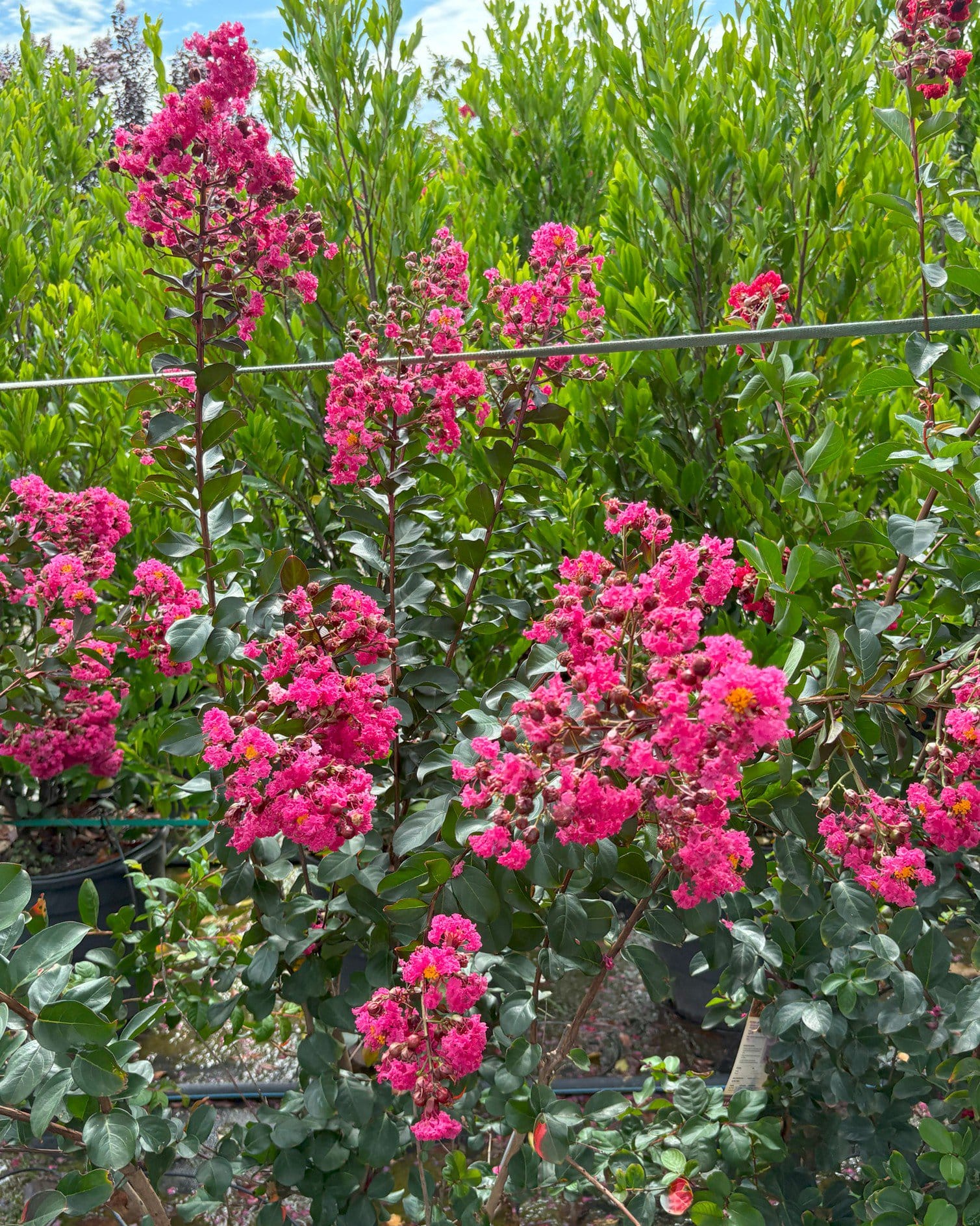
This cultivar is admired for its bright pink flower clusters that create a vibrant summer display. The color appears lively without being overly intense. Dense bloom clusters give the tree a full canopy of color during peak flowering.
Branches typically grow outward and slightly upward, forming a rounded canopy. Over time, limbs become evenly spaced and well balanced. This structure supports heavy flower clusters.
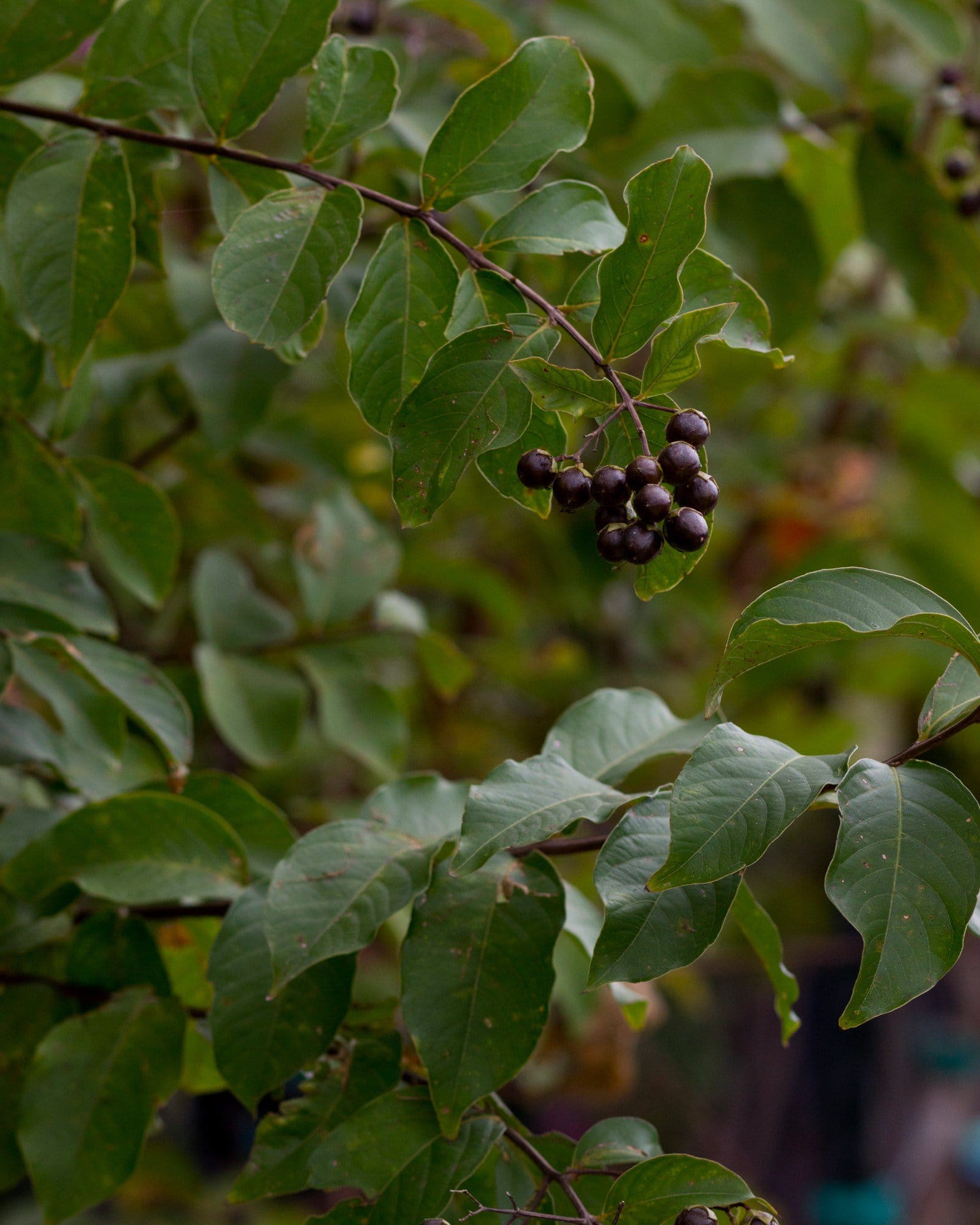
Small seed pods may appear after the flowering period ends. These capsules remain on the branches and add subtle texture. Most gardeners leave them until seasonal pruning.
The flowers produce nectar that attracts bees and other beneficial insects. Summer-blooming trees can provide valuable resources when earlier flowering plants are finished. This helps sustain pollinator activity.
As the tree matures, the bark begins to peel in thin layers. Lighter tones beneath the surface gradually become visible. This exfoliating effect adds character to older trunks.
The canopy typically becomes moderately dense while still allowing filtered light to pass through. Balanced branching helps distribute foliage evenly. This creates a full yet airy appearance.
With time, the trunk thickens and supports a stable canopy. Proper pruning during early growth helps encourage good branch spacing. Mature trees usually maintain a sturdy structure.
The large clusters create a broad wash of pink across the canopy. Even from far away, the flowering display remains highly visible. This gives the tree a strong ornamental presence when in bloom.
Special Features
You might also like
Black Diamond Shell Pink Crape Myrtle
Maturity: 12' H x 8' W
Coral Boom Crape Myrtle
Maturity: 15' H x 10' W
Coral Magic Crape Myrtle
Maturity: 8' H x 6' W
Hopi Crape Myrtle
Maturity: 10' H x 8' W
Basham's Party Pink Crape Myrtle
Maturity: 20' H x 15' W
Biloxi Crape Myrtle
Maturity: 20' H x 15' W
Colorama Coral Crape Myrtle
Maturity: 20' H x 12' W
Ebony Embers Crape Myrtle
Maturity: 10' H x 6' W
Ebony Fire Crape Myrtle
Maturity: 10' H x 6' W
Lavender Skies Crape Myrtle
Maturity: 20' H x 12' W
Pink Velour Crape Myrtle
Maturity: 10' H x 8' W
Purple Sage Crape Myrtle
Maturity: 20' H x 12' W
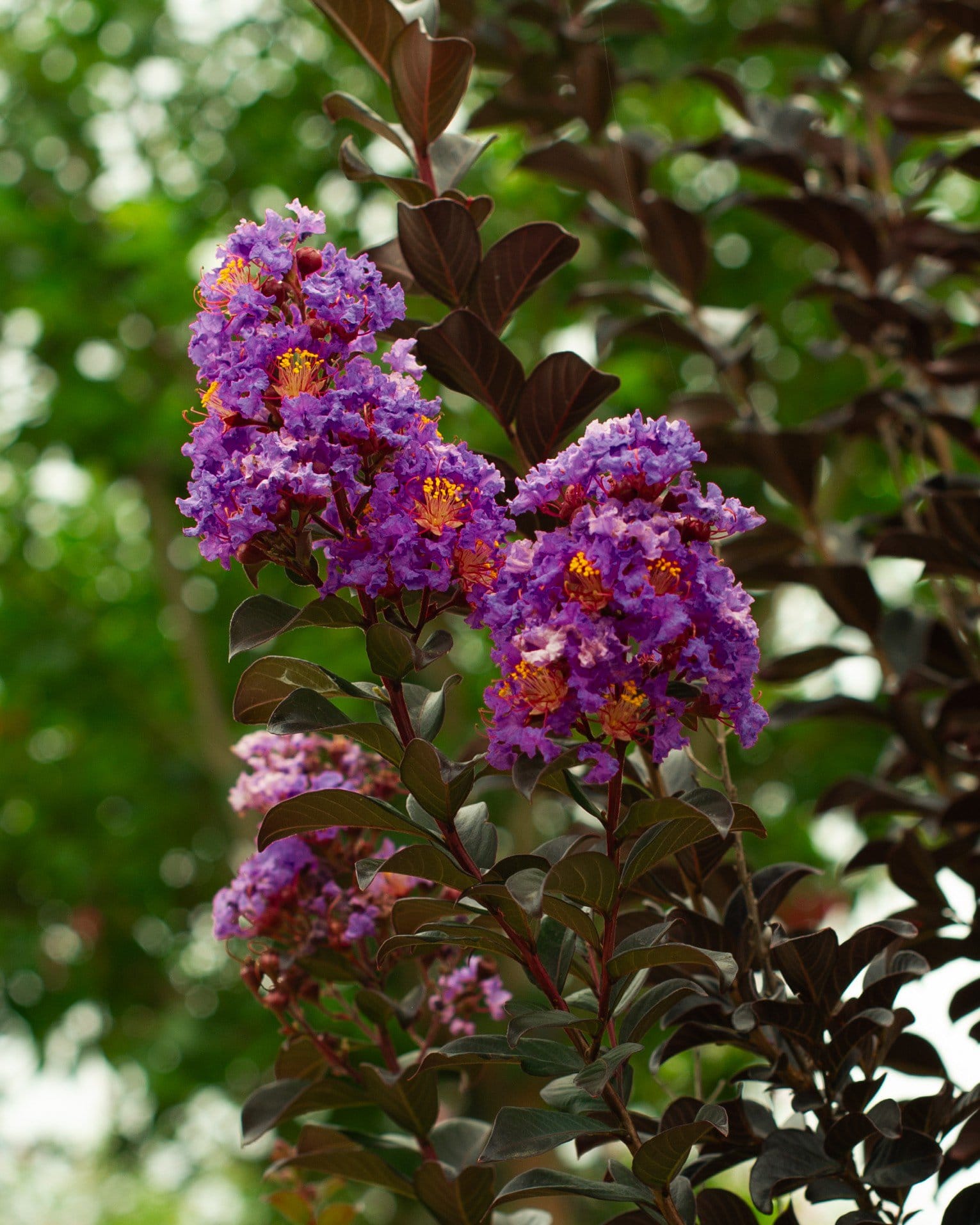
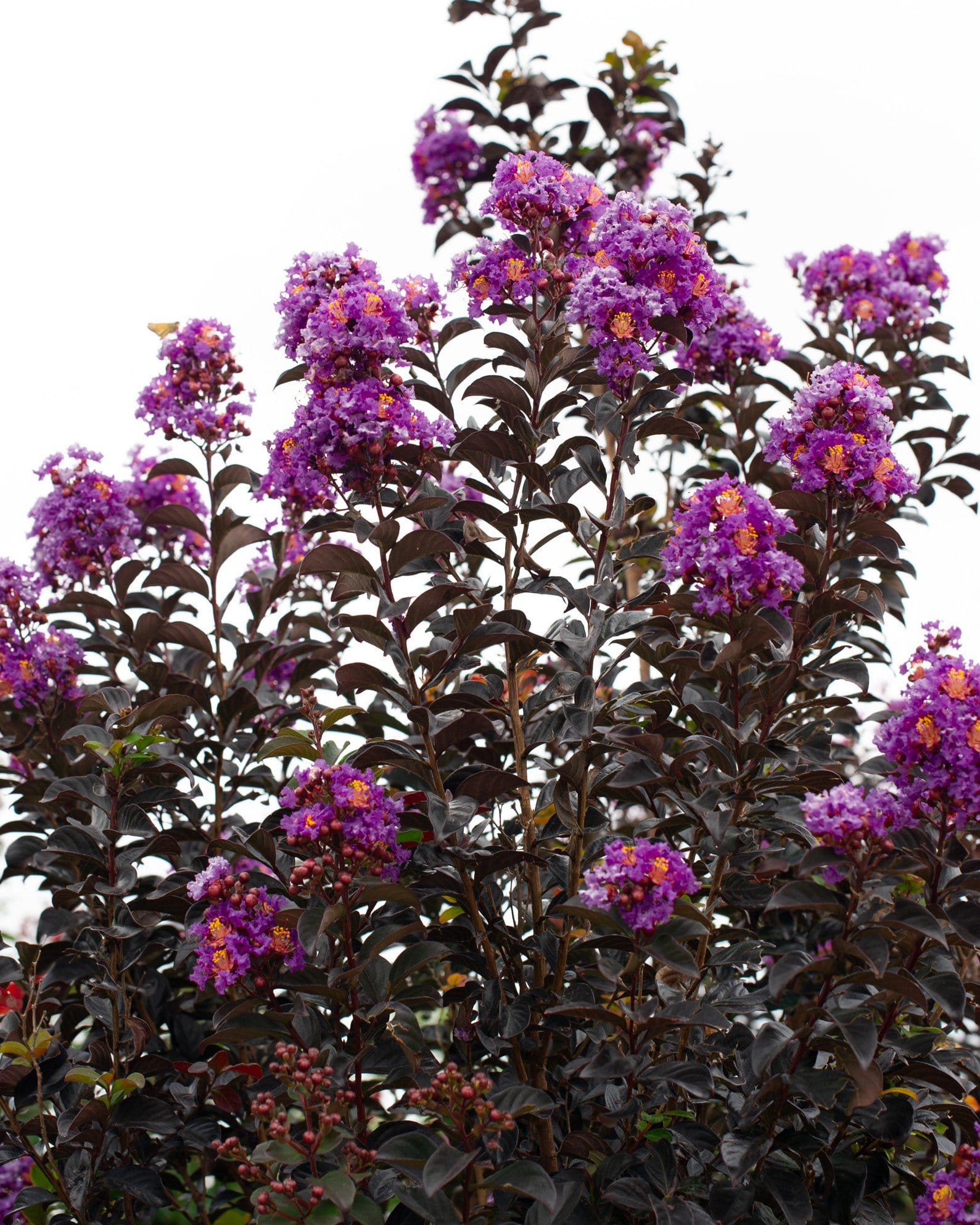
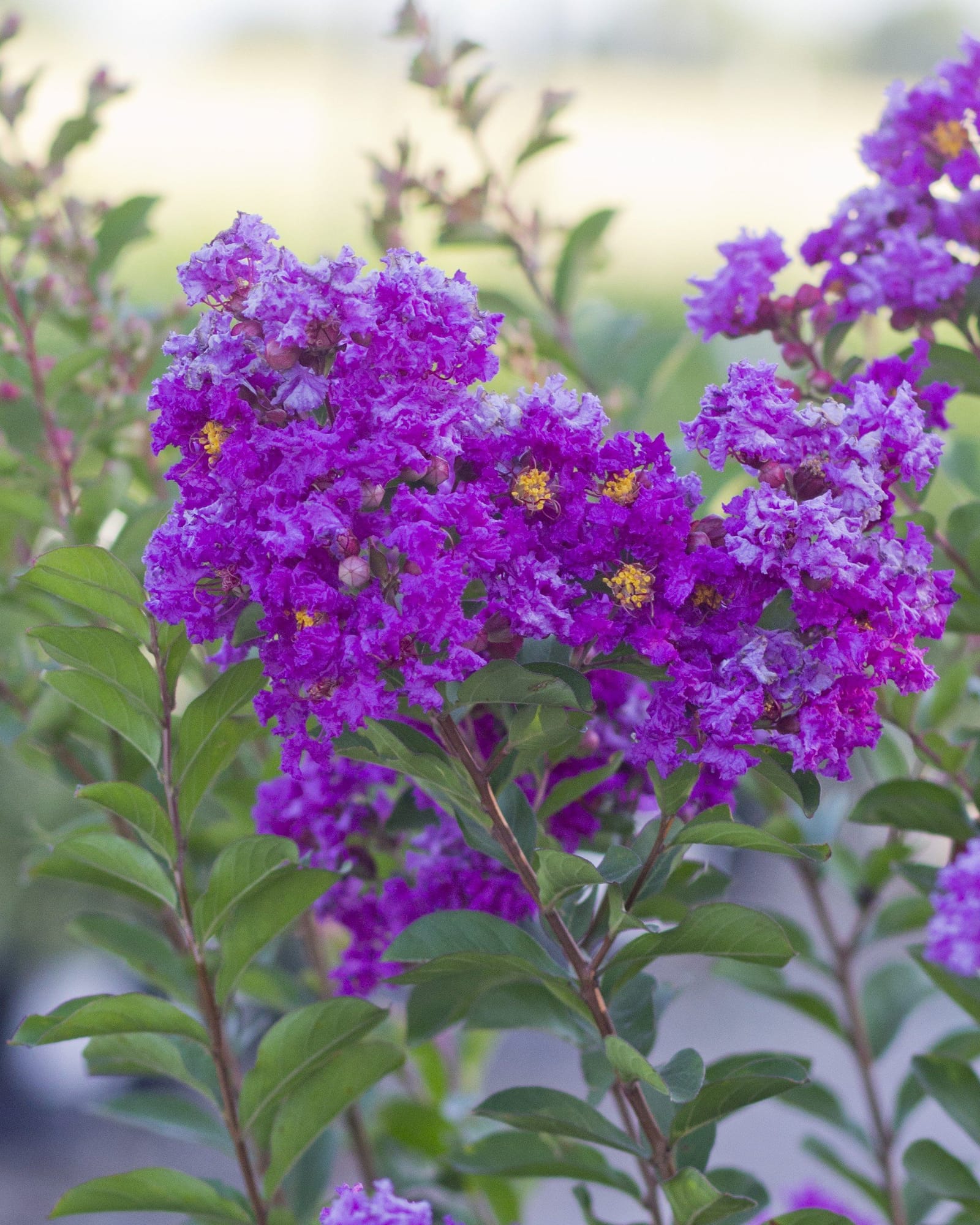
Royalty Crape Myrtle
Maturity: 6' H x 6' W
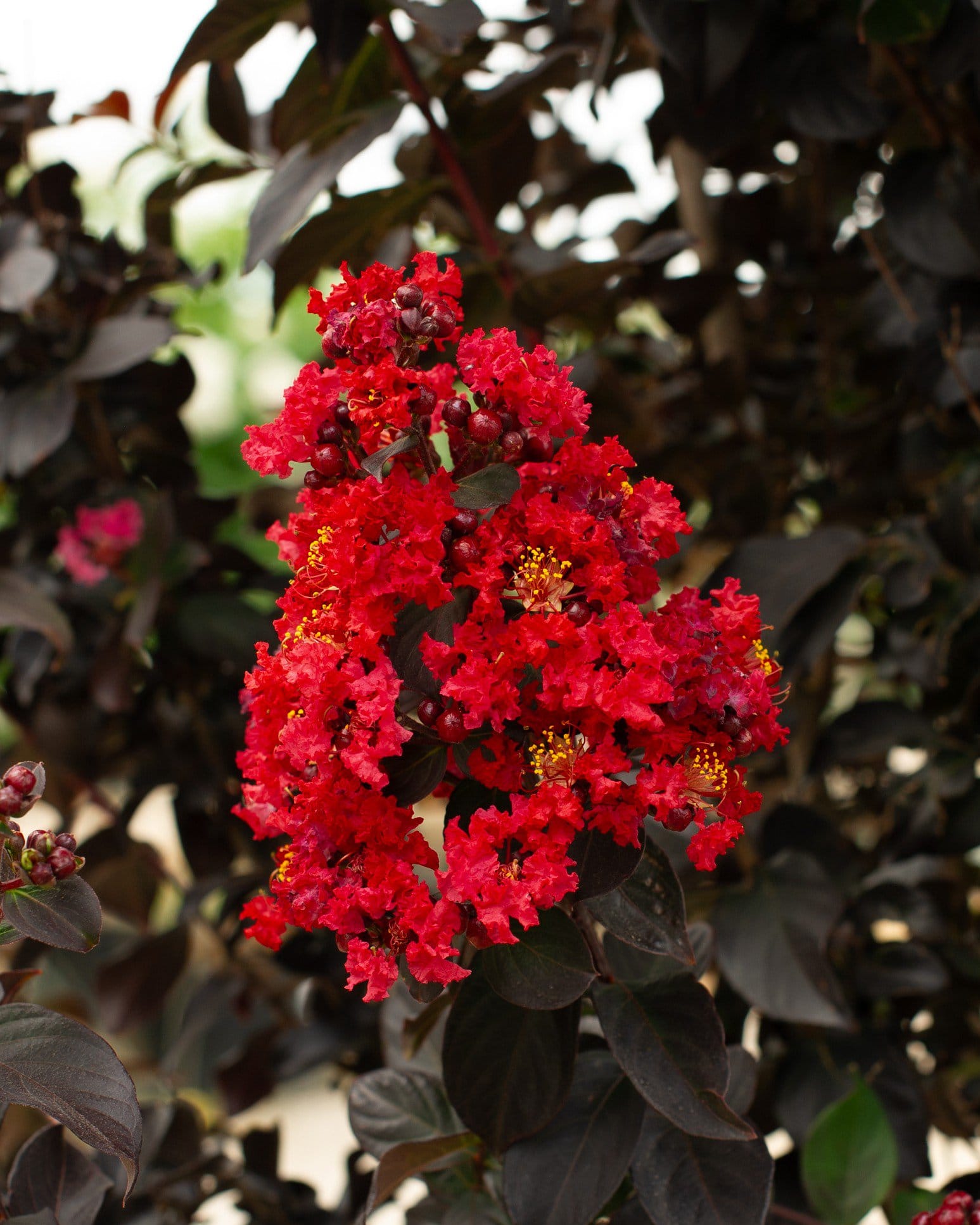
Ruby Crape Myrtle
Maturity: 20' H x 12' W
Sioux Crape Myrtle
Maturity: 15' H x 10' W
Compare Similar Plants
Rhapsody in Pink Crape Myrtle This plant | ||
|---|---|---|
| Scientific Name | Lagerstroemia indica 'Whit VIII' | Lagerstroemia indica '1 Li' |
| Size at Maturity | 12' H x 8' W | 12' H x 8' W |
| Leaf Retention | Deciduous | Deciduous |
| Fall Color | Orange | Orange & Red |
| Flower Color | Pink | Pink |
| Bloom Times | Summer | Summer |
| Sizes Available | 5, 15 gal | 5, 7 gal |


Our 1-Year Planting Guarantee
We take pride in our plants and installation services. If any plants or trees installed by Treeland fail to thrive within the first year, we'll provide a replacement credit in accordance with our guarantee program.
Learn More About Our Guarantee